


Courtesy: Reporting Contribution by Salman-Bin-Kareem [A Senior Journalist I Doha, Qatar]
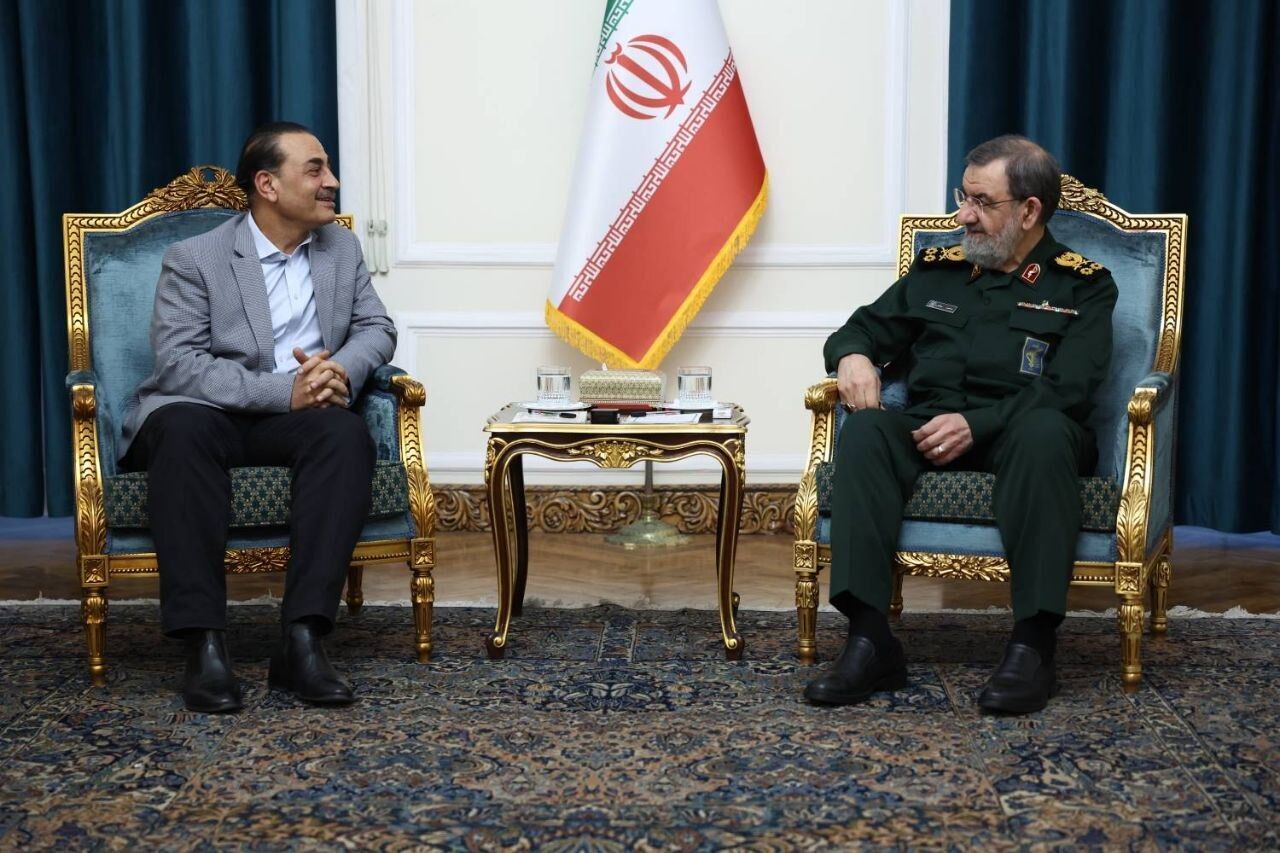
Rochester, NY/Doha, QA/Islamabad, PK: The arrival of Pakistan’s Chief of Defence Forces and Army Chief, Field Marshal Syed Asim Munir, in Tehran on October 20 represents more than another diplomatic engagement between two neighboring countries.
It comes at a particularly dangerous moment in Middle Eastern geopolitics, when the confrontation between Saudi Arabia and Iran-aligned Houthi forces threatens to expand into a wider regional conflict, while Washington and Tehran remain locked in an increasingly fragile standoff.
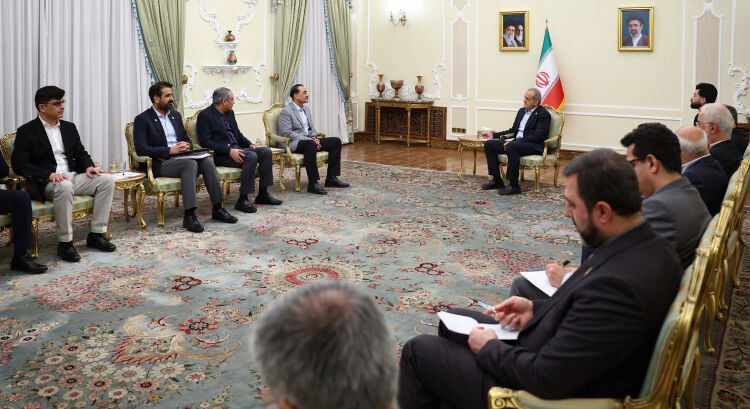
Accompanied by Interior Minister Mohsin Naqvi, Munir met Iranian President Masoud Pezeshkian, Parliament Speaker Mohammad Bagher Ghalibaf, Foreign Minister Abbas Araghchi and senior security official Mohsen Rezaei.
Although the visit involved Iran’s highest political and security authorities, publicly available accounts do not establish a separate formal meeting with an incumbent Iranian armed-forces chief.
The distinction matters because the engagement appears primarily designed to address strategic and diplomatic crises rather than announce a new military partnership.
The central question is whether Pakistan can maintain its emerging position as a regional security guarantor while simultaneously negotiating with a country whose regional allies are attacking one of Islamabad’s closest strategic partners.
Tehran’s Strategic Message: Diplomacy without Concessions
Iranian officials used Munir’s visit to communicate an uncompromising position regarding negotiations with the United States.
President Pezeshkian maintained that meaningful negotiations required Washington to address Tehran’s demands, including sanctions relief and an end to military pressure.
Parliament Speaker Ghalibaf insisted that the United States must meet Iran’s seven conditions before confidence could be restored.
“Threats and military maneuvers cannot influence the strategic decisions of the Islamic Republic of Iran,” Ghalibaf declared, according to the Iranian account reported by Pakistani Media.
Mohsen Rezaei reinforced Tehran’s nuclear position, declaring that not even a single particle of enriched nuclear material would leave Iranian territory.
These statements reveal that Tehran considers military deterrence, economic pressure and diplomatic negotiations interconnected instruments of national security.
For Islamabad, however, the difficulty extends beyond Iran’s nuclear program. Pakistan must persuade Iranian decision-makers that continued regional escalation, particularly through Houthi attacks against Saudi Arabia, could undermine the security architecture Pakistan has recently committed itself to defending.
According to Turkish media, citing sources familiar with the discussions, Munir sought Iranian assistance in restraining attacks against Saudi Arabia. Tehran reiterated its willingness to mediate between Riyadh and the Houthis, although the precise commitments emerging from those discussions remain undisclosed.
Saudi Arabia and the Houthis: The Conflict behind the Tehran Mission
The immediate strategic backdrop is the intensification of hostilities between Saudi Arabia and Yemen’s Houthi movement.
Repeated missile and drone attacks against Saudi airports, energy infrastructure and other strategic facilities have exposed the kingdom’s vulnerability despite its substantial defense investments.
The October attack on Riyadh’s King Khalid International Airport, alongside continuing strikes and counterstrikes, has raised concerns about regional aviation, energy security and international commercial shipping.
The Houthis maintain their own political and military command structure, although their relationship with Iran gives Tehran considerable strategic influence. That influence should not automatically be confused with operational control over every Houthi attack.
Pakistan’s position became particularly complicated following the establishment of the trilateral defense framework involving Saudi Arabia, Pakistan and Türkiye.
Under the August 2026 Mecca Joint Defense Agreement, the three countries committed themselves to collective defense arrangements. The framework has intensified expectations that Islamabad will contribute to Saudi security during major external threats.
Pakistan’s Foreign Office reinforced this commitment on October 9, reporting Prime Minister Shehbaz Sharif’s condemnation of repeated Houthi attacks and reaffirming Pakistan’s unwavering solidarity with Saudi Arabia.
The government also emphasized the kingdom’s right to defend its population, sovereignty and critical infrastructure.
This creates a fundamental contradiction in Pakistan’s regional calculations: Islamabad is politically and strategically committed to Saudi defense while attempting to maintain productive relations with Tehran.
Yet the contradiction could also become an opportunity. Pakistan may be among the few regional actors capable of communicating Saudi security concerns directly to Iran without automatically being treated as an adversary.
Washington’s Calculations: Is Pakistan Becoming Too Close to Tehran?
For the Trump administration, Munir’s visit presents competing strategic interpretations.
On one hand, Washington benefits from maintaining communication channels with Tehran through countries that retain access to Iranian decision-makers. Pakistan’s involvement in earlier mediation efforts has already demonstrated the potential value of such engagement.
On the other hand, American policymakers may scrutinize any indication that Pakistan is expanding security cooperation with Iran beyond diplomatic engagement.
President Donald Trump recently left open the possibility of American participation in Saudi military operations against the Houthis.
“We may. We’re gonna look at it,” Trump said when questioned about possible US involvement following the attack on Riyadh’s airport.
Meanwhile, Vice President JD Vance has emphasized the need for substantial restrictions on Iran’s uranium enrichment as part of resolving the broader confrontation.
These positions demonstrate that Washington continues to regard Iranian military capabilities and regional influence as significant security concerns.
Nevertheless, there is no verified public evidence that the White House or Pentagon has interpreted Munir’s October 20 visit as a betrayal of American confidence.
Indeed, Pakistan’s intermediary role may serve American interests by maintaining diplomatic access at a time when direct negotiations have stalled.
The distinction Washington will likely consider is whether Islamabad is facilitating communication with Tehran or developing strategic arrangements that could weaken American security interests.
Could the Tehran Meeting Damage US-Pakistan Trust?
The possibility cannot be dismissed, but neither should it be exaggerated.
Historically, Pakistan has maintained a complicated relationship with Washington, combining military cooperation, intelligence coordination and regional strategic disagreements.
Its relationship with Iran has likewise been shaped by border security, economic interests and geographic necessity rather than complete political alignment.
The reopening of the Pakistan-Iran border during Munir’s latest visit illustrates the practical dimension of bilateral engagement. Iranian accounts quoted Munir as describing previous border difficulties as temporary and technical.
Washington is therefore unlikely to regard diplomatic engagement alone as evidence of an anti-American strategic realignment.
However, three developments could materially alter that assessment.
First, any verified Pakistani transfer of sensitive American-origin military technology or intelligence to Iran would raise serious concerns.
Second, an emerging operational military arrangement between Islamabad and Tehran that directly challenged American or Saudi security interests could complicate bilateral relations.
Third, Pakistani involvement in military operations against the Houthis, followed by Iranian retaliation or heightened regional confrontation, could place Islamabad in a strategically unsustainable position.
None of these scenarios has been established as an outcome of the Tehran visit.
The more plausible immediate interpretation is that Washington recognizes Pakistan’s usefulness as a diplomatic intermediary while remaining attentive to the boundaries of its military cooperation.
An Emerging Regional Order beyond American Guarantees
The broader significance of Munir’s mission lies in the changing regional security environment.
At a security forum in Doha, US envoy Tom Barrack recently indicated that Washington could no longer guarantee Gulf security indefinitely, reinforcing expectations that regional governments would assume greater responsibility for their own defense.
Saudi Arabia’s growing defense arrangements with Pakistan and Türkiye reflect precisely that transition.
For Islamabad, the development offers increased diplomatic influence but also creates additional obligations.
Pakistan cannot afford a direct confrontation with Iran, its immediate neighbor, while simultaneously assuming substantial military responsibilities toward Saudi Arabia.
Nor can it disregard Washington, whose diplomatic influence and strategic relationship with Pakistan remain consequential.
This explains why Munir’s visit should be understood primarily as an exercise in crisis management rather than evidence of a new geopolitical alliance.
Conclusion: Pakistan’s Influence Will Depend on Restraint, Not Alignment
Field Marshal Asim Munir’s Tehran mission has placed Pakistan at the intersection of three competing strategic priorities: Saudi security, Iranian regional influence and American geopolitical interests.
Its success cannot be measured simply by the number of high-level meetings or the diplomatic reception extended by Tehran.
The meaningful test will be whether Pakistan can help reduce Houthi attacks, encourage renewed US-Iran negotiations and prevent its Saudi defense commitments from drawing it into a wider confrontation.
For Washington, the visit does not necessarily weaken trust in Islamabad. Properly managed, it could reinforce Pakistan’s value as a country capable of communicating across opposing regional blocs.
But that advantage depends on transparency, disciplined diplomacy and a clear separation between mediation and military alignment.
Pakistan’s greatest strategic achievement would not be choosing between Washington, Riyadh and Tehran. It would be preventing the confrontation among them from forcing such a choice.
The Tehran visit may therefore mark neither a diplomatic breakthrough nor a deterioration in American confidence, but the beginning of a more demanding phase in Pakistan’s regional diplomacy—one in which influence will be measured less by access to powerful leaders than by the ability to prevent another devastating Middle Eastern escalation.
Follow our latest coverage for deeper insights into the policies, trends, and developments influencing today’s world.

