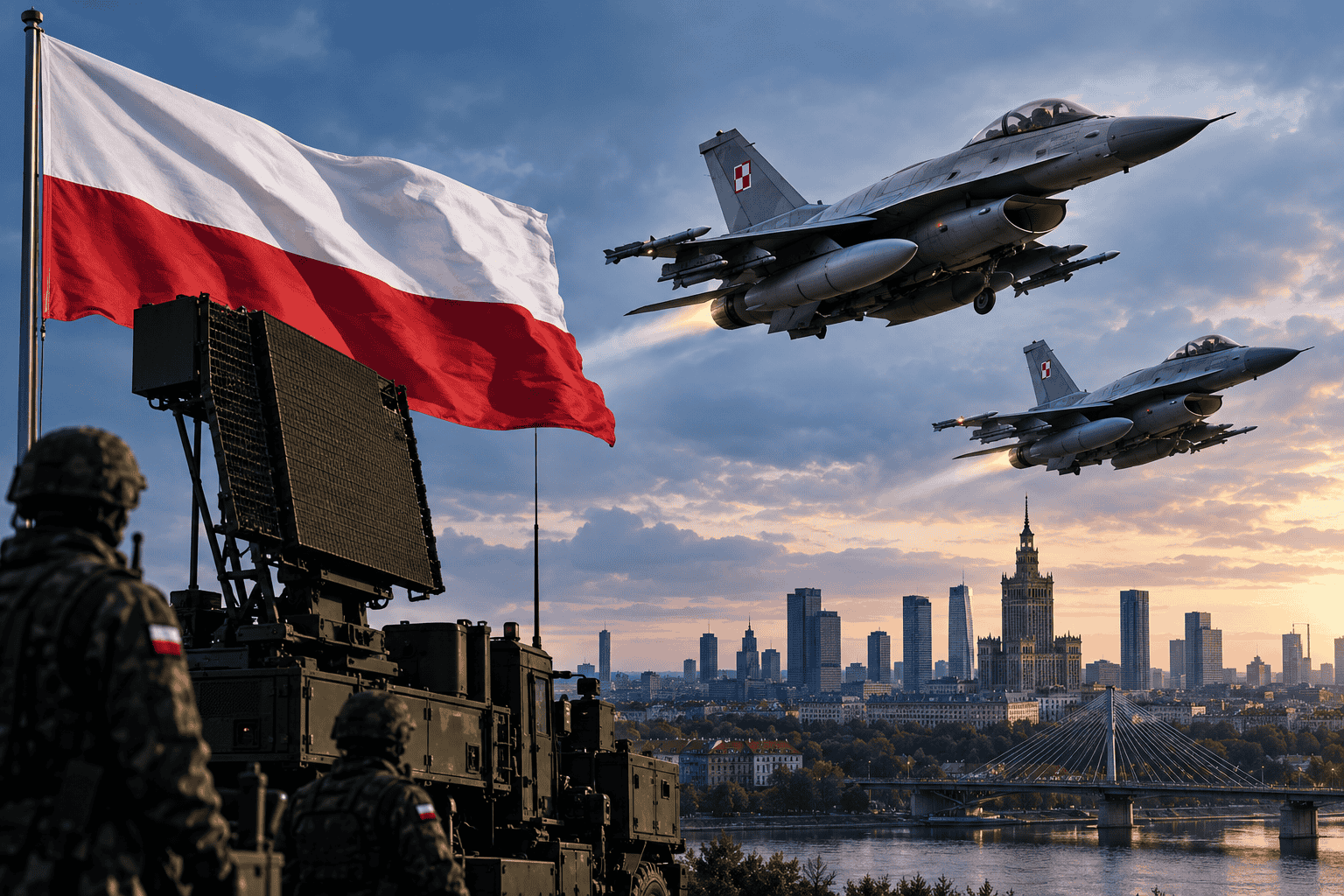
Warsaw, PL: Poland’s decision to scramble fighter jets on October 16, 2026, following Russian missile and drone strikes against western Ukraine represents another significant moment in Europe’s deteriorating security environment.
Although Polish authorities confirmed that their airspace had not been violated, the incident illustrates how Russia’s prolonged military campaign against Ukraine increasingly threatens the security calculations of neighboring NATO countries.
Russian attacks concentrated on Ukraine’s western Volyn region, bordering Poland, disrupted electricity supplies to approximately 370,000 people. Additional strikes hit several Ukrainian cities, causing civilian casualties and damaging critical infrastructure.
According to Reuters, Russian attacks across Ukraine on Friday killed at least eight people, injured approximately 60, and disrupted electricity supplies to more than one million people before restoration efforts recovered service for many residents.
These developments reflect a broader strategic challenge: the geographical boundaries separating the Russia-Ukraine war from NATO territory remain legally clear, but the operational risks of accidental escalation are increasing.
Poland’s military response was defensive rather than offensive. Nevertheless, repeated fighter deployments indicate that Warsaw increasingly regards Russian aerial operations near its borders as a persistent national security threat.
Why Russia Is Targeting Western Ukraine
Western Ukraine holds considerable strategic importance because it connects Ukrainian military and civilian infrastructure with European supply networks.
Poland serves as a major logistical gateway for Western assistance, humanitarian shipments, military equipment, and international transportation. Russian attacks against infrastructure in western Ukraine can therefore produce consequences extending beyond the immediate battlefield.
Moscow’s military objectives appear to involve three interconnected considerations.
First, sustained attacks against electricity infrastructure weaken Ukraine’s economic resilience and complicate military logistics. Energy disruptions affect industrial production, railway operations, communications, hospitals, and civilian living conditions.
Second, attacks near important transportation corridors can complicate Ukraine’s ability to maintain reliable connections with European partners.
Third, strikes close to NATO territory generate political pressure on neighboring countries by forcing them to maintain heightened military readiness.
However, there is insufficient publicly verified evidence that the October 16 strikes were specifically intended to provoke a direct confrontation with Poland. The proximity of attacks to NATO territory makes escalation possible without proving that escalation is Moscow’s objective.
This distinction is essential when evaluating Russian intentions.
Poland’s Military Response: Deterrence without Direct Engagement
Poland has emerged as one of Europe’s most security-conscious NATO members since Russia launched its full-scale invasion of Ukraine in February 2022.
Its geographical position makes developments in western Ukraine particularly sensitive. Any missile or drone approaching Polish territory requires rapid assessment because military commanders have limited time to distinguish between an accidental incursion and a deliberate attack.
The October 16 deployment was consistent with Poland’s increasingly proactive air-defense posture.
In September, Polish Prime Minister Donald Tusk warned that intelligence assessments suggested Russia might conduct hybrid drone and missile operations against countries supporting Ukraine.
Speaking to parliament, Tusk said Russian planning could include attacks against Ukraine’s allies, including Poland, designed to undermine NATO’s collective response. These were Polish intelligence assessments, not independently established Russian operational plans.
Poland’s concerns are reinforced by earlier incidents.
On July 30, Polish authorities investigated a suspected Russian Kh-101 cruise missile that entered Polish airspace during a major Russian attack on Ukraine.
In September, Russian aerial operations near the border again prompted Polish defensive deployments, including an incident involving a drone strike only a few kilometers from Polish territory.
The accumulation of such incidents creates a difficult security environment in which routine defensive activity can rapidly become politically sensitive.
NATO’s Article 5: Could an Airspace Violation Trigger War?
The central concern surrounding Poland’s fighter deployments is the possibility of a confrontation involving NATO.
Article 5 of the North Atlantic Treaty establishes collective defense obligations when an alliance member experiences an armed attack.
However, an airspace violation does not automatically trigger Article 5 or require an immediate military response against Russia.
NATO members must evaluate the circumstances, severity, attribution, and strategic consequences of an incident.
An accidental drone incursion, for example, would generally raise different questions from a deliberate missile strike causing substantial casualties on Polish territory.
NATO also possesses mechanisms for consultations under Article 4 when an ally considers its security threatened.
The principal danger is therefore not that every border incident inevitably causes war, but that repeated incidents increase the possibility of miscalculation.
A defensive interception could be misinterpreted, an unidentified projectile could cause civilian deaths, or conflicting intelligence assessments could produce political pressure for retaliation before the circumstances are fully established.
NATO must consequently balance credible deterrence with effective crisis management.
Russia’s Strategy: Military Pressure and Political Signaling
Russian President Vladimir Putin has consistently framed the conflict through Moscow’s security interests and opposition to Ukraine’s deeper military integration with Western institutions.
From Moscow’s perspective, Western military assistance prolongs Ukraine’s resistance and complicates Russia’s battlefield objectives.
Western governments, however, maintain that Ukraine possesses the sovereign right to defend itself and receive external assistance against Russia’s invasion.
These competing positions have produced a prolonged confrontation extending beyond Ukrainian territory into European defense planning, sanctions, energy markets, and diplomatic relations.
Russia’s continued use of missiles and drones also demonstrates the importance of long-range strike capabilities in modern warfare.
Even when Russian forces cannot achieve decisive territorial advances, attacks against energy systems and urban infrastructure can impose substantial economic and humanitarian costs.
Yet the effectiveness of this approach remains uncertain.
Destroying infrastructure may weaken Ukraine’s immediate capabilities, but it can also strengthen public opposition to Russia, encourage European military cooperation, and accelerate investment in alternative energy and defensive technologies.
Moscow therefore faces a strategic contradiction: military pressure intended to reduce Western support for Ukraine may instead reinforce European perceptions of Russia as a long-term security threat.
Ukraine’s Growing Humanitarian and Economic Burden
The consequences of Russia’s aerial campaign extend far beyond military calculations.
Ukraine’s energy infrastructure remains especially vulnerable as colder weather approaches.
Repeated attacks against electricity generation, transmission facilities, and distribution networks create difficulties that cannot always be resolved through emergency repairs.
The October 16 disruption in Volyn demonstrates how a relatively concentrated attack can affect hundreds of thousands of civilians.
Beyond immediate blackouts, energy insecurity creates secondary economic losses through interrupted production, damaged equipment, transportation delays, and higher reconstruction costs.
The humanitarian implications are equally serious.
Hospitals require uninterrupted electricity, vulnerable populations depend on heating, and businesses struggle to maintain operations under repeated disruptions.
An Associated Press report published October 16 also highlighted United Nations findings showing that civilian deaths and injuries in September had increased by 85 percent compared with the same month a year earlier.
For Ukrainian President Volodymyr Zelenskyy, these attacks reinforce the urgency of obtaining additional air-defense systems and interceptor missiles.
However, Western military stockpiles, production constraints, and competing security priorities complicate Ukraine’s ability to maintain comprehensive protection.
The Black Sea: A Second Front of NATO’s Security Anxiety
Poland’s heightened military readiness coincides with growing concerns among NATO members bordering the Black Sea.
Bulgaria has formally requested additional NATO combat aircraft and counter-drone capabilities following incidents involving commercial shipping near its coastline.
Bulgarian officials have expressed suspicions concerning Russian responsibility for maritime incidents, although Prime Minister Rumen Radev acknowledged that conclusive proof was unavailable.
Romania has also requested additional defensive equipment.
These developments indicate that the regional security challenge is no longer confined to Poland’s land border.
The Black Sea connects critical trade routes, energy infrastructure, commercial ports, and military installations.
Disruption of maritime transportation can increase shipping insurance costs, delay cargo deliveries, and complicate agricultural and energy trade.
For NATO, defending this region requires coordination between air-defense systems, naval surveillance, intelligence-sharing networks, and diplomatic crisis-management mechanisms.
The strategic challenge is substantial: Russia can generate pressure across multiple geographical areas while NATO must maintain readiness throughout its eastern and southeastern territories.
Washington’s Dilemma and Europe’s Defense Responsibilities
The continued escalation places the United States in a complicated strategic position.
Washington must balance its commitment to NATO security with concerns about military expenditure, weapons availability, and the risks associated with direct confrontation between nuclear-armed powers.
President Donald Trump’s administration also faces difficult questions concerning the relationship between continued assistance to Ukraine, diplomatic engagement with Moscow, and broader economic consequences.
Russian and Ukrainian attacks against energy infrastructure have contributed to concerns about international oil markets.
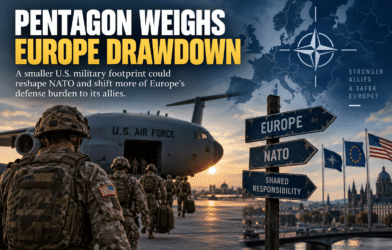
Meanwhile, European governments increasingly recognize that their long-term security cannot depend exclusively on American military capabilities.
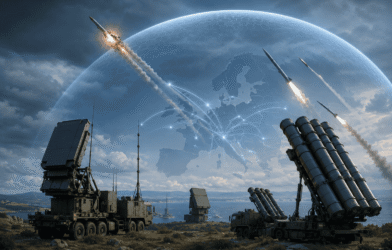
For Poland and other eastern NATO members, the practical response involves strengthening integrated air defenses, expanding domestic weapons production, improving drone detection, and increasing military coordination.
The central challenge is ensuring that stronger defensive capabilities reduce the likelihood of conflict rather than accelerate an uncontrolled arms race.
Conclusion: Europe’s Most Dangerous Risk Is Miscalculation
Poland’s October 16 fighter-jet deployment should not be interpreted as evidence that NATO and Russia have entered direct military confrontation.
No Polish airspace violation was reported during the incident, and Warsaw’s response remained defensive.
Nevertheless, the episode demonstrates the increasingly fragile security environment surrounding the Russia-Ukraine war.
Russia continues to employ long-range attacks to weaken Ukrainian infrastructure and sustain military pressure. Ukraine remains dependent on international defensive assistance while facing severe humanitarian and economic consequences.
NATO, meanwhile, must defend its territory without transforming every military incident into a broader confrontation.
The most effective response requires three parallel efforts: stronger defensive readiness, reliable communication channels to prevent accidental escalation, and sustained diplomatic engagement aimed at reducing hostilities.
Ultimately, Europe’s greatest immediate danger may not be a deliberate decision by Moscow or NATO to initiate a wider war. It may be an unexpected incident that political leaders and military commanders fail to contain.
The strategic lesson from Poland’s latest fighter deployment is clear: deterrence must remain credible, but preventing miscalculation is equally essential to European security.
Explore related stories, expert opinions, and exclusive insights to better understand the broader implications of today’s headlines.