


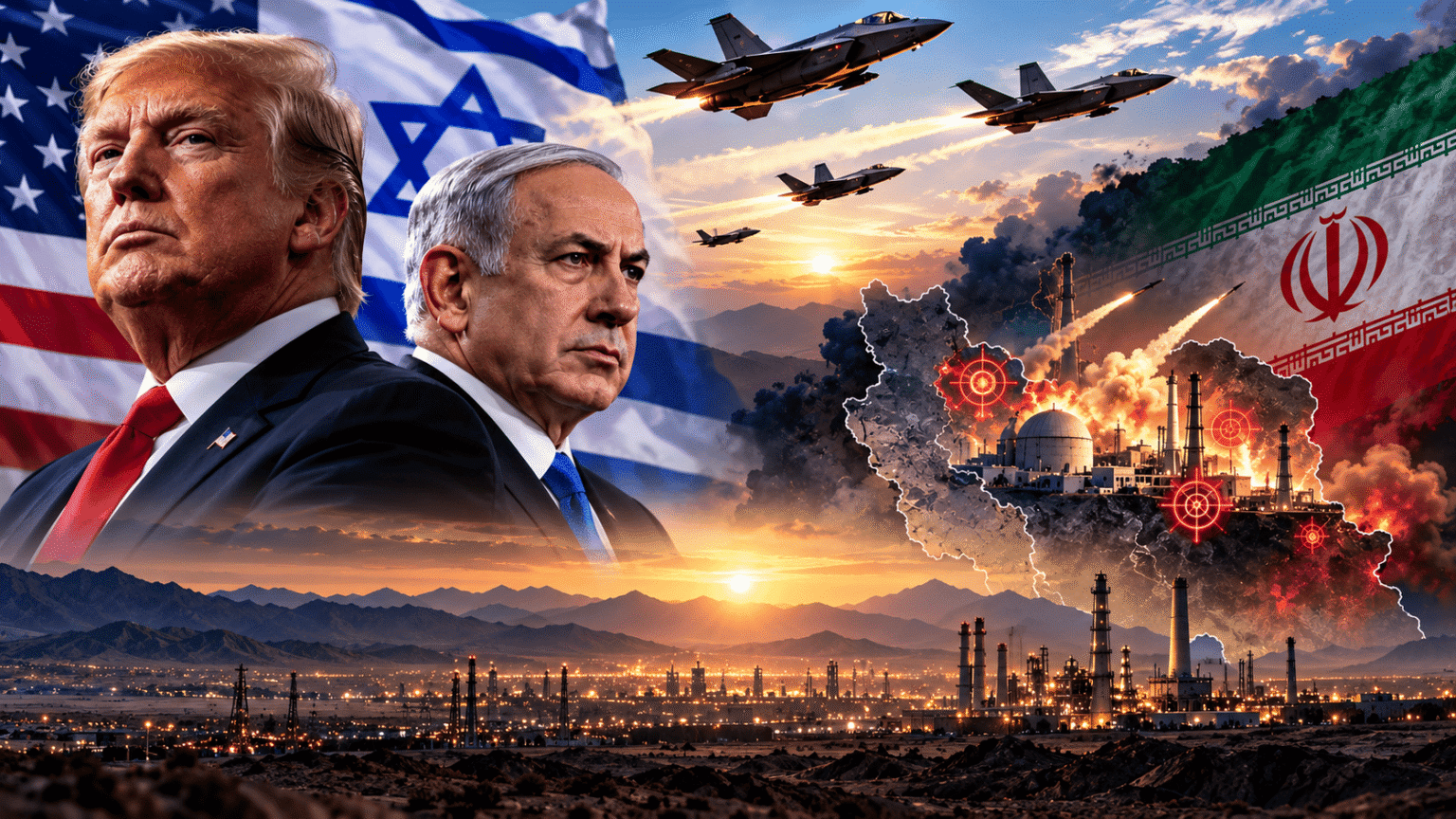
Washington, D.C: The Middle East may be approaching another decisive moment, not necessarily on the battlefield, but at the American ballot box. As the United States prepares for its November 3 midterm elections, reports of renewed American-Israeli military planning against Iran have raised a disturbing possibility: that the relative restraint preceding the elections could give way to another intensive military confrontation immediately afterward.
On October 22, ABC News reported, citing two Israeli sources, that American and Israeli military planners had developed proposals for renewed strikes against Iranian targets.
The White House explicitly ruled out attacks before the midterms, while leaving open the possibility of subsequent military action. The Pentagon declined to discuss the reported plans.
The distinction is crucial. Military preparations do not constitute a final presidential authorization.
Nevertheless, the combination of operational planning, diplomatic deadlock, and increasingly confrontational rhetoric suggests that Washington is considering whether another concentrated offensive could accomplish what months of warfare and economic pressure have failed to achieve.
The Electoral Calendar and the Logic of Military Restraint
The timing of the reported operation is politically significant. President Donald Trump faces an electorate already confronting the economic consequences of the Iran conflict, particularly elevated fuel prices and uncertainty surrounding international energy supplies.
Launching another military offensive before November 3 could intensify these pressures. A sharp increase in oil prices would affect American households, transportation costs, and business confidence precisely when voters are evaluating the administration’s performance.
The White House’s position was unusually explicit. Spokesperson Anna Kelly told ABC News on October 22: “The United States will not be attacking Iran at any time prior to the midterm elections.”
That statement establishes a temporary boundary, not a permanent commitment to diplomacy.
On October 23, Trump further raised the possibility of renewed military operations, telling supporters at a Florida rally, “We may do another little Epic Fury,” referring to the American military campaign against Iran. He provided no operational details.
The political calculation is evident, although the administration’s precise motives cannot be established from public statements alone. Delaying military action may reduce immediate electoral exposure while preserving military options afterward.
Yet the strategic question remains: would an offensive launched after the elections deliver a different result, or merely extend an already costly conflict?
Netanyahu’s Strategic Ambitions: Nuclear Containment or Regime Change?
For Israeli Prime Minister Benjamin Netanyahu, the Iranian challenge extends beyond immediate military capabilities.
Israeli officials have repeatedly emphasized concerns about Iran rebuilding its nuclear infrastructure, replenishing missile inventories, and restoring military capabilities damaged during earlier operations.
According to reporting published by TIME, possible targets under consideration include nuclear installations, energy infrastructure, and Iranian missile and drone systems. Discussions reportedly occurred during Defense Secretary Pete Hegseth’s visit to Israel.
However, an important distinction has emerged between Washington’s declared objective of preventing an Iranian nuclear weapon and the more expansive ambitions attributed to Netanyahu’s government.
ABC News reported that an Israeli source described regime change, rather than a negotiated settlement, as the Israeli government’s preferred outcome. Netanyahu also publicly called for the Iranian government to be overthrown.
This divergence matters enormously.
Destroying missile launchers, degrading military installations, and disrupting nuclear facilities are operational objectives. Overthrowing an established political system is a fundamentally different undertaking, carrying uncertain military, political, and humanitarian consequences.
Iran’s governing institutions, Revolutionary Guard networks, and internal security apparatus cannot necessarily be dismantled through aerial bombardment. Even substantial military destruction does not guarantee political collapse.
Israel may regard another offensive as an opportunity to weaken its principal regional adversary. Washington must additionally consider the consequences for American forces, Gulf allies, international trade, and long-term regional stability.
Tehran’s Warning: The Next War May Have No Geographic Boundaries
Iran’s response to the reported preparations has been unusually confrontational.
Mohsen Rezaei, secretary of Iran’s Supreme National Security Council, warned that renewed American-Israeli attacks could trigger retaliation against oil facilities, underwater communications cables, data centers, and artificial intelligence infrastructure across Gulf countries.
Mehdi Mohammadi, an adviser to senior Iranian negotiator Mohammad Bagher Ghalibaf, described Tehran’s prospective strategy as one of “zero red lines.”
Such threats indicate a potentially consequential shift in Iranian military thinking.
Rather than concentrating retaliation exclusively against Israeli territory or American military installations, Tehran appears to be threatening the wider economic infrastructure supporting regional security arrangements.
However, Iran’s ability to execute these threats at the scale described remains uncertain.
Foreign Minister Abbas Araghchi has also challenged Washington’s military relationship with Israel, arguing that American resources are being disproportionately committed to Israeli defense. His October 23 statements illustrate the widening diplomatic confrontation.
Saudi Arabia, the Houthis and the Danger of Regional Expansion
The conflict cannot be separated from escalating hostilities involving Saudi Arabia and Yemen’s Houthi movement.
Recent Houthi attacks on Saudi infrastructure and threats against shipping near the Bab el-Mandeb Strait have complicated regional security calculations. Washington has responded by adjusting diplomatic staffing across several Middle Eastern countries.
Saudi Arabia faces a difficult strategic dilemma. Its security relationship with Washington remains essential, yet a renewed American-Israeli assault could expose Saudi energy facilities to additional retaliatory threats.
For Crown Prince Mohammed bin Salman, the central challenge is protecting national infrastructure and economic transformation plans while avoiding deeper involvement in a regional war.
The conflict also creates an important opening for diplomacy. Pakistan, Turkey, Egypt, and European governments have participated in discussions addressing the Strait of Hormuz and regional instability.
These diplomatic efforts could become increasingly important if military escalation threatens both Gulf energy exports and Red Sea commercial navigation.
Oil Markets: The Economic Weapon Neither Side Can Ignore
Energy security remains perhaps the most consequential element of the confrontation.
On October 23, Brent crude briefly exceeded $117 per barrel, according to CBS News, amid renewed maritime tensions and Iranian claims of attacks on commercial vessels. Those specific Iranian claims had not been independently corroborated.
Another round of strikes against Iranian energy facilities could produce consequences far beyond the immediate conflict.
Higher oil prices would increase transportation and manufacturing costs, complicate inflation control, and place additional pressure on energy-importing economies across Asia and Europe.
Iran, meanwhile, would face further destruction of infrastructure essential to its economic survival.
This creates a dangerous paradox: Washington may regard economic pressure as a means of forcing Iranian concessions, while Tehran may regard disruption of international energy markets as its strongest remaining bargaining instrument.
Both strategies risk imposing substantial costs on countries that are not direct participants in the conflict.
Can Another Military Offensive Actually End the War?
The strategic argument for renewed strikes rests on the assumption that additional destruction would force Tehran to accept American demands.
Yet nearly eight months of conflict have demonstrated the limitations of military coercion.
U.S. Ambassador to the United Nations Mike Waltz acknowledged on October 23 that the conflict could continue for another year, while emphasizing Washington’s demand for restrictions on Iranian uranium enrichment.
Three possible developments deserve consideration.
First, a concentrated offensive could damage Iranian military capabilities and produce renewed diplomatic negotiations, particularly if Tehran concludes that continued resistance threatens its economic survival.
Second, Iran could respond through prolonged asymmetric warfare, attacks on regional infrastructure, and additional maritime disruption, transforming a limited offensive into a broader confrontation.
Third, Washington could ultimately maintain economic and military pressure without authorizing another major bombing campaign, preserving negotiations as an alternative.
None of these outcomes can be treated as certain.
Conclusion: The Election May Change the Timing, Not the Strategic Dilemma
The reported American-Israeli preparations reveal an uncomfortable reality: the military confrontation with Iran remains unresolved despite months of sustained pressure.
Trump retains the authority to authorize or reject another offensive. Netanyahu continues to press for decisive action, while Iranian leaders threaten retaliation extending beyond conventional military targets.
The approaching American midterm elections may influence when decisions are made, but they cannot resolve the fundamental disagreements over Iran’s nuclear program, regional influence, and political survival.
A renewed bombing campaign might alter the military balance. Whether it could deliver a sustainable political settlement is an entirely different question.
Ultimately, the greatest danger lies in assuming that one more intensive offensive will necessarily produce the concessions previous campaigns failed to secure.
The ballots will be counted on November 3. What follows will depend not only on decisions in Washington and Tel Aviv, but also on whether diplomacy can prevent another cycle of escalation across the Middle East.
For readers seeking clarity beyond the headlines, The Variant offers context-driven journalism and expert analysis.
