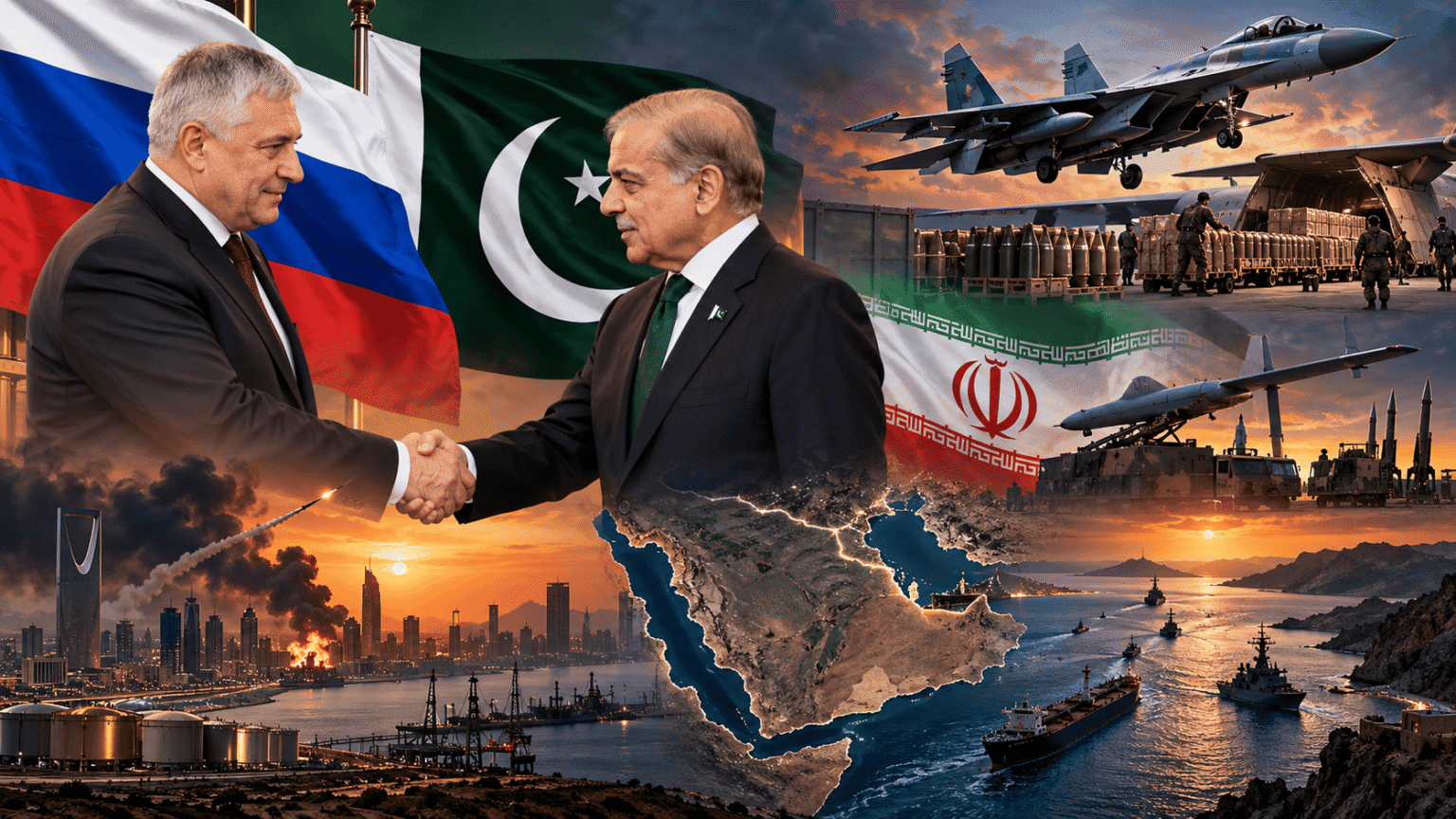
Islamabad, PK/Moscow, RU: The arrival of Russian Interior Minister Vladimir Kolokoltsev in Islamabad on October 12, 2026, marked the first official visit of its kind by a Russian interior minister to Pakistan. Invited by Pakistan’s Interior Minister Mohsin Naqvi, Kolokoltsev undertook a four-day visit that included meetings with President Asif Ali Zardari and Prime Minister Shehbaz Sharif.
The publicly announced agenda emphasized security cooperation, trade, energy, investment and regional connectivity.
Yet the significance of the visit cannot be assessed solely through the diplomatic language of official communiqués. It occurred as Saudi Arabia faced renewed Houthi attacks, the confrontation involving Iran and the United States remained unresolved, and Russia’s military relationship with Tehran attracted increasing international scrutiny.
Two developments require particular distinction. Russian military assistance to Iran is supported by credible reporting, including reports of ammunition and drone-component shipments.
However, the arrival of a new October consignment of Russian fighter jets in Iran has not been independently established by the evidence reviewed for this analysis. Nor is there verified evidence that Kolokoltsev’s Pakistan visit was intended to coordinate Russian military deliveries to Tehran.
These uncertainties do not diminish the visit’s geopolitical importance. Rather, they establish the boundaries between what is known and what a matter of strategic interpretation remains.
A Diplomatic Visit at an Unusually Sensitive Moment
On October 13, President Zardari met Kolokoltsev at Aiwan-e-Sadr, where discussions extended beyond conventional internal-security cooperation. The Pakistani president emphasized bilateral trade, energy development, regional connectivity, counterterrorism and maritime security.
One of the most revealing elements of the meeting was Zardari’s insistence that Pakistan-Russia relations should develop independently of their respective relationships with third countries.
This formulation carries considerable diplomatic weight.
For decades, Pakistan’s strategic relationships have been shaped by its security cooperation with Washington, close economic ties with China and longstanding defense relationship with Saudi Arabia. Russia, meanwhile, has maintained close ties with Iran and historically extensive defense relations with India.
A more substantial Pakistan-Russia relationship would therefore represent diversification rather than necessarily a wholesale realignment.
Zardari also raised the escalating Gulf crisis, expressing concern about attacks on shipping, energy installations and critical infrastructure. He called for restraint, respect for national sovereignty and protection of navigation through the Strait of Hormuz and Red Sea.
The official Pakistani account records his support for diplomatic commitments under the Islamabad Memorandum of Understanding, underscoring Pakistan’s desire to preserve a negotiating framework amid regional instability.
The following day, Prime Minister Shehbaz Sharif welcomed stronger cooperation with Moscow, particularly in trade, investment, energy and economic development. Kolokoltsev reciprocated by expressing Russia’s readiness to expand bilateral engagement.
Although no publicly confirmed military agreement emerged from these meetings, the breadth of discussions demonstrated that Islamabad and Moscow increasingly view their relationship through a regional strategic lens.
Russian Ammunition Reaches Iran: What Is Actually Confirmed?
The question of Russian military supplies to Iran is especially consequential because it moves the discussion from diplomatic symbolism to material military capabilities.
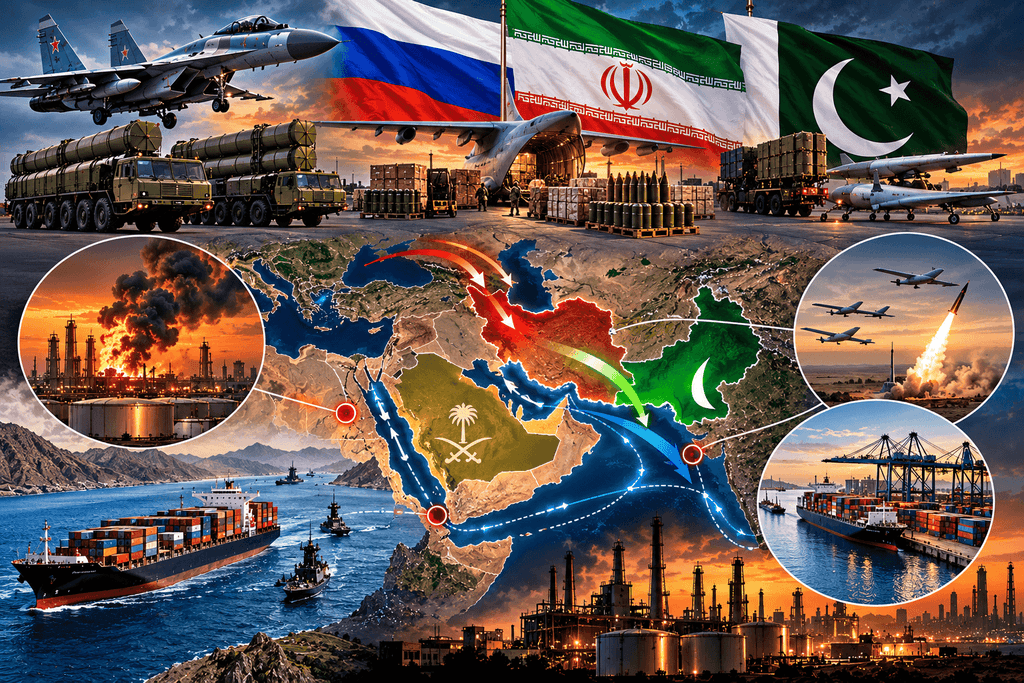
An August 18 assessment by the Critical Threats Project, citing NBC News reporting based on a European government document and Western official, described Russian transfers of drone components, ammunition and TNT explosives to Iran through the Caspian Sea.
According to that reporting, more than two dozen Russian vessels had carried shipments to Iran’s Amirabad port by July 2026. The assessment also described the military importance of these transfers for Iran’s drone and missile programs.
These findings indicate that Russia-Iran military cooperation is not merely rhetorical.
It involves physical supply routes, industrial components and weapons-related materials capable of supporting Iranian military operations.
However, the existence of earlier shipments does not independently confirm a newly arrived consignment in October.
The distinction is particularly important in a conflict environment where claims concerning weapons deliveries can influence market sentiment, military planning and diplomatic calculations even before they are verified.
The Su-35 Fighter Jet Question: Has Iran Received Russia’s New Aircraft?
Iran’s pursuit of Russian combat aircraft is among the most significant elements of its long-term military modernization.
Reports based on leaked Russian defense-industry documents indicate that Tehran ordered approximately 48 Sukhoi Su-35 multirole fighters under an agreement reportedly valued at around €6 billion, with deliveries envisaged between 2026 and 2028.
In July, military publications reported that Russia had completed an initial batch of 20 aircraft. Crucially, those reports described the fighters as remaining in Russia ahead of their transfer to Iran.
The distinction between aircraft being manufactured, delivered and operationally deployed is fundamental.
The Su-35 would provide Iran with more advanced radar, air-to-air engagement and multirole capabilities than much of its aging fighter fleet. Nevertheless, a limited number of modern aircraft would not automatically overturn American or Israeli air superiority.
Pilot training, maintenance infrastructure, secure airfields, spare parts and integration with ground-based air defenses would determine their operational effectiveness.
The more immediate significance of Russian assistance may lie in replenishing Iranian military inventories and supporting drone production rather than transforming the regional airpower balance overnight.
Saudi Arabia, the Houthis and Pakistan’s Strategic Dilemma
The Russian minister’s visit also coincided with an increasingly sensitive challenge for Islamabad: managing its relationship with Saudi Arabia while maintaining diplomatic engagement with Iran.
On October 16, Pakistan’s Foreign Ministry condemned a Houthi attack targeting King Khalid International Airport in Riyadh and reaffirmed its commitment to Saudi Arabia’s security, including under the Makkah Agreement for Joint Defence.
Pakistan also participated in an October 11 joint statement with Saudi Arabia, Egypt and Türkiye condemning Houthi attacks and supporting Saudi Arabia’s right to protect its territory and population.
These developments place Islamabad in a complicated position.
Pakistan cannot disregard its defense commitments to Riyadh. Equally, confrontation with neighboring Iran would threaten its border security, trade interests and diplomatic influence.
Russia’s position introduces another dimension. Moscow has a substantial strategic relationship with Tehran, yet it also has reasons to preserve constructive relations with Gulf governments.
For Russia, a wider Middle Eastern war could create contradictory consequences. Higher energy prices might benefit Russian exporters, while an uncontrolled regional confrontation could threaten commercial routes, diplomatic relationships and the stability of a major strategic partner.
The Kremlin therefore has incentives to strengthen Iran’s ability to withstand pressure without necessarily committing itself to an unrestricted regional war.
For Pakistan, the central question is whether it can sustain defense cooperation with Saudi Arabia while retaining sufficient credibility to facilitate diplomacy involving Tehran.
That balancing act becomes harder if Iranian military capabilities improve through Russian assistance while Saudi Arabia continues to experience attacks attributed to the Houthis.
However, Russian arms transfers to Iran should not automatically be interpreted as Russian endorsement of every Iranian or Houthi military action. Such a conclusion would require separate evidence.
Afghanistan: The Overlooked Strategic Dimension
The Middle Eastern crisis is only part of the explanation for Moscow’s renewed engagement with Islamabad.
Kolokoltsev’s visit followed the October 5 Moscow Format meeting on Afghanistan, attended by representatives of Russia, Pakistan, Iran, China and other regional states.
The meeting exposed differences between Pakistan and the Taliban administration. Russia’s relatively favorable approach toward Kabul contrasted with Islamabad’s concerns over militant organizations operating from Afghan territory.
This context matters because Russia’s interior minister is responsible for internal-security matters rather than directing the Russian military or foreign policy apparatus.
Counterterrorism, law enforcement, border-related security and intelligence cooperation are therefore more directly connected to his institutional responsibilities than fighter aircraft deliveries.
Moscow’s ability to communicate with Kabul could create opportunities for dialogue with Pakistan, although its recognition of the Taliban administration does not guarantee effective leverage over Afghan security decisions.
The visit may consequently reflect overlapping Russian objectives: expanding influence in South Asia, developing practical security cooperation and preserving diplomatic access to governments whose regional priorities do not always coincide.
Is Moscow Challenging American Influence in the Middle East?
Russia’s expanding engagement with Iran and Pakistan raises an important strategic question: Is Moscow constructing alternative regional security architecture?
The available evidence supports a more nuanced interpretation.
Russia has demonstrated its willingness to supply Iran with military technology and reportedly provide intelligence-related assistance.
Carnegie’s analysis describes a growing defense relationship, while also emphasizing Moscow’s limited capacity and reluctance to become directly involved in a larger confrontation with the United States and Israel.
Meanwhile, Washington remains deeply involved in Gulf security through military deployments, defense cooperation and longstanding relationships with regional governments.
Russia’s engagement does not eliminate those relationships.
Instead, a more diversified regional order may be emerging in which governments seek relationships with several major powers rather than relying exclusively on one.
Pakistan is particularly well positioned to participate in this diplomacy because of its connections with China, Saudi Arabia, Iran, Türkiye, Russia and the United States.
Yet diplomatic access should not be confused with unrestricted influence. Islamabad’s ability to shape events will depend on whether these governments view its mediation as credible and whether their security interests can be reconciled.
The October 23 meeting of European and Middle Eastern foreign ministers in Istanbul provides a further illustration of the demand for diplomacy.
Representatives of eight countries, including Pakistan and Saudi Arabia, warned against renewed American or Israeli attacks on Iran and discussed maritime security, Yemen and regional escalation.
Such developments suggest that the regional debate increasingly concerns not simply which power provides military protection, but how competing security interests can be managed without another major war.
The Economic Calculation behind Russia’s Outreach
Beyond military and diplomatic considerations, Moscow and Islamabad have substantial economic reasons to strengthen their relationship.
During Kolokoltsev’s meeting with President Zardari, Pakistan’s presidency reported bilateral trade of approximately $243.4 million in fiscal year 2025, a relatively modest figure compared with the potential identified by both governments.
Zardari emphasized cooperation in oil, gas, transport infrastructure, cargo connectivity and the International North-South Transport Corridor.
For Russia, stronger commercial relationships across Asia offer opportunities to diversify trade connections amid continuing Western sanctions and geopolitical isolation.
For Pakistan, Russian energy supplies, industrial investment and transport connectivity could support economic diversification.
However, closer commercial relations also carry complications, including payment mechanisms, sanctions exposure, logistical constraints and the need to maintain productive relations with Western financial institutions.
These economic realities suggest that Pakistan-Russia cooperation will likely be shaped as much by practical constraints as by diplomatic ambition.
Conclusion: A Strategic Opening, Not yet a New Alliance
Vladimir Kolokoltsev’s visit to Islamabad was significant because of its timing, diplomatic reach and the changing security environment surrounding Pakistan.
It demonstrated Moscow’s interest in broadening its engagement with Islamabad at a moment when Russia’s relationship with Iran, Pakistan’s defense commitments to Saudi Arabia and the wider Middle Eastern confrontation increasingly intersect.
The evidence establishes that Russian military assistance to Iran has expanded, including reported ammunition and drone-component transfers. It also establishes that Iran has pursued advanced Russian fighter aircraft, although the arrival of a new Su-35 consignment in October remains unverified.
What the evidence does not establish is a direct connection between these weapons transfers and the Russian minister’s meetings in Pakistan.
The larger geopolitical development is the growing overlap between South Asian security and Middle Eastern strategic competition.
Pakistan faces the challenge of maintaining its Saudi defense relationship without allowing regional polarization to undermine relations with Iran.
Russia seeks to preserve its partnership with Tehran while cultivating broader diplomatic and economic relationships. The United States, meanwhile, remains a major security actor whose interests intersect with those of both countries.
The emerging question is not whether Pakistan has chosen Moscow over Washington, or Riyadh over Tehran. It is whether Islamabad can translate its increasingly diverse diplomatic relationships into a meaningful role in preventing regional escalation.
In a region where weapons are moving faster than peace agreements, the ability to communicate across opposing strategic camps may prove as important as the military capabilities themselves.
The Variant delivers more than news—providing the context and analysis needed to understand complex global events.