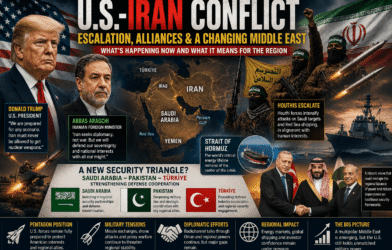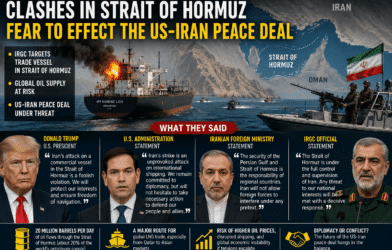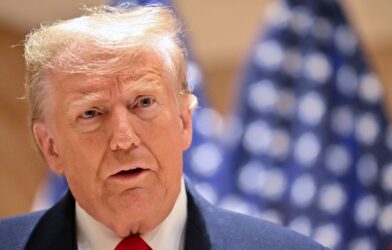
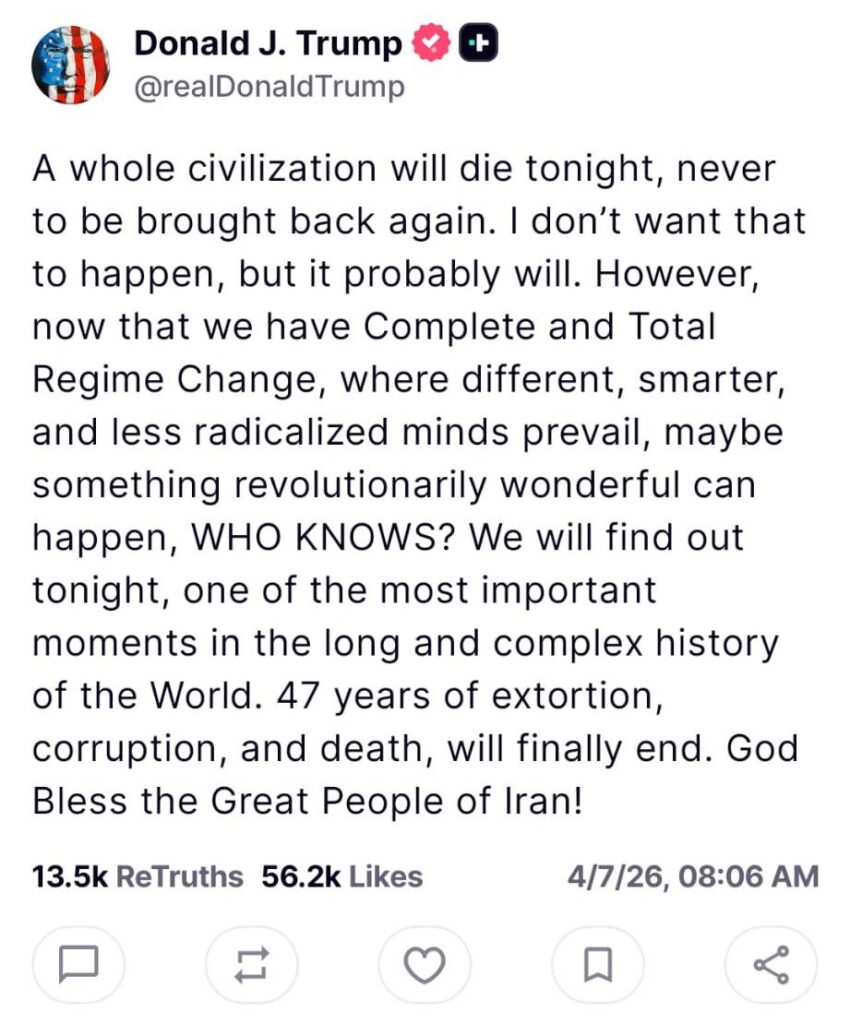
Rochester, NY: The declaration by Donald Trump that “a whole civilization will die tonight” in the context of escalating confrontation with Iran represents one of the most extreme rhetorical escalations in modern U.S. foreign policy.
The phrasing suggested not merely a military strike, but a catastrophic outcome affecting an entire society, raising immediate concerns about proportionality, legality, and intent. In the tradition of American strategic language, even during moments like the Cuban Missile Crisis, such sweeping civilizational threats have rarely been articulated so explicitly.
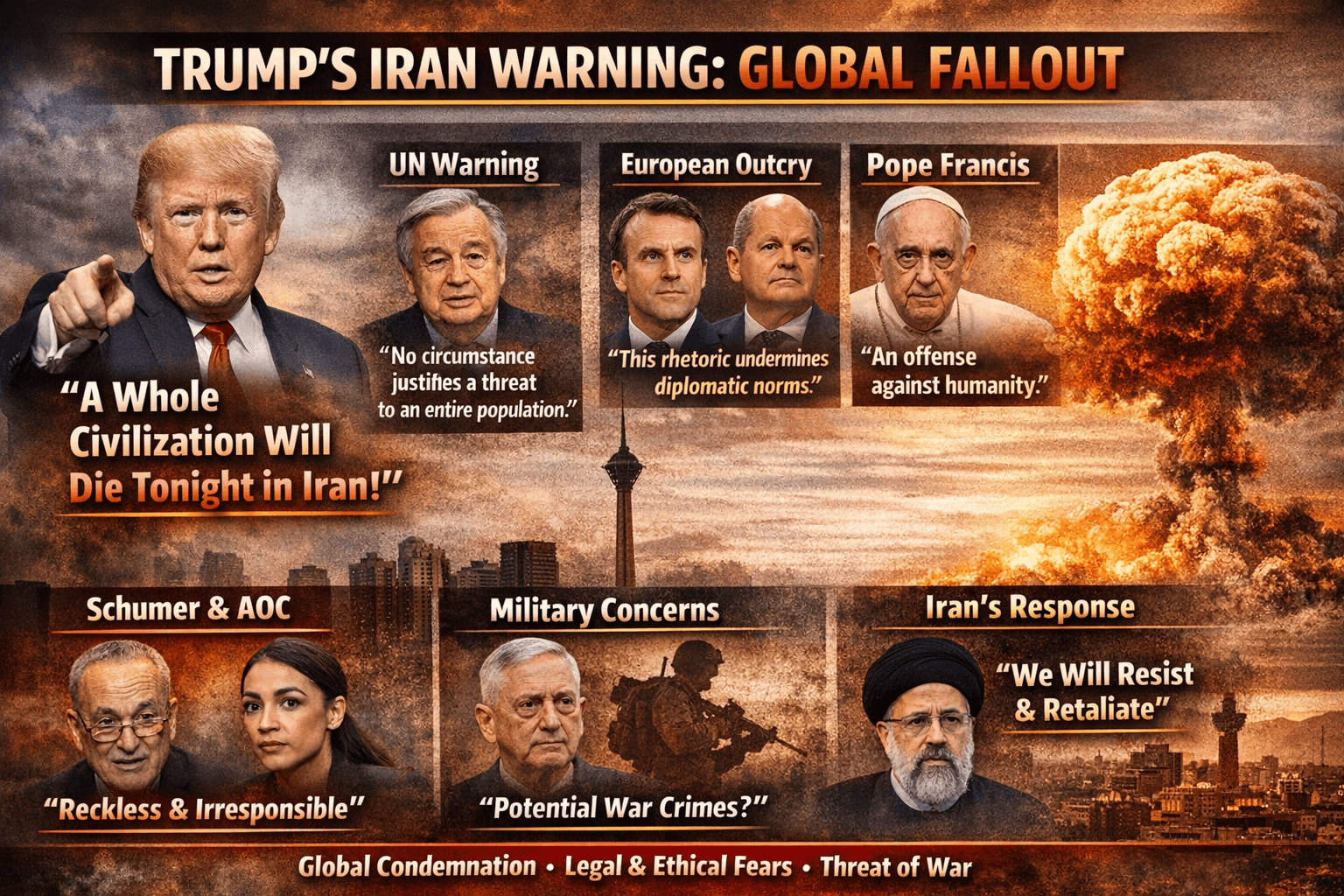
Within the United States, the response from political leadership has been sharp, public, and deeply divided. Senate Majority Leader Chuck Schumer condemned the statement as “dangerously irresponsible,” arguing that rhetoric implying mass destruction of civilians undermines both U.S. law and global stability.
Similarly, Representative Alexandria Ocasio-Cortez described the language as “a threat that crosses into the realm of war crimes,” emphasizing that such statements damage America’s moral standing.
On the Republican side, reactions were more measured but not entirely unified. Senator Lindsey Graham attempted to contextualize the statement, suggesting that Trump’s words were intended as a deterrent signal rather than a literal operational plan.
Meanwhile, Senator Mitt Romney expressed concern about the tone, warning that “language matters in moments of crisis,” and that exaggeration at such a scale risks miscalculation.
From within the national security establishment, former Defense Secretary James Mattis reportedly viewed such rhetoric as inconsistent with military doctrine, which emphasizes precision and the protection of civilian life.
Legal scholars and retired officers echoed this concern, arguing that any action matching such rhetoric would likely violate the principles embedded in the Geneva Conventions.
International Leadership: Condemnation and Alarm
International leaders responded with a mixture of condemnation and strategic anxiety. UN Secretary-General António Guterres issued a statement stressing that “no circumstance justifies threats against entire populations,” calling for immediate de-escalation.
French President Emmanuel Macron warned that such rhetoric “undermines decades of diplomatic norms,” while German Chancellor Olaf Scholz emphasized that Europe remains committed to preventing a broader war in the Middle East.
From the United Kingdom, Prime Minister Rishi Sunak expressed concern over escalating language, noting that “responsible leadership requires restraint, especially between nuclear-capable states.”
Religious leadership also entered the debate. Pope Francis described the threat as “a grave offense against humanity,” reinforcing a moral dimension to the global response.
Collectively, these reactions reflect a broad consensus that Trump’s statement challenges the post-World War II framework of international conduct, particularly norms embedded in the United Nations system.
Iran’s Response: Defiance from Leadership
Iranian leadership responded firmly and publicly. Supreme Leader Ali Khamenei rejected the threat outright, stating that “Iran will not yield to intimidation or the language of annihilation.” President Ebrahim Raisi echoed this stance, declaring that any attack would be met with “a response that will reshape the balance of power in the region.”
Iran’s Foreign Minister Hossein Amir-Abdollahian further framed Trump’s statement as evidence of U.S. hostility toward the Iranian people rather than its government, signaling an effort to rally domestic and international sympathy.
Rather than backing down, Iran’s response reinforced a pattern seen in its strategic history: existential threats tend to produce internal unity and heightened resistance rather than capitulation.
Historical Context: A Departure from Established Norms
In the broader sweep of American history, Trump’s rhetoric stands apart. Even during the War on Terror under George W. Bush, or the use of atomic weapons authorized by Harry S. Truman, official language framed actions in terms of necessity and wartime objectives—not the eradication of an entire civilization.
This distinction is critical because rhetoric shapes both perception and policy. Trump’s statement suggests a shift toward maximalist and absolute framing, where outcomes are described in totalizing terms rather than strategic objectives.
Impact on America’s Global Image
The implications for the United States’ global standing are significant. For decades, American leaders have sought to balance power with principle, presenting the U.S. as both a military superpower and a guardian of international norms. Statements implying civilizational destruction risk eroding that balance.
Leaders like Emmanuel Macron and Olaf Scholz have already hinted at concerns that such rhetoric could weaken alliances and complicate diplomatic coordination. Meanwhile, adversaries may use the statement to reinforce narratives portraying the U.S. as an existential threat to entire nations.
Conclusion: A Moment of Strategic and Moral Reckoning
The reaction to Donald Trump’s statement—across American political figures, international leaders, and Iranian officials—reveals a rare moment of convergence on one point: the language of total destruction carries consequences far beyond immediate policy. It shapes global perceptions, tests legal boundaries, and influences the trajectory of conflict itself.
Whether viewed as a negotiating tactic or a genuine warning, the statement has already altered the tone of international discourse, placing the United States at a critical juncture between its historical identity as a rule-based power and the risks of a more unconstrained approach to global leadership.