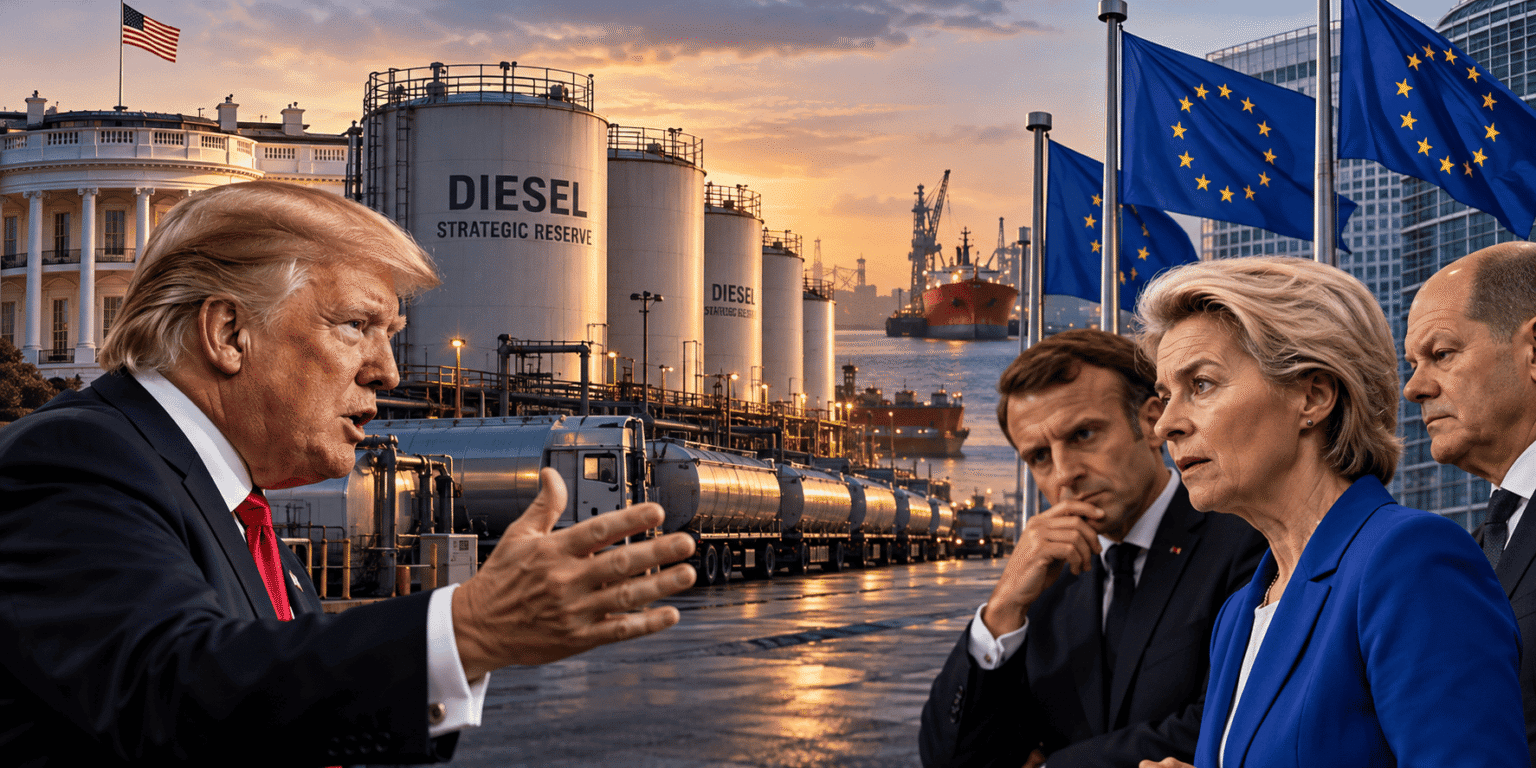
Washington, D.C/Brussels, BE: As the Trump administration presses European allies to release emergency diesel supplies, the dispute exposes deeper weaknesses in global energy markets, transatlantic relations and the economic consequences of the US–Iran conflict.
The White House’s efforts to persuade European governments to release diesel from their strategic reserves have developed into a significant test of international energy cooperation.
What initially appeared to be an emergency measure aimed at controlling rising fuel prices has evolved into a broader disagreement involving American domestic politics, European energy security, international trade and the continuing disruption of Middle Eastern oil supplies.
According to a September 29 report by POLITICO, the Trump administration was considering asking European governments to release diesel inventories as an alternative to restricting American diesel exports.
Oil industry executives and some Republican lawmakers opposed an export ban, warning that it could disrupt international petroleum markets without addressing the underlying shortage.
The administration’s reasoning is understandable from a domestic economic perspective. Diesel is indispensable to American transportation, agriculture, construction and industrial production.
Rising prices increase freight expenses, raise food distribution costs and contribute to inflation.
Yet the American proposal raises a fundamental question: Should European governments deplete emergency energy reserves to relieve economic and political pressure in the United States, particularly when Europe faces serious supply vulnerabilities of its own?
The answer is neither straightforward nor entirely negative. Coordinated emergency releases can stabilize markets, but their effectiveness depends on timing, scale and whether governments address the structural causes of the shortage.
Washington’s strategy: Lower prices without restricting exports
President Donald Trump’s administration has faced mounting pressure to contain energy costs ahead of the November 2026 midterm elections.
The White House has explored several options, including restrictions on diesel exports, adjustments to fuel taxation and coordinated releases of strategic petroleum stocks.
However, an export ban would carry substantial economic risks.
American refiners participate in an interconnected global market. Restricting their access to foreign customers could create regional imbalances, discourage production and increase uncertainty for energy companies.
Although additional domestic supplies might temporarily lower prices in some American markets, the broader consequences could include reduced refining incentives and retaliatory trade measures.
Energy Secretary Chris Wright has favored coordinated international action over unilateral restrictions.
In remarks reported by POLITICO, Wright urged other countries to honor previously announced emergency-stock commitments, arguing that the United States and Japan had been delivering on their obligations while several European countries had released only part of their pledged supplies.
Interior Secretary Doug Burgum also acknowledged that European diesel inventories were among the options being considered by Washington.
The strategy reflects an attempt to reconcile competing objectives: protecting American consumers, preserving energy exports and preventing a broader deterioration in international fuel markets.
However, the administration’s negotiating approach has complicated those objectives.
By linking European reserve releases to the possibility of an American diesel export ban, Washington has transformed an energy coordination problem into a diplomatic dispute.
Europe’s dilemma: Strategic cooperation versus energy independence
European governments face a difficult calculation.
Supporting Washington could help moderate international diesel prices, reduce market volatility and preserve stable access to American petroleum products.
Conversely, releasing strategic inventories would reduce Europe’s ability to respond to future emergencies.
European countries collectively possess substantial government and commercial diesel inventories.
Estimates cited during the initial discussions placed the combined volume above 350 million barrels, although not all of those supplies are necessarily available for immediate emergency release.
Germany initially expressed reservations about releasing additional stocks merely to influence prices.
A German government spokesperson emphasized that emergency reserves are intended primarily to address actual or anticipated shortages rather than routine price fluctuations.
Strategic reserves function as insurance against severe disruptions. Using them to manage politically inconvenient prices risks weakening their original purpose.
Nevertheless, Europe’s position is not entirely defensive. European industries, households and transportation companies also benefit from lower diesel prices.
A carefully coordinated release could therefore serve European interests, provided that governments maintain sufficient emergency coverage and establish a credible plan for replenishing inventories.
The diplomatic challenge is to distinguish mutually beneficial cooperation from pressure-driven concessions.
The Iran conflict and Russia’s supply restrictions
The diesel shortage cannot be understood without examining the geopolitical disruptions affecting international energy supplies.
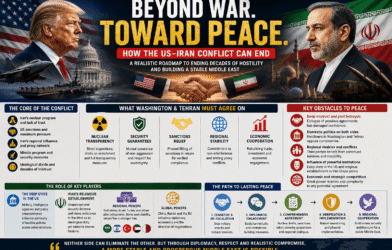
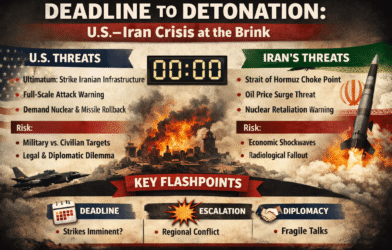
The continuing US–Iran conflict has placed pressure on petroleum markets, particularly through threats to Middle Eastern production facilities, shipping routes and export infrastructure.
The Strait of Hormuz remains strategically important because it connects major Gulf energy producers with international markets.
Disruptions affecting the strait can raise transportation costs, increase insurance premiums and complicate the delivery of both crude oil and refined petroleum products.
At the same time, Russia’s restrictions on petroleum-product exports and damage associated with attacks on Russian refining infrastructure have further tightened international diesel availability.
China’s restrictions on fuel exports have added another layer of uncertainty.
These developments illustrate a structural weakness: global diesel supply depends not only on the availability of crude oil but also on refining capacity, product specifications, storage facilities and reliable transportation networks.
A country may possess substantial crude reserves while still experiencing a shortage of usable diesel.
Consequently, releasing crude oil alone cannot automatically resolve a refined-product shortage.
Could European reserves actually lower American diesel prices?
The answer is yes, but the magnitude and duration of the benefit remain uncertain.
International petroleum markets are interconnected. Additional European diesel supplies could reduce competition for available cargoes, ease regional shortages and moderate the demand for American exports.
Lower international prices could eventually reduce pressure on US wholesale markets.
However, several factors limit the effectiveness of this strategy.
First, emergency reserves represent existing inventories rather than newly created production capacity.
Second, the market impact depends on where the diesel is stored and how quickly it can reach regions experiencing shortages.
Third, governments must eventually replenish the inventories they release, potentially creating additional demand later.
Finally, if military conflict, refinery disruptions and shipping restrictions persist, the underlying shortage could quickly reappear.
Industry analysts have consequently warned that emergency releases may buy time rather than produce a lasting solution.
Political calculations in Washington and Brussels
The dispute also reveals contrasting political priorities.
For President Trump, lowering diesel prices carries immediate domestic importance.
Expensive transportation fuel affects businesses and consumers, creating a politically sensitive issue ahead of congressional elections.
For European leaders, however, maintaining emergency energy security is equally important.
Europe’s experience with Russian energy dependence has strengthened the argument for preserving strategic inventories and diversifying supply chains.
European governments may therefore view Washington’s demands as an attempt to transfer part of America’s domestic economic burden to its allies.
Nevertheless, the United States also has a legitimate argument that energy security requires collective responsibility.
If European countries have committed to coordinated emergency releases, fulfilling those commitments can contribute to broader market stability.
The central issue is not whether Europe should cooperate, but whether cooperation should be determined through agreed international mechanisms or threats of unilateral trade restrictions.
The International Energy Agency provides an established framework for coordinating emergency responses and evaluating supply disruptions.
Using that framework could reduce diplomatic friction while strengthening confidence in the legitimacy of reserve releases.
The global implications: Developing economies face additional risks
Although the dispute primarily involves the United States and Europe, its consequences extend to Asia, Africa and other energy-importing regions.
Countries such as Pakistan, Bangladesh and several African economies remain exposed to fluctuations in international petroleum prices.
Higher diesel costs can increase transportation expenses, agricultural production costs, electricity-generation expenses where diesel is used, and import bills.
For countries facing currency depreciation or limited foreign-exchange reserves, the effects can be particularly severe.
A prolonged global diesel shortage could therefore deepen inflationary pressures and weaken economic stability in vulnerable markets.
This broader international dimension reinforces the need for coordinated action rather than policies designed exclusively around the short-term interests of individual governments.
What should Washington and Europe do?
A sustainable response requires a combination of emergency intervention and longer-term structural reform.
First, the United States and European governments should coordinate any additional reserve releases through the International Energy Agency, with transparent commitments and clear emergency thresholds.
Second, Washington should avoid a sweeping diesel export ban unless there is compelling evidence that its domestic benefits would outweigh the damage to global trade and refining incentives.
Third, governments should prioritize the restoration of disrupted refining operations and international shipping routes, including diplomatic efforts to reduce tensions affecting the Persian Gulf.
Fourth, policymakers should establish realistic plans to replenish strategic reserves once market conditions stabilize.
Finally, both sides should invest in more resilient refining, storage and transportation infrastructure to reduce vulnerability to future supply disruptions.
These measures would not eliminate geopolitical risks, but they could improve the ability of energy markets to withstand future shocks.
Conclusion: Emergency reserves cannot substitute for energy stability
The Trump administration’s appeal to Europe represents more than an effort to lower diesel prices. It illustrates the increasingly close relationship between domestic politics, energy security and international diplomacy.
Washington has legitimate reasons to seek additional fuel supplies, particularly as rising diesel prices threaten transportation, agriculture and consumer purchasing power.
Europe has equally legitimate concerns about exhausting strategic inventories during a period of geopolitical instability.
Neither side benefits from allowing a temporary supply shortage to become a prolonged transatlantic confrontation.
The strongest policy response would combine coordinated emergency releases with measures to restore refining capacity, protect international shipping and reduce the geopolitical disruptions driving the shortage.
Ultimately, strategic petroleum reserves can provide valuable protection during an energy emergency, but they cannot replace stable production, functioning trade routes and predictable international relations.
The deeper lesson is that the global diesel crisis cannot be resolved simply by shifting emergency fuel supplies from one continent to another.
Without addressing the conflicts and structural weaknesses restricting energy availability, governments risk postponing today’s shortage only to confront a more serious one tomorrow.
Discover more perspectives, breaking news, and in-depth reports from around the world by visiting The Variant.