Washington, D.C: As the deadline set by the United States approaches, the confrontation between Iran and the U.S. has entered one of its most dangerous and unpredictable phases in decades.
What makes the current moment uniquely volatile is not just the military escalation, but the convergence of hard deadlines, maximalist demands, and collapsing trust on both sides. The threats now emerging are multidimensional—military, economic, nuclear, and systemic—and they are being driven simultaneously by both Washington and Tehran.
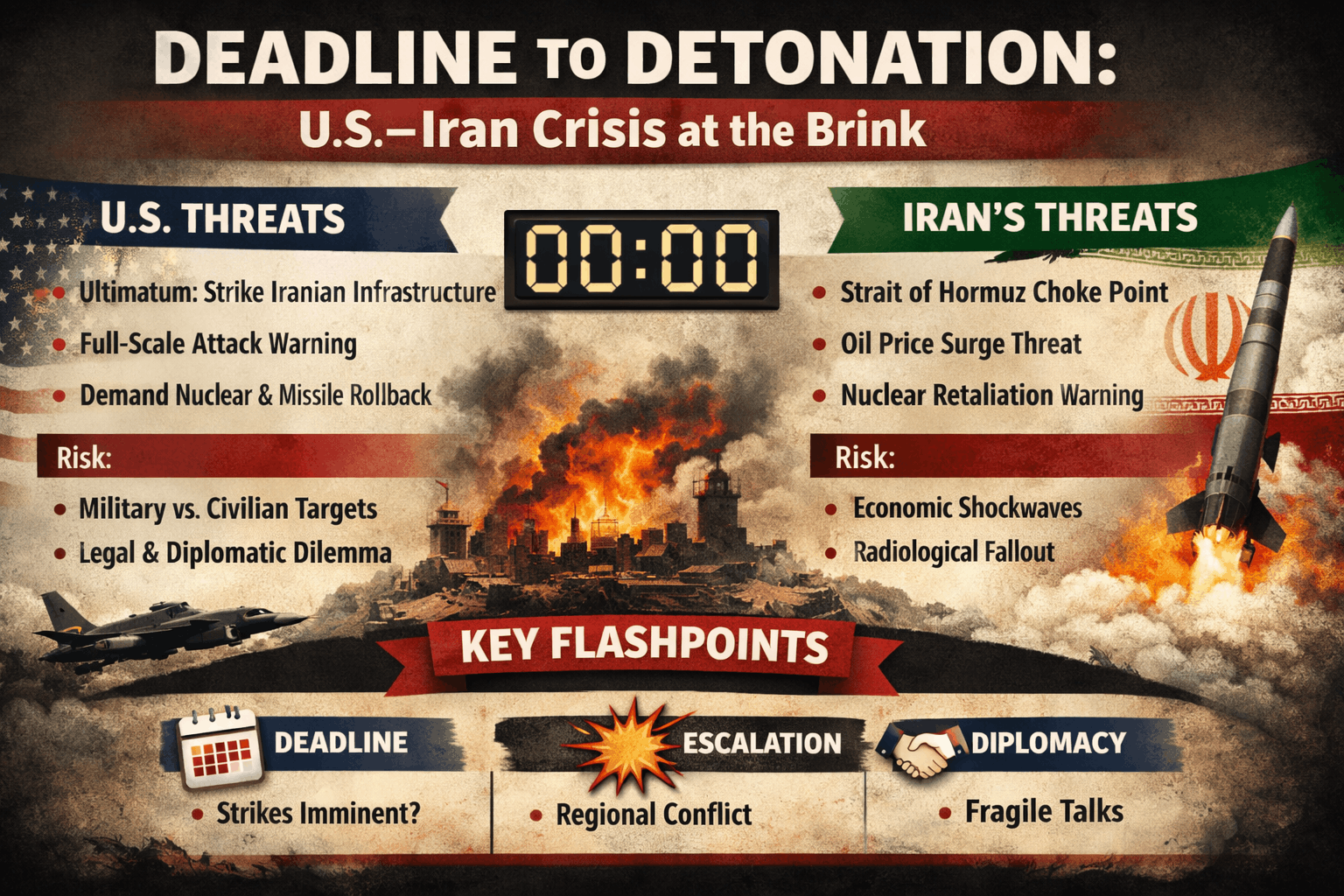
From the U.S. side, the threat posture is explicit, time-bound, and coercive. President Donald Trump has drawn a clear red line: if Iran does not comply with U.S. demands by the stated deadline, Washington is prepared to launch large-scale strikes on Iranian infrastructure, including energy grids and strategic facilities.
This is not a symbolic threat—it signals a transition from limited engagement to full-spectrum coercive warfare, potentially targeting civilian-linked systems. Such threats carry two major risks. First, they blur the line between military and civilian targets, raising legal and ethical concerns even within U.S. institutions.
Second, by setting a fixed deadline, Washington has reduced its own diplomatic flexibility—if Iran refuses, the U.S. must either escalate or lose credibility.
At a strategic level, the U.S. objectives remain expansive and non-negotiable: dismantling Iran’s nuclear capability, restricting its missile program, and curbing regional influence. These demands go far beyond a traditional ceasefire framework and are perceived in Tehran as an attempt at strategic rollback or even regime weakening, rather than conflict resolution. This perception is central to understanding Iran’s response.
Iran’s threats, in contrast, are asymmetrical but equally potent. Tehran has refused to accept U.S. conditions and instead issued its own counter-demands, including sanctions relief, reparations, and long-term security guarantees.
More importantly, Iran is leveraging geo-economics pressure as a weapon. The closure or disruption of the Strait of Hormuz—a chokepoint for global trade—has already pushed oil prices above $110 per barrel, demonstrating Tehran’s capacity to destabilize global markets.
This is a calculated signal: Iran may not match U.S. military power conventionally, but it can impose global economic pain that forces international intervention.
Another critical Iranian threat lies in escalation dynamics. Iran has shown willingness to absorb strikes while gradually expanding the scope of retaliation—whether through regional proxies, maritime disruption, or missile exchanges.
At the same time, Tehran is warning about attacks on sensitive nuclear infrastructure, highlighting the risk of radiological consequences if such facilities are hit. This introduces a dangerous new dimension: even non-nuclear strikes could trigger environmental or humanitarian disasters with cross-border impact.
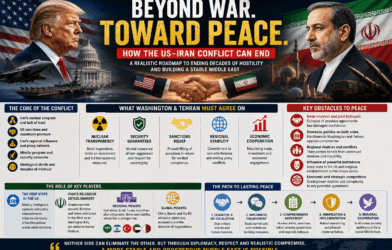
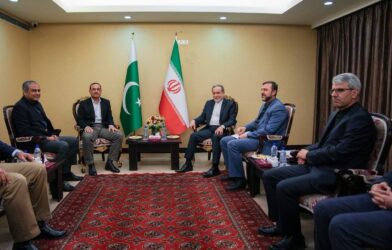
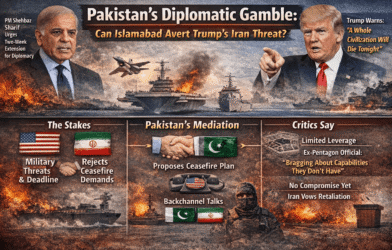
The diplomatic track, meanwhile, remains fragile and uncertain. A ceasefire framework—reportedly involving third-party mediation and a phased settlement—has been proposed, but Iran has not committed, and the U.S. has deemed current proposals insufficient.
This reflects a deeper issue: both sides are negotiating, but neither is negotiating to concede. The U.S. seeks compliance before de-escalation; Iran seeks guarantees before compromise. This sequencing deadlock is one of the most dangerous aspects of the current crisis.
What makes the approaching deadline especially critical is the compression of time against rising stakes. Deadlines in geopolitics often function as catalysts for miscalculation. If the deadline passes without agreement, three scenarios become highly likely.
First, a rapid escalation into large-scale U.S. strikes, followed by Iranian retaliation across the region.
Second, a limited but symbolic strike that prolongs the conflict without resolving it.
Third, a last-minute diplomatic pause that delays—but does not eliminate—the underlying confrontation.
In reality, the situation is no longer just about Iran or the United States. It has evolved into a systemic crisis involving global energy flows, regional stability, and the credibility of coercive diplomacy itself.
The longer the standoff continues, the greater the risk that unintended escalation—rather than deliberate strategy—will determine the outcome.
The core danger, therefore, is not just war, but uncontrolled escalation under deadline pressure, where both sides feel compelled to act, yet neither is willing to yield.