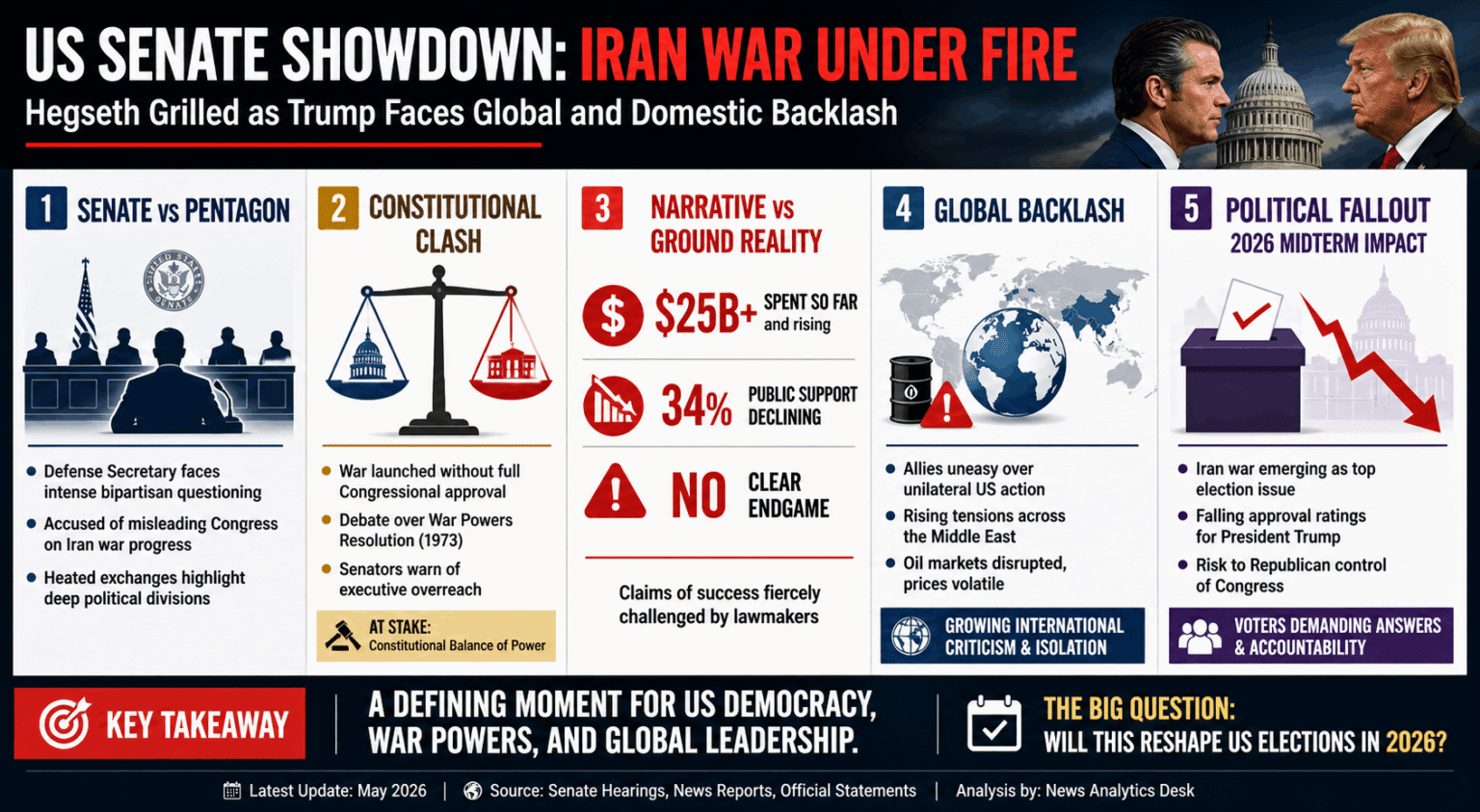
Washington, D.C/Rochester, NY: The recent Senate Armed Services Committee hearings have emerged as one of the most consequential political confrontations of the ongoing Iran war.
What unfolded was not merely routine oversight—it was a high-stakes institutional clash over constitutional authority, military strategy, and the credibility of the Donald Trump administration.
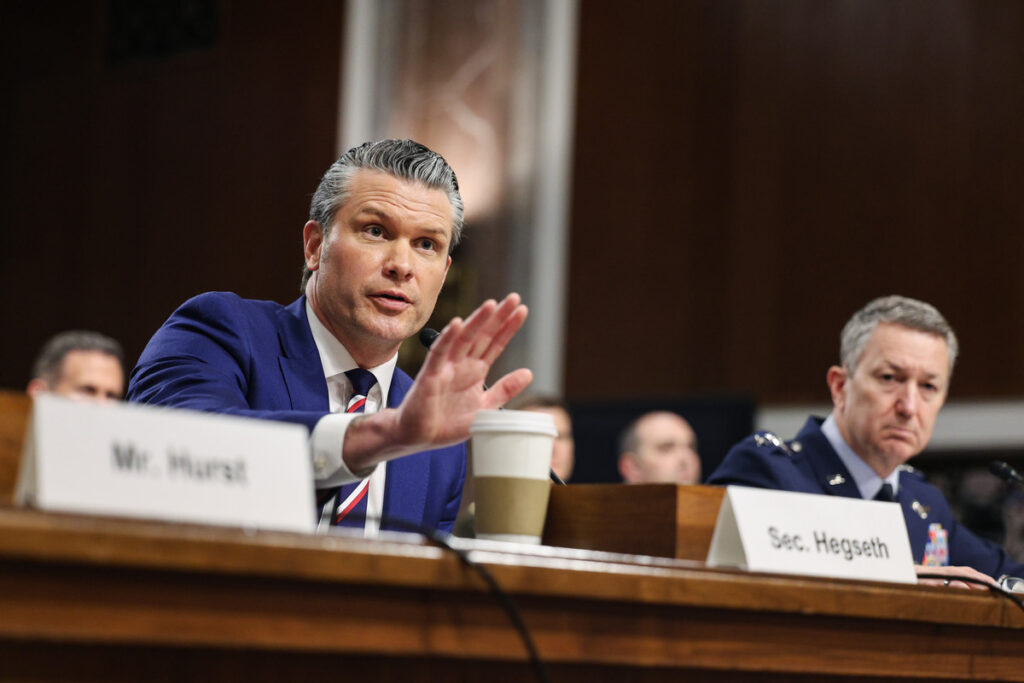
Hegseth faced intense bipartisan scrutiny over three central issues: the legality of the war, its strategic outcomes, and the administration’s broader conduct during the conflict.
Senators—particularly Democrats led by figures like Jack Reed and Elizabeth Warren—accused him of presenting an overly optimistic and misleading narrative about the war’s progress, with Reed warning that the administration had “dangerously exaggerated” success.
The hearings quickly turned confrontational, rather than adopting a conciliatory tone, Hegseth doubled down, portraying critics within Congress as undermining national security and even labeling them as internal adversaries.
This rhetorical escalation reflected a deeper breakdown in civil-military dialogue and widened partisan divisions over the war.
The War Powers Crisis: Constitutional Fault Lines
At the core of the Senate proceedings was a constitutional crisis over the War Powers Resolution of 1973. The law requires presidential authorization from Congress within 60 days of initiating hostilities.
The Trump administration launched military operations against Iran on February 28, 2026, without explicit congressional approval. As the deadline approached, Hegseth argued that a ceasefire effectively “paused” the legal clock—an interpretation widely rejected by lawmakers and legal experts.
This argument triggered alarm in the Senate. Critics viewed it as an attempt to bypass constitutional checks and expand executive war powers. Even some Republicans expressed unease, signaling potential cracks within the president’s own party.
The failure of multiple Senate resolutions to halt or constrain the war highlights a structural reality: while Congress is divided, the executive branch continues to dominate U.S. war-making authority. Yet the narrow voting margins suggest that future constraints on presidential military power may gain bipartisan traction.
Strategic and Economic Criticism: “Quagmire or Victory?”
A second major theme of the hearings was the growing gap between official claims and ground realities. Hegseth insisted the war was not a “quagmire” and claimed major strategic gains, including degradation of Iran’s military capabilities.
However, senators challenged this narrative with data:
- The war has already cost over $25 billion, with projections potentially reaching $200 billion.
- Oil markets and global energy supply chains have been disrupted, particularly after tensions in the Strait of Hormuz.
- U.S. public support for the war is declining, with President Trump’s approval dropping to around 34%.
Critics argued that the administration lacks a clear endgame. The ceasefire has not translated into a political settlement, and negotiations with Iran remain stalled.
These disconnect between strategic claims and measurable outcomes became one of the most damaging aspects of the hearing for Hegseth.
Ethical and Institutional Concerns
Beyond strategy, the Senate raised serious concerns about governance and ethics:
- Allegations of military purges targeting senior officers raised fears of politicization within the armed forces.
- Questions about insider trading and financial conflicts linked to defense and energy sectors intensified scrutiny.
- Controversial rhetoric from Hegseth—including statements interpreted as endorsing extreme military actions—sparked concerns over potential violations of international law.
International criticism has also been severe. Religious authorities, including the Vatican, condemned the war as a violation of moral and legal norms, highlighting growing global isolation of the U.S. position.
Together, these issues point to a broader institutional crisis: the erosion of traditional norms governing civilian oversight, military professionalism, and adherence to international law.
Global Reaction: Erosion of U.S. Legitimacy
The Iran war has triggered widespread global criticism of the Trump administration. Allies have expressed concern over unilateral military action, while adversaries have used the conflict to challenge U.S. credibility.
Key international reactions include:
- The accusations that the U.S. bypassed international law and norms governing the use of force.
- Concerns about humanitarian consequences, including civilian casualties and infrastructure damage.
- A broader narrative that U.S. foreign policy is becoming increasingly unilateral and militarized.
This has strategic consequences. It weakens U.S. diplomatic leverage, complicates coalition-building, and accelerates the shift toward a more multipolar global order.
Political Fallout: Trump and Hegseth’s Future
1. Pete Hegseth’s Political Trajectory
Hegseth’s future depends on two variables: war outcomes and domestic political pressure.
If the war stabilizes or produces a negotiated settlement, he may survive politically as a “wartime defense chief.” However, current trends suggest increasing vulnerability:
- Bipartisan criticism has already emerged, including from some Republicans.
- Ethical controversies and institutional decisions have eroded his credibility.
- His combative stance toward Congress may deepen political isolation.
A prolonged or unsuccessful conflict could lead to calls for resignation or dismissal, particularly if investigations into financial or administrative conduct intensify.
2. Donald Trump and the 2026 Midterm Elections
The Iran war is shaping up to be a defining issue for the November 2026 midterms.
Several factors are critical:
Declining approval ratings: Trump’s approval has dropped significantly due to war-related economic and political costs.
Economic pressure: Rising fuel prices and war spending are directly affecting American households, making the conflict a domestic political issue.
War fatigue: Public opposition to prolonged military engagements historically translates into electoral losses for the ruling party.
Congressional backlash: Even limited Republican dissent could signal broader electoral vulnerability in swing districts.
If current trends persist, the Republican Party risks losing control of one or both chambers of Congress. That would fundamentally constrain Trump’s ability to continue the war or pursue similar policies.
Conclusion: A Turning Point in U.S. Governance
The Senate hearings on Pete Hegseth are more than a political spectacle—they represent a critical inflection point in American governance. Three key dynamics are now converging:
- A constitutional struggle over war powers
- A strategic debate over the direction and outcome of the Iran war
- A political battle that may reshape the 2026 midterm elections
The outcome of this confrontation will not only determine the fate of Hegseth and influence Trump’s political future—it may redefine the balance of power between Congress and the presidency in matters of war, with long-term implications for U.S. democracy and global leadership.
Visit our blog and stay informed.