Courtesy: Reporting Contribution by Salman-Bin-Kareem [A Senior Journalist I Doha, Qatar]
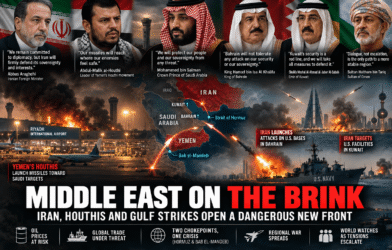
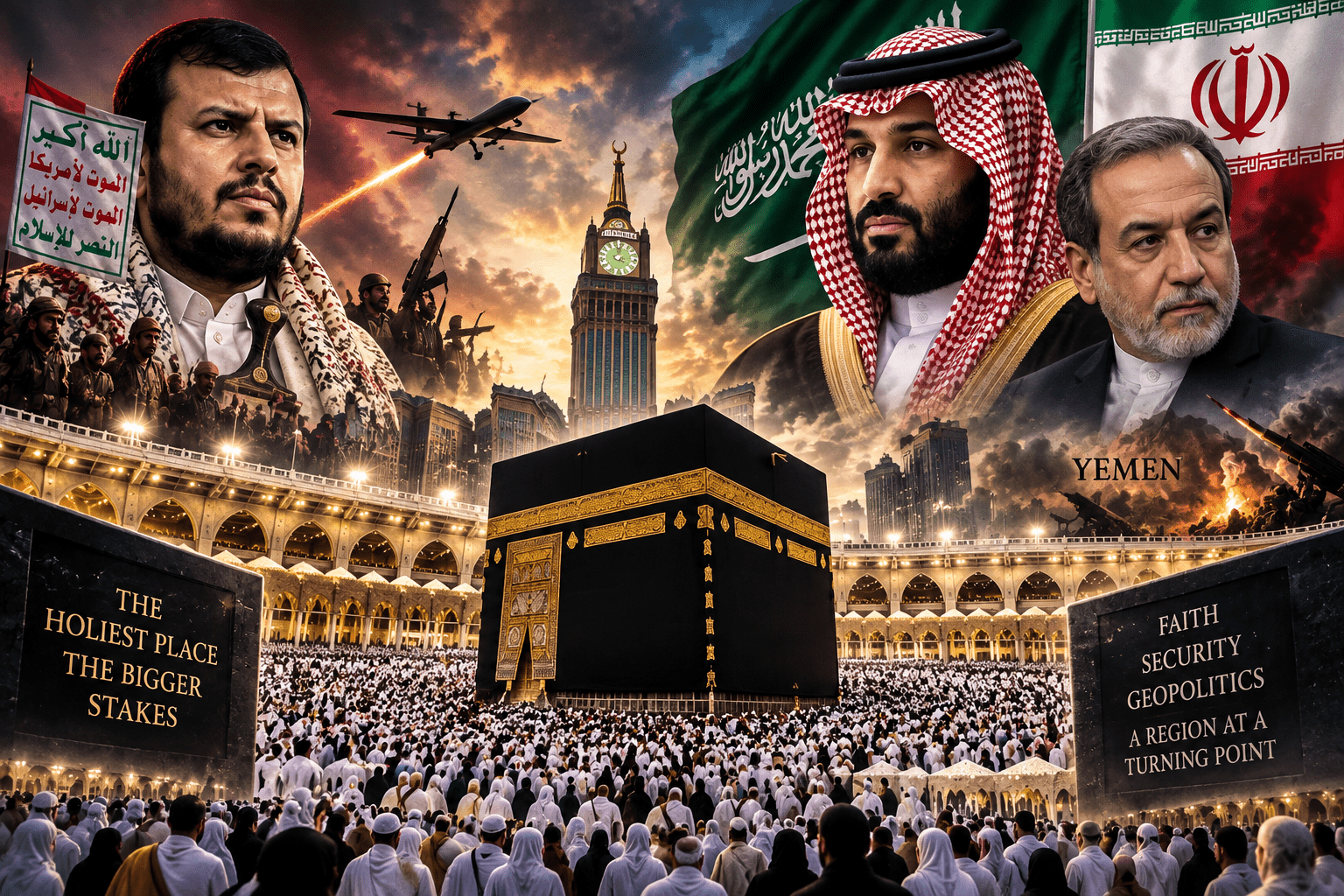
Rochester, NY/Doha, QA: Intercepting a drone near Islam’s holiest city has escalated the current Saudi-Houthi showdown in Yemen’s conflict into a potentially combustible religious, political, and regional crisis, rather than just another chapter in the country’s war.
The issue of purpose becomes just as significant as the military event due to conflicting Saudi and Houthi narratives.
A very delicate barrier has been passed by the escalating military conflict between Saudi Arabia and the Houthis of Yemen.
The holiest city in Islam has been drawn into a battle that already involves Yemen, Iran, Gulf security, Red Sea trade, and the broader Middle Eastern struggle, thanks to the interception of a Houthi drone south of Makkah.
The Saudi government claims that on September 15, just before the drone entered Makkah’s restricted airspace, its air defenses shot it down.
Security for the two sacred Mosques and pilgrims was proclaimed a “red line” by Riyadh, who described the event as an attempt on the sacred city. Because they did not intend to attack Makkah, the Houthis vehemently deny that account.
That disagreement is really important.
Deliberately targeting Makkah would have far-reaching political ramifications, even beyond Saudi Arabia. However, closeness does not prove purpose.
According to an analysis published by the Institute for the Study of War, it is highly improbable that the Houthis planned an attack on Makkah due to its immense religious importance and low military value.
Instead, the drone might have been targeted at Saudi energy or military facilities north or near the holy city. That is still only an analytical assessment and not confirmation that the drone hit its objective.
Consequently, it is crucial to differentiate between a drone that was intercepted near Makkah and a premeditated effort to attack either the Grand Mosque or Makkah itself.
The Reasons Makkah Alters the Political Balance
The Kingdom of Saudi Arabia is no stranger to drone and missile strikes. Throughout the protracted Saudi-Houthi conflict, oil infrastructure, airports, military sites, and border territories have all played a role. At its core, Makkah is distinct.
It is more than just another city in Saudi Arabia.
With the Kaaba and Masjid-al-Haram, Makkah becomes a sacred site for people of all nations, races, and political persuasions. The significance of its security goes beyond Saudi sovereignty for Muslims throughout the world, including in Indonesia, Pakistan, Turkey, Africa, Europe, and the Americas.
This explains why, in the wake of the intercept, Riyadh has stressed the need to safeguard not only its territory but also the Two Holy Mosques and the pilgrims.
The Islamic legal institution in Egypt, Al-Azhar, denounced the alleged effort with vehemence, saying that the safety of Makkah is a matter for the whole Muslim Ummah and not just Saudi Arabia or the area.
In a statement that showed solidarity with Saudi Arabia and emphasized the importance of protecting Islamic holy places, the Organization of Islamic Cooperation (OIC) denounced the alleged Houthi assaults that affected Makkah and the Medina area.
Several Muslim countries’ governments also condemned or expressed sympathy with Saudi Arabia, including Pakistan, Kuwait, and Yemen.
The Houthis face a strategic threat, as shown by their reply. They have often sought to portray their military operations in regional political discourse by arguing against foreign interference and using rhetoric of resistance.
That narrative may take a major hit among Muslim communities outside of the Gulf if it was widely believed that they deliberately threatened Makkah.
That gives the Houthis a strong argument in their defense of themselves against the Saudi charges.
A Religious-Legacy Crisis Awaits the Houthis
Abdul Malik al-Houthi, head of the Houthis, has dismissed the Saudi accusation as baseless, saying that his group never attempted to assault Makkah.
The Houthis’ goal has been to refocus attention on Saudi military actions and the embargo of Yemen, as they see it.
Wartime denial doesn’t get much more basic than this.
A planned attack on Makkah would have disastrous reputational repercussions, something the Houthis are well aware of.
Attacks against airports or military installations by missiles or drones might be justified as part of a larger armed conflict. When the supposed target is the holiest city in Islam, the same argument is quite tricky.
Consequently, the dispute has created a second front: the fight for control of the storyline.
Saudi Arabia hopes to use this tragedy to show that the Houthi escalation has gone too far.
An equal and competing priority of the Houthis is distancing themselves from claims that they endangered Islamic holy places in the course of their armed assault against Saudi Arabia.
For this reason, it is crucial to have an independent third party confirm the aim.
Loss of Saudi-Houthi Deterrence
There has been a general decline in Saudi-Houthi deterrence, which the Makkah incident must be seen within the context of.
Houthi missile and drone assaults on Khamis Mushait, Abha, and Taif were reported by the Saudi-led coalition, resulting in civilian casualties and property damage. Officials from Saudi Arabia later pledged a strong reaction.
Two people were wounded and one person was killed in Taif province when debris from an intercepted Houthi drone fell on them, according to the Associated Press.
More than 100,000 have been displaced as a result of the resurgence of violence in Yemen.
This point to a great deal of tension on the relatively calm Saudi-Houthi partnership that has developed after years of catastrophic fighting.
The strategic dilemma is challenging for Riyadh.
The Yemen War showed that conventional superiority isn’t enough to defeat a movement that can disperse forces, operate drones and missiles, and inflict economic costs through asymmetric warfare, even though Saudi Arabia has far more conventional military power than the Houthis.
The Houthis’ capabilities might be diminished by a significant Saudi response, but it could also set in motion a protracted cycle:
What happens when the Houthis launch an attack is that the Saudis respond by escalating the situation, which in turn leads to more Saudi involvement.
The risk arises when Makkah is used as a political pretext to escalate the situation even worse.
Iran Takes the Lead in the Saudi-Houthi Conflict Again
Another relationship—between Saudi Arabia and Iran—lies behind the tension.
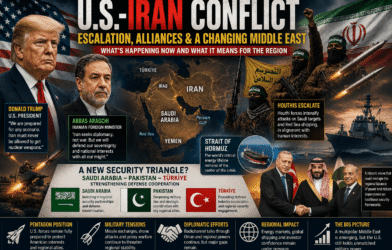
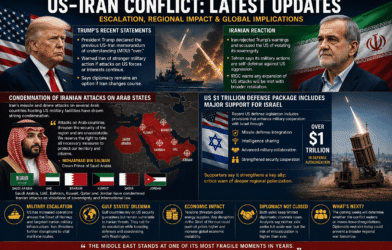
One of the most significant events in the Middle East in recent years was their diplomatic reconciliation. However, the restored Houthi campaign is putting the level of strategic confidence between Riyadh and Tehran to the test.
A description of each Houthi operation as being directly authorized by Tehran would go beyond publicly disclosed proof, while the Houthis are associated with Iran and have traditionally benefitted from Iranian political and military backing. Every part of the movement has its own hierarchy, agenda, and system of decision-making.
The significance of that difference is growing.
Still, if Iran does nothing to rein in a partner whose activities endanger Saudi land and regional commerce, Saudi Arabia may politically blame Iran.
Diplomatic efforts have shown this pressure most clearly.
On September 17, Reuters reported that after a request from Saudi Arabia to Beijing, China has discreetly asked Iran to assist in controlling the Houthis.
After the Houthi advances heightened hazards near the Red Sea and Bab el-Mandeb, Riyadh requested Chinese participation, according to three Iranian sources reported by Reuters.
The diplomatic foundation for peace between Iran and Saudi Arabia was assisted along by China, therefore this is quite important.
Therefore, Beijing is being expected to do more than just observe the connection it helped foster; it is being urged to assist keep the relationship from going downhill.
A Strategic Conundrum Awaits Tehran
The situation in Iran is just as complex.
With excessive public pressure on the Houthis, Tehran runs the danger of alienating a key regional ally and casting doubt on the long-term viability of Iran’s regional network.
Yet, if it remains powerless, Saudi authorities may come to the conclusion that maintaining diplomatic ties with Iran would not save the country from armed groups affiliated with Iran.
The Makkah debate has prompted a cautious response from Iran. The Iranian foreign ministry reportedly cautioned against using the interception allegation as a pretext for more escalation, as reported by AP.
Thus, the fundamental dispute between Saudi Arabia and Iran extends beyond a single drone.
The question that Riyadh is implying is:
Can Tehran ensure stable ties with Gulf States threatened by armed groups while maintaining connections with the same organizations?
Traditional Iranian counterarguments have focused on the fact that these groups are politically autonomous and that Tehran cannot be held solely responsible for regional security issues.
This question will be useful in gaging if the Saudi-Iranian détente is developing into a real security agreement or is just a diplomatic tool for controlling animosity.
Shaping Public Perception of Muslims
The military aspect of the Makkah event may not even be the most relevant.
The issue is both spiritual and psychological.
How swiftly an event involving Makkah may internationalize a Saudi-Houthi dispute is shown by the OIC’s criticism, Al-Azhar’s response, and remarks from states with a Muslim majority.
This gives Saudi Arabia more bargaining power diplomatically. Saudi Arabia may justify its defense of Makkah by claiming it is defending holy sites that are spiritually important to Muslims everyplace.
Categorized denial coupled with claims that Riyadh is influencing religious opinion provides the Houthis with the safest political answer.
These conflicting messages will probably become much more strident.
While it is necessary for Muslim governments and media outlets to denounce any danger to Makkah, doing so does not address the factual matter of what the drone was really meant to target.
Political affiliation is less important than evidence when answering the question.
A Risky New Era for Saudi Arabia
The Saudi government must now decide whether to respond militarily or try to control the situation.
Reinforcing deterrence without resuming full-scale combat is possible with a limited military response. But Riyadh may be dragged back into the military commitment it spent years trying to avoid if the battle inside Yemen were to be much more extensive.
In a parallel calculation, the Houthis find themselves.
The military’s reach has been shown by the ongoing assaults within Saudi territory, but the likelihood of overwhelming Saudi retribution and wider regional participation grows with each subsequent hit.
On top of that, there is a far bigger threat.
When military operations are conducted near Makkah, even a little mishap might have far-reaching religious ramifications that outweigh the initial military goal.
Before investigators determine what occurred, Muslim cultures may be enraged by a drone that was destroyed in the wrong place, debris that fell near pilgrims, or an inaccurately labeled missile.
Because of such, Makkah is fundamentally distinct from almost all other possible battlegrounds.
From the Conflict in Yemen to Regional Tensions
Consequently, the fact that the Houthis have decided to assault Makkah is hardly the most crucial take away from the most recent clash. Such assurance cannot be justified by the data that is now accessible to the public.
The bigger picture is that Makkah is now part of the story of how the Saudi-Houthi conflict has escalated, which is a result of its territorial and political expansion.
“The holy city” was the intended target of the drone, according to Saudi Arabia.
According to the Houthis, the charge is unfounded.
According to third-party investigations, it’s possible that another Saudi target was also planned.
Saudi Arabia is trying to put diplomatic pressure on Iran, and China is becoming involved in attempts to prevent further escalation, as a result of the perceived danger. Muslim organizations and countries have also responded forcefully.
Together, they make the incident far bigger than the one drone that was seized.
Three relationships will be tested in the next phase of the confrontation: the connection between Iran and Saudi Arabia, the relationship between Iran and the Houthis, and the relationship between Iran and its regional friends.
An interconnected web of religious symbolism, regional animosity, and military reprisal poses the biggest threat.
The strategic lesson here should be very clear for both Riyadh and the Houthis: as fighting moves toward Islam’s holiest sites, the stakes are too high to be measured in terms of land, missiles, or drones alone.
Their legitimacy is being assessed across the Muslim world, and the risk that a little conflict in Yemen may escalate into a larger problem in the Middle East is being considered.
Keep following The Variant as we continue to monitor developments and provide informed perspectives on this evolving situation.