Courtesy: Reporting Contribution by Salman-Bin-Kareem [A Senior Journalist I Doha, Qatar]
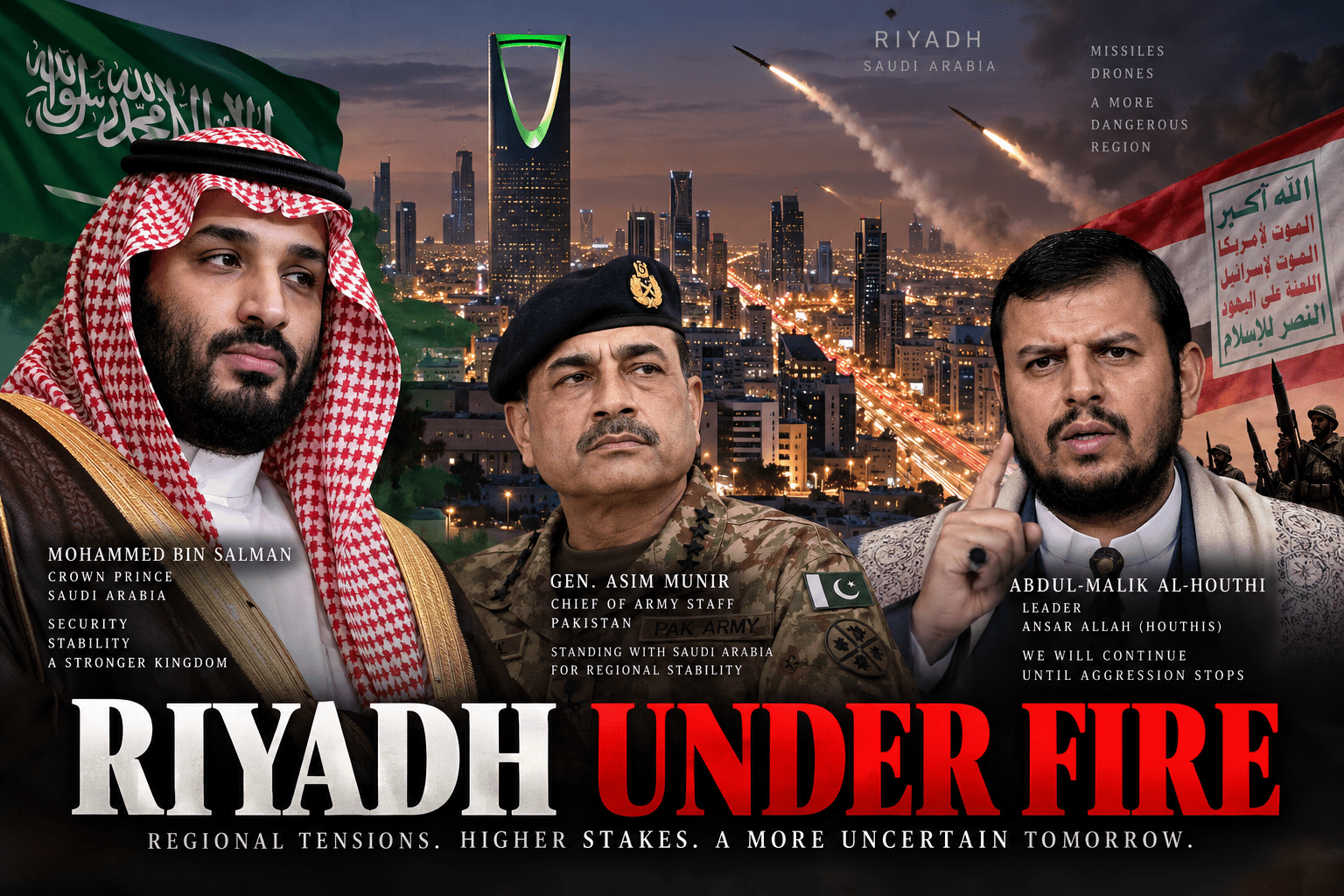
Rochester, NY/Doha, QA: The Houthi attempt to strike Riyadh has pushed the Saudi-Yemen confrontation into a more dangerous phase.
For Crown Prince Mohammed bin Salman, the challenge is no longer simply intercepting missiles and drones: it is restoring deterrence without being dragged back into an open-ended Yemen war.
Pakistan has now emerged as an especially important variable, pledging to defend Saudi sovereignty while simultaneously trying to preserve dialogue with Iran and prevent a wider regional conflict.
The attempted Houthi strike against Riyadh on September 19 represents an important psychological and strategic escalation.
Saudi authorities said air defenses intercepted a ballistic missile launched toward Riyadh, while threats were also reported against other parts of the kingdom.
The Houthis, meanwhile, said they had launched ballistic and cruise missiles and drones against what they described as sensitive targets in Riyadh and Saudi Aramco facilities at Yanbu.
Whatever the competing accounts of individual interceptions and impacts, the strategic message is unmistakable: the Saudi capital itself is once again within the Houthi threat envelope.
For Crown Prince Mohammed bin Salman, this presents a difficult equation.
Saudi Arabia must demonstrate that attacks on its cities carry consequences while avoiding a return to the costly military intervention in Yemen that dominated the previous decade.
Saudi Arabia possesses sophisticated air and missile defenses, and recent interceptions demonstrate their value. But no defensive architecture can guarantee that every ballistic missile, cruise missile or low-flying drone will be destroyed.
The Houthis therefore do not necessarily need to destroy a major strategic target to impose costs.
Repeated air-raid warnings, interruptions at airports, threats to Aramco facilities and uncertainty around Red Sea shipping can create economic consequences even when attacks are intercepted.
This is particularly important for Mohammed bin Salman because Vision 2030 depends upon presenting Saudi Arabia as a stable destination for international investment, tourism, aviation and major global events.
Riyadh consequently faces three interconnected tasks: reinforce its defensive shield, impose enough costs to restore deterrence, and avoid being pulled back into another prolonged Yemen campaign.
The third may prove the hardest.
Saudi Arabia’s strategy: shield the Kingdom before expanding the battlefield
Riyadh’s immediate priority is likely to be stronger layered air defense.
Saudi Arabia needs additional interceptors, radar coverage, early-warning capabilities, electronic warfare and cheaper methods of defeating relatively inexpensive drones.
Intelligence cooperation will be equally important because identifying launch preparations inside Yemen can sometimes be more valuable than attempting interception after launch.
Crown Prince Mohammed bin Salman met U.S. Central Command commander Adm. Brad Cooper on September 14 as the confrontation intensified, illustrating the importance Riyadh continues to place on American intelligence and military coordination.
But Saudi Arabia is simultaneously developing another security architecture involving Pakistan and Türkiye.
That development could fundamentally alter Houthi calculations.
Pakistan enters the equation: Will Islamabad actually fights for Saudi Arabia?
Pakistan’s position has become one of the most consequential questions surrounding the confrontation.
Islamabad is no longer simply expressing traditional diplomatic solidarity with Saudi Arabia.
Pakistani political and military officials have issued increasingly explicit statements that Saudi sovereignty and territorial integrity are matters on which Pakistan is prepared to act.
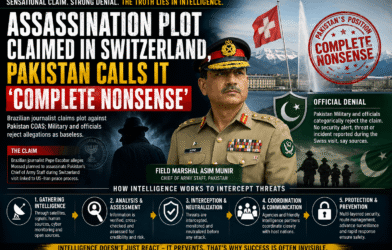
The strongest statement came from Pakistan’s military spokesman, Director General ISPR Lt. Gen. Ahmed Sharif Chaudhary.
In an interview published September 18, Chaudhary said Pakistan stood with Saudi Arabia both “diplomatically and physically” and would go “to any extent” in defending the Kingdom’s sovereignty.
He emphasized that Pakistan’s commitment also extends to protecting Islam’s holy sites in Makkah and Madina.
That language is considerably stronger than conventional diplomatic support.
It suggests that Islamabad wants both the Houthis and regional governments to understand that Pakistan considers Saudi territorial defense a genuine security commitment rather than a symbolic political relationship.
Pakistan’s Defence Minister Khawaja Asif has adopted similar language. He said Islamabad would stand with Saudi Arabia “practically and diplomatically” if the confrontation escalated and has stressed that Pakistan intends to fulfill its obligations under its defense arrangements.
Prime Minister Shehbaz Sharif has been equally explicit politically.
Following recent Houthi attacks on Saudi civilian and energy infrastructure, Sharif strongly condemned them and reaffirmed Pakistan’s support for Saudi sovereignty, security and territorial integrity.
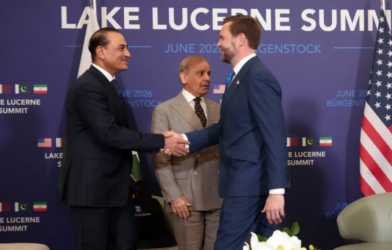
In a subsequent telephone conversation with Mohammed bin Salman, he again condemned the attacks, expressed complete solidarity with the Saudi leadership and said he, Field Marshal Asim Munir and Deputy Prime Minister Ishaq Dar would continue working to defuse regional tensions.
The Saudi crown prince, according to Pakistan’s official account, thanked Islamabad for its support and peace efforts.
The Makkah Agreement changes the calculation
These declarations carry additional significance because Pakistan, Saudi Arabia and Türkiye signed the Makkah Joint Defence Agreement in August.
The agreement establishes a collective-defense principle: an armed attack against one member is to be regarded as an attack against all three.
The three countries subsequently agreed to institutionalize military cooperation, including defense-industry collaboration, technology development and greater cohesion among their armed forces.
Pakistan is also due to provide the first secretary-general of the agreement’s new secretariat.
The escalation therefore represents an early and serious test of whether the agreement is principally a deterrence mechanism or could eventually become an operational military alliance.
Türkiye has already said it is prepared to help Saudi Arabia meet military requirements under the pact, particularly technical requirements.
Pakistan’s position is more delicate.
Pakistan stands with Saudi Arabia — but that does not automatically mean war in Yemen
There is an important distinction between Pakistan defending Saudi territory and Pakistan participating in an offensive campaign against the Houthis inside Yemen.
Islamabad has deliberately preserved that distinction.
Pakistan’s Foreign Office said earlier in the escalation that no Pakistani military response to the Houthi attacks was then under discussion.
Spokesman Sajjad Haider Khan said Pakistan opposed escalation and favored restraint, dialogue and diplomacy.
Even after stronger statements from Pakistan’s military leadership, Islamabad have avoided publicly specifying what forces might be deployed, what targets could be engaged or precisely what circumstances would trigger military action.
That ambiguity is probably deliberate.
Pakistan wants the Houthis to believe that continuing attacks on Saudi territory could trigger consequences, while avoiding a public commitment that automatically drags Islamabad into the Yemen battlefield.
Its policy could therefore be summarized as defensive commitment combined with offensive ambiguity.
Pakistan could theoretically assist Saudi Arabia without launching attacks inside Yemen through air-defense personnel, radar and early-warning cooperation, intelligence sharing, naval deployments, training, logistical assistance or protection of strategic facilities.
Whether Pakistan would conduct direct combat operations would depend on political decisions and the circumstances of an attack.
Public statements so far do not establish that Islamabad has decided to launch offensive operations against the Houthis.
Pakistan’s potentially most valuable contribution may actually be diplomatic rather than kinetic.
Field Marshal Asim Munir has maintained communication with Iranian officials while Pakistan simultaneously strengthens its defense relationship with Saudi Arabia.
Reuters reported that Munir and Iranian Foreign Minister Abbas Araghchi discussed efforts to restore diplomacy and reduce escalation.
Pakistani officials have also urged Iran to use its influence to restrain Houthi attacks, according to reporting by Reuters and the Financial Times.
This gives Pakistan an unusual position.
Islamabad has deep military ties with Saudi Arabia, maintains relations with Tehran, communicates with Washington and now sits inside a trilateral defense structure with Saudi Arabia and Türkiye.
Rather than choosing immediately between Riyadh and Tehran, Pakistan appears to be trying to use those relationships simultaneously: deterring attacks against Saudi Arabia while persuading Iran that escalation is not in Tehran’s interest.
That balancing strategy will become much harder if Houthi missiles repeatedly target Riyadh or other major Saudi cities.
Pakistan’s red line could be Saudi territorial defense
Pakistan has previously made its position on Saudi security relatively clear.
In July, its Foreign Office unequivocally condemned Houthi threats against Saudi Arabia and Red Sea commercial shipping and reiterated support for Saudi sovereignty and territorial integrity. It also confirmed that Pakistan remained committed to its bilateral defense arrangements with Riyadh, while refusing to disclose operational details regarding deployments or military responses.
The latest statements from DG ISPR have hardened that message considerably.
This suggests a possible Pakistani red line: Islamabad may attempt to remain outside an offensive Yemen war, but sustained attacks threatening Saudi sovereignty—particularly Makkah, Madina or other major population centers—could produce a different calculation.
That should not be interpreted as evidence that Pakistan has already decided to enter the conflict.
It means Islamabad is deliberately trying to make its commitment credible enough that military intervention may not become necessary.
That is deterrence.
Washington will be watching Pakistan and Türkiye closely
For the United States, the Saudi-Pakistani-Turkish alignment creates both opportunities and complications.
Washington wants Saudi Arabia protected, international shipping secured and Iranian-aligned armed groups constrained, but it also has strong incentives to prevent another regional war.
If Pakistan and Türkiye can reinforce Saudi air defenses, intelligence capabilities and deterrence without opening a large ground or air campaign in Yemen, they could reduce the immediate burden on Washington.
But if Houthi attacks continue despite the Makkah Agreement, Washington will have to assess whether the emerging trilateral alliance stabilizes the region or introduces another military escalation mechanism.
The Pentagon and CENTCOM will consequently be watching not only Houthi missile inventories and Iranian support networks but also how Riyadh activates its new security partnerships.
Why Riyadh changes everything
Threatening a border installation is one matter. Bringing missiles or drones toward a capital of millions is another.
Riyadh carries enormous political symbolism.
The Houthis are demonstrating that geographical distance does not automatically guarantee Saudi security. Even unsuccessful attacks can create alarms, airport disruptions and international headlines.
But repeatedly targeting major Saudi population centers carries substantial risks for the Houthis as well.
It could consolidate Saudi public support for retaliation, strengthen international backing for Riyadh and transform the Makkah defense framework from a diplomatic agreement into an increasingly operational alliance.
Pakistan’s involvement is therefore important not simply because of the size of its armed forces.
Its significance lies in the uncertainty it introduces into Houthi calculations.
Mohammed bin Salman ultimately has to restore deterrence without allowing the Houthis to dictate Saudi Arabia’s strategic agenda.
An unlimited military response could pull Riyadh back into the Yemen trap. Excessive restraint could encourage additional attacks if the Houthis conclude that Saudi Arabia is unwilling to impose meaningful costs.
Pakistan offers Riyadh another option between those extremes.
Saudi Arabia can strengthen its defenses through Pakistani and Turkish cooperation, increase intelligence coordination, demonstrate collective deterrence and simultaneously use Islamabad’s channels with Tehran to search for an exit.
For Pakistan, however, the balancing act is becoming increasingly difficult.
Islamabad is effectively telling three different audiences three complementary but carefully calibrated things: Saudi Arabia is being told that Pakistan will stand behind its security; Iran is being told to help prevent further escalation; and the Houthis are being warned indirectly that attacks on Saudi territory could eventually test Pakistan’s defense commitments.
For the moment, therefore, Pakistan is not standing off from Saudi Arabia.
The latest official statements point in the opposite direction: Islamabad has publicly aligned itself with the defense of Saudi sovereignty and territorial integrity.
What remains unresolved is the most important operational question: does defending Saudi Arabia mean helping intercept missiles over the Kingdom, or could it eventually mean Pakistani forces striking the sources of those missiles inside Yemen?
Pakistan’s leadership has intentionally left that question unanswered.
And that ambiguity may itself be part of the deterrence strategy.
The battle for Riyadh is consequently becoming about far more than Saudi Arabia and the Houthis.
It is testing Iran’s influence, America’s regional posture, Türkiye’s security ambitions and Pakistan’s willingness to translate decades of Saudi military cooperation into collective defense.
Explore related stories, expert opinions, and exclusive insights to better understand the broader implications of today’s headlines.