


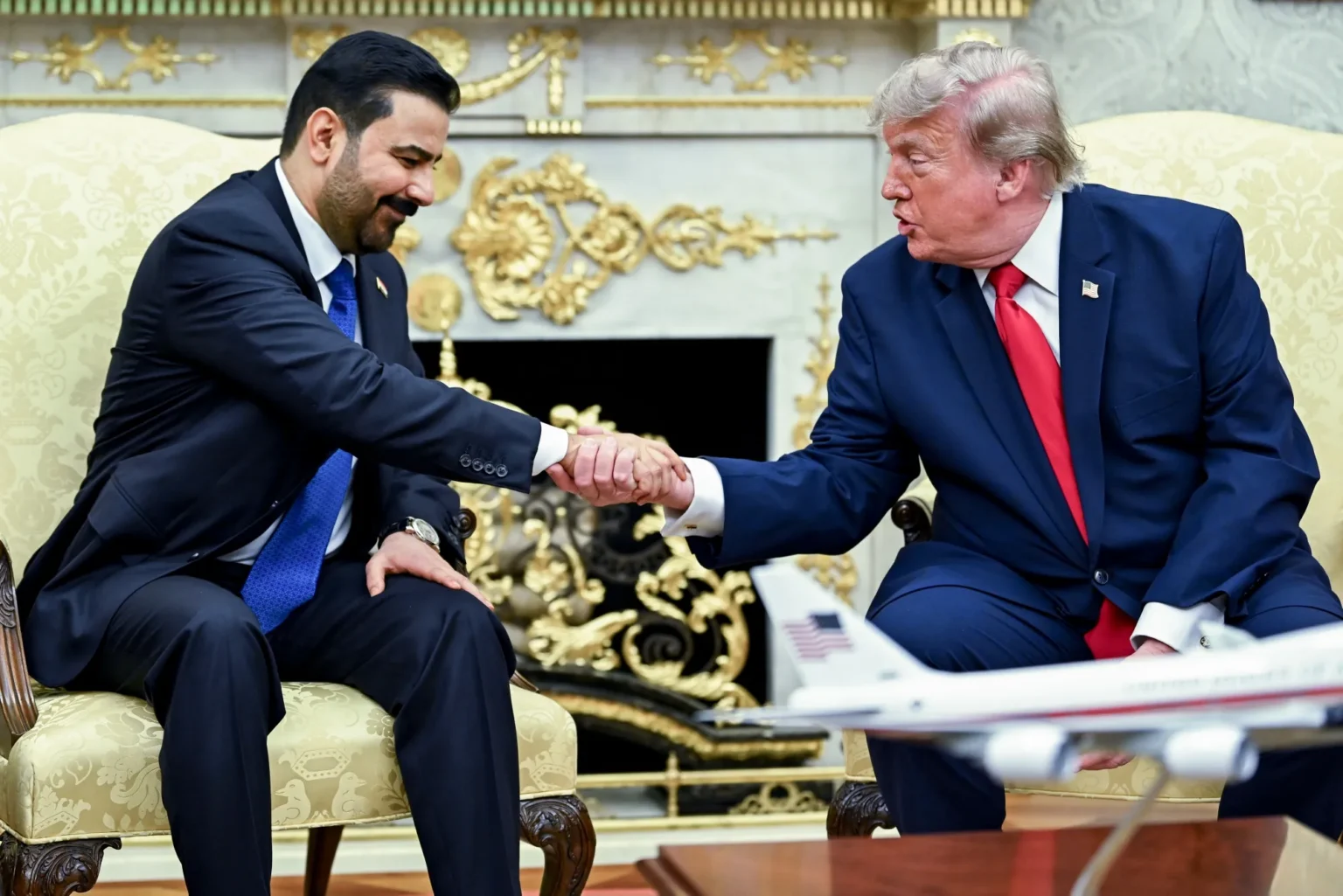
Washington D.C: The first White House meeting between U.S. President Donald Trump and Iraq’s newly appointed Prime Minister Ali al-Zaidi marks one of the most consequential diplomatic engagements in the Middle East this year.
More than a ceremonial visit, the summit reflected a broader strategic shift in U.S.–Iraq relations—from two decades dominated by security cooperation and counterterrorism toward a partnership centered on energy, infrastructure, investment, and regional stability.
The meeting also comes at a critical moment. The Middle East continues to grapple with the aftermath of the U.S.-Iran confrontation, instability in Syria, tensions in the Gulf, and the gradual withdrawal of U.S. military forces from Iraq.
Against this backdrop, Washington and Baghdad are attempting to redefine a relationship that has often been shaped by war rather than economic opportunity.
Who Is Ali al-Zaidi? Iraq’s Political Outsider
Ali al-Zaidi entered Iraqi politics from the private sector rather than the traditional political establishment.
A businessman and banker, he emerged as a consensus candidate after months of political deadlock that prevented Iraq’s dominant Shiite coalition from agreeing on a prime minister.
His appointment itself reflected changing political realities.
The Trump administration openly opposed the return of former Prime Minister Nouri al-Maliki, citing concerns over his close relationship with Iran-backed factions.
Eventually, Iraq’s political blocs settled on al-Zaidi, who presented himself as an independent figure focused on economic reforms, anti-corruption measures, and attracting foreign investment.
For Washington, al-Zaidi represents an opportunity to strengthen ties with a government that appears willing to expand cooperation with American businesses while maintaining Iraq’s policy of balanced regional diplomacy.
Trump’s New Iraq Strategy: Economics before Security
Perhaps the most striking aspect of Trump’s remarks during the meeting was his emphasis on economic cooperation rather than military operations.
President Trump declared that the United States intends to pursue “a lot of deals” with Iraq, particularly in the energy sector, highlighting Iraq’s vast oil reserves and describing them as a foundation for long-term economic cooperation and job creation in both countries.
He stressed that American companies would play a leading role in future oil development projects.
This reflects a significant departure from previous U.S. administrations, whose Iraq policy primarily revolved around counterterrorism, military assistance, and state-building.
Instead, Trump’s administration appears to be promoting what many analysts describe as “commercial diplomacy”—using private-sector investment and energy partnerships as the principal tools of American influence.
Energy Becomes the Centerpiece
Energy cooperation dominated the discussions.
Iraq possesses one of the world’s largest proven oil reserves but continues to struggle with underdeveloped infrastructure, electricity shortages, gas flaring, and dependence on imported energy.
Prime Minister al-Zaidi arrived in Washington seeking billions of dollars in American investment across oil, natural gas, electricity generation, and infrastructure.
Negotiations reportedly involve major U.S. firms in upstream oil development, power generation, liquefied natural gas projects, and modernization of Iraq’s energy network.
For Iraq, attracting American capital serves multiple purposes:
- Rebuilding production damaged by recent regional instability
- Diversifying investment beyond Chinese and Russian companies
- Improving electricity generation
- Creating employment
- Restoring investor confidence
For Washington, stronger energy ties offer both commercial benefits and greater strategic influence in one of the world’s most energy-rich countries.
The Security Dimension Has Not Disappeared
Although economics dominated the headlines, security remained an essential part of the discussions.
Both governments confirmed that the long-planned withdrawal of U.S. military forces from Iraq will continue, with the American military mission scheduled to conclude by the end of September 2026.
Iraqi officials emphasized that the transition reflects growing confidence in Iraqi security forces, while the Pentagon noted that the remaining U.S. personnel have largely shifted to advisory roles.
However, the end of the military mission does not necessarily signal the end of strategic cooperation.
Counterterrorism intelligence sharing, military training, defense technology, and security coordination against the remnants of ISIS are expected to continue through different mechanisms.
This transition illustrates a broader evolution of U.S.–Iraq relations—from direct military involvement toward institutional security cooperation.
The Iran Factor Looms over Every Discussion
No U.S.–Iraq summit can be fully understood without considering Iran.
Baghdad continues to maintain complex relations with Tehran due to geography, religious ties, trade, and the influence of Iran-backed armed groups operating inside Iraq.
Washington has consistently urged successive Iraqi governments to reduce the influence of these militias.
Reports surrounding the White House meeting indicate that discussions included Iraq’s plans to strengthen state control over armed groups and improve security governance.
These issues remain central to American concerns regarding Iraq’s long-term stability.
For al-Zaidi, this represents a delicate balancing act.
Moving too close to Washington risks domestic political backlash from influential Iran-aligned factions.
Moving too close to Tehran risks limiting Western investment and financial cooperation.
Maintaining equilibrium between both powers may become the defining challenge of his premiership.
Regional Implications
The timing of the visit is especially significant.
The Middle East has experienced months of heightened tension following the U.S.–Iran confrontation, disruptions in regional energy markets, and uncertainty surrounding maritime security.
A more economically stable Iraq could become an important regional stabilizer.
If Iraq successfully attracts American investment while maintaining constructive relations with neighboring Arab states, it may gradually transform from a battlefield of regional competition into a platform for regional economic integration.
This possibility also aligns with growing Gulf interest in infrastructure connectivity, energy corridors, and cross-border investment.
Challenges Facing the New Partnership
- Despite the optimism surrounding the visit, major obstacles remain.
- Corruption continues to undermine Iraq’s investment climate.
- Political fragmentation complicates major economic reforms.
- Iran-backed armed groups retain significant influence.
- Oil price volatility creates uncertainty for public finances.
- Persistent bureaucracy discourages foreign investors.
Additionally, American companies will seek stronger legal protections, transparent procurement procedures, and improved security before committing large-scale investments.
The success of Trump’s economic strategy therefore depends less on announcements and more on Iraq’s ability to implement structural reforms.
A Shift in American Foreign Policy?
The Trump–al-Zaidi meeting may also reflect a broader evolution in U.S. Middle East policy.
Instead of deploying large numbers of troops, Washington increasingly appears interested in leveraging:
- Energy investment
- Infrastructure financing
- Technology partnerships
- Private-sector engagement
- Commercial diplomacy
If successful, Iraq could become an important test case for this model.
Rather than measuring influence through troop numbers, Washington would measure success through investment flows, infrastructure projects, and economic integration.
Conclusion
The White House meeting between President Donald Trump and Prime Minister Ali al-Zaidi represents more than a routine diplomatic engagement. It signals an attempt by both governments to redefine one of the Middle East’s most complicated bilateral relationships.
For the United States, Iraq remains strategically important because of its energy resources, geographic position, and role in regional security.
For Iraq, American investment offers an opportunity to modernize its economy, strengthen its energy sector, and diversify international partnerships while reducing dependence on any single external power.
Whether this meeting becomes a historic turning point will depend on implementation rather than rhetoric.
If promised investment materializes, security cooperation evolves successfully after the military withdrawal, and Iraq advances meaningful reforms while balancing its relationships with both Washington and Tehran, the summit could mark the beginning of a new chapter in U.S.–Iraq relations.
Conversely, if political instability, corruption, or regional rivalries derail these ambitions, the meeting may ultimately be remembered as another moment of unrealized promise in a relationship shaped by decades of conflict and competing geopolitical interests.
For readers seeking clarity beyond the headlines, The Variant offers context-driven journalism and expert analysis.


