Courtesy: Reporting Contribution by Salman-Bin-Kareem [A Senior Journalist I Doha, Qatar]
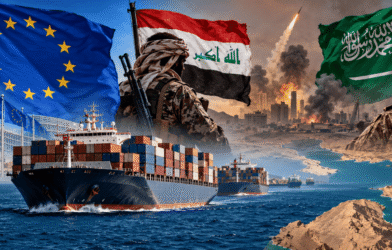
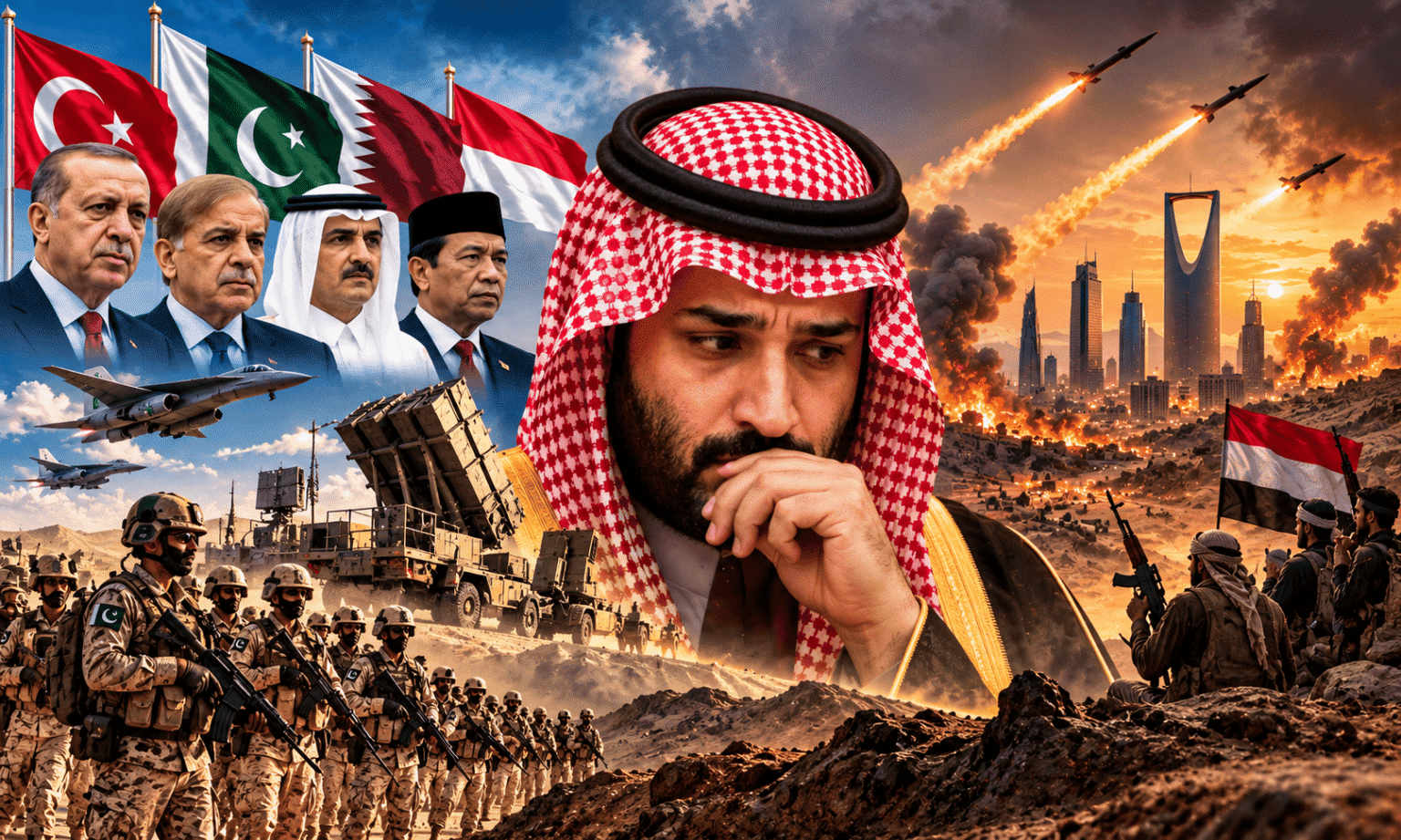
Rochester, NY/Doha, QA: The Middle East is witnessing an important experiment in collective security. At its centre are two distinct arrangements: the Makkah Joint Defence Agreement, signed by Saudi Arabia, Pakistan and Türkiye on August 7, 2026, and the Badr Multilateral Memorandum of Understanding, signed in Doha on October 21 by Pakistan, Türkiye, Qatar and Indonesia.
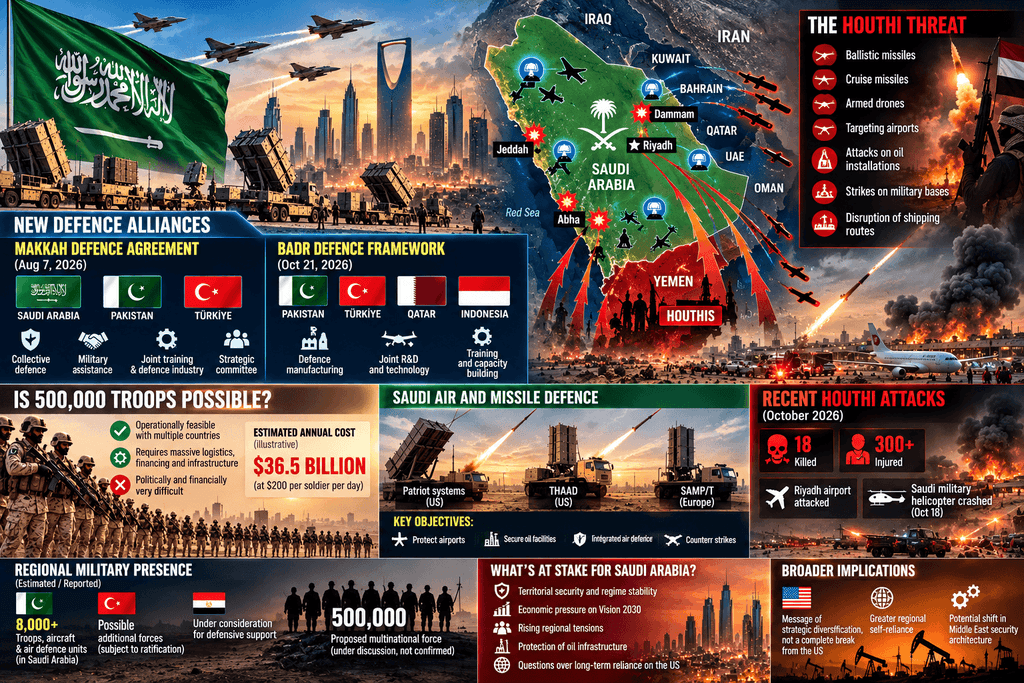
The distinction matters. The Makkah agreement establishes collective-defence commitments, while Badr focuses on defence-industrial cooperation. Badr does not itself establish a 500,000-strong multinational army or authorize military intervention in Yemen.
The Makkah pact, signed by Crown Prince Mohammed bin Salman, Pakistani Prime Minister Shehbaz Sharif and Turkish President Recep Tayyip Erdoğan, is considerably more consequential operationally.
Its Article 2 declares that an external armed attack against one party shall be considered an attack against all. The agreement also provides for military assistance, intelligence cooperation, joint training, defence manufacturing and coordinated planning.
Its institutional structure includes a Strategic Political and Defence Committee, a Saudi-based secretariat and a rotating secretary-general, with Pakistan holding the first three-year term.
On October 20, Türkiye submitted the agreement for parliamentary ratification. Pakistan and Saudi Arabia have already completed their respective ratification procedures, according to Islamabad’s October 23 briefing. Türkiye’s approval remains pending.
These developments suggest that regional security cooperation is advancing beyond ceremonial declarations, although the actual military commitments remain subject to national laws and operational decisions.
Can 500,000 Soldiers Realistically Be Deployed in Saudi Arabia?
The proposed figure of 500,000 personnel deserves careful scrutiny. No verified official announcement establishes a commitment to deploy half a million foreign troops under either agreement.
Such a deployment is theoretically possible as a major multinational mobilization, but sustaining it would present extraordinary difficulties.
At 500,000 personnel, a force would require accommodation, transport, ammunition, medical infrastructure, command networks and enormous quantities of food, water and fuel.
Even a hypothetical daily sustainment cost of $200 per soldier would translate into $100 million daily or approximately $36.5 billion annually, excluding major weapons procurement, combat operations and infrastructure.
More importantly, defending Saudi Arabia against Houthi missiles and drones does not necessarily require an army of that size.
The operational priorities are integrated air defence, early-warning radar, electronic warfare, intelligence surveillance, interception capabilities and protection of airports, oil installations and critical infrastructure.
Pakistan has already demonstrated a smaller-scale contribution. Reuters reported in May that Islamabad had deployed approximately 8,000 troops, fighter aircraft and an air-defence system to Saudi Arabia under an earlier bilateral arrangement.
A carefully coordinated defensive force could therefore provide substantial protection without the political and financial consequences of a massive foreign military presence.
The Houthi Challenge: Why Military Superiority Does Not Guarantee Victory
The renewed Saudi-Houthi confrontation has exposed the vulnerability of expensive infrastructure to relatively inexpensive weapons.
According to Saudi figures reported by the Financial Times, attacks on Riyadh’s airport during the first ten days of October killed 18 people and injured more than 300.
A Saudi military helicopter also crashed near the Yemeni border on October 18, with Saudi authorities attributing the incident to mechanical failure and the Houthis claiming responsibility.
The conflicting accounts illustrate the difficulties of independently establishing battlefield facts.
Yet a distinction must be drawn between defending Saudi territory and conducting offensive operations inside Yemen.
Pakistan’s Foreign Ministry stated on October 9 that the Makkah alliance was defensive and that participating forces would not cross into Yemen to attack the Houthis.
Turkish Foreign Minister Hakan Fidan similarly rejected interpreting the pact as authorization for offensive operations.
The military logic is straightforward: protecting Saudi cities through coordinated missile defence is a different undertaking from defeating an entrenched movement operating inside Yemen.
Even an enormous coalition could encounter prolonged resistance, difficult terrain and substantial civilian and diplomatic consequences.
A Message to Washington: Regional Independence or Strategic Diversification?
The agreements carry a geopolitical message, but interpreting them as a declaration that the Middle East no longer needs the United States would overstate the evidence.
Saudi Arabia remains deeply connected to American military technology; weapons supply chains, intelligence arrangements and strategic cooperation.
Nevertheless, Riyadh’s pursuit of alternative security partnerships reflects concern about excessive dependence on any single external power.
Following the Makkah agreement, President Donald Trump publicly welcomed greater regional responsibility for defence, while analysts have interpreted the initiative as evidence of growing uncertainty over American security guarantees.
Turkish presidential communications director Burhanettin Duran described the trilateral partnership as intended to strengthen collective deterrence and regional stability.
The strategic implication is therefore not necessarily American exclusion. It is an effort to increase regional bargaining power while preserving relationships with Washington.
The Badr initiative complements this ambition through industrial cooperation. According to Qatar’s official news agency, its signatories intend to develop joint manufacturing, technical training and research capabilities.
A regional capacity to manufacture drones, ammunition, missiles and defence electronics could eventually reduce dependence on imported equipment. Such industrial independence, however, would require years of investment and technological development.
Is Mohammed bin Salman’s Government Facing an Existential Threat?
The renewed conflict creates political and economic pressures for Crown Prince Mohammed bin Salman, but military attacks alone do not establish that his government is approaching collapse.
MBS has concentrated substantial authority over Saudi security institutions and the country’s economic transformation agenda. His political standing is consequently connected to the kingdom’s ability to maintain domestic stability, protect infrastructure and sustain investment.
The interruption of aviation, threats to energy installations and repeated security emergencies complicate those objectives.
Three potential sources of pressure deserve particular attention: the economic cost of prolonged conflict, possible disagreements within Saudi political elites and public concern about national security.
However, there is insufficient independently verified evidence that the latest Houthi attacks have produced an organized internal challenge capable of displacing the crown prince.
A security crisis and a succession crisis are not synonymous.
The larger strategic question is whether prolonged hostilities could divert resources from Vision 2030, weaken investor confidence and place additional strain on Saudi Arabia’s regional relationships.
Leaders’ Positions and the Limits of the Alliance
Pakistan’s Foreign Ministry reiterated on October 23 that the Makkah agreement is defensive, consistent with Article 51 of the United Nations Charter and not directed against a particular country.
President Erdoğan’s administration has emphasized deterrence and defence cooperation rather than announcing a large-scale offensive deployment.
Egyptian President Abdel Fattah el-Sisi, whose government is separately considering defensive assistance to Saudi Arabia, stated that Egypt would undertake measures to protect the kingdom while distinguishing defence from attacks against another party.
These positions reveal an important political limitation: allied governments may support Saudi territorial defence without accepting responsibility for a wider war in Yemen.
Conclusion: A New Security Architecture, Not Yet a New Military Order
The Badr and Makkah initiatives mark an important development in the Middle East’s evolving security architecture.
Their significance lies less in the prospect of deploying 500,000 troops than in their potential to connect Saudi financial resources, Pakistani military capabilities, Turkish defence technology and the industrial ambitions of additional partners.
Whether these agreements become operationally effective will depend on joint command arrangements, sustainable financing, parliamentary approvals, intelligence integration and clearly defined military responsibilities.
For Mohammed bin Salman, the immediate challenge is to reconcile territorial security with economic transformation and regional diplomacy.
For Washington, the agreements demonstrate that longstanding partners are pursuing additional options without necessarily abandoning American cooperation.
And for Yemen, the essential question remains unresolved: can stronger deterrence create space for negotiation, or will expanding military alliances prolong a conflict that has already imposed enormous human and economic costs?
The emerging regional order will ultimately be judged not by the number of soldiers it can mobilize, but by whether its collective strength can prevent another devastating war.
Stay engaged with the issues shaping our future through comprehensive reporting and informed commentary from The Variant.