


Washington, D.C/Rochester, NY/Doha, QR: The ongoing conflict between the United States and Iran has entered one of its most volatile phases since hostilities began in late February 2026.
What started as a campaign of strategic strikes and counterattacks has now evolved into a direct and sustained military confrontation, stretching across airspace, sea lanes, and regional alliances.
At the center of this escalation lies the dramatic downing of a U.S. fighter jet inside Iranian territory—an incident that briefly raised fears of an American pilot being captured and used as leverage in a widening war.
The Downing of the U.S. Fighter Jet
According to multiple confirmed reports, a U.S. Air Force F-15E Strike Eagle was shot down over Iran during active combat operations. The aircraft, carrying two crew members, was hit by Iranian air defense systems, marking the first confirmed instance of a U.S. manned jet being downed inside Iran during this conflict.
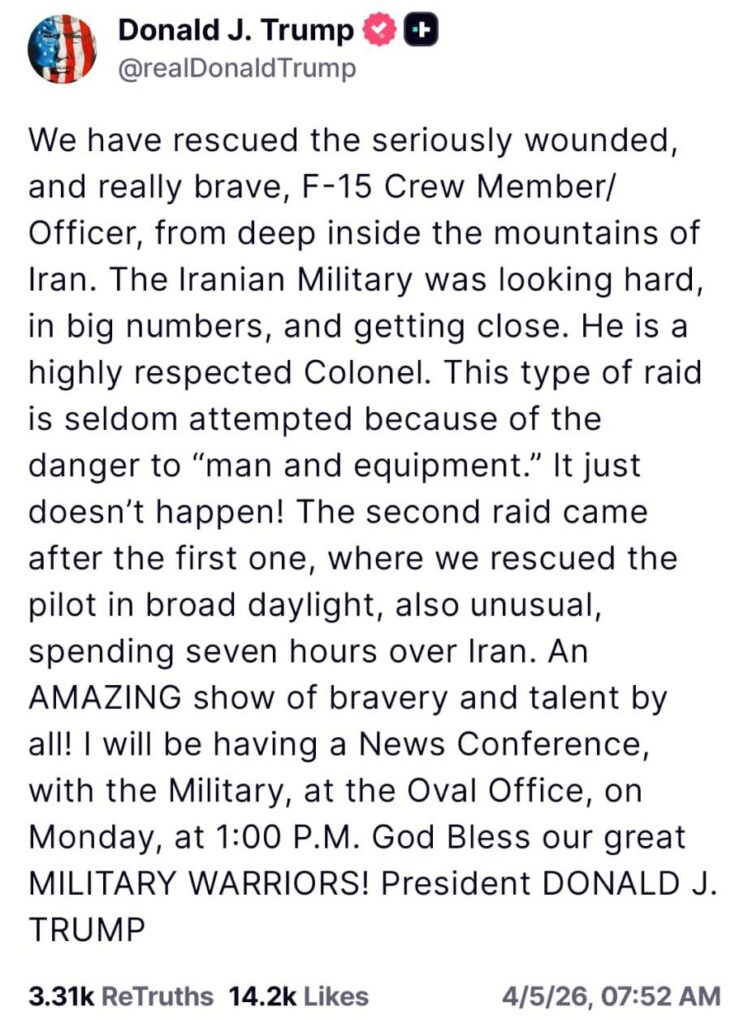
Initially, one crew member was rescued quickly, while the second remained missing behind enemy lines. This triggered a high-risk search-and-rescue mission involving special operations forces, surveillance aircraft, and aerial support operating deep within hostile territory.
The situation was further complicated by Iranian ground forces and even civilian mobilization efforts attempting to locate the downed airman.

However, the latest updates confirm that the missing crew member has now been successfully rescued by U.S. forces after nearly two days of intense operations.
The mission reportedly involved deception tactics, heavy air cover, and direct engagements with Iranian forces.
Was the Pilot Ever “Missing”?
While early reports suggested a missing or potentially captured pilot, the situation has now been clarified. Both crew members survived the crash and were ultimately recovered.
The “missing pilot” narrative reflects the critical window during which one crew member was unaccounted for in hostile terrain—not a confirmed capture scenario.
Iranian state media, however, presented a different version during that period, claiming that the downing of the aircraft was a major victory and even circulating calls for citizens to locate or target the American airman.
This reflects the broader information war accompanying the military confrontation, where narratives are rapidly shaped for domestic and international audiences.
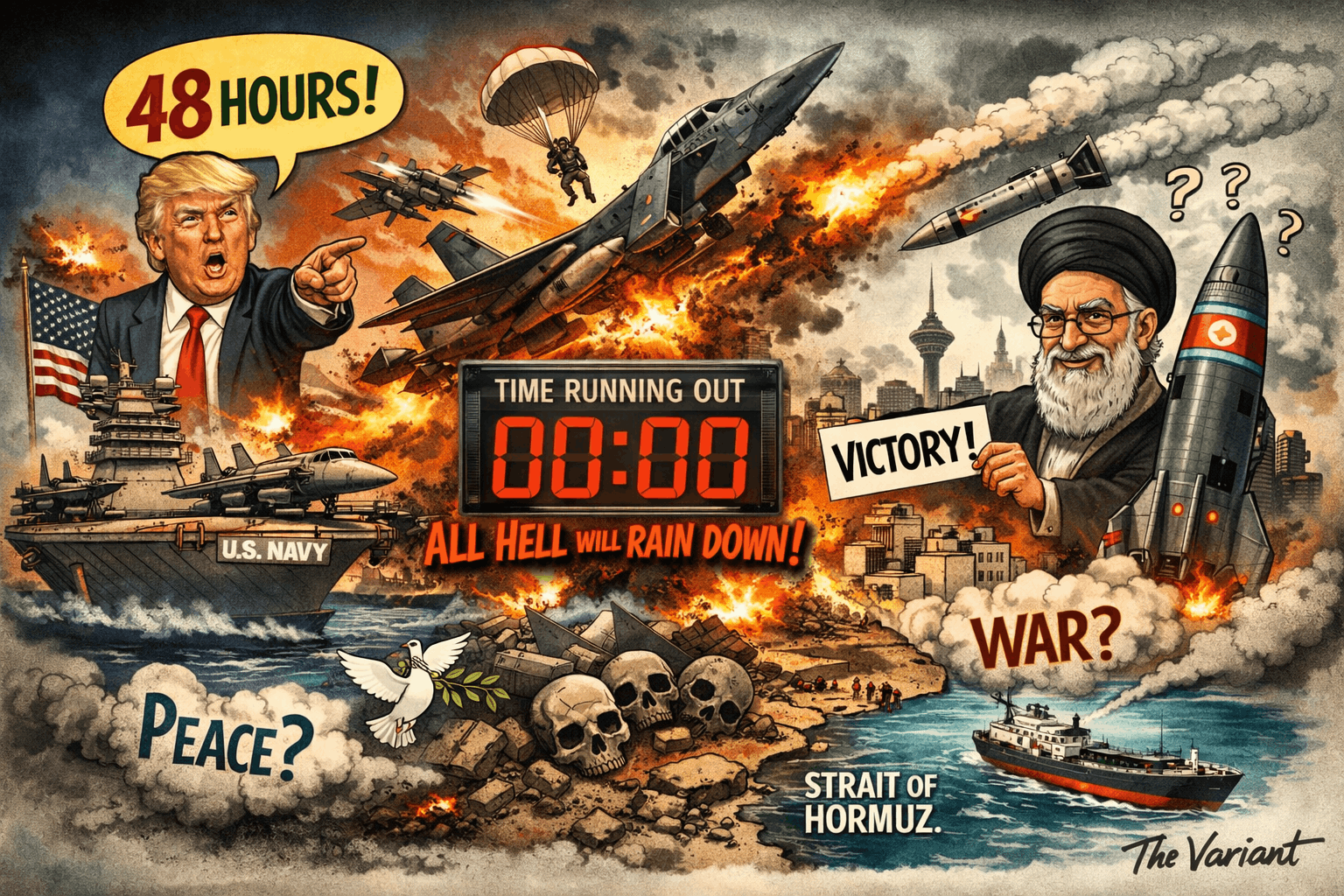
Trump’s 48-Hour Ultimatum: “All Hell Will Rain Down”
Amid the crisis, President Donald Trump issued one of the most aggressive warnings of the conflict. In a public statement, he gave Iran a 48-hour deadline to either reach a deal or reopen the strategically critical Strait of Hormuz.
His warning was explicit: failure to comply would result in devastating military retaliation, with “all hell” set to “rain down” on Iran.
This ultimatum was not merely rhetorical. It came alongside increased U.S. military readiness and reports of potential strikes targeting Iranian infrastructure, including energy facilities and military installations.
Iran responded with equal defiance, warning that any such attack would trigger retaliation against U.S. assets across the region.
The exchange underscores how close the conflict has come to a broader regional war, with global energy routes, Gulf States, and allied forces all at risk.
The Expanding Battlefield
The downing of the F-15E was not an isolated incident. Reports indicate that additional U.S. aircraft, including an A-10 Thunderbolt II, also came under fire during the same period, highlighting the intensity of Iranian air defense capabilities.
Meanwhile, Iran has continued launching missile and drone attacks across the region, targeting U.S. bases and allied infrastructure in countries such as Kuwait and the United Arab Emirates.
The Strait of Hormuz—through which a significant portion of global oil supply passes—remains a focal point of tension, with disruptions already impacting global markets.
Iranian State Media Perspective
Iranian state-controlled outlets have framed the downing of the U.S. jet as a symbol of resistance and military competence. Claims have ranged from the successful interception of advanced U.S. aircraft to assertions that American air superiority has been broken.
At various points, Iranian media even suggested the possibility of capturing U.S. personnel, though such claims were not independently verified and were later contradicted by confirmed rescue operations.
This divergence between U.S. and Iranian narratives illustrates the dual-layer nature of the conflict: a physical war on the ground and an information war shaping perception and morale.
The North Korea ICBM Claim: Fact or Speculation?
Amid the flood of wartime information, claims have circulated suggesting that North Korea supplied Iran with long-range intercontinental ballistic missiles (ICBMs), allegedly numbering in the hundreds.
As of now, there is no credible, independently verified evidence supporting the claim that “500 North Korean ICBMs” have been transferred to Iran.
While Iran does possess an advanced missile and drone program and has demonstrated the ability to strike regional targets, intelligence assessments and verified reports continue to emphasize domestically developed systems and existing regional capabilities.
The North Korea narrative appears to fall into the category of wartime speculation or psychological messaging, potentially aimed at amplifying perceived threat levels rather than reflecting confirmed military transfers.
Conclusion: A Conflict on the Edge
The episode of the downed U.S. fighter jet and the temporary disappearance of its crew encapsulate the current state of the U.S.–Iran war: high-risk, rapidly evolving, and dangerously close to broader escalation.
While the successful rescue of both crew members removes one immediate crisis, it does little to reduce the underlying tensions.
With ultimatums issued, regional actors drawn in, and both sides demonstrating military resolve, the situation remains fluid and unpredictable.
The coming days—particularly in the wake of the 48-hour deadline—may determine whether the conflict moves toward negotiation or descends into a far more destructive phase.







