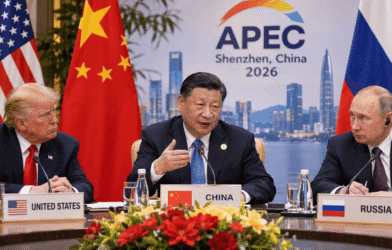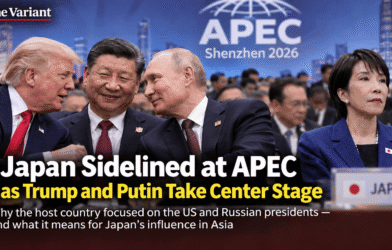
Rochester, NY: The arrival of U.S. President Donald Trump and Russian President Vladimir Putin in the Chinese city of Shenzhen for the Asia-Pacific Economic Cooperation (APEC) summit offered a striking demonstration of diplomacy at a time of heightened geopolitical tensions.
Chinese President Xi Jinping welcomed the two leaders with warmth and carefully arranged ceremonial gestures, creating an atmosphere of cooperation despite the considerable disagreements separating Washington, Moscow and Beijing.
The gathering brought together three leaders whose countries exert enormous influence over international security, global trade, energy markets and the geopolitical balance.
Although the summit produced limited immediate progress on major international conflicts, its diplomatic significance extended beyond formal agreements.
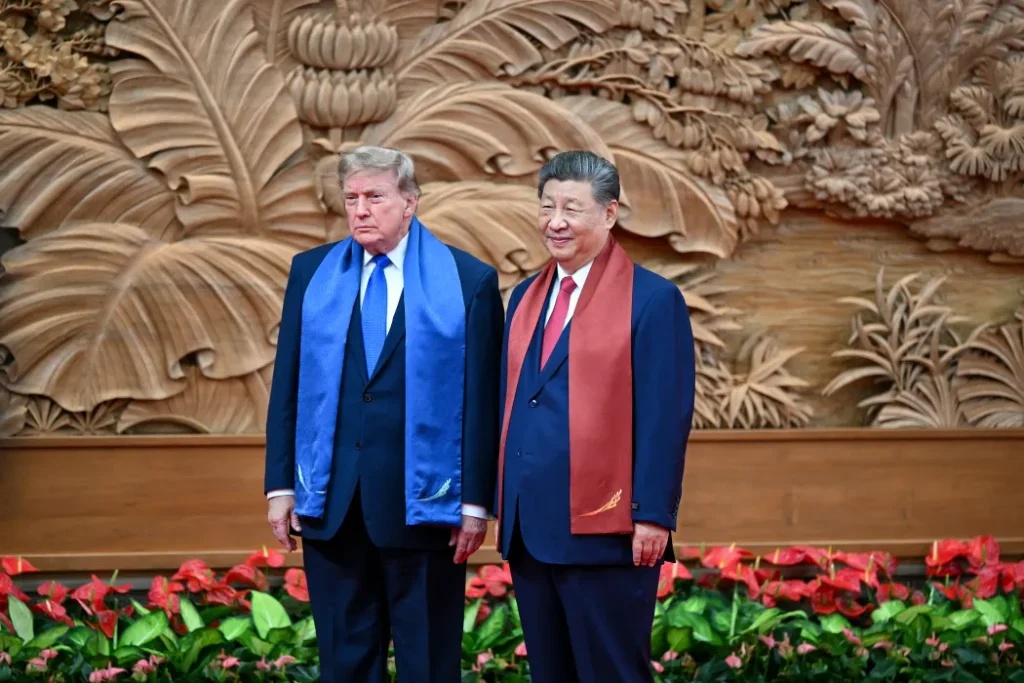
The images of Xi, Trump and Putin exchanging greetings suggested that the world’s leading powers remain willing to communicate even when their strategic interests diverge.
For China, hosting the American and Russian presidents was an opportunity to demonstrate its capacity to engage competing global powers while presenting itself as a central participant in international diplomacy.
A Personal Welcome That Carried Diplomatic Significance
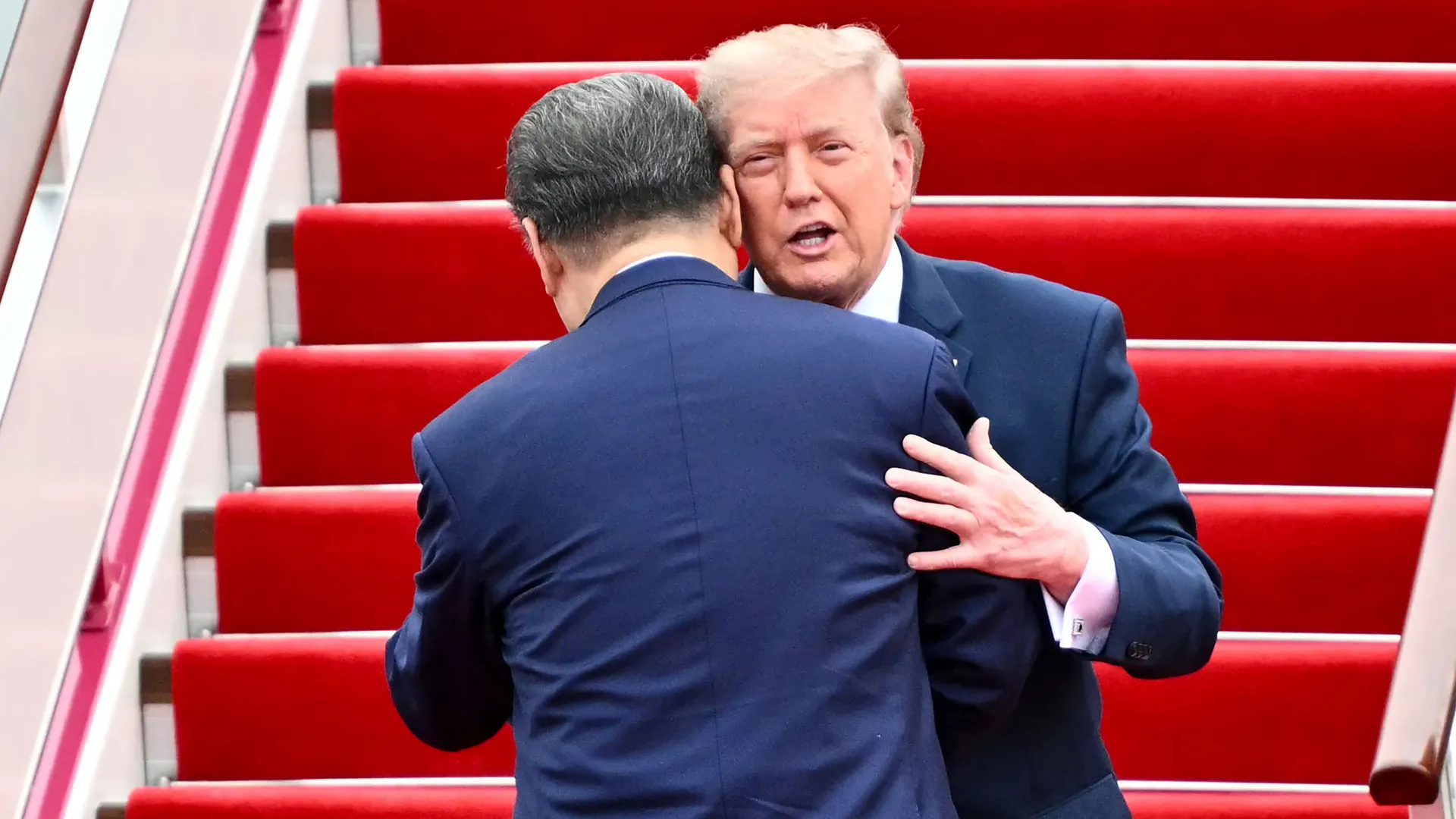
One of the most notable moments came when President Xi personally greeted President Trump upon his arrival in Shenzhen.
The Chinese leader’s presence at the airport, accompanied by ceremonial arrangements, reflected an unusually personal approach to receiving the American president.
According to Reuters, Xi’s decision to welcome Trump personally reciprocated the reception Trump had given him during an earlier visit to the United States in September. The gesture was particularly significant because Xi had not previously greeted another visiting leader at the airport during his presidency.
The reception included a red carpet, military honors, national flags and a performance of the two countries’ national anthems. Xi and Trump shook hands and briefly embraced, offering photographers an image of cordiality between the leaders of the world’s two largest economies.
President Putin also received an official ceremonial welcome, although Xi did not personally meet him at the airport. Instead, Cai Qi, a senior Chinese Communist Party official and Xi’s chief of staff, received the Russian president. Putin later exchanged warm greetings with Xi at the summit events.
The difference in reception attracted attention, but diplomatic analysts cautioned against interpreting it as evidence that Beijing was distancing itself from Moscow. China’s relationship with Russia is well established, while its relationship with the United States requires continuous management because of competing economic and security interests.
Why China Extended Such Warm Hospitality
China’s diplomatic approach reflected several overlapping interests.
Relations between Washington and Beijing remain essential to the stability of international trade. The two countries are deeply connected through manufacturing, technology, financial markets and supply chains, even as they compete over strategic industries and regional influence.
For Xi, establishing a constructive atmosphere with Trump could help reduce the risk of further economic confrontation. Trade restrictions, semiconductor technology, artificial intelligence, tariffs and security concerns in the Indo-Pacific continue to complicate bilateral relations.
Trump, meanwhile, has emphasized the importance of personal relationships in his diplomatic dealings. A highly visible reception provided an opportunity for both leaders to demonstrate engagement without necessarily compromising their respective positions.
China’s relationship with Russia involves a different strategic calculation. Beijing and Moscow maintain substantial political and economic cooperation and share concerns about aspects of Western international influence.
Nevertheless, China also has strong incentives to preserve economic relations with the United States and European countries.
By welcoming both presidents, Beijing demonstrated its preference for maintaining channels of communication across competing geopolitical blocs rather than allowing its relationship with one major power to determine its engagement with another.
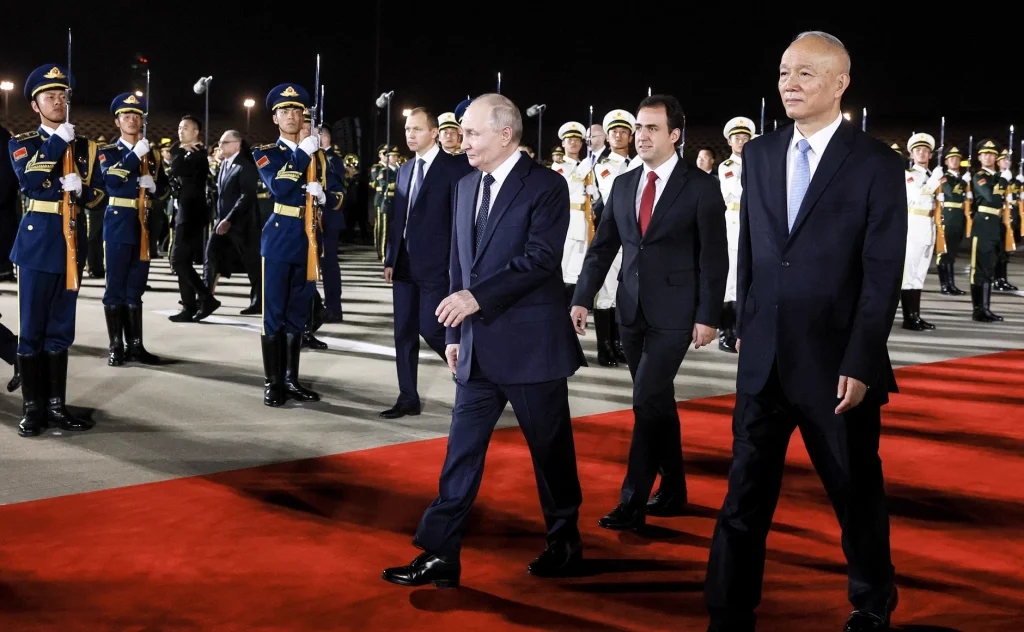
Putin’s Presence and the Importance of Russia
President Putin’s participation added another dimension to the gathering, particularly because Russia’s continuing war in Ukraine remains one of the most consequential international security crises.
Despite sanctions and diplomatic isolation imposed by several Western governments, Russia remains a major nuclear power, an important energy producer and a permanent member of the United Nations Security Council.
These realities make Moscow an essential participant in discussions concerning European security, nuclear arms control and global energy stability.
During the summit, Putin and Xi exchanged expressions of friendship, reflecting the close political relationship they have developed over years of meetings. Trump also greeted Putin warmly, underscoring his willingness to maintain direct communication with the Russian president despite the unresolved conflict in Ukraine.
However, cordial diplomatic exchanges should not be confused with progress toward ending the war. The leaders discussed Ukraine, but their meeting did not produce a breakthrough. Putin subsequently ruled out direct negotiations with Ukraine under the circumstances he described.
The contrast between friendly summit appearances and continuing military confrontation illustrated the limitations of personal diplomacy when fundamental political disagreements remain unresolved.
Xi Jinping’s Position between Washington and Moscow
The summit also highlighted China’s distinctive position in contemporary international relations.
Beijing maintains a complex relationship with Washington, characterized by economic interdependence, strategic competition and occasional cooperation. At the same time, China has developed a substantial partnership with Russia, including cooperation in energy, trade and international institutions.
These relationships are not identical, nor are they necessarily mutually exclusive.
China benefits from stable economic relations with the United States, while Russia provides important energy resources and strategic cooperation. Beijing therefore has reasons to avoid an outright confrontation with either country.
Hosting Trump and Putin together allowed Xi to demonstrate that China can communicate with rival powers while maintaining its own diplomatic priorities.
The symbolism was particularly important because all three countries possess nuclear weapons and hold permanent seats on the UN Security Council. Their decisions influence international responses to conflicts, sanctions, arms control and economic instability.
At the trilateral meeting, Xi seated Trump and Putin on opposite sides of a round table, creating a more balanced setting than the separate arrival ceremonies had suggested.
The three governments subsequently expressed support for dialogue on nuclear risks, increased fuel supplies and reforms intended to improve the effectiveness of the United Nations.
These commitments were meaningful as statements of diplomatic intent, but their practical importance will depend on whether governments translate them into concrete policies.
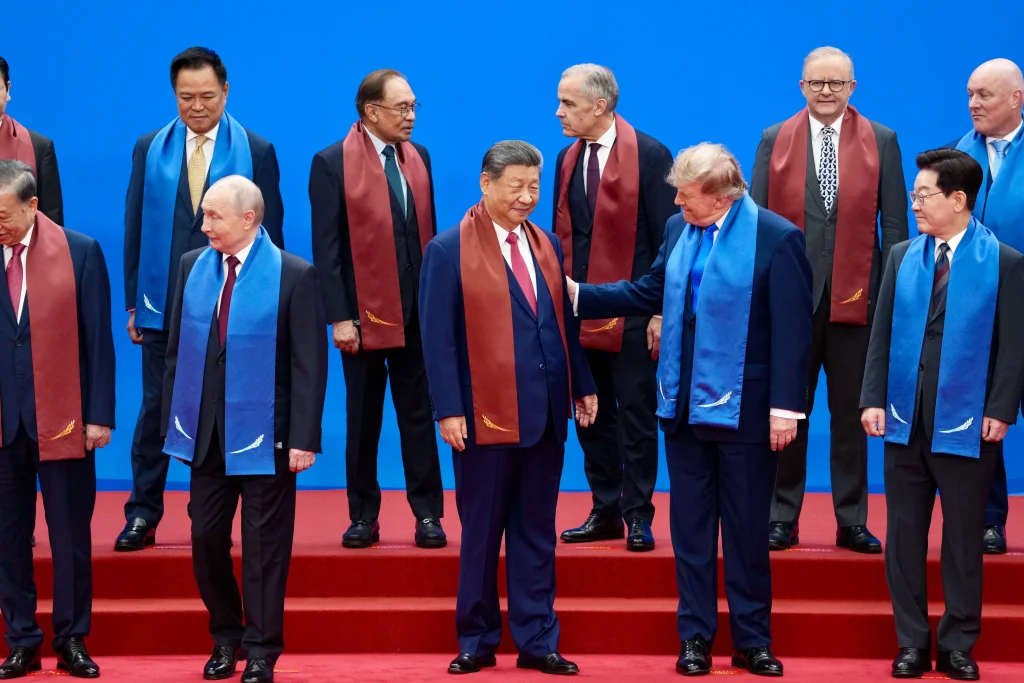
Diplomatic Success Does Not Necessarily Mean Political Agreement
The summit’s ceremonial atmosphere contrasted with the absence of major agreements addressing the world’s most urgent crises.
The United States and China continue to disagree over trade restrictions, advanced technology and security arrangements in the Indo-Pacific. Russia’s war in Ukraine remains unresolved, while tensions in the Middle East continue to threaten international energy security.
A warm reception cannot eliminate these disagreements.
Nevertheless, the ability of competing powers to meet directly carries value. Diplomatic engagement can reduce misunderstandings, establish channels for crisis management and create opportunities for future negotiations.
For Beijing, the event was an opportunity to project the image of a confident host capable of bringing powerful international figures together.
For Washington, it provided an opportunity to engage both China and Russia at a time when American foreign policy faces multiple challenges. For Moscow, participation reinforced Russia’s continuing role in major international security discussions.
The interests of all three governments overlapped sufficiently to justify engagement, even though they remained divided on important questions.
The Broader APEC Agenda and Smaller Economies
The attention surrounding Trump, Xi and Putin also raised questions about the wider purpose of APEC.
The organization was established to promote economic cooperation, trade facilitation and regional integration among its member economies. Its agenda extends beyond the relationships among the world’s most powerful countries.
Japan, South Korea, Australia, Canada and Southeast Asian economies all have substantial interests in the decisions made by Washington and Beijing. Their governments face challenges involving market access, investment, supply-chain security and economic resilience.
Reuters reported concerns among smaller countries that agreements between major powers could marginalize their interests.
Such concerns highlight a broader challenge for multilateral diplomacy. Meetings dominated by major-power rivalries risk diverting attention from economic development, inclusive growth and the practical concerns of smaller economies.
China’s diplomatic success as host should therefore be assessed not only through its interactions with Trump and Putin, but also through its ability to advance the wider economic objectives of APEC.
A New Chapter in Great-Power Diplomacy?
The Shenzhen summit demonstrated that international relationships cannot be understood solely through the language of rivalry or alliance.
China and the United States remain strategic competitors, yet their economic relationship makes communication essential. China and Russia maintain close ties, but Beijing also pursues independent interests that require engagement with Western governments.
Similarly, Washington’s willingness to communicate with Moscow does not necessarily indicate agreement with Russian policies.
The reception hosted by Xi Jinping reflected these complicated realities. Diplomatic warmth offered a means of maintaining engagement without resolving underlying disagreements.
For the international community, the most important question is whether the atmosphere established in Shenzhen will lead to sustained cooperation on nuclear security, international trade, energy stability and conflict resolution.
Conclusion: China’s Red Carpet and the Real Test of Diplomacy
President Xi Jinping’s reception of Donald Trump and Vladimir Putin at APEC was more than an exercise in ceremonial hospitality. It reflected China’s effort to manage complex international relationships while demonstrating its diplomatic importance.
The personal welcome extended to Trump showed Beijing’s willingness to invest in improving communication with Washington. The cordial treatment of Putin reaffirmed China’s continuing engagement with Moscow, despite the differences in their arrival ceremonies.
Yet the significance of the summit should not be exaggerated. Its most visible achievements were diplomatic engagement, public expressions of cooperation and limited commitments to further dialogue rather than decisive solutions to international crises.
The gathering nevertheless illustrated an important principle of international relations: countries with competing interests can continue to communicate without abandoning their positions.
For Xi, Trump and Putin, the challenge now lies beyond the photographs, handshakes and ceremonial receptions. Their diplomatic credibility will ultimately depend on whether the conversations in Shenzhen produce measurable progress on the issues affecting international peace, economic stability and the lives of ordinary people.
The red carpet demonstrated China’s capacity to welcome competing powers. The lasting significance of APEC will depend on what those powers accomplish after leaving Shenzhen.