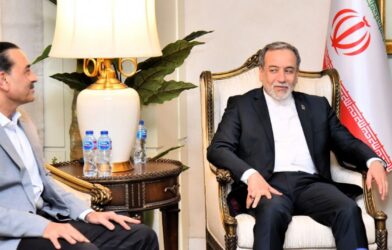
Islamabad, PK/Rochester, NY: The arrival of Iranian Foreign Minister Abbas Araghchi in Pakistan represents far more than another diplomatic engagement between two neighboring Muslim countries.
At a time when the United States and Iran remain trapped in a dangerous military confrontation, the visit has placed Islamabad at the center of one of the most consequential diplomatic efforts in the Middle East.
Behind the carefully worded statements about regional stability, mutual trust and bilateral cooperation lies a far more complicated negotiation involving Iran’s nuclear program, American military pressure, the Strait of Hormuz, Gulf security and Pakistan’s increasingly influential military leadership.
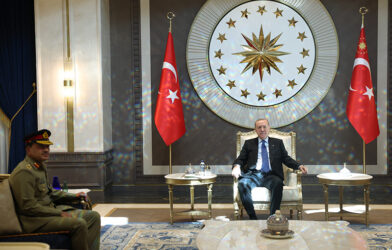
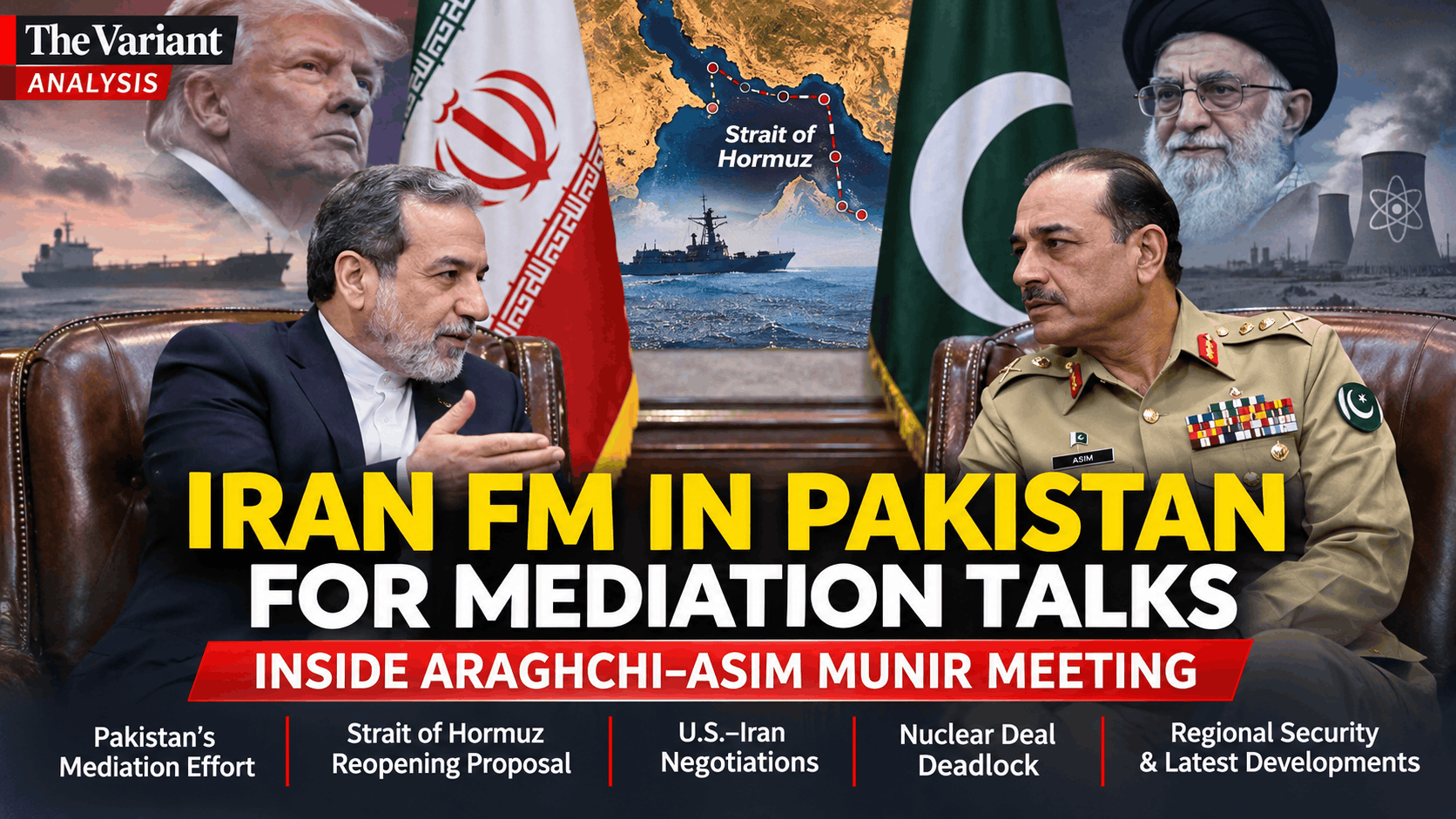
Araghchi’s meeting with Pakistan’s Chief of Defence Forces and Chief of Army Staff, Field Marshal Asim Munir, on November 16 in Rawalpindi was particularly significant.
The meeting took place during the Iranian foreign minister’s visit for the 30th Economic Cooperation Organization Council of Foreign Ministers.
Pakistan’s military publicly confirmed the engagement on November 17, emphasizing regional security, geopolitical developments and cooperation against shared threats.
The official account was diplomatic and restrained. However, the wider circumstances suggest that the encounter formed part of an increasingly urgent effort to identify a workable formula for restoring negotiations between Washington and Tehran.
Importantly, no detailed transcript or independently verified private account of the Munir–Araghchi conversation has been released, making it necessary to distinguish confirmed developments from strategic interpretation.
The Real Diplomatic Agenda: Reopening Hormuz and Reviving Negotiations
Perhaps the most revealing development surrounding the visit came not from the military meeting itself but from Pakistan’s Deputy Prime Minister and Foreign Minister, Ishaq Dar.
Following discussions with Araghchi, Dar disclosed that Iran had accelerated its proposal for reopening the Strait of Hormuz, reducing an earlier seven-day framework to a two-day plan.
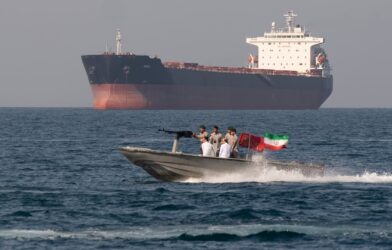
This development is particularly important because the waterway has become both an economic pressure point and a bargaining instrument in the wider confrontation.
Dar acknowledged that Washington had not yet responded to the latest Iranian proposal.
His statement demonstrated that Pakistan was not merely advocating dialogue in general terms but was actively handling a specific diplomatic initiative requiring an American decision.
The proposed two-day arrangement may offer a limited confidence-building opportunity, although its precise operational conditions have not been publicly established. Whether it would involve temporary commercial passage, security guarantees, naval coordination or reciprocal concessions remains unclear.
For Tehran, the Strait of Hormuz represents one of its strongest remaining sources of strategic leverage.
For Washington, reopening the passage is essential to reducing the economic consequences of the conflict without appearing to reward military coercion.
The immediate diplomatic challenge is therefore not simply persuading both sides to return to negotiations. It is designing a sequence in which neither government believes it has surrendered its principal bargaining advantage.
Why Iran Is Engaging Pakistan’s Military Leadership
The Iranian foreign minister’s decision to engage directly with Pakistan’s military chief highlights an important reality of regional diplomacy: Pakistan’s armed forces have become central participants in its international security negotiations.
Munir has maintained high-level contact with Iranian leaders throughout the conflict, including meetings in Tehran with President Masoud Pezeshkian and other senior political and security officials.
During his October visit, Iranian officials communicated their unwillingness to resume negotiations without meaningful American concessions.
Tehran’s conditions included relief from economic sanctions, an end to the American blockade of Iranian ports and guarantees against further military attacks.
The latest meeting must be understood against this background.
Pakistan’s military leadership offers Iran access to an institution capable of discussing security guarantees, military escalation risks and the practical implications of any ceasefire.
At the same time, Islamabad’s established relationships with Washington and Gulf capitals make it a potentially useful intermediary.
This does not mean Pakistan can dictate the outcome. Rather, it can facilitate communication between adversaries whose direct diplomatic channels remain politically sensitive.
For Munir, successful mediation would also reinforce Pakistan’s international standing and demonstrate that Islamabad possesses strategic influence beyond its traditional South Asian security concerns.
Inside the Negotiations: What the Public Record Reveals
The most important insight into the negotiations comes from examining the sequence of diplomatic contacts rather than assuming knowledge of conversations held behind closed doors.
Pakistan helped facilitate a ceasefire in April and hosted direct American-Iranian discussions on April 11 and 12. Subsequent negotiations produced the June 17 Islamabad Memorandum of Understanding, which established a framework for pursuing a more permanent settlement.
Nevertheless, the agreement failed to produce lasting peace. Renewed hostilities and mutual accusations of violations exposed the weakness of an arrangement that had not resolved the fundamental political and security disputes.
Pakistan and Qatar subsequently continued diplomatic engagement, seeking to preserve communication even as the military situation deteriorated.
The November discussions appear to be another attempt to transform temporary de-escalation into a negotiated political process.
One particularly revealing statement came from Araghchi himself, who publicly expressed confidence in Pakistan’s mediation efforts and described Islamabad as a trusted partner.
Such an endorsement matters because mediation can succeed only when the parties believe the intermediary will communicate their positions accurately.
Yet trust in Pakistan should not be confused with Iranian willingness to compromise on every substantive issue. Reporting surrounding the visit indicated that Tehran’s position on its nuclear program had not changed significantly.
This distinction is central to understanding the diplomatic deadlock: the channels of communication remain open, but the negotiating positions remain far apart.
The Nuclear Dispute: The Most Difficult Obstacle to Peace
Despite the attention surrounding the Strait of Hormuz, Iran’s nuclear program remains one of the most difficult obstacles to a comprehensive agreement.
Washington has demanded substantial restrictions on Iranian nuclear activities, while Tehran maintains that its nuclear program serves peaceful purposes and that its sovereign rights must be respected.
Iranian leaders have also insisted that enriched nuclear material remain inside the country, while American officials have pressed for restrictions capable of preventing a potential nuclear weapons capability.
The disagreement extends beyond uranium enrichment. Iran wants sanctions relief, access to frozen financial assets and credible assurances against renewed military operations.
Washington, meanwhile, faces the challenge of securing verifiable commitments without appearing to accept Tehran’s regional military activities.
The October discussions between Munir and Iranian officials illustrated the depth of this disagreement.
Tehran communicated a seven-point framework for peace, while emphasizing that the United States must take meaningful steps to rebuild confidence.
Consequently, the November meeting should not be interpreted as evidence of an imminent nuclear settlement. It is better understood as another effort to identify which concessions might make negotiations politically possible.
The Saudi Factor and Pakistan’s Strategic Balancing Act
Pakistan’s mediation is complicated by its security relationships with Saudi Arabia and Türkiye.
The three countries signed a mutual-defense arrangement in August, creating a new dimension in regional security cooperation.
Their subsequent diplomatic engagement with Iran in October demonstrated an effort to prevent the expanding conflict from dividing the region into irreconcilable military blocs.
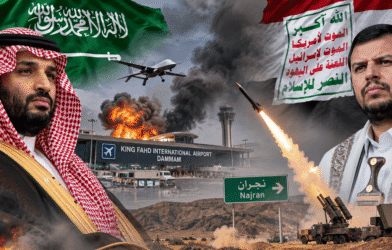
The situation is particularly sensitive because Iranian-backed Houthi attacks against Saudi targets have raised fears of further regional escalation.
Islamabad must therefore reassure Tehran that its mediation is genuine while maintaining confidence among Gulf partners who regard Iranian military influence with considerable concern.
This balancing act explains why Pakistan’s military and diplomatic establishments are working in parallel.
A settlement limited to Washington and Tehran might reduce direct hostilities but fail to address threats involving Saudi Arabia, Yemen and other regional actors.
Fresh Military Escalation Threatens the Diplomatic Opening
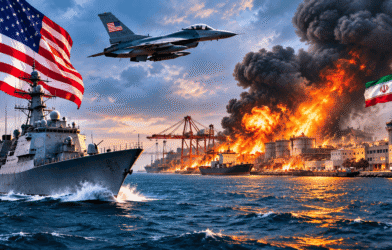
The fragility of the mediation effort became particularly apparent on November 17, when American and Iranian forces exchanged fire despite continuing diplomatic contacts.
According to Reuters, American aircraft struck an Iranian Revolutionary Guards missile-launch installation on Qeshm Island after Iran claimed to have targeted an American radar facility in Bahrain.
Bahrain reported intercepting the attack without casualties or damage.
Meanwhile, Oman and Qatar continued diplomatic efforts to prevent further escalation.
These developments reveal the central contradiction confronting mediators: diplomatic engagement is continuing, but neither side has established a dependable mechanism for preventing renewed military confrontation.
The economic consequences are equally significant. The disruption of shipping through the Strait of Hormuz has affected energy markets, while Brent crude traded around $92.76 per barrel in Reuters’ November 17 reporting.
For Pakistan, which depends heavily on imported energy, prolonged instability carries direct consequences for inflation, transportation costs, industrial production and foreign-exchange pressures.
Can Islamabad Deliver a Breakthrough?
The immediate test of Pakistan’s diplomatic influence will be Washington’s response to Iran’s proposed two-day Hormuz arrangement.
An American willingness to examine the proposal could create space for limited confidence-building measures, followed by negotiations over maritime security, sanctions and nuclear restrictions.
Conversely, another round of military escalation could undermine the political confidence necessary for further engagement.
The Munir–Araghchi meeting has demonstrated that Pakistan remains an important diplomatic channel between Iran and the United States.
It has not, however, established that either adversary is prepared to make the concessions required for lasting peace.
Ultimately, Islamabad’s greatest contribution may be its ability to keep negotiations alive when direct engagement becomes politically impossible.
The deeper significance of Araghchi’s visit lies in this reality: Pakistan is attempting to move beyond the role of a regional observer and become an active architect of diplomatic de-escalation.
Whether that ambition succeeds will depend less on the cordiality of meetings in Rawalpindi and more on the willingness of Washington and Tehran to convert diplomatic proposals into enforceable commitments.
For now, Pakistan has helped keep a narrow diplomatic opening alive. The next decisive move belongs to Washington and Tehran.