x
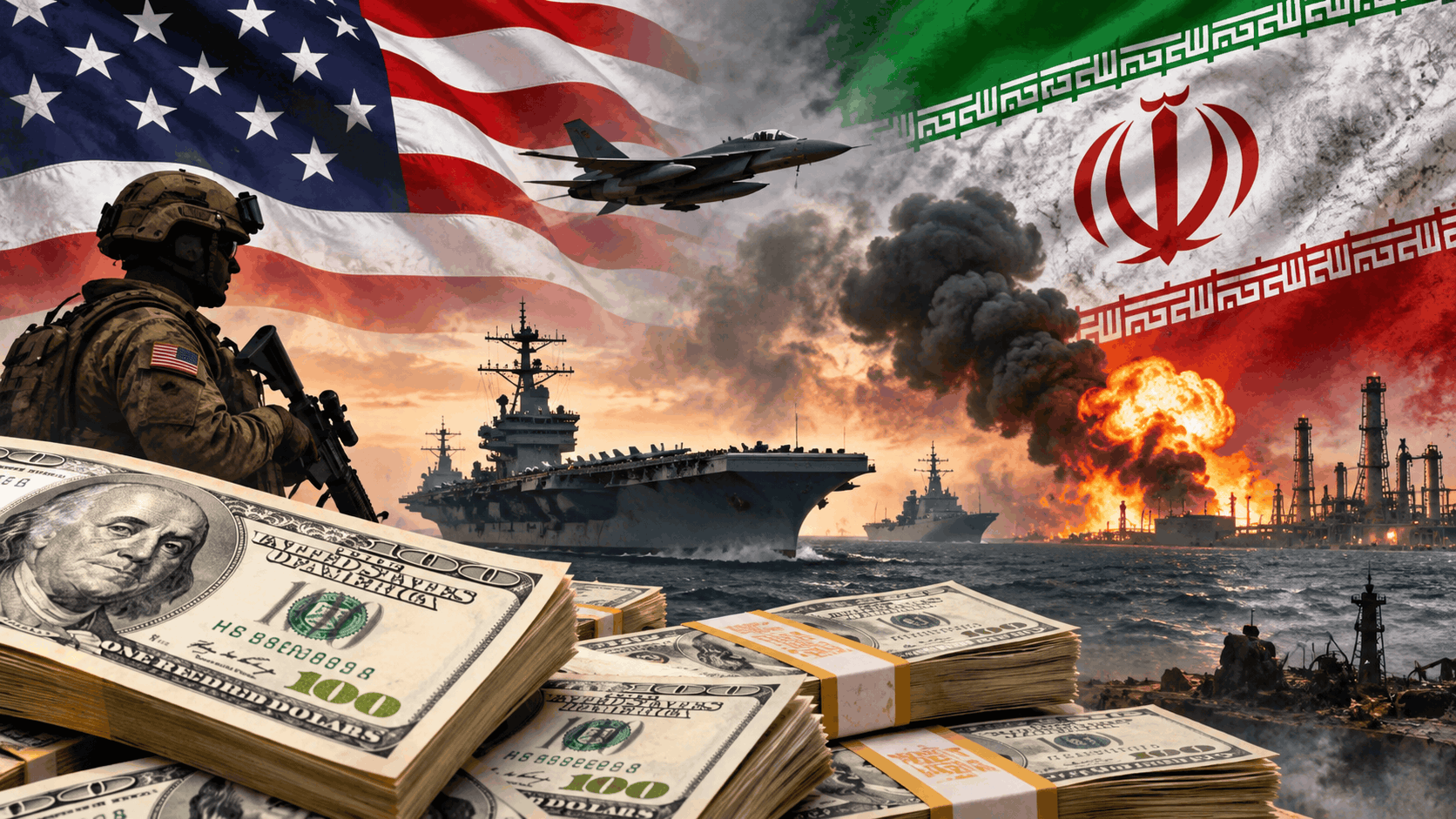
Rochester, NY: President Donald Trump has declared that the United States has effectively won its military confrontation with Iran, presenting the outcome as a demonstration of overwhelming American military superiority. Yet beneath the administration’s triumphant language lies a financial and strategic reality that complicates the meaning of victory.
The conflict may have entered a period of reduced military engagement, but American warships remain deployed, troops continue operating across the Middle East, and billions of dollars are being spent maintaining a military posture designed to deter renewed Iranian aggression.
During a Veterans Day ceremony at Arlington National Cemetery on November 11, Trump insisted that Washington had won but wanted complete victory rather than a partial settlement.
His earlier remarks suggested Iran’s military capabilities had been severely weakened and that maintaining the existing balance was preferable to launching another major offensive.
However, military dominance does not necessarily constitute strategic victory. The fundamental question confronting Washington is whether the United States has achieved a sustainable political settlement or merely entered an expensive period of armed containment.
The Financial Reality: Nearly $50 Billion and Counting
The financial consequences of the Iran conflict are increasingly difficult to reconcile with the administration’s declaration of victory.
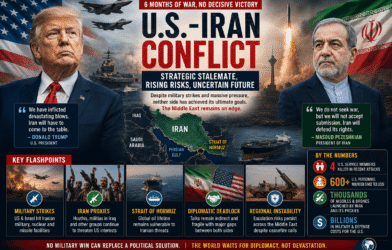
According to figures from U.S. Central Command reported by CBS News, the conflict had cost the American military approximately $47.1 billion by mid-October 2026.
This included approximately $29 billion for replacing expended munitions, $6.1 billion for replacing lost equipment, and $11.9 billion in additional operational and personnel-support expenditures.
The Congressional Budget Office independently estimated that military operations had cost approximately $38 billion through August 1. Its assessment projected continuing expenses of between $2 billion and $3 billion monthly, depending on the intensity of military activity.
These estimates cover different reporting periods and should not be added together. Nevertheless, they demonstrate how a conflict can continue generating enormous financial obligations even when major offensive operations decline.
The broader financial exposure extends beyond direct operational spending. Damage to military installations, replenishment of strategic weapons inventories, and long-term equipment maintenance could substantially increase the ultimate cost.
The administration has also sought additional military appropriations, raising questions about whether Congress will authorize further expenditures for a conflict the president describes as militarily resolved.
A Naval Blockade That Continues to Consume Billions
One of the most expensive dimensions of America’s continuing military commitment is its naval blockade of Iranian ports and associated operations around the Strait of Hormuz.
Maintaining aircraft carriers, destroyers, surveillance aircraft, logistics vessels, and thousands of deployed personnel requires substantial resources regardless of whether American forces are actively launching attacks.
According to reporting published by an America based publication on November 14, the United States maintained two aircraft carriers, eleven destroyers, and a cruiser in the Arabian Sea during early November, alongside additional naval deployments in the Red Sea and Mediterranean.
These deployments represent more than a symbolic demonstration of military strength. They require continuous fuel supplies, maintenance, intelligence operations, defensive readiness, and personnel support.
Every additional month of deployment increases operational costs and places further pressure on American military resources.
The blockade also creates a strategic contradiction. Washington is attempting to pressure Tehran economically while simultaneously sustaining an expensive military operation that imposes costs on American taxpayers and disrupts international commerce.
The Hidden Cost to American Households
The financial consequences of the conflict extend far beyond the Pentagon’s budget.
Disruptions involving the Strait of Hormuz, one of the world’s most important energy transportation corridors, have contributed to volatility in international oil markets.
Higher energy prices affect American consumers through gasoline, household heating, transportation, food distribution, and manufacturing expenses.
The Congressional Budget Office identified disrupted oil and natural gas shipments as major sources of inflationary pressure associated with the conflict.
Meanwhile, estimates from the National Energy Assistance Directors Association, projected average household heating costs of approximately $1,002 this winter, representing a 7.1 percent increase from the previous winter.
For households dependent on heating oil, projected expenses were considerably higher. These increases cannot all be attributed exclusively to the Iran conflict, but energy-market instability has intensified the pressure facing consumers.
For Americans already struggling with housing expenses, healthcare costs, insurance premiums, and everyday necessities, continued overseas military expenditures raise difficult questions about national spending priorities.
The administration must explain not only how much the war has cost, but also what measurable economic and security benefits Americans can expect from that investment.
Military Superiority Does Not Guarantee Strategic Success
The United States possesses overwhelming advantages over Iran in conventional military capabilities, including advanced aircraft, naval power, intelligence systems, and precision weapons.
Nevertheless, Iran’s ability to threaten regional shipping, maintain asymmetric military capabilities, and impose costs on American forces demonstrates the limitations of conventional superiority.
The destruction of military infrastructure does not automatically eliminate a country’s capacity to create instability.
Iran’s remaining missile capabilities, regional relationships, and influence over strategically important maritime routes complicate Washington’s calculations.
More importantly, the central political questions surrounding Iran’s nuclear program, sanctions, maritime security, and regional military activities remain unresolved.
Trump’s declaration of victory may accurately reflect the degradation of important Iranian military capabilities. But a durable strategic victory would require a settlement that prevents renewed confrontation without demanding an indefinite American military commitment.
As the Stimson Center has argued, evaluating the conflict requires comparing its costs with clearly defined national security objectives rather than relying exclusively on battlefield achievements.
A Political Reckoning after the Midterm Elections
The timing of Trump’s victory declaration carries considerable political significance.
The November 2026 midterm elections delivered major setbacks to Republicans, with Democrats securing control of both chambers of Congress amid public dissatisfaction over economic pressures and the prolonged Iran confrontation.
Although election outcomes reflect multiple political and economic factors, the conflict became an important issue in debates over presidential judgment, federal spending, and the administration’s foreign policy priorities.
Trump now faces a changed political environment in which congressional scrutiny of military expenditures and the legal basis for continued operations could intensify.
For Democrats, the financial burden of the conflict presents an opportunity to challenge the administration’s priorities. Republicans, meanwhile, must reconcile support for military strength with concerns about federal spending and domestic economic pressures.
However, oversight should not become merely a partisan contest. Congress has a responsibility to demand transparent accounting, realistic strategic objectives, and a credible pathway toward reducing military commitments.
The Strategic Cost of Depleting American Military Resources
Beyond the immediate financial burden, the Iran conflict has generated concerns about America’s ability to respond to future security emergencies.
The Congressional Budget Office warned that extensive expenditure of missile-defense interceptors could leave reduced inventories for several years.
Such shortages could become particularly consequential in a potential confrontation involving China, whose missile capabilities would pose substantial challenges to American forces in the Indo-Pacific.
Rebuilding advanced weapons inventories requires industrial capacity, specialized components, skilled labor, and time.
Consequently, the strategic cost of the Iran conflict cannot be measured solely through dollars already spent. It must also account for military capabilities temporarily unavailable for other national security contingencies.
The longer American forces remain committed to maintaining pressure on Iran, the greater the possibility that Washington will confront difficult trade-offs between Middle Eastern operations and other strategic priorities.
Diplomacy Remains the Only Sustainable Exit
Despite the administration’s emphasis on military achievement, diplomacy remains essential to transforming battlefield advantages into lasting stability.
Negotiations involving Washington, Tehran, and regional intermediaries offer a possible route toward reducing hostilities, addressing nuclear concerns, and restoring greater predictability to energy markets.
However, significant disagreements remain over sanctions relief, Iranian nuclear activities, maritime restrictions, and compensation for wartime destruction.
Trump has indicated that additional military action may be unnecessary if negotiations produce a sufficiently strong agreement. Nevertheless, his administration continues maintaining substantial military pressure while talks proceed.
The Washington Post
The challenge is to ensure that military pressure supports a realistic diplomatic outcome rather than becoming a permanent substitute for one.
An indefinite blockade could preserve American leverage, but it would also prolong financial costs, increase regional uncertainty, and sustain the possibility of renewed confrontation.
The Final Verdict: Winning the War Is Not the Same as Ending It
President Trump’s assertion that America has won militarily may resonate with those who view the destruction of Iranian military capabilities as evidence of decisive success.
Yet the economic and strategic consequences suggest a more complicated outcome.
Nearly $50 billion in reported military expenditures, continuing naval deployments, depleted weapons inventories, and unresolved diplomatic disputes demonstrate that the conflict’s consequences remain substantial.
The United States may have established military superiority, but the ultimate measure of success will be whether Washington can convert that advantage into a stable political arrangement while reducing the burden on American taxpayers.
A war does not become inexpensive simply because the shooting slows. Nor does a declaration of victory eliminate the financial responsibilities created by military operations.
For ordinary Americans, the decisive question is no longer simply whether their country defeated Iran militarily. It is whether that victory will deliver lasting security, economic stability, and a credible end to extraordinary military spending.
Until American forces can safely reduce their deployments, the financial burden declines, and a sustainable diplomatic settlement emerges, Washington’s declared victory will remain incomplete—not necessarily on the battlefield, but in the lives and finances of the Americans paying for it.