


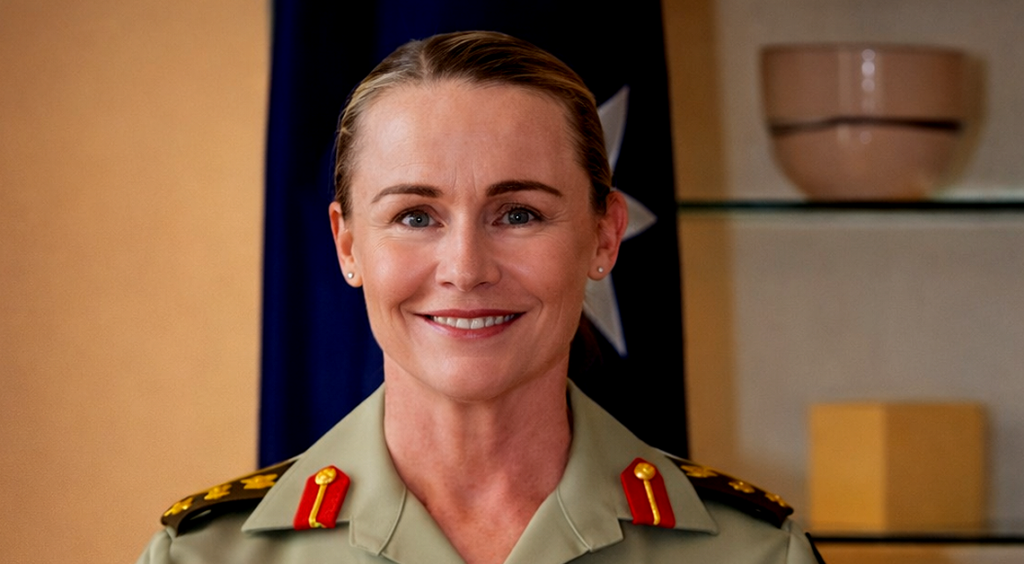
Melbourne, AU: The appointment of Susan Coyle as Chief of Army marks a defining moment in the evolution of civil-military institutions in advanced democracies. Announced in April 2026, her elevation represents the first time in the 125-year history of the Australian Army that a woman will lead a service branch.
This development is not merely symbolic; it reflects deeper structural and cultural transformation within the Australian Defence Force (ADF), which has been under increasing pressure to modernize, diversify, and respond to both geopolitical challenges and internal institutional reforms.
Biography and Military Career of Susan Coyle
Susan Coyle began her military journey in 1987 when she enlisted in the Army Reserves, eventually building a career spanning nearly four decades. Her professional trajectory reflects a blend of operational command, strategic planning, and technological expertise.
She has served at tactical, operational, and strategic levels, including deployments in Afghanistan and leadership roles in multinational operations such as those in Timor-Leste and the Solomon Islands. Her command of the 17th Signal Regiment and her role as Chief of Joint Capabilities highlight her specialization in communications, cyber, and information warfare—domains increasingly central to modern military doctrine.
Coyle’s career achievements are particularly significant in the context of contemporary warfare, where digital infrastructure, intelligence integration, and joint operations define battlefield success. Her appointment signals a shift toward prioritizing these capabilities in Australia’s defense posture.
Military Structure in Australia: Context of the Appointment
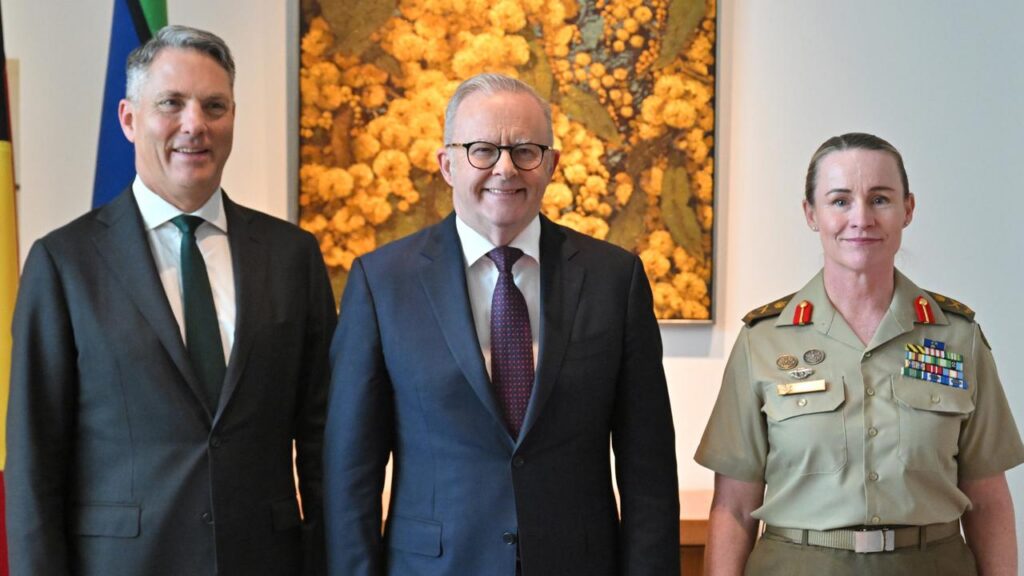
Australia’s military leadership structure is hierarchical but joint in nature. The Chief of Army, a three-star general, operates under the Chief of the Defence Force, the highest-ranking military officer responsible for overall command.
The appointment of Coyle is part of a broader leadership reshuffle that includes the promotion of Vice Admiral Mark Hammond as Chief of the Defence Force. This simultaneous restructuring reflects a strategic pivot toward modernization amid rising Indo-Pacific tensions.
Is Australia the Only Country with a Female Military Chief?
The assertion that Australia is the only country to appoint a woman as a military chief is not entirely accurate, though its case remains highly significant.
Australia is among a small group of developed nations that have elevated women to top-tier military leadership, but it is not alone. However, what makes Australia’s case distinct is that Coyle becomes the first woman to lead any service branch in the country’s history, rather than the overall armed forces.
Comparative Analysis with Developed Countries
United States: In the United States, women have reached very senior positions, including service secretaries and combatant command roles. However, no woman has yet served as Chairman of the Joint Chiefs of Staff—the highest uniformed military position. The U.S. military, though advanced in integration, still reflects structural ceilings at the absolute top.
Germany: Germany has demonstrated progress in civilian defense leadership, with figures like Ursula von der Leyen serving as Defense Minister. However, the top uniformed military leadership has remained male-dominated, indicating a gap between political and military gender representation.
France: In France, women have held senior command roles and strategic positions, but none have led the entire armed forces or a primary service branch like the army. The French system remains hierarchical with slow gender mobility at the top.
Israel: Israel is often cited as a leader in integrating women into combat roles. However, despite compulsory military service for women, the position of Chief of the General Staff has never been held by a woman. Structural and operational traditions continue to limit advancement to the highest command.
India: In India, women have made historic strides, including permanent commissions and command roles in certain branches. Yet, no woman has been appointed as Chief of Army Staff. Institutional inertia and traditional hierarchies remain key barriers.
Pakistan: Pakistan has seen women rise in medical and administrative corps, but combat leadership and top command roles remain exclusively male. The Chief of Army Staff position continues to reflect deeply entrenched gender norms.
Women Empowerment and Structural Transformation
Coyle’s appointment must be viewed within the broader framework of gender inclusion in the ADF. Women currently constitute around 21% of personnel and nearly 18.5% of senior leadership, with targets to increase participation to 25% by 2030.
This trajectory reflects deliberate policy interventions aimed at dismantling historical barriers, including the lifting of restrictions on women in combat roles and increased recruitment initiatives. It also comes at a time when the military faces scrutiny over issues such as harassment and institutional culture, making representation at the top both a symbolic and practical necessity.
Her leadership is therefore not just a milestone but a strategic instrument to reshape organizational culture, improve diversity, and enhance operational effectiveness in a technologically evolving battlefield.
Strategic and Symbolic Implications
The appointment of Susan Coyle represents a convergence of strategic necessity and social transformation. Modern warfare increasingly values cognitive, technological, and network-centric capabilities—areas where traditional gender biases hold less relevance.
At the same time, her rise challenges long-standing perceptions of military leadership as inherently male-dominated, particularly in combat-oriented institutions.
Conclusion
Australia’s decision to appoint a female Chief of Army is both historic and strategically aligned with contemporary defense needs. While it does not make Australia the only country to elevate women to senior military roles, it places the country among a progressive group of nations redefining military leadership norms.
In comparative perspective, many developed and developing states have advanced in integrating women but continue to lag in granting them top command authority. Australia’s move, therefore, stands as a benchmark—not of exclusivity, but of momentum—toward a more inclusive and modern military order.


