


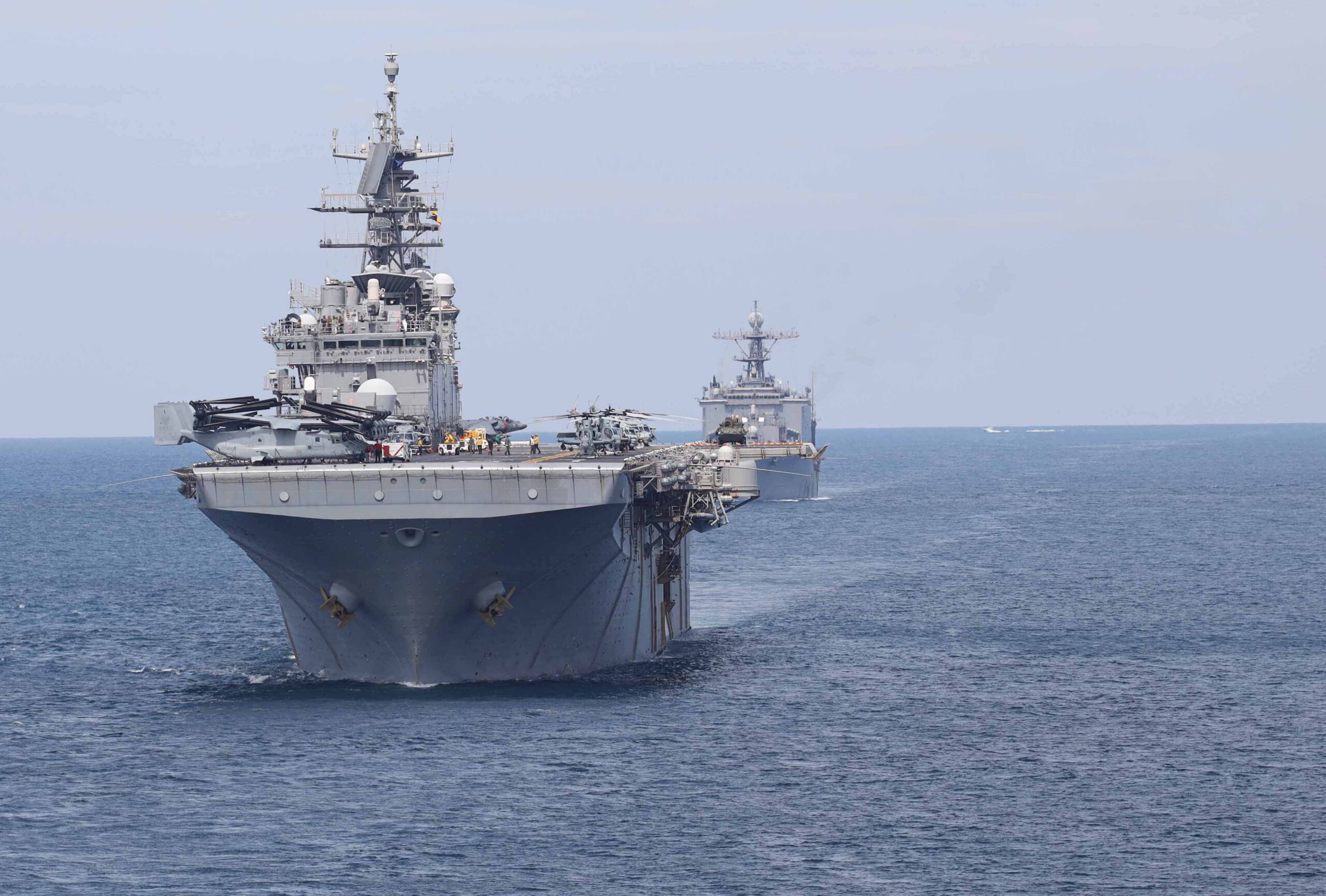
Washington, D.C/Doha, QR: The United States has announced that its naval containment operation in the Strait of Hormuz has been “fully implemented,” marking one of the most significant maritime escalations in recent years. At the same time, Washington has signaled that diplomatic engagement with Iran remains possible if Tehran agrees to de-escalation.
According to U.S. Central Command (CENTCOM), the operation reached full operational capacity within approximately 36 hours of activation. Officials said this resulted in the effective restriction of maritime movement linked to Iranian-controlled ports and increased oversight of key shipping routes in the region.
The Strait of Hormuz, through which nearly 20 percent of global oil and liquefied natural gas shipments normally pass, has now become the center of an intensifying geopolitical standoff.
Maritime Enforcement and Operational Control
CENTCOM described the mission as having achieved “operational precision,” stating that commercial vessels associated with Iranian-linked maritime activity were redirected or turned away during the early phase of enforcement. U.S. military reportedly indicated that several merchant ships altered course shortly after entering monitored zones, reflecting the immediate impact of the deployment.
The operation reportedly involves more than 10,000 deployed personnel supported by a fleet of over a dozen warships and continuous aerial surveillance conducted through drones and fighter aircraft.
U.S. officials have stated that within the first 24 to 36 hours, no unauthorized vessel successfully completed transit through restricted areas under surveillance, signaling what they describe as functional maritime control over critical segments of the waterway.
U.S. Position: Pressure Strategy with Diplomatic Messaging
Despite the military escalation, the United States has simultaneously emphasized that the blockade is not intended to be permanent.
President Donald Trump, speaking from Washington, described the action as a necessary enforcement measure aimed at preventing what he termed Iranian economic coercion through control of maritime routes. At the same time, he reiterated that diplomatic channels remain open should Iran choose to reduce tensions.
In a separate statement released via social media, the president said the United States is prepared for direct talks without preconditions if Iran agrees to halt activities viewed by Washington as destabilizing in the Strait of Hormuz.
The White House also clarified that humanitarian and non-sanctioned commercial shipments could still be permitted under inspection frameworks, suggesting an effort to avoid a complete disruption of global energy flows.
Global Energy Impact and Market Volatility
The Strait of Hormuz remains one of the most strategically important maritime corridors in the world. Prior to the current escalation, approximately one-fifth of global oil trade passed through this narrow passage connecting the Persian Gulf to the Gulf of Oman.
Following the announcement of the blockade, global oil markets reacted sharply, with crude prices briefly surging above the 100-dollar-per-barrel threshold.
Shipping insurance costs for vessels operating in the region increased significantly, and several major tanker operators began adjusting routes to reduce exposure to potential risk zones.
Analysts have warned that a prolonged disruption could remove millions of barrels of oil per day from global supply chains, placing additional pressure on inflation-sensitive economies in Europe and Asia.
Iran’s Response and Escalating Rhetoric
Iran strongly condemned the U.S. action, calling it an illegal interference in international maritime law. Iranian officials described the blockade as an act that amounts to piracy in international waters and warned that it would not go unanswered.
Tehran has also indicated that the Strait of Hormuz remains a strategic lever in its regional policy. Senior Iranian military figures warned that sustained pressure on maritime exports could trigger broader regional consequences, including disruptions beyond the Gulf.
Iranian leadership has maintained that any attempt to fully restrict its oil exports would carry serious repercussions for global energy security and regional stability.
International Reaction and Diplomatic Concerns
The international response has been mixed, with major global powers expressing concern over the potential consequences of escalating tensions in one of the world’s most important energy corridors.
China, a key importer of Iranian crude, has called for immediate de-escalation, warning that prolonged disruption of the Strait of Hormuz could have severe consequences for global economic stability.
Several European governments have also expressed concern that the situation could undermine already fragile regional security conditions. While the United Kingdom has not joined the operation, it has urged restraint from all sides and emphasized the importance of maintaining freedom of navigation in international waters.
Diplomatic observers have described the current standoff as one of the most dangerous maritime confrontations in decades, highlighting the risk of miscalculation in a highly militarized environment.
Diplomatic Off-Ramp and Backchannel Efforts
Despite rising tensions, U.S. officials continue to stress that diplomatic efforts remain active. According to officials familiar with ongoing discussions, backchannel communications are still taking place through intermediaries, focusing on possible de-escalation measures and a structured path toward renewed dialogue.
These discussions reportedly include the potential easing of maritime restrictions, limitations on Iran’s nuclear-related activities, regional security guarantees, and a phased approach to reopening commercial shipping lanes under monitored conditions.
Analysts suggest that the current U.S. approach combines economic and military pressure with conditional diplomacy, designed to bring Iran back to negotiations from a position of reduced leverage.
The declaration that the Strait of Hormuz blockade has been fully implemented marks a significant escalation in U.S. maritime strategy in the Gulf region. However, the simultaneous emphasis on diplomacy reflects an effort to balance coercive pressure with the possibility of negotiation.
The coming days are likely to determine whether this strategy leads to renewed diplomatic engagement or further confrontation. As global energy markets react and regional tensions intensify, the Strait of Hormuz remains at the center of a high-stakes geopolitical contest with global consequences.


