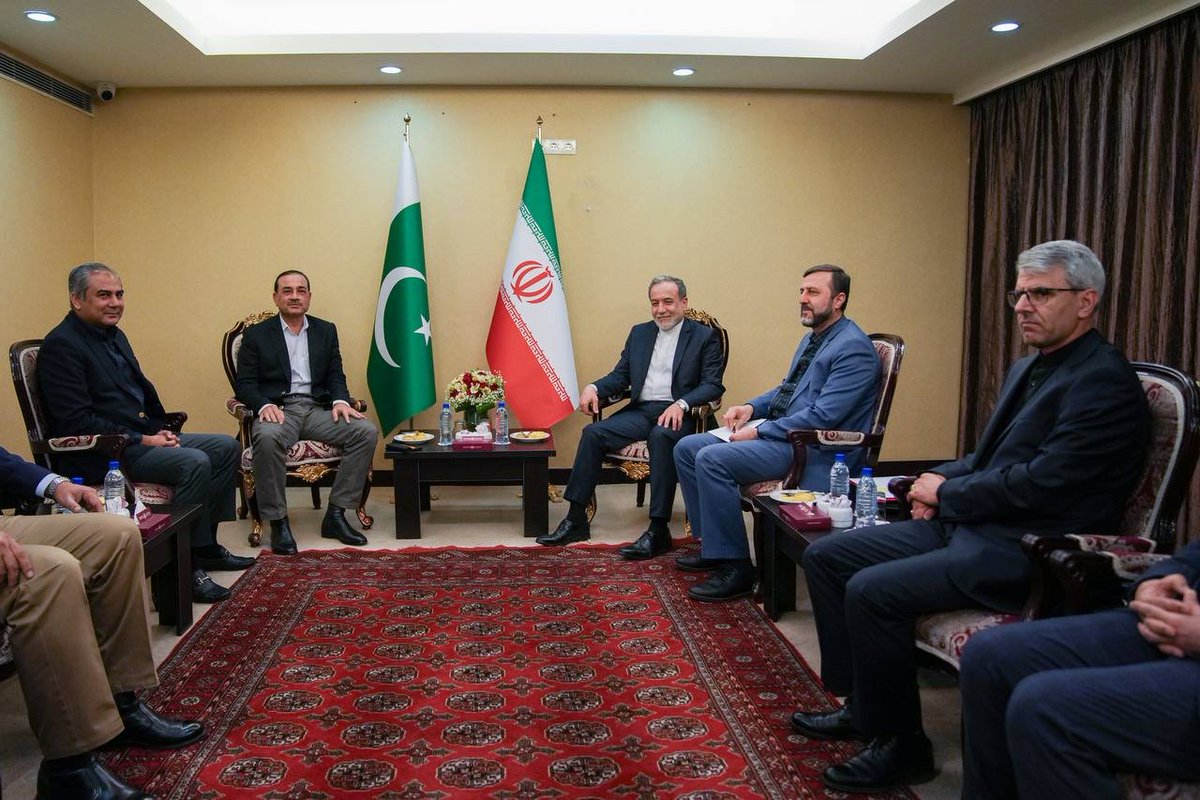
Rochester, NY: The recent visit of Pakistan’s Army Chief, Asim Munir, to Tehran marks a pivotal moment in the evolving geopolitical landscape of the Middle East. Coming in the immediate aftermath of the first round of the Islamabad Talks, the visit reflects Islamabad’s transition from a peripheral actor to a central diplomatic broker between Washington and Tehran.
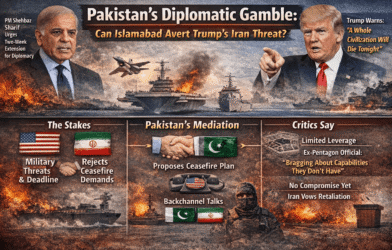
At stake is not merely a ceasefire extension, but the broader question of whether coercive diplomacy—particularly under Donald Trump—can coexist with meaningful negotiations.
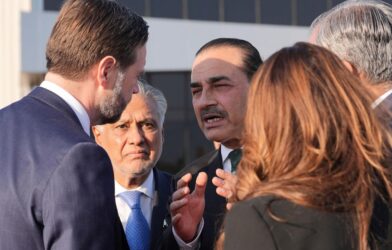
Munir’s Tehran visit was not ceremonial; it was strategic and message-driven. Pakistani officials indicated that the army chief carried key diplomatic messages between Washington and Tehran while assessing Iran’s readiness for further engagement.
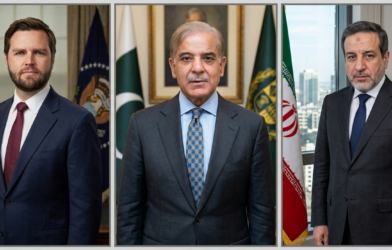
This reflects a coordinated civil-military approach, with Shehbaz Sharif and Ishaq Dar publicly supporting the continuation of dialogue under what is increasingly being described as the “Islamabad process.”
The involvement of Pakistan’s military leadership highlights the security-heavy nature of the crisis. By deploying its most powerful institutional actor, Islamabad is signaling both seriousness and credibility to both sides—something few regional players can currently offer.
Momentum toward a second round of US–Iran negotiations appears to be solidifying, with Islamabad expected to host the next phase of talks. Crucially, Donald Trump himself confirmed that discussions could resume “very soon,” expressing confidence in Pakistan’s role as a mediator.
In a notable shift in tone, Trump openly praised Pakistan’s efforts, describing its leadership as “very helpful” and emphasizing that Pakistan had played a “constructive and important role” in bringing both sides closer to the negotiating table.
He singled out Asim Munir, calling him “a strong and effective leader” who had done “a great job” facilitating communication between Washington and Tehran.
Such remarks represent a significant diplomatic endorsement, particularly given the historically fluctuating nature of U.S.–Pakistan relations. Trump’s praise appears aimed at reinforcing Islamabad’s intermediary role while also signaling to Tehran that the channel remains credible.
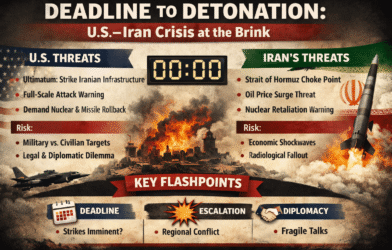
The most controversial element remains Trump’s stance on the Strait of Hormuz. Following the initial breakdown in talks, Trump announced a naval blockade targeting Iranian maritime routes, effectively turning one of the world’s most critical corridors into a pressure point.
In public messaging, Trump framed the move as an effort to “open” or secure the strait for global trade, suggesting that U.S. actions were stabilizing rather than escalatory. However, this framing invites skepticism.
The blockade has disrupted commercial shipping and heightened global energy uncertainty, raising concerns that Washington’s approach is less about stability and more about leverage.
There is an inherent contradiction in claiming to safeguard maritime flow while simultaneously militarizing it. Trump’s narrative of “opening Hormuz” overlooks the fact that such tensions are, in part, the result of U.S. escalation itself. The policy, therefore, risks undermining the very diplomatic process it claims to support.
Iranian leadership, including Abbas Araghchi, has adopted a cautious but engaged stance. Tehran has signaled willingness to participate in a second round of talks but remains wary of U.S. intentions.
Iranian officials have argued that previous negotiations came close to a breakthrough, only to be derailed by shifting U.S. demands. They have also linked progress to broader regional dynamics, including security concerns and guarantees related to sanctions and nuclear policy.
This dual approach—engagement coupled with strategic skepticism—reflects Iran’s effort to avoid isolation while preserving leverage in a high-pressure environment.
Pakistan’s leadership has consistently framed its role as one of neutral facilitation. Statements from Islamabad emphasize peace, regional stability, and the urgency of avoiding a wider conflict that could disrupt global energy markets.
The military establishment, led by Asim Munir, has projected Pakistan as a trusted intermediary capable of bridging deep geopolitical divides. Trump’s public praise further strengthens this perception, giving Islamabad added diplomatic weight on the global stage.
The anticipated second round of talks in Islamabad will unfold under far greater pressure than the first. Unlike earlier engagements, these negotiations will take place against the backdrop of active economic coercion and military signaling.
Trump’s optimistic claims that a resolution is “very close” contrast sharply with the ongoing tensions in the region. The coexistence of dialogue and confrontation underscores the fragile nature of the current process.
The Tehran visit of Asim Munir highlights Pakistan’s emergence as a key diplomatic actor in one of the world’s most volatile crises. Trump’s unusually positive remarks about Pakistan and its leadership add a new dimension to this role, signaling both trust and strategic reliance.
However, the broader picture remains complex. While Pakistan’s mediation and the confirmation of a second round of talks offer cautious optimism, the aggressive posture of the United States—particularly regarding the Strait of Hormuz—raises fundamental questions about the coherence of its strategy.
Whether Islamabad becomes the stage for a genuine diplomatic breakthrough or merely a pause in escalating tensions will depend on whether all parties can move beyond rhetoric and align their actions with the stated goal of peace.