


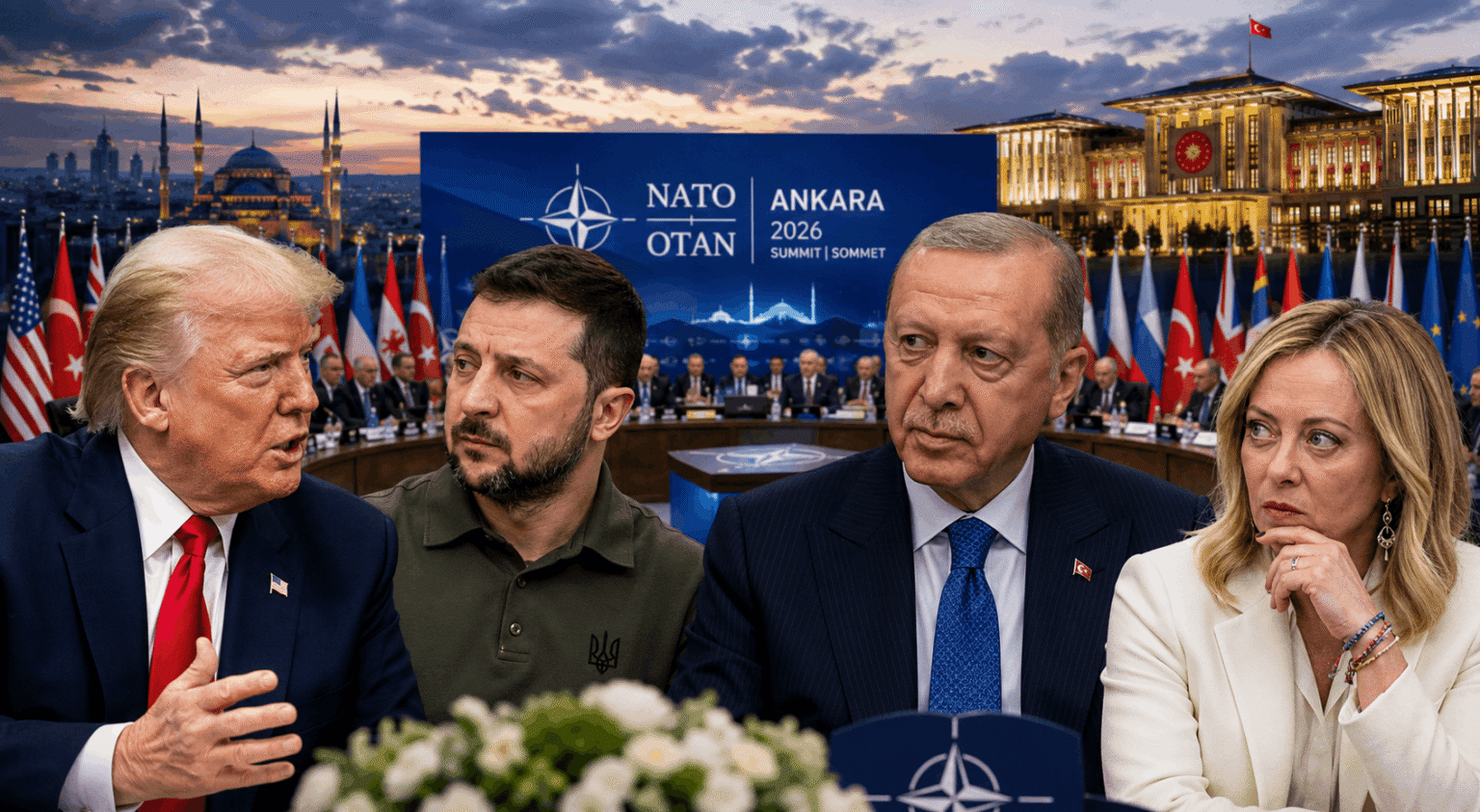
ANKARA — The 2026 NATO Summit in Ankara was never going to be a routine gathering of allied leaders. Convened on July 7 and 8 at Türkiye’s Beştepe Presidential Complex, the summit brought together NATO heads of state and government at a moment when the alliance is being pressured simultaneously by the Russia-Ukraine war, Middle Eastern instability, disputes over European defence spending and renewed questions about the political durability of the transatlantic relationship.
The official mission was to review progress since NATO’s 2025 summit in The Hague and turn previous commitments into military capability, greater defence production and continued support for Ukraine. NATO Secretary General Mark Rutte entered the summit arguing that the task was now to convert promises into “concrete results.”
Yet the political reality in Ankara was considerably more complicated. President Donald Trump arrived after publicly confronting allies on several issues, including the Iran conflict, Greenland and burden-sharing. European governments, meanwhile, were attempting to demonstrate that their increased military expenditure and defence contracts were evidence of a stronger NATO rather than simply an effort to satisfy Washington.
By the summit’s conclusion, Trump was publicly talking about “a lot of unity,” while reports from inside the closed meeting said he told NATO leaders that the United States wanted to remain with them. The Ankara gathering therefore became an exercise in managing contradictions: an alliance worried about American unpredictability but still dependent on American power, and an American president critical of NATO partners while continuing to position Washington at the centre of the alliance.
Trump and Zelenskyy: From Political Friction to a Pragmatic War Partnership
One of the summit’s most closely watched encounters was the meeting between Trump and Ukrainian President Volodymyr Zelenskyy.
Their relationship has passed through periods of extraordinary political tension. But in Ankara, the public atmosphere surrounding their engagement reflected a more transactional and strategically focused relationship. Ukraine arrived at the summit with an urgent military argument: Russian ballistic missile and drone attacks have made air defence not simply another item on Kyiv’s weapons list, but a question of national survival.
Zelenskyy had been pressing NATO countries for effective anti-ballistic systems and additional interceptors. NATO itself has repeatedly identified Patriot interceptors as essential to counter Russian ballistic attacks against Ukrainian cities and critical infrastructure.
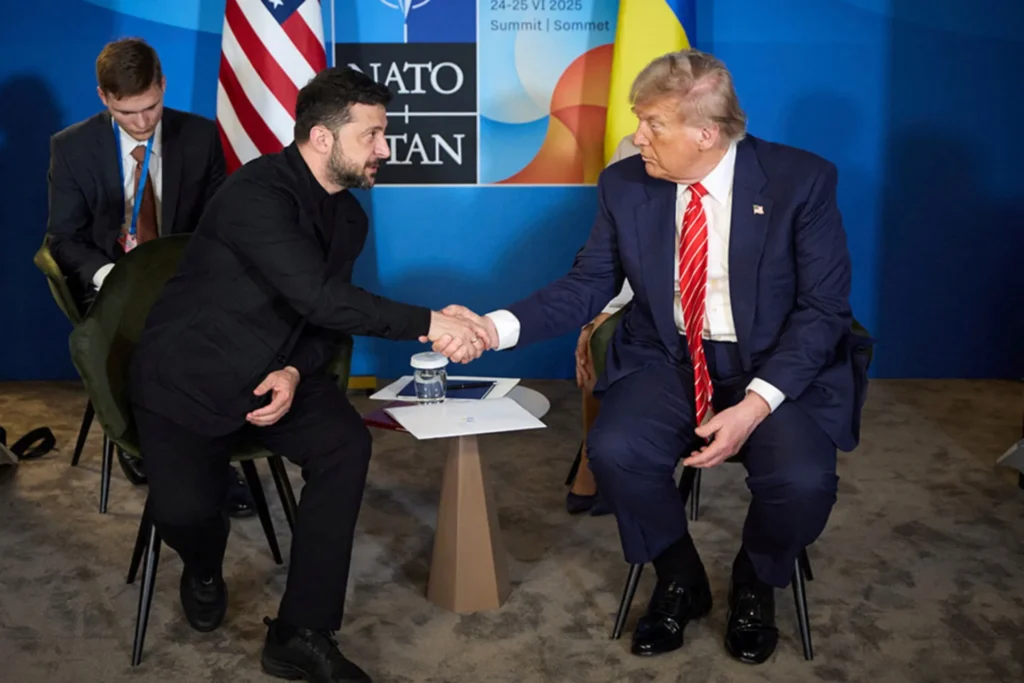
Trump delivered perhaps the most significant Ukraine-related political signal of the summit when he indicated that the United States could permit Ukraine to manufacture Patriot air-defence systems under license. He also praised Ukraine’s rapidly developing drone capabilities and expressed interest in the United States potentially purchasing Ukrainian drone technology.
The significance extends beyond a single weapons announcement.
For years, Ukraine’s defence strategy has depended heavily on the delivery schedules, political decisions and industrial capacity of Western countries. Licensing the production of a sophisticated American defence system—or developing a serious framework towards such production—could represent a gradual shift from emergency military assistance towards deeper defence-industrial integration.
There are, however, enormous technical and political questions. Patriot systems are complex, highly sensitive military platforms. Production involves sophisticated supply chains, intellectual property, trained personnel and security controls. Trump’s public suggestion therefore should not automatically be interpreted as an immediately executable manufacturing agreement.
But politically, the message was unmistakable: Washington was discussing Ukraine not only as a recipient of American weapons but potentially as a defence production partner.
During the public media exchanges surrounding the Trump-Zelenskyy meeting, the American president also suggested that Russian President Vladimir Putin and Zelenskyy could eventually meet to discuss ending the war. Trump portrayed both leaders as having incentives to reach an agreement, while Zelenskyy continued to emphasise the need for credible security and military strength.
This revealed the fundamental difference that remains between Washington’s negotiating instinct and Kyiv’s security calculation.
Trump views direct negotiation as a potential mechanism to stop the war. Zelenskyy fears that negotiations conducted without military leverage could simply freeze the conflict and allow Russia to rebuild its forces.
The two positions are not necessarily irreconcilable. Ankara suggested the emerging possibility of a formula in which Ukraine receives stronger air defence and military capabilities while diplomatic channels remain open.
In other words, Trump may increasingly see military assistance not as an alternative to negotiations but as leverage for negotiations.
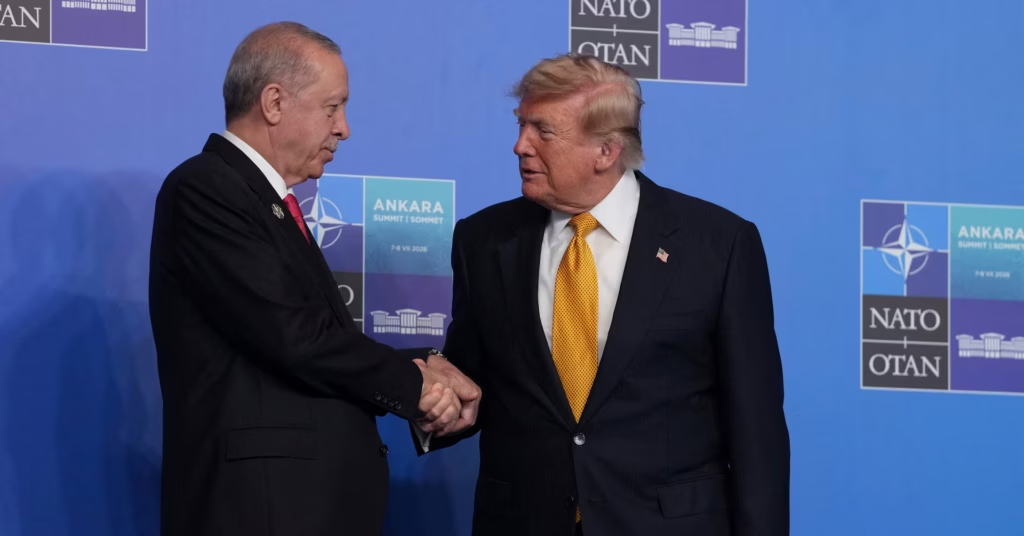
Erdoğan’s Summit: Türkiye Demands Equality inside the Western Defence System
For Turkish President Recep Tayyip Erdoğan, hosting NATO in Ankara was itself a demonstration of Türkiye’s growing strategic importance.
Türkiye controls access between the Black Sea and the Mediterranean through the Turkish Straits. It maintains NATO’s second-largest military by personnel, has developed a rapidly expanding defence industry and maintains political channels with Russia, Ukraine, European governments and Middle Eastern powers.
Erdoğan used the summit to deliver a direct message to NATO allies: defence cooperation cannot be built on political exclusion and restrictions against other alliance members.
He urged allies to remove defence-industry restrictions and criticized practices that discriminate between NATO members on the basis of European Union membership. Erdoğan specifically pushed for Türkiye to participate more fully in European security initiatives, including mechanisms connected to the EU’s defence financing architecture.
This was not merely an economic complaint.
Ankara has long argued that European countries expect Türkiye to provide military capabilities, geographical access and regional influence while simultaneously restricting Turkish participation in certain European defence programmes.
Erdoğan’s position in Ankara was essentially that NATO cannot demand strategic solidarity while maintaining industrial barriers between allies.
Türkiye also highlighted its own defence expansion. Erdoğan said Ankara was moving towards NATO’s higher defence spending ambitions and announced major additional investment in the country’s “Steel Dome” integrated air-defence project. According to reporting from the summit, the programme is expected to receive a $24 billion boost.
The timing was important.
Modern warfare in Ukraine and the Middle East has demonstrated the strategic importance of layered air and missile defence. Ballistic missiles, cruise missiles and relatively inexpensive drones can overwhelm traditional defensive systems or force countries to expend costly interceptors.
Türkiye wants to position its Steel Dome programme as part of the answer to that changing battlefield.
Giorgia Meloni: Defending the Transatlantic Bridge
Italian Prime Minister Giorgia Meloni arrived in Ankara facing a particularly delicate diplomatic environment.
Her political relationship with Trump had previously been viewed as one of the strongest personal connections between the American president and a major European leader. But recent political disagreements had tested that relationship, and Trump had publicly targeted Meloni with provocative remarks before the summit. Reuters had described the Iran conflict as having damaged personal ties between Trump and several European leaders, including Meloni.
Yet Meloni refused to distance herself from her previous diplomatic engagement with Trump.
At the conclusion of the summit, when asked whether she regretted investing political capital in the American president, she responded that she “absolutely” did not regret what she had done.
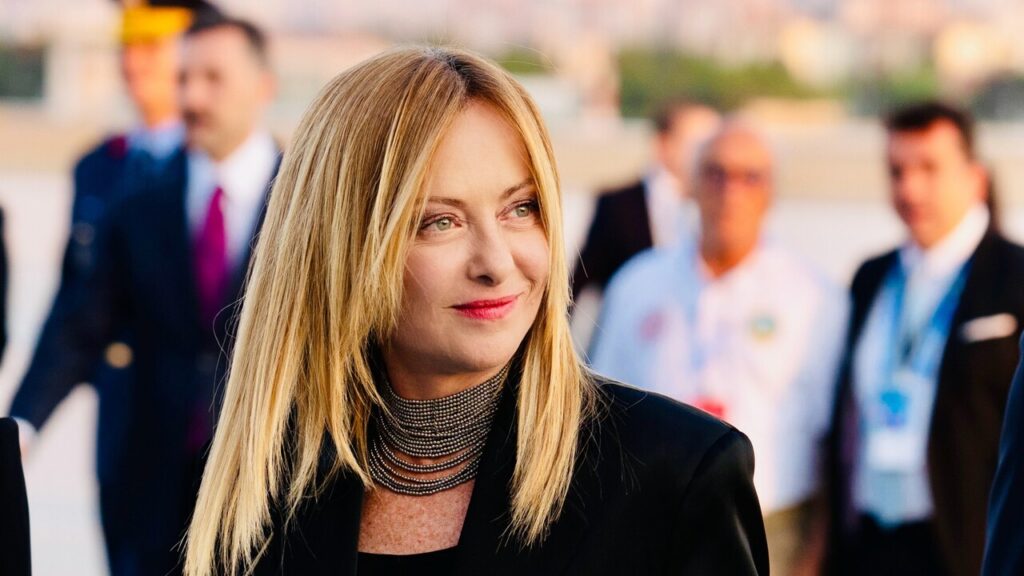
That statement provides an important insight into Meloni’s foreign-policy strategy.
Italy does not want Europe to become strategically detached from the United States. Meloni appears to believe that maintaining a political channel with Trump—even during periods of disagreement—is more valuable than joining European leaders who advocate a more confrontational relationship with Washington.
Her broader message from Ankara centered on NATO unity, common security and continued support for Ukraine. The Italian government said Meloni congratulated Erdoğan on summit results that reaffirmed the unity of the Atlantic Alliance and its shared commitment to collective security. She also met Zelenskyy on the summit margins, with Ukraine remaining a central element of Italy’s security diplomacy.
Meloni’s role is therefore increasingly distinctive.
She is attempting to be simultaneously pro-European, pro-NATO and capable of speaking politically with Trump. This balancing act is difficult, but it gives Italy potential diplomatic influence at a time when relations between Washington and some European capitals are increasingly unpredictable.
Iran and the Middle East Enter NATO’s Strategic Conversation
Another major development was the increasing presence of Middle Eastern security questions in NATO discussions.
The consequences of the Iran conflict and disagreements over allied support for American operations created political tensions before the summit. Trump had criticised European partners and questioned the reliability of allies who did not fully support Washington’s approach.
NATO Secretary General Mark Rutte did not completely exclude the possibility of the alliance having a future role connected to Middle Eastern security developments, according to summit reporting.
This is strategically sensitive.
NATO was created as a Euro-Atlantic collective defence alliance. Expanding its operational or political focus towards direct involvement in Middle Eastern conflicts could deepen divisions among members.
Türkiye, Italy and other Mediterranean NATO countries understand that instability in the Middle East can directly affect European security through energy markets, maritime routes, terrorism and migration.
But many European governments remain cautious about transforming NATO into a permanent military instrument for conflicts beyond its traditional geographical focus.
The Ankara summit did not resolve this debate.
It merely demonstrated that the debate can no longer be avoided.
Ankara’s Message: NATO Is Changing Faster Than Its Political Language
The 2026 NATO Summit may ultimately be remembered as a transition point.
The old NATO was primarily designed to deter a conventional military attack against its members. The emerging NATO must confront ballistic missiles, drone warfare, cyber threats, industrial supply shortages, Russian military pressure and instability on its southern flank.
Türkiye wants a larger role in this new architecture.
Ukraine wants to become deeply integrated into Western defence production.
Italy wants to preserve the political relationship between Europe and Washington.
And Trump wants NATO allies to spend more, purchase more military equipment and demonstrate that American support produces measurable strategic returns.
These objectives occasionally conflict, but Ankara demonstrated that they can also overlap.
Trump and Zelenskyy discussing Patriots and Ukrainian drones was more than a bilateral conversation. Erdoğan demanding the removal of defence restrictions was more than a Turkish grievance. Meloni defending engagement with Trump was more than personal diplomacy.
Together, these developments reveal the emerging structure of Western security.
The future NATO may be less politically comfortable, more transactional and increasingly dominated by defence production and technological competition.
But the summit also demonstrated something NATO’s critics frequently underestimate.
Every major leader in Ankara—from Trump and Zelenskyy to Erdoğan and Meloni—was fighting for influence inside the NATO security architecture, not outside it.
That may be the most important outcome of the Ankara summit.
The alliance remains divided over strategy, personalities and priorities. Yet in an increasingly dangerous international environment, NATO’s political gravity appears to be growing rather than disappearing.
Keep following The Variant as we continue to monitor developments and provide informed perspectives on this evolving situation.


