


Rochester, NY/Doha, QR/Islamabad, PK, Tehran, IR: From Tehran and Qom to Najaf and Karbala, the funeral journey of Iran’s slain supreme leader has drawn vast crowds, senior foreign delegations and emotional calls for revenge.
But behind the carefully projected image of unity, the absence of his successor and son Mojtaba Khamenei, renewed US-Iran hostilities and Iran’s unresolved domestic divisions reveal a state confronting its most consequential transition in decades.
Iran’s farewell to Ayatollah Syed Ali Khamenei is proving to be far more than the funeral of a head of state. It is a religious ceremony rooted in Shia tradition, a national moment of grief and, unmistakably, a political demonstration by a system determined to show that the Islamic Republic survived the death of the man who dominated it for nearly four decades.
Khamenei, 86, was killed on February 28, 2026, during the opening US-Israeli strikes on Iran. Iranian state media later confirmed his death. The attack also killed members of his family, according to Iranian and international reporting.
His death removed a leader who had served as supreme leader since 1989 and whose influence extended across Iran’s armed forces, foreign policy, nuclear strategy and religious establishment.
The large public funeral was postponed during the war because gathering Iran’s senior political, military and religious leadership in one location created an obvious security risk.
Months later, the delayed farewell has become a week-long procession stretching from Tehran to Qom and across the border into the Iraqi holy cities of Najaf and Karbala.
The coffin is expected to return to Iran for burial in Mashhad, the northeastern city closely associated with Khamenei and home to the shrine of Imam Reza.
That extraordinary route has transformed the funeral into a symbolic journey through some of the most important spiritual centres of Shia Islam.
How Many Mourners Attended? Vast Crowds, but No Verified Final Number
The number of participants has become part of the political narrative surrounding the funeral.
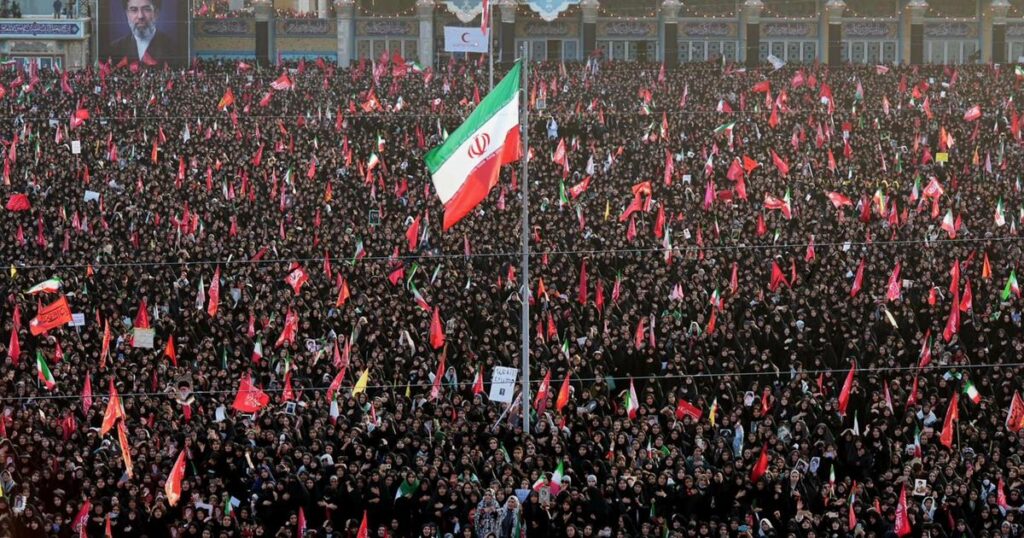
Iranian organizers anticipated an enormous turnout, and early expectations suggested millions could participate during the wider ceremonies. However, as of July 8, no independent authority has produced a verified cumulative figure for Tehran, Qom, Najaf, Karbala and the final Mashhad burial.
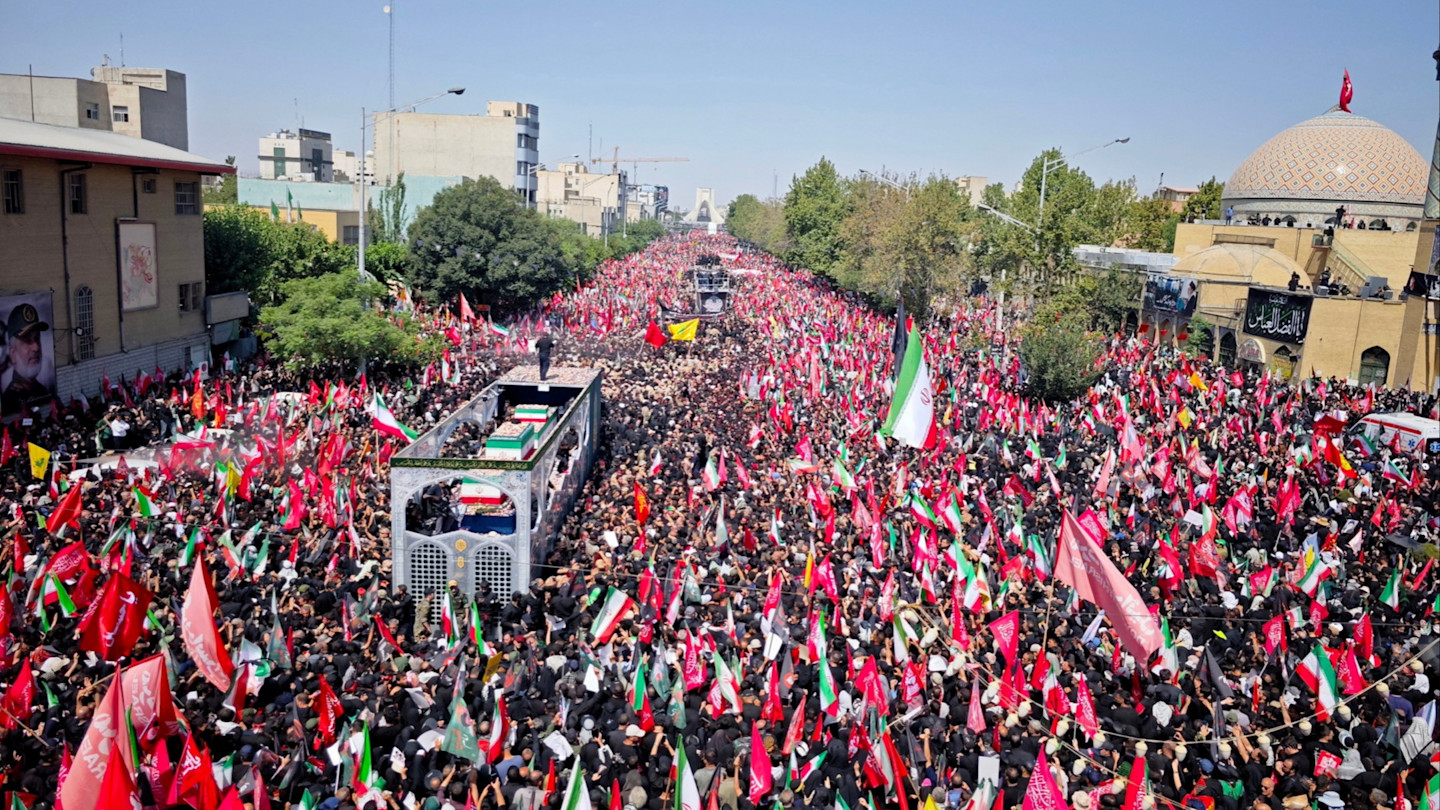
Reuters reported that drone footage showed many tens of thousands of people packed into a central Tehran boulevard during the major July 6 procession. Other reporting described hundreds of thousands at individual ceremonies, while accounts of the wider week of mourning referred to vast numbers participating across several cities.
The distinction is important. Claims of a precise total running into many millions remain difficult to independently verify, particularly when the funeral is taking place over multiple days and in different countries. A single person may also attend more than one stage of the procession.
What is not seriously disputed is the visible scale of the mobilization.
Tehran’s streets were filled with black-clad mourners, Iranian flags and portraits of Khamenei. Iran’s extensive religious, municipal and state networks helped move and accommodate visitors.
The funeral demonstrated the Islamic Republic’s continuing ability to mobilize a substantial social base, even after war, sanctions, economic hardship and repeated waves of domestic protest. International news reporting has simultaneously noted that large funeral crowds do not erase Iran’s deep political and economic divisions.
Comparisons have inevitably been drawn with the 1989 funeral of the Islamic Republic’s founder, Ayatollah Ruhollah Khomeini, widely estimated to have attracted about 10 million mourners. Whether Khamenei’s multi-city ceremonies ultimately exceed that historic gathering cannot yet be established with journalistic certainty.
Three Sons at the Coffin — and the Son Who Was Missing
Among the most closely watched images from the funeral prayers in Tehran was the appearance of three of Khamenei’s sons.
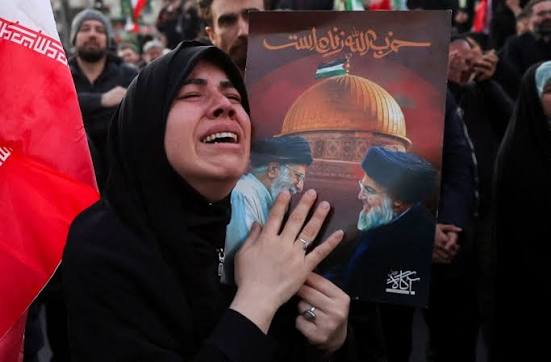
Mustafa Khamenei, Masoud Khamenei and Meysam Khamenei were seen praying beside their father’s coffin at Tehran’s Imam Khomeini Grand Mosalla. Their public appearance was particularly significant because they had largely remained outside public view during the war.
The images presented a powerful family scene: three clerical sons standing beside the coffin of a father whose political and religious authority shaped modern Iran.
Yet it was the absent fourth son who attracted even greater attention.
Ayatollah Mojtaba Khamenei, selected as his father’s successor, did not appear at the Tehran funeral prayers and, as of July 8, has still not made a public appearance during the main mourning ceremonies. He was reportedly wounded in the February attack that killed his father. Iranian authorities have not provided a detailed public medical account of his condition.
His absence is now one of the central political stories surrounding the funeral.
From a security perspective, keeping Iran’s new supreme leader away from a gathering containing senior government and military officials may be understandable. But politically, his prolonged invisibility inevitably encourages speculation about his health and his ability to exercise visible authority.
The Islamic Republic designed the funeral to communicate continuity. Mojtaba’s absence has instead created a question that Iran’s carefully managed ceremonies have not answered.
Iran’s Political and Military Leadership Gather under Extraordinary Security
The funeral prayer in Tehran was led by the 97-year-old senior Shia scholar Grand Ayatollah Jafar Sobhani, giving the ceremony considerable religious significance.
Iranian President Masoud Pezeshkian, Parliament Speaker Mohammad Bagher Qalibaf and other senior figures of the Islamic Republic attended.
Senior Revolutionary Guard officials, clerics and members of Iran’s political establishment were also present. Reuters reported that Khamenei’s three publicly visible sons stood among officials during the prayer.
The gathering itself represented a major security challenge. Iran’s leadership had already suffered serious losses during the war, and concentrating surviving officials in one location carried an obvious military risk.
That danger became even more politically sensitive as US President Donald Trump continued using openly threatening language toward Iran’s surviving leadership.
Foreign Delegations Reveal Iran’s Strategic Relationships
The international attendance offered a revealing picture of Iran’s diplomatic position after the war.
Pakistan’s Prime Minister Shehbaz Sharif travelled to Iran for the funeral ceremonies. His presence carried particular diplomatic significance because Pakistan has maintained communication with Tehran while also engaging closely with Washington.
Islamabad has sought to present itself as a regional diplomatic actor capable of speaking to competing sides. Pakistan’s Foreign Ministry had publicly confirmed Sharif’s participation.
Russia was represented by former president and former Prime Minister Dmitry Medvedev, now deputy chairman of Russia’s Security Council.
China sent senior representation, while India was also among the countries reported to be sending a high-level official delegation.
Afghanistan’s Taliban administration and regional governments were represented as well.
Iranian officials said representatives from more than 70 countries participated in funeral-related ceremonies, although a complete independently verified list of every foreign dignitary has not been publicly consolidated.
The foreign presence was significant not simply because of numbers but because of political geography.
Pakistan, Russia and China were highly visible in reporting surrounding the funeral. Regional delegations and representatives from governments maintaining relations with Tehran also participated. Major Western heads of government, however, were absent.
In many ways, the guest list reflected Iran’s strategic world: stronger links toward Russia and China, important regional relationships with Pakistan and Iraq, and continued political distance from Washington and much of the Western alliance.
Grief Turns Into Anger as Mourners Demand Revenge
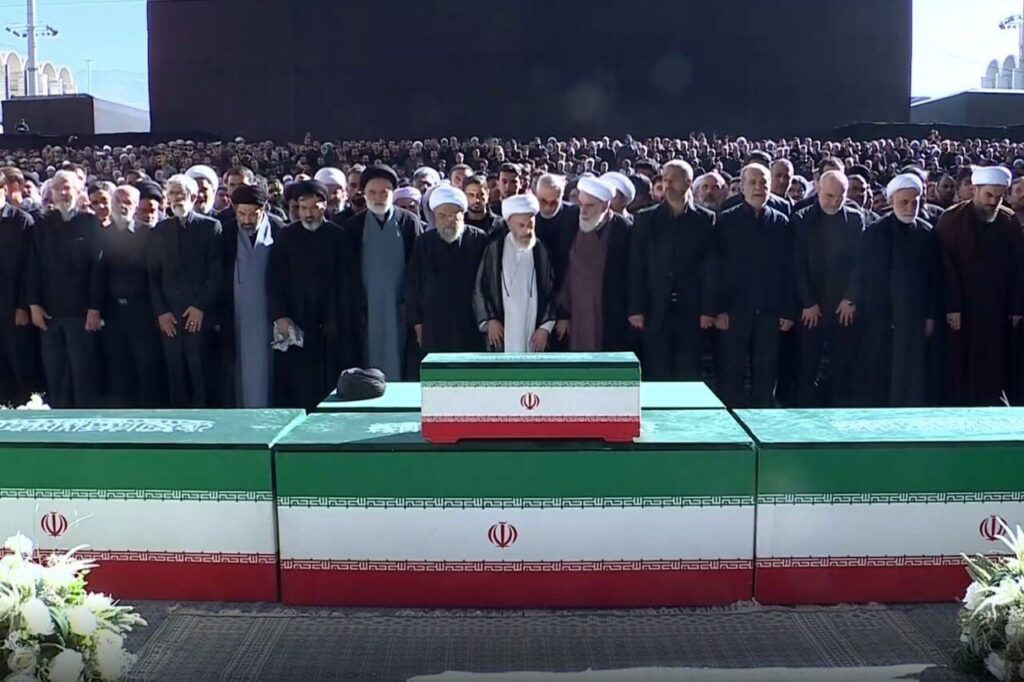
The reaction of funeral participants has ranged from quiet mourning to explicit calls for retaliation.
Mourners in Tehran wept, beat their chests and participated in traditional mourning rituals. Flowers were thrown toward the funeral procession. Many carried photographs of Khamenei, while black flags and red banners were displayed throughout the ceremonies.
But anger toward the United States and Israel was equally visible.
Such scenes are politically significant, but they require careful interpretation.
The mourners visible at the funeral represent a substantial and highly motivated constituency of the Islamic Republic.
Their grief should not simply be dismissed as state theatre. At the same time, their slogans cannot automatically be treated as the unanimous opinion of Iran’s entire population.
Iran remains a deeply divided society. Years of inflation, sanctions, restrictions on political freedoms and state crackdowns have produced widespread discontent.
Recent analysis of the funeral crowds has stressed that the Islamic Republic retains a meaningful social base while also confronting demands for political and economic change.
The funeral therefore reveals strength and vulnerability at the same time.
President Donald Trump showed little inclination to moderate his language during Iran’s mourning ceremonies.
As Tehran held the funeral, Trump said the United States would win the confrontation with Iran “one way or the other.” He warned that Washington would either reach an agreement with Tehran or “finish the job,” language widely interpreted as a direct military threat.
A Funeral Designed to Show Survival — but Questions About Iran’s Future Remain
The central message Iran’s establishment wants to send through Khamenei’s funeral is clear: the Islamic Republic survived.
Its supreme leader was killed. Members of his family died. Iranian military and state institutions were struck during a major war. Yet the president remains visible, parliament continues to function, Revolutionary Guard commanders have appeared publicly, foreign delegations travelled to Tehran and vast crowds participated in the mourning ceremonies.
For supporters of the Islamic Republic, the funeral is evidence that external military pressure failed to destroy the system.
For Iran’s critics, however, mass mobilization cannot answer questions about economic hardship, political repression and the legitimacy of an unelected religious leadership.
And above all stands the unresolved question of succession.
Mojtaba Khamenei is Iran’s new supreme leader, but he remains unseen. The funeral of his father has become the largest political stage available to the Islamic Republic, yet the man expected to guide Iran into the post-Ali Khamenei era has not stepped onto it.
That absence may be explained by injuries or security. But until Mojtaba appears publicly, speculation will continue.
Ali Khamenei’s long funeral journey from Tehran to Qom, Najaf and Karbala, before the expected final burial in Mashhad, is therefore carrying more than the remains of Iran’s longest-serving supreme leader.
It is carrying the political burden of an entire system entering the post-Khamenei era — mourning its past, displaying its strength and still uncertain about the face, direction and survival of its future.
For more news, expert commentary, and strategic analysis, explore the latest reports and features published by The Variant.


