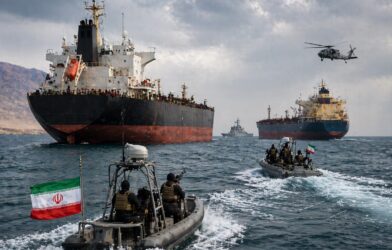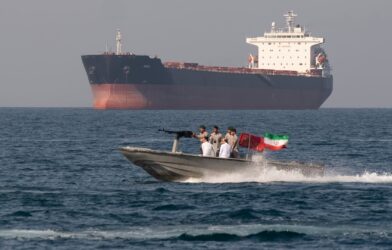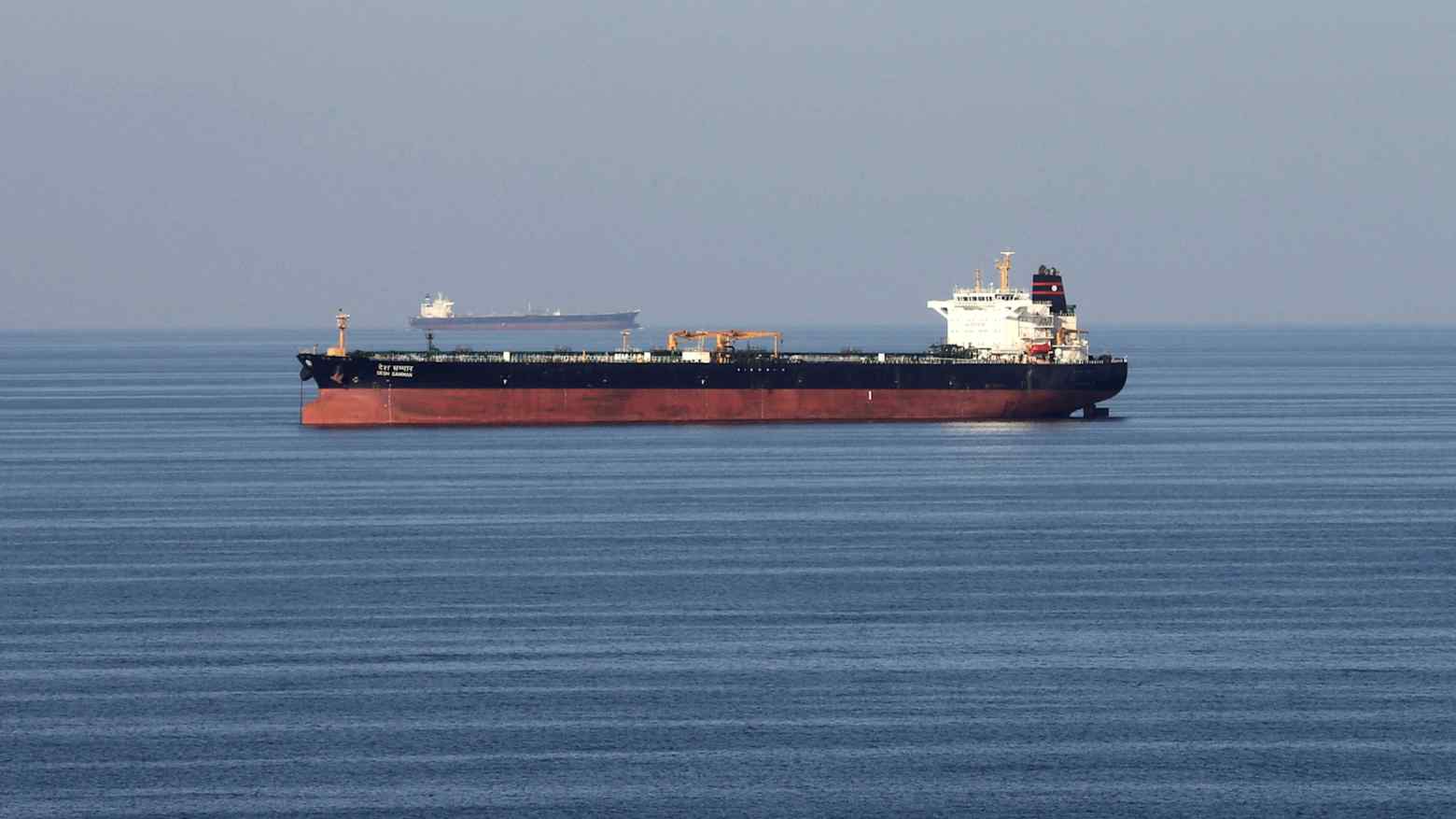
Rochester, NY/Tehran, IR: The Strait of Hormuz crisis has entered a renewed and volatile phase, with Iran declaring the strategic waterway effectively closed again and warning that vessels attempting to cross risk being targeted.
The latest escalation underscores how fragile the already tenuous ceasefire environment has become and signals a widening confrontation between Tehran and Washington with global economic implications.
Iran’s decision to reimpose control over the strait follows a pattern of rapid reversals in recent days—opening the route briefly under diplomatic pressure, then shutting it again after accusing the United States of violating agreements through its continued naval blockade.
Iranian military authorities, particularly the Islamic Revolutionary Guard Corps (IRGC), have framed the closure as a defensive necessity, asserting that any vessel attempting unauthorized passage could be treated as hostile.
Vessels under Fire and Seizures at Sea
Reports indicate that multiple commercial vessels came under direct fire while attempting to navigate the narrow maritime corridor. Iranian forces not only fired upon ships but also seized at least two container vessels, accusing them of violating maritime regulations and attempting covert transit.
Other incidents confirm that ships were either damaged or forced to retreat after ignoring Iranian warnings, reinforcing Tehran’s claim that the strait is under “strict management and control.”
These actions have effectively transformed the strait into a militarized zone. Even when not formally “closed,” the risk environment has become so severe that shipping traffic has sharply declined, with many vessels avoiding the route altogether.
The Strait of Hormuz is one of the most critical chokepoints in global trade, carrying roughly 20% of the world’s oil and significant volumes of liquefied natural gas. Disruptions in this corridor have immediate ripple effects on global energy markets, with oil prices already surging above $100 per barrel amid the latest tensions.
The closure has also stranded hundreds of ships and created logistical paralysis across the Gulf region, affecting supply chains from Asia to Europe.
The United States has responded with a mix of military signaling and economic pressure. President Donald Trump has condemned Iran’s actions as violations of ceasefire understandings, warning that attacks on commercial shipping could trigger further escalation.
At the same time, the U.S. administration has maintained its naval blockade of Iranian-linked shipping, arguing that it is necessary to prevent Tehran from advancing its nuclear capabilities and to enforce broader strategic objectives.
Pentagon officials have acknowledged the seriousness of the situation, noting that even if hostilities subside; clearing potential sea mines in the strait could take months—highlighting the long-term disruption risk.
Washington has also kept diplomatic channels nominally open, signaling willingness for negotiations while simultaneously preparing contingency military responses if attacks on vessels continue.
What makes the current crisis particularly dangerous is the cycle of action and reaction. Iran links its closure of the strait directly to the U.S. blockade, while the United States frames its actions as a response to Iranian aggression. Each side’s justification reinforces the other’s escalation.
The result is a volatile environment where the status of the Strait of Hormuz can shift within hours—from “open” to “closed” in both rhetoric and reality—leaving global markets, shipping companies, and regional actors in a state of constant uncertainty.
Iran’s renewed closure of the Strait of Hormuz and its willingness to fire on vessels attempting passage mark a significant escalation in the broader U.S.–Iran confrontation. While both sides continue to speak of negotiations, actions on the ground suggest a deepening standoff rather than de-escalation.
Unless a credible diplomatic breakthrough emerges, the strait is likely to remain a flashpoint—with far-reaching consequences not only for regional security but for the global economy as well.