Contributed by Salman-Bin-Karem from Doha, Qatar
Washington, D.C/Doha, QR: The latest sequence of U.S. actions against Iranian-linked oil shipments, combined with an unprecedented escalation in rules of engagement ordered by Donald Trump, marks a decisive turning point in the already fragile security landscape of the Strait of Hormuz.
What was once a tense but largely contained standoff has now evolved into an active maritime confrontation where economic coercion and military force operate side by side?
The U.S. military’s seizure of oil tanker allegedly carrying Iranian crude is not an isolated enforcement action but part of a broader strategic pattern.
Washington appears increasingly committed to disrupting Tehran’s ability to export oil by physically intercepting shipments at sea.
This approach extends sanctions enforcement beyond financial systems and into direct naval operations, effectively transforming economic pressure into a quasi-blockade.
From the American perspective, these seizures are justified as necessary measures to prevent Iran from financing its regional military activities. From Tehran’s viewpoint, however, they represent a dangerous violation of international norms governing freedom of navigation.
The Logic of Escalation at Sea
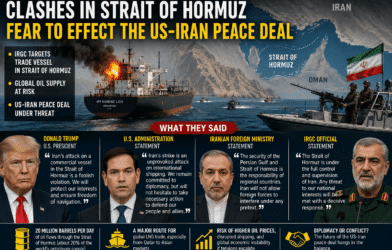
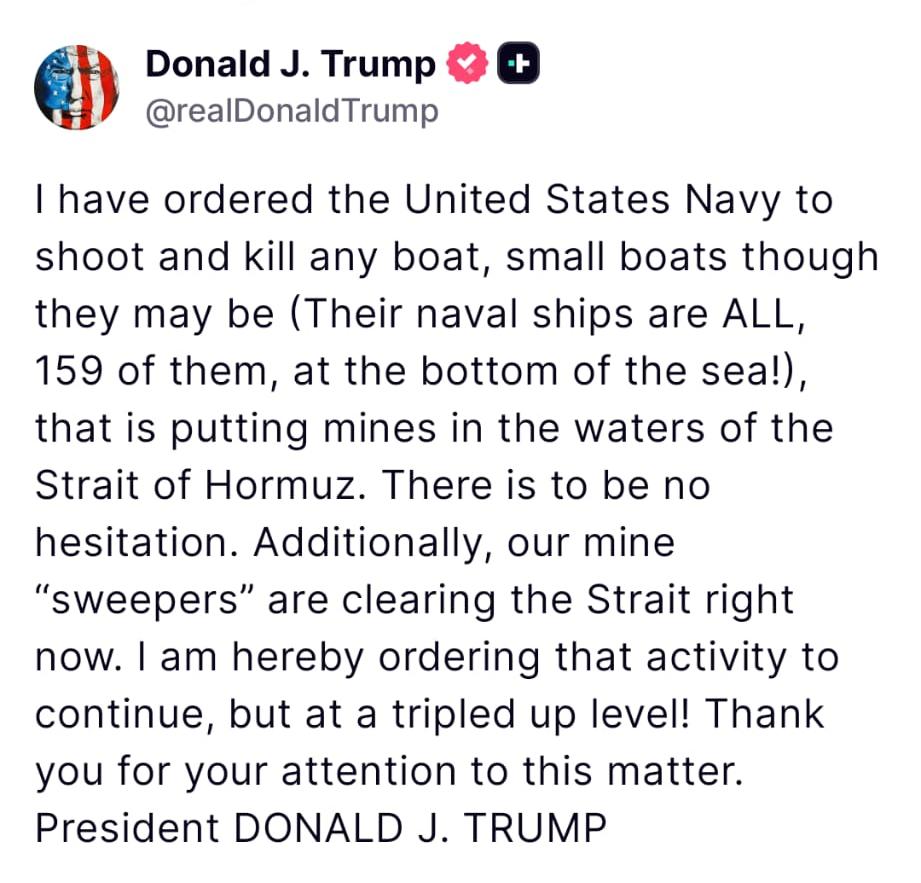
What makes this moment particularly volatile is the convergence of enforcement actions with explicit military threats. Trump’s directive authorizing U.S. forces to “shoot and kill” Iranian small boats suspected of laying mines introduce a level of immediacy and lethality rarely seen in recent naval confrontations.
The order signals that Washington is no longer willing to tolerate ambiguity in the Strait, especially given the strategic importance of uninterrupted maritime traffic through one of the world’s most critical energy corridors.
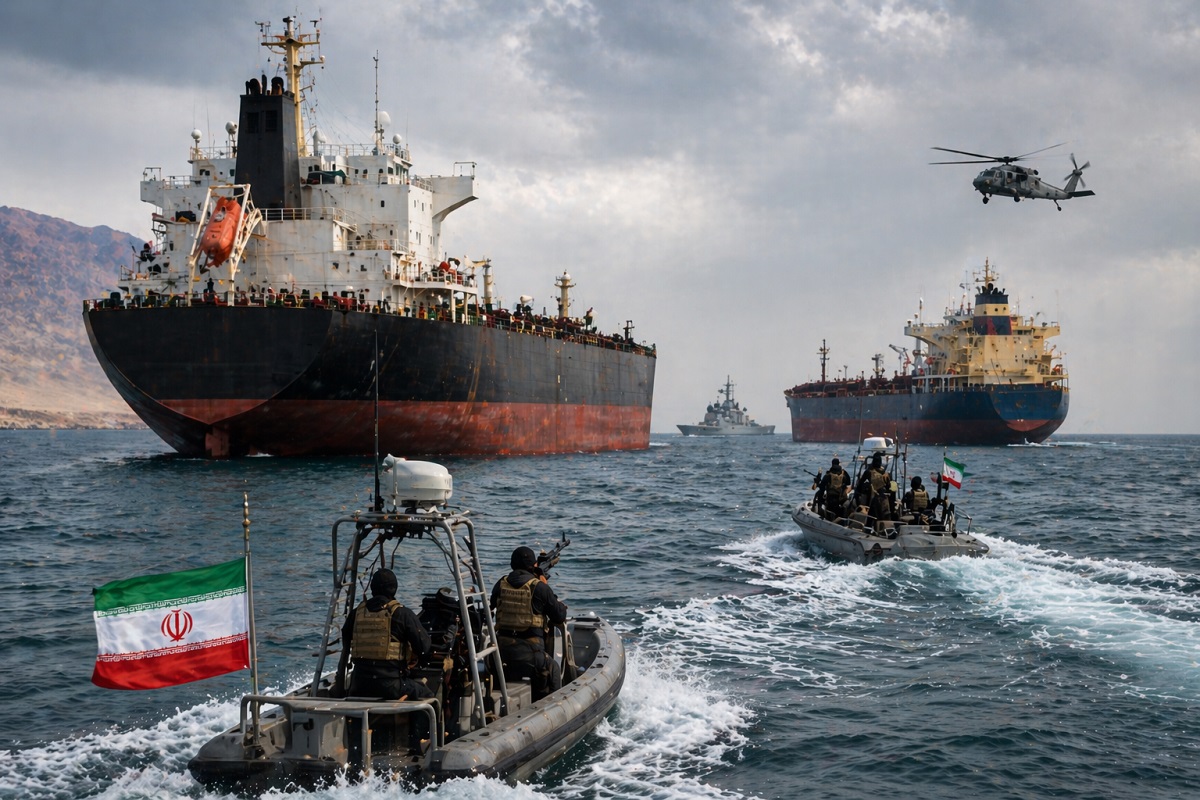
Iran’s naval doctrine has long relied on asymmetric tactics, including the deployment of fast attack craft and the potential use of naval mines to disrupt shipping lanes. These methods are designed not to defeat a superior naval force outright but to raise the costs of confrontation and create uncertainty in global markets.
By issuing such a direct and uncompromising order, the U.S. effectively lowers the threshold for engagement, meaning that even minor encounters could spiral into lethal exchanges.
The risk lies not only in deliberate escalation but in miscalculation, where a single misidentified vessel or aggressive maneuver could trigger a chain reaction.
The Transformation of the Strait
The Strait of Hormuz has always been a geopolitical chokepoint, but it is now taking on the characteristics of an active conflict zone. The presence of U.S. warships conducting interdictions, surveillance missions, and mine-countermeasure operations has increased significantly, while Iran continues to signal its capacity to retaliate through vessel seizures and threats to close the passage altogether.
This evolving dynamic creates a paradox in which both sides claim to be safeguarding maritime security while simultaneously contributing to its deterioration.
Commercial shipping has become entangled in this confrontation, caught between competing assertions of authority.
Tankers navigating these waters now face not only the traditional risks of piracy or regional instability but also the possibility of becoming instruments in a geopolitical contest. Each interception, whether by the U.S. or Iran, reinforces a cycle of retaliation that erodes confidence in the safety of global trade routes.
Economic Reverberations beyond the Gulf
The implications of this crisis extend far beyond the immediate region. Global energy markets are highly sensitive to disruptions in the flow of oil through Hormuz, and even the perception of instability can drive significant price fluctuations.
The recent escalation has already injected a premium of uncertainty into oil prices, reflecting fears that supply chains could be interrupted at any moment.
For major economies, this uncertainty translates into broader economic pressure, affecting everything from fuel costs to inflationary trends.
The strategic importance of the Strait means that any sustained disruption would not remain a regional issue but would quickly become a global economic challenge.
In this sense, the confrontation between the U.S. and Iran is not just a bilateral dispute; it is a stress test for the resilience of the international energy system.
Diplomacy in the Shadow of Force
What is particularly striking about the current situation is the apparent disconnect between diplomatic rhetoric and operational reality. Even as discussions of de-escalation and ceasefire frameworks linger in the background, actions at sea suggest a steady march toward confrontation.
The absence of meaningful diplomatic progress has created a vacuum that is being filled by military posturing and unilateral measures.
This dynamic underscores a broader shift in how conflicts are conducted in the modern era. Rather than large-scale, declared wars, states increasingly engage in limited but continuous forms of confrontation that blur the lines between peace and conflict.
The events unfolding in and around the Strait exemplify this trend, where economic sanctions, naval operations, and political signaling converge into a single, fluid strategy.
A Crisis Balancing on the Edge
The unfolding situation represents a classic case of controlled escalation, where both sides seek to assert dominance without crossing the threshold into full-scale war. Yet the very nature of this approach makes it inherently unstable.
The combination of aggressive enforcement, heightened military readiness, and the strategic importance of the region creates conditions where the margin for error is exceedingly narrow.
The seizure of Iranian-linked tankers and the authorization of lethal force against suspected threats are not merely tactical decisions; they are indicators of a broader strategic trajectory.
As tensions continue to rise, the Strait of Hormuz is no longer just a passage for global trade. It has become a focal point of geopolitical rivalry, where each move carries consequences that extend far beyond the waters in which they occur.
In such an environment, the distinction between deterrence and provocation becomes increasingly blurred. What one side views as a necessary assertion of security, the other perceives as an act of aggression.
It is within this ambiguity that the greatest risk lies, as the path from confrontation to conflict grows shorter with each passing incident.