


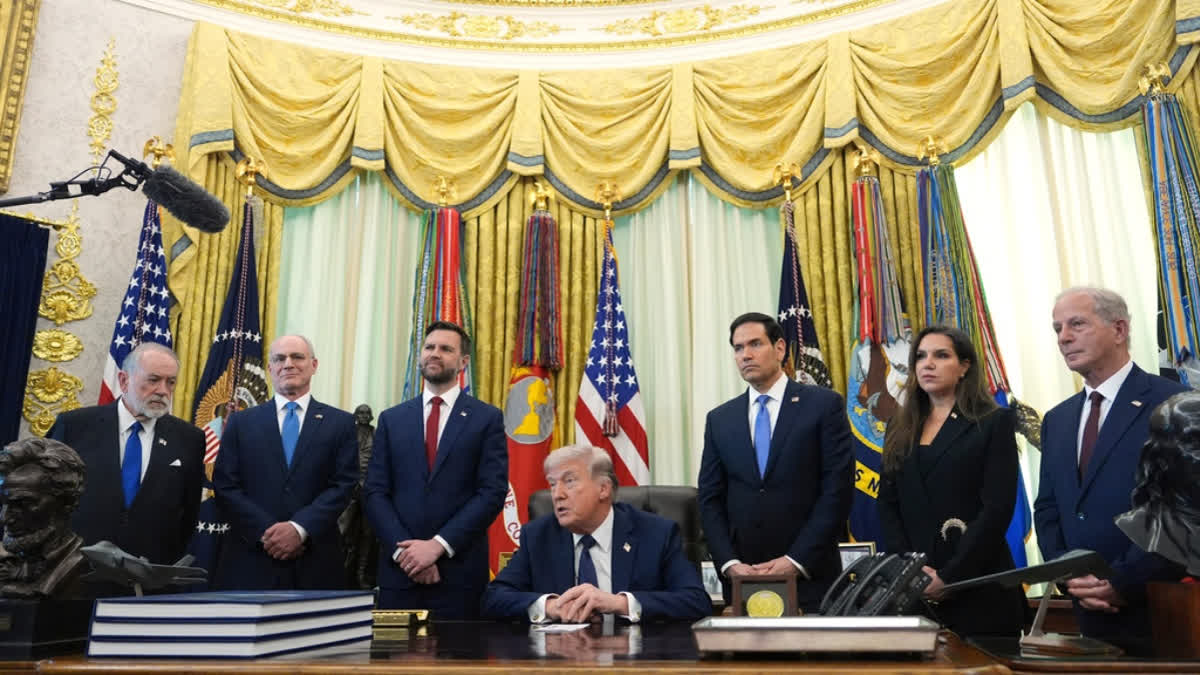
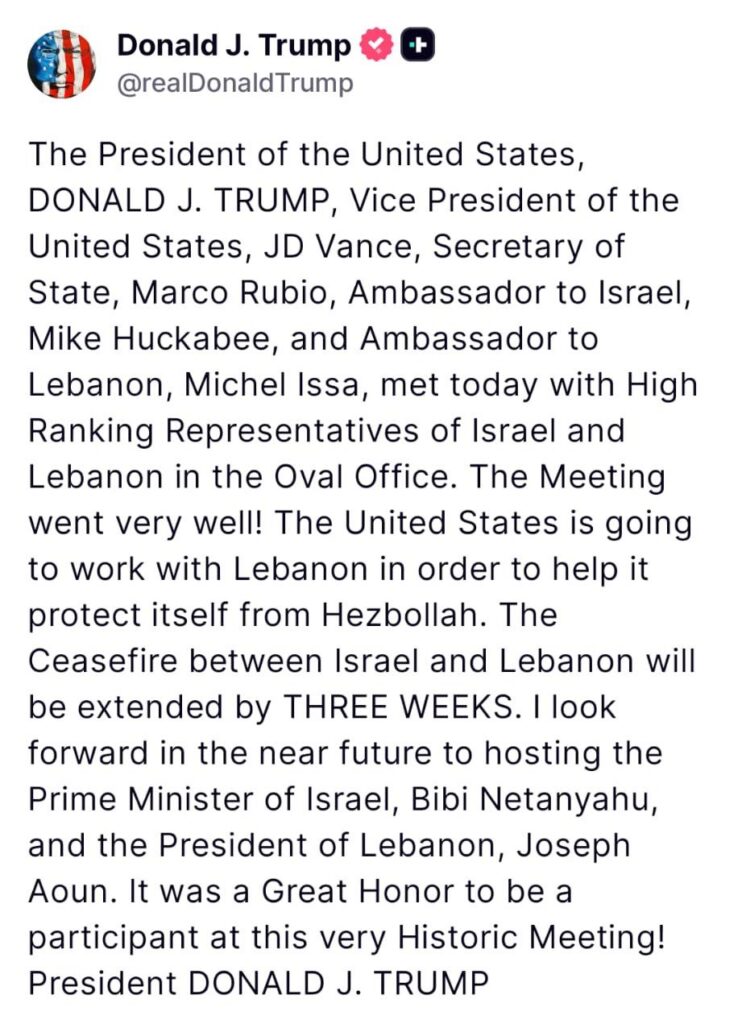
Rochester, NY/Washington, D.C: The latest extension of the Israel–Lebanon ceasefire, announced after a high-level meeting in the White House led by Donald J. Trump, should not be mistaken for a breakthrough in peace-building. It is, rather, a carefully managed pause in an increasingly complex regional confrontation.
The presence of Israeli and Lebanese ambassadors alongside senior U.S. leadership, including the Vice President and Secretary of State, gave the meeting an appearance of decisive diplomacy.
Yet beneath the formal setting lies a far more intricate reality: this ceasefire is less about resolving the Israel–Lebanon dispute and more about controlling escalation within a broader geopolitical struggle that now deeply involves Iran.
The extension itself reflects urgency rather than confidence. It was driven by the fear that without immediate intervention, the situation along the Israel–Lebanon border could spiral into a wider war.
The United States stepped in not merely as a mediator but as a strategic actor seeking to contain multiple fronts of instability simultaneously.
The Truth behind the Conflict
To understand the current moment, one must move beyond the simplistic framing of Israel versus Lebanon. The central axis of confrontation is between Israel and Hezbollah, a powerful non-state actor deeply embedded within Lebanon’s political and military landscape.
Hezbollah operates with significant autonomy and is widely recognized as a key regional proxy of Iran. This transforms the conflict into a layered struggle involving state sovereignty, proxy warfare, and regional power competition.
Israel’s military doctrine is rooted in preemption and deterrence. From its perspective, Hezbollah’s arsenal and cross-border capabilities represent an existential threat that cannot be tolerated. Lebanon, on the other hand, faces a profound internal dilemma.
Its government lacks the capacity—and in some cases the political consensus—to fully control Hezbollah, creating a fragmented sovereignty that complicates any formal diplomatic engagement.
This structural imbalance means that even when Lebanon sits at the negotiating table, it does not fully represent the most powerful armed actor on its own territory.
As a result, any ceasefire agreement that excludes Hezbollah is inherently fragile, if not fundamentally flawed.
The Oval Office: Behind Closed Doors, Strategic Calculations
The Oval Office meeting was not merely a diplomatic exercise; it was a convergence of strategic priorities. For Donald Trump, the ceasefire extension fits into a broader approach that favors transactional diplomacy and incremental gains over comprehensive agreements.
His public remarks emphasized the desire for a “lasting deal,” yet the decision to extend the ceasefire rather than finalize a settlement suggests a recognition that conditions for a durable agreement do not yet exist.
From the U.S. perspective, the immediate goal is de-escalation. A prolonged conflict between Israel and Hezbollah risks drawing in Iran more directly, potentially opening another front in an already volatile regional environment.
By stabilizing the Lebanon front, Washington gains strategic bandwidth to manage its wider confrontation with Tehran.
Israel’s participation in the meeting reflects a dual-track strategy. On one hand, it engages in diplomacy to maintain alignment with the United States and to secure international legitimacy. On the other, it continues to assert its right to military action against perceived threats.
Israeli leadership has consistently framed Hezbollah as the primary obstacle to peace, signaling that any long-term resolution must address the group’s military capabilities.
Lebanon’s position in the meeting was markedly different. Lebanese representatives emphasized sovereignty, territorial integrity, and the need for Israeli withdrawal. However, their negotiating leverage remains limited.
Lebanon is caught between external pressure from Israel and internal constraints posed by Hezbollah’s influence, leaving it with few viable options beyond seeking international support.
The Deception of Consistency
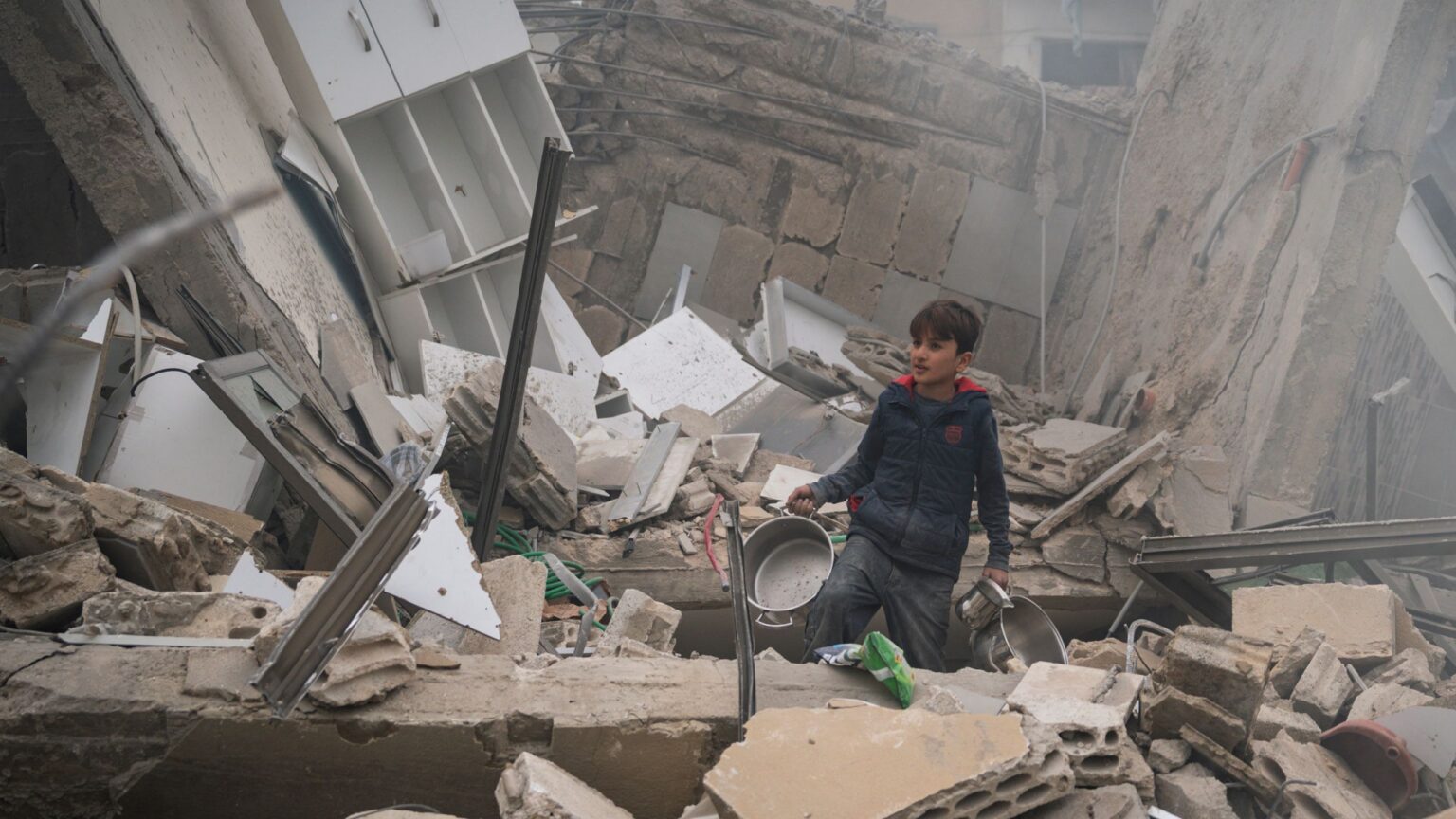
Despite the formal extension of the ceasefire, conditions on the ground tell a different story. Violations—both alleged and confirmed—continue to occur, underscoring the absence of genuine trust between the parties.
This is not an environment moving toward reconciliation; it is one being carefully managed to prevent collapse.
The most critical weakness of the ceasefire lies in its incomplete structure. Without the direct involvement of Hezbollah, the agreement lacks enforcement mechanisms over the primary source of military activity.
This creates a paradox in which the ceasefire exists on paper while conflict dynamics persist in reality.
Moreover, the underlying objectives of the key actors remain fundamentally incompatible. Israel seeks long-term security guarantees that would likely require the disarmament or marginalization of Hezbollah. Lebanon seeks to preserve its sovereignty without descending into internal conflict.
The United States aims to contain regional escalation while maintaining pressure on Iran. These goals intersect tactically but diverge strategically, limiting the potential for a comprehensive resolution.
Ways Out: Balancing Idealism with Real-Life Politics
A lasting resolution to the Israel–Lebanon conflict would require addressing its structural roots. This includes redefining the role of Hezbollah within Lebanon, establishing clear and enforceable border arrangements, and creating a framework for mutual security assurances. However, each of these steps faces significant obstacles.
The integration or disarmament of Hezbollah is perhaps the most contentious issue. For Israel, it is a non-negotiable condition for security. For Lebanon, it risks triggering internal instability. For Iran, it represents a strategic asset that extends its influence across the region.
Any attempt to resolve this issue would therefore require not only domestic consensus within Lebanon but also a broader regional agreement involving Iran.
In the absence of such a comprehensive settlement, the most realistic outcome is a continuation of managed de-escalation.
This would involve periodic ceasefire extensions, limited military engagements, and ongoing diplomatic interventions. While this approach may prevent large-scale war, it does little to resolve the underlying tensions.
Relevance to the Conflict between Iran and the United States
The extension of the ceasefire has significant implications for the evolving conflict between the United States and Iran.
By stabilizing the Lebanon front, Washington reduces the immediate risk of a multi-front escalation that could overwhelm its strategic posture. At the same time, the situation highlights the extent to which regional conflicts are interconnected.
Hezbollah’s role as an Iranian ally means that developments in Lebanon cannot be separated from the broader U.S.–Iran dynamic.
Any escalation involving Hezbollah has the potential to draw Iran more directly into the conflict, transforming a localized confrontation into a regional crisis. Conversely, efforts to weaken Hezbollah’s position indirectly challenge Iran’s influence, raising the stakes of the confrontation.
The ceasefire extension, therefore, serves a dual purpose. It acts as a buffer against immediate escalation while also positioning the United States to pursue its broader strategic objectives vis-à-vis Iran.
However, this balancing act is inherently unstable. A breakdown in the ceasefire could rapidly alter the regional landscape, forcing the United States to confront simultaneous crises.
Conclusion: A Shock-Resistant Area: A Dynamic Balance
The recent ceasefire extension between Israel and Lebanon is best understood as a temporary equilibrium rather than a step toward lasting peace. It reflects the interplay of local conflicts and global strategies, where immediate stability is prioritized over long-term resolution.
The Oval Office meeting highlighted the central role of the United States in managing this balance, but it also exposed the limitations of diplomacy in the absence of structural change.
As long as the core issues—Hezbollah’s role, Lebanon’s sovereignty, Israel’s security concerns, and Iran’s regional ambitions—remain unresolved, the ceasefire will remain fragile.
In this sense, the current moment is not an end to conflict but a pause within it, shaped as much by geopolitical calculation as by the pursuit of peace.
Stay informed with The Variant for in-depth analysis, breaking developments, and expert perspectives on the stories shaping our world.


