Courtesy: Reporting Contribution by Salman-Bin-Kareem [A Senior Journalist I Doha, Qatar]
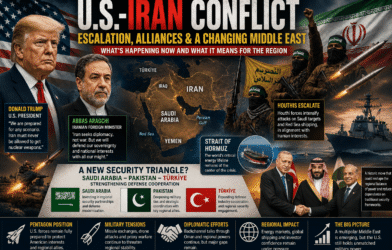
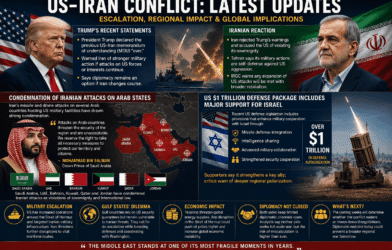
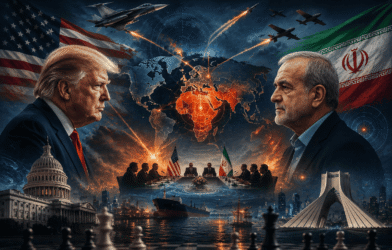
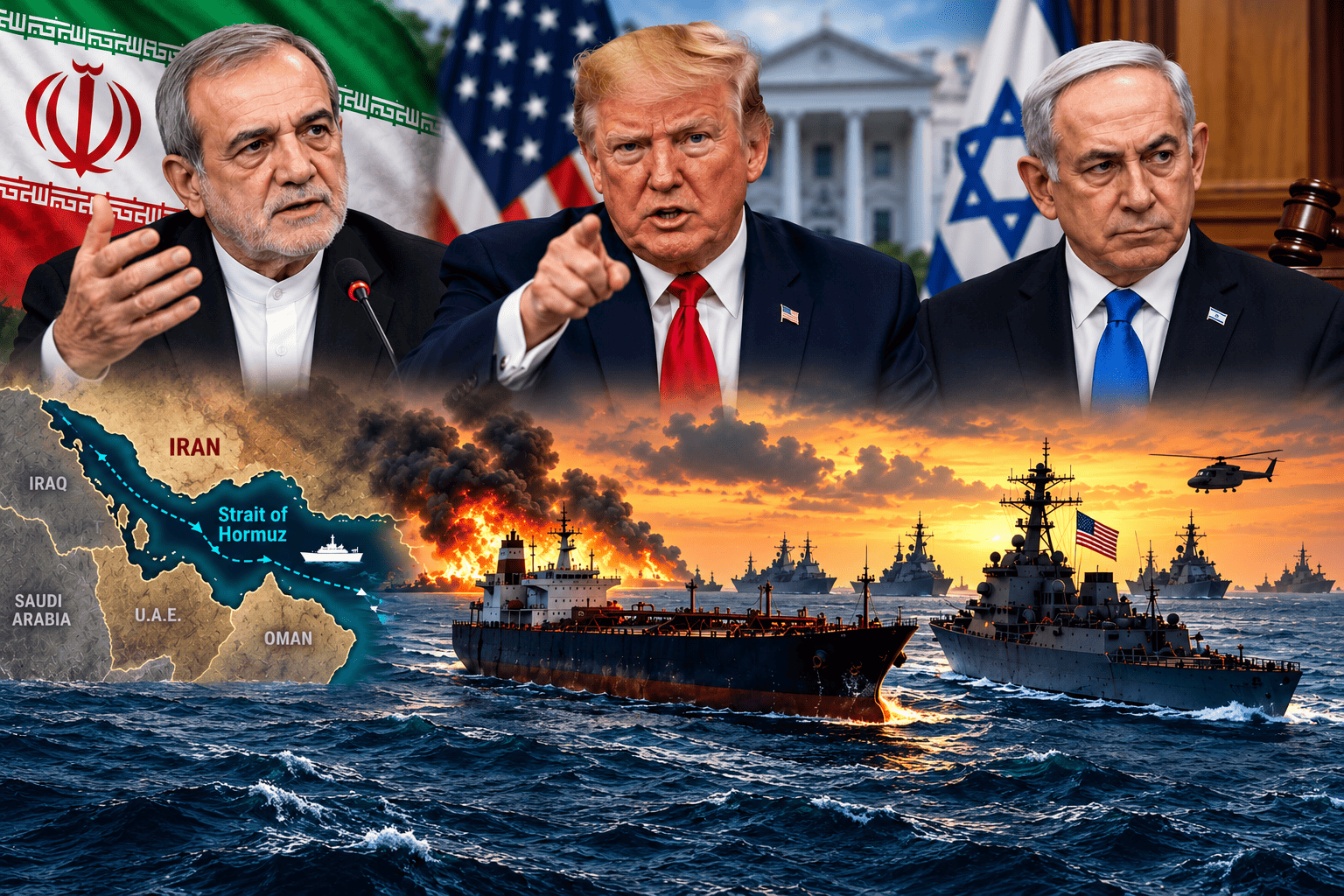
Washington, D.C/Doha, QA: The United States and Iran have entered another dangerous phase of their prolonged confrontation, with Tehran declaring Washington’s latest response to its peace proposal insufficient, even as military tensions intensify around the Strait of Hormuz.
Meanwhile, Israeli Prime Minister Benjamin Netanyahu faces renewed scrutiny in his corruption trial, creating a complex intersection of regional security, domestic politics and diplomatic maneuvering.
The latest developments suggest that negotiations have not completely collapsed, but the distance between Washington’s strategic demands and Tehran’s security conditions remains substantial.
On October 11, Iran’s Supreme National Security Council Secretary Mohsen Rezaei rejected the adequacy of the American response to Tehran’s seven-point proposal, which was transmitted through Qatari intermediaries.
Iran has offered to restore normal maritime passage through the Strait of Hormuz within seven days of an acceptable agreement. Washington, however, continues to insist that any comprehensive settlement address Iran’s nuclear program.
The dispute raises a fundamental question: can the two countries separate the immediate need to reopen international shipping routes from their broader military and nuclear disagreements?
Iranian leadership: No negotiations without acceptable conditions
Mohsen Rezaei, a former commander of Iran’s Islamic Revolutionary Guard Corps, has adopted a firm position regarding the American counterproposal.
Rezaei said the United States had accepted certain Iranian conditions while leaving others unresolved. He emphasized that Tehran would not resume negotiations or reopen the strategic waterway on Washington’s terms unless its requirements were satisfied.
He characterized the American response as “insufficient” and said Iran was no longer engaged in responding to Washington’s proposals.
More alarmingly, Rezaei warned that regional digital infrastructure, including communications cables, data centers and artificial intelligence facilities, could become targets if major hostilities resumed.
On October 16, Iranian military spokesman Mohammad Akraminia further hardened Tehran’s public position, saying the Strait of Hormuz would reopen if American forces left the Middle East. He warned that Iran would otherwise seek to expel them.
These statements illustrate Tehran’s attempt to convert its geographic leverage over a critical international shipping corridor into political and security concessions.
However, threatening commercial infrastructure and maritime traffic risks undermining Iran’s diplomatic credibility, particularly among countries dependent on Gulf energy supplies.
Washington’s position: Nuclear concessions and economic pressure
President Donald Trump’s administration has maintained that restoring maritime security cannot be divorced from concerns over Iran’s nuclear activities.
Washington’s strategy combines economic sanctions, naval pressure and the possibility of renewed military strikes.
On October 13, Trump indicated that his administration would make a decision regarding Iran soon. Axios subsequently reported that Trump and Netanyahu had discussed potential large-scale military operations against Iran before their respective countries’ elections.
According to that report, Trump initially appeared receptive to renewed military action but later became more hesitant. These deliberations should not be interpreted as confirmation that a new offensive has been authorized.
The U.S. military argues that its naval blockade and sanctions have severely constrained Iran’s financial resources.
On October 16, U.S. Central Command commander Admiral Brad Cooper described the financial pressure on the Islamic Revolutionary Guard Corps, attributing an estimated $25 billion in lost oil revenue to the broader economic restrictions.
American officials have also maintained that U.S. forces are assisting commercial vessels navigating the region.
Nevertheless, economic coercion carries limitations. While sanctions may weaken Tehran’s financial capacity, they can also encourage Iran to increase pressure on commercial shipping, potentially raising international energy costs and complicating Washington’s broader economic objectives.
Latest development: Trump raises possibility of another strike
In an October 16 interview with Newsmax, Trump suggested that the United States might need to strike Iran’s heavily fortified Pickaxe Mountain nuclear facility.
He reiterated his determination to prevent Tehran from acquiring nuclear weapons, while ruling out the use of American nuclear weapons and the deployment of U.S. ground troops.
These remarks suggest that Washington continues to view military force as an available option, despite ongoing diplomatic efforts.
Netanyahu’s corruption trial and Israel’s strategic calculations
Israel’s domestic political situation adds another dimension to the regional crisis.
Former Attorney General Avichai Mandelblit, who authorized Netanyahu’s indictment, has testified in the prime minister’s long-running corruption proceedings. Netanyahu faces allegations involving bribery, fraud and breach of trust, all of which he denies.
Before entering court, Netanyahu declared, “The truth comes to light.”
On October 13, he called for an investigation into officials responsible for his prosecution, describing the proceedings as a “political witch hunt.”
The timing is particularly significant because Israel faces elections on October 27.
Reports that Netanyahu discussed renewed military operations against Iran with Trump have generated questions about whether domestic political considerations could influence regional security decisions.
However, Netanyahu’s office has denied reports that he sought to restart the war before the election.
There is insufficient evidence to conclude that his legal difficulties are driving Israeli military policy.
Nevertheless, any Israeli decision to expand military operations could undermine U.S.–Iran diplomacy, particularly if Tehran interprets Israeli action as part of a coordinated American strategy.
Strait of Hormuz: A dangerous escalation in maritime attacks
The Strait of Hormuz remains the most immediate international flashpoint.
On October 11, six commercial vessels were reportedly attacked in a single day. The escalation included tankers and an Indian container ship, highlighting the risks faced by neutral shipping operators.
On October 14, reports confirmed that two vessels had sunk following Iranian attacks, although the ships were damaged in separate incidents.
The Iranian Revolutionary Guard’s navy has also warned that vessels disabling identification and navigation systems could be treated as hostile.
These developments reveal the limits of military protection. Although American naval forces maintain a significant presence, guaranteeing the safety of every commercial vessel remains difficult.
Iran’s maritime strategy may create leverage in negotiations, but attacks on civilian shipping threaten international trade and seafarers regardless of nationality.
Economic consequences: Oil, sanctions and global food security
The conflict is increasingly affecting sectors beyond petroleum.
Reuters reported on October 16 that Iran had managed to export limited quantities of liquefied petroleum gas and jet fuel despite the American blockade. Such shipments demonstrate the difficulty of enforcing a comprehensive maritime embargo.
Meanwhile, elevated insurance premiums, vessel diversions and shipping disruptions continue to create uncertainty for energy markets.
The humanitarian implications are equally serious.
On October 14, United Nations Under-Secretary-General Jorge Moreira da Silva warned that failure to establish a mechanism for fertilizer shipments through Hormuz could threaten agricultural production in Asia and Africa.
The proposed UN arrangement would facilitate verified shipments through a coordination center in Oman while broader peace negotiations continued.
This represents an important diplomatic opportunity: humanitarian maritime access could become an initial confidence-building measure without requiring immediate resolution of every political dispute.
Can diplomacy still prevent another major war?
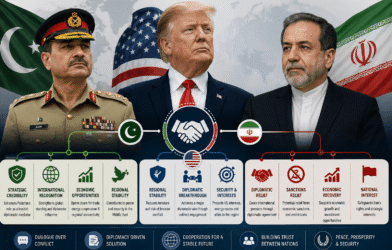
Despite increasingly confrontational statements, Qatar continues to facilitate communication between Tehran and Washington.
Three obstacles remain central to a sustainable settlement: disagreement over nuclear restrictions, Iran’s conditions for reopening Hormuz, and the absence of reliable security guarantees.
The collapse of earlier arrangements has also damaged mutual confidence. A June memorandum initially offered hope of de-escalation, but subsequent hostilities demonstrated how quickly diplomatic progress could unravel.
A realistic framework would require phased maritime reopening, independently monitored nuclear negotiations and reciprocal measures to reduce military tensions.
Regional governments, including Gulf states whose economies depend on maritime security, could support such a process. International monitoring would be essential to establishing confidence on both sides.
Conclusion: Military pressure cannot substitute for a political settlement
The latest U.S.–Iran confrontation demonstrates a fundamental strategic contradiction.
Washington possesses substantial military and economic power but has struggled to translate that advantage into a durable diplomatic agreement.
Tehran retains the ability to disrupt international shipping, yet prolonged confrontation risks further damaging its economy and international relationships.
Netanyahu’s legal and electoral pressures introduce additional uncertainty, although they do not independently explain Israel’s security calculations.
Ultimately, neither side can confidently assume that further escalation will produce more favorable negotiating conditions.
A negotiated settlement remains possible, but it will require Washington and Tehran to distinguish immediate maritime security needs from the larger nuclear and regional security disputes.
The central danger is no longer simply whether the United States and Iran will return to large-scale fighting.
It is whether a maritime incident, an Israeli military decision or a failed diplomatic exchange could trigger a wider regional war before negotiators regain control of events.
Thank you for reading. Explore more exclusive news, analysis, and expert perspectives available across The Variant.