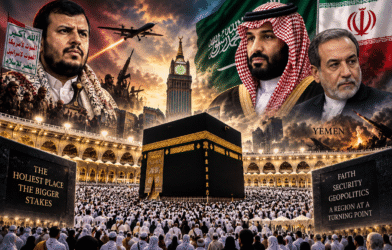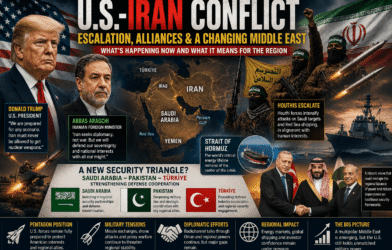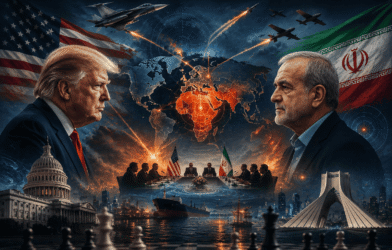
New York City, NY/ Doha, QR/Riyadh, SA: The military confrontation between the United States and Iran has entered another volatile stage, raising fears that the conflict is evolving beyond a bilateral crisis into a wider regional security challenge.
Recent U.S. military operations targeting Iranian infrastructure, Tehran’s retaliatory missile and drone attacks, and increasingly sharp rhetoric from both governments have significantly reduced hopes for an immediate diplomatic breakthrough.
The latest developments have also exposed growing concerns among Gulf Arab states, many of which have traditionally sought to avoid becoming direct participants in a U.S.-Iran confrontation while simultaneously relying on American security guarantees.
The renewed escalation is forcing regional capitals to reassess both their security posture and diplomatic priorities.
Trump Declares Earlier Understanding “Over”
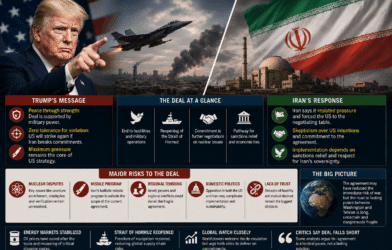
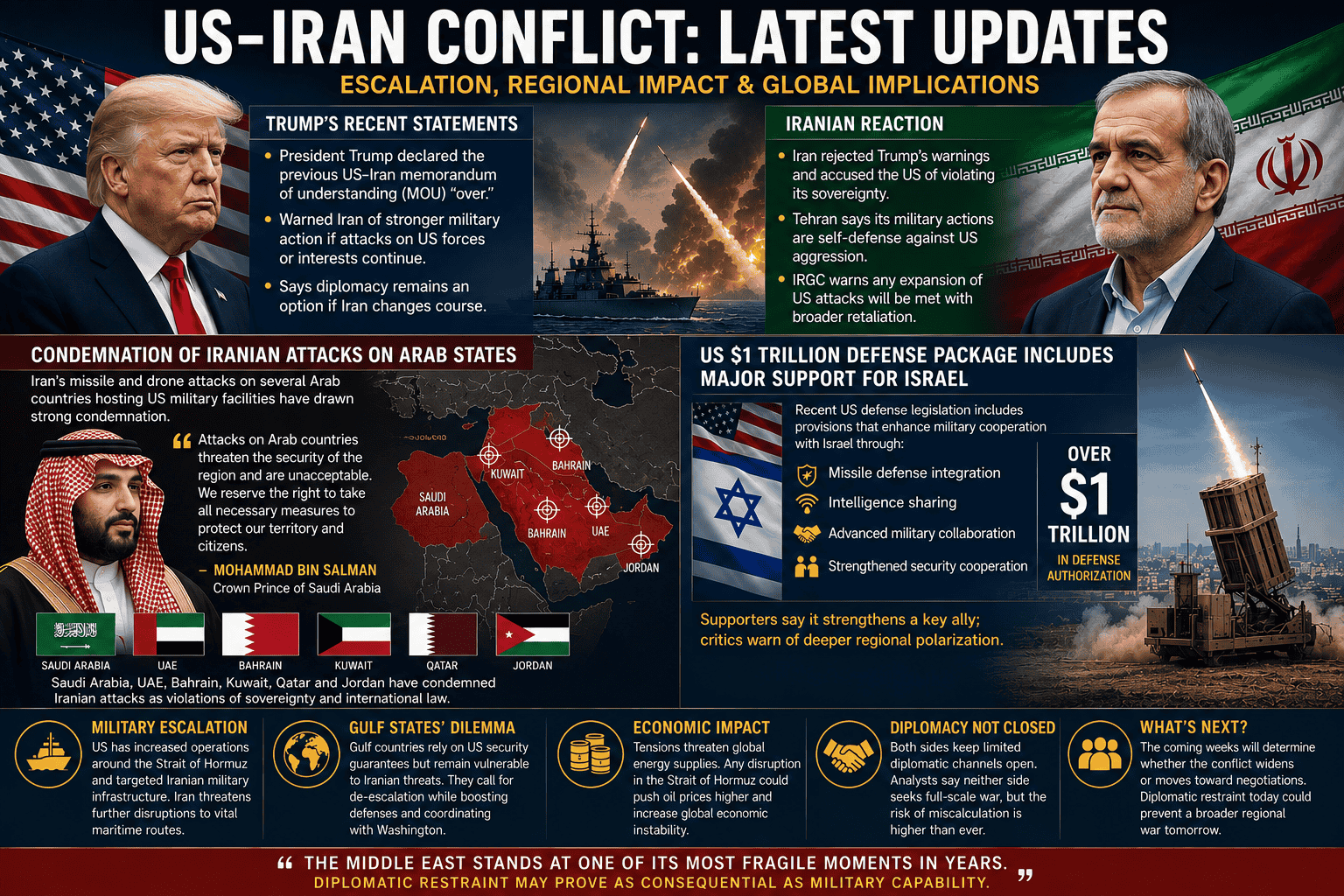
President Donald Trump recently declared that the previous memorandum of understanding (MOU) between Washington and Tehran was effectively “over,” arguing that Iran had failed to comply with its commitments.
He warned Tehran that additional attacks on American forces or interests would trigger stronger military responses while leaving the door open to negotiations if Iran altered its course.
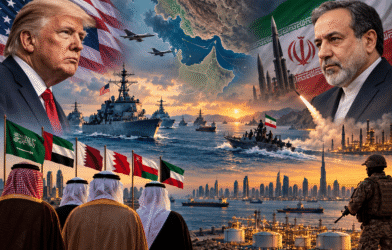
The United States has since expanded military operations around the Strait of Hormuz and reimposed maritime pressure on Iran.
According to recent reports, Washington has targeted military infrastructure associated with Iran’s coastal defense capabilities while reinforcing its naval presence in the Gulf.
American officials argue these measures are intended to protect international shipping and deter future attacks against U.S. personnel and allies.
Iran Rejects Trump’s Warnings
Iranian leaders have responded defiantly to President Trump’s statements.
Officials from Tehran have accused Washington of violating Iranian sovereignty and pursuing what they describe as an illegal military campaign designed to weaken the Islamic Republic.
Iranian authorities insist their military actions constitute legitimate self-defense against U.S. operations and warn that any expansion of American attacks will be met with broader retaliation.
The Islamic Revolutionary Guard Corps (IRGC) has maintained that strategic waterways, including the Strait of Hormuz, remain central to Iran’s deterrence strategy. Iranian commanders have repeatedly threatened further disruptions to regional maritime traffic if military pressure continues.
Iranian Attacks on Arab States Draw Strong Regional Condemnation
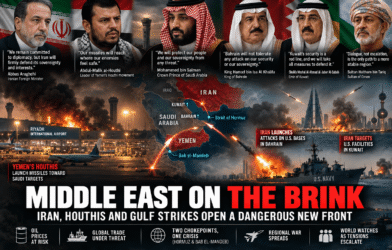
One of the most significant shifts during the current crisis has been Iran’s reported missile and drone attacks against several Arab countries hosting U.S. military facilities.
Saudi Arabia, the United Arab Emirates, Bahrain, Kuwait, Qatar, and Jordan have all condemned these attacks as violations of their sovereignty.
Their governments argue that they were not parties to the conflict and that attacks on civilian infrastructure and national territory cannot be justified under international law.
Saudi Crown Prince Mohammed bin Salman has strongly criticized Iranian military actions against Gulf States, emphasizing that attacks on Arab countries threaten the collective security of the region and undermine ongoing efforts to stabilize the Middle East.
Saudi officials have stated that Riyadh reserves the right to take all necessary measures to protect its territory and citizens while continuing coordination with international partners.
Although Saudi Arabia has consistently supported diplomatic engagement with Iran since the restoration of bilateral relations in 2023, the latest attacks have placed that rapprochement under severe strain.
The Israel Dimension Continues to Expand
The conflict has simultaneously reinforced the strategic relationship between Washington and Israel.
Recent debate in Washington over a defense spending package exceeding $1 trillion has included provisions aimed at strengthening U.S.-Israel military cooperation, including missile defense integration, intelligence sharing, and expanded defense coordination.
While media reports and lawmakers have described these provisions as enhancing military cooperation with Israel, it would not be accurate to characterize the legislation as a standalone “$1 trillion support bill for Israel.” Rather, Israel-related measures are part of a much broader U.S. defense authorization package.
Supporters argue that deeper cooperation is necessary because Israel remains one of Washington’s closest security partners and faces increasing threats from Iran and its regional allies.
Critics, however, contend that expanding military commitments while the U.S. is directly engaged with Iran could deepen regional polarization and increase the risk of a prolonged conflict.
Why the Gulf States Face a Strategic Dilemma
The Gulf monarchies now face one of their most difficult strategic calculations in years.
On one hand, they depend heavily on American military protection and intelligence cooperation.
On the other, they remain highly vulnerable to Iranian missile capabilities, drone attacks, proxy groups, and disruptions to maritime trade.
Most Gulf governments continue advocating de-escalation while simultaneously strengthening their air defense systems and coordinating with Washington.
Their public messaging reflects a delicate balancing act: condemning attacks on their territory without openly endorsing an unlimited military campaign against Iran.
Economic Consequences Continue to Mount
The renewed fighting has once again shaken global energy markets.
The Strait of Hormuz remains one of the world’s most strategically important shipping lanes, carrying a substantial share of internationally traded crude oil and liquefied natural gas.
Any sustained disruption raises concerns over higher energy prices, shipping insurance costs, and global inflationary pressures.
Financial markets continue monitoring developments closely, particularly after reports of renewed attacks near commercial shipping routes.
Diplomacy Has Not Completely Disappeared
Despite increasingly hostile rhetoric, neither Washington nor Tehran appears to have completely abandoned diplomatic options.
Analysts note that both governments continue sending military signals while leaving limited channels open for future negotiations.
Iran’s selective targeting decisions and Washington’s repeated statements that diplomacy remains possible suggest that neither side necessarily seeks a full-scale regional war, although the risk of miscalculation remains exceptionally high.
Strategic Assessment
The current U.S.-Iran confrontation differs from previous crises because it increasingly involves multiple regional actors simultaneously.
Gulf Arab states have moved beyond expressions of neutrality by publicly condemning Iranian attacks on their territory, while the United States is strengthening defense cooperation with Israel amid expanding military operations.
Iran, meanwhile, continues demonstrating that it retains significant regional military capabilities despite sustained economic sanctions and international pressure.
Washington remains determined to maintain freedom of navigation and protect allied interests while increasing pressure on Tehran.
The coming weeks are likely to determine whether this confrontation evolves into a broader regional conflict or returns to indirect negotiations.
Much will depend on whether both sides can prevent tactical military exchanges from triggering strategic escalation.
At present, the Middle East stands at one of its most fragile moments in recent years, where diplomatic restraint may prove as consequential as military capability.
Both Washington and Tehran continue to emphasize deterrence, but every additional exchange of fire narrows the political space for compromise and increases the possibility of a wider regional war.
The Variant delivers more than news—providing the context and analysis needed to understand complex global events.