Courtesy: Reporting Contribution by Salman-Bin-Kareem [A Senior Journalist I Doha, Qatar]
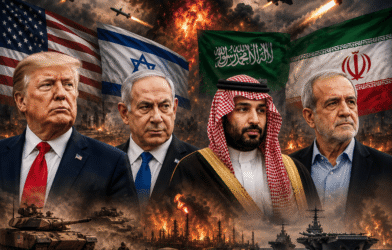
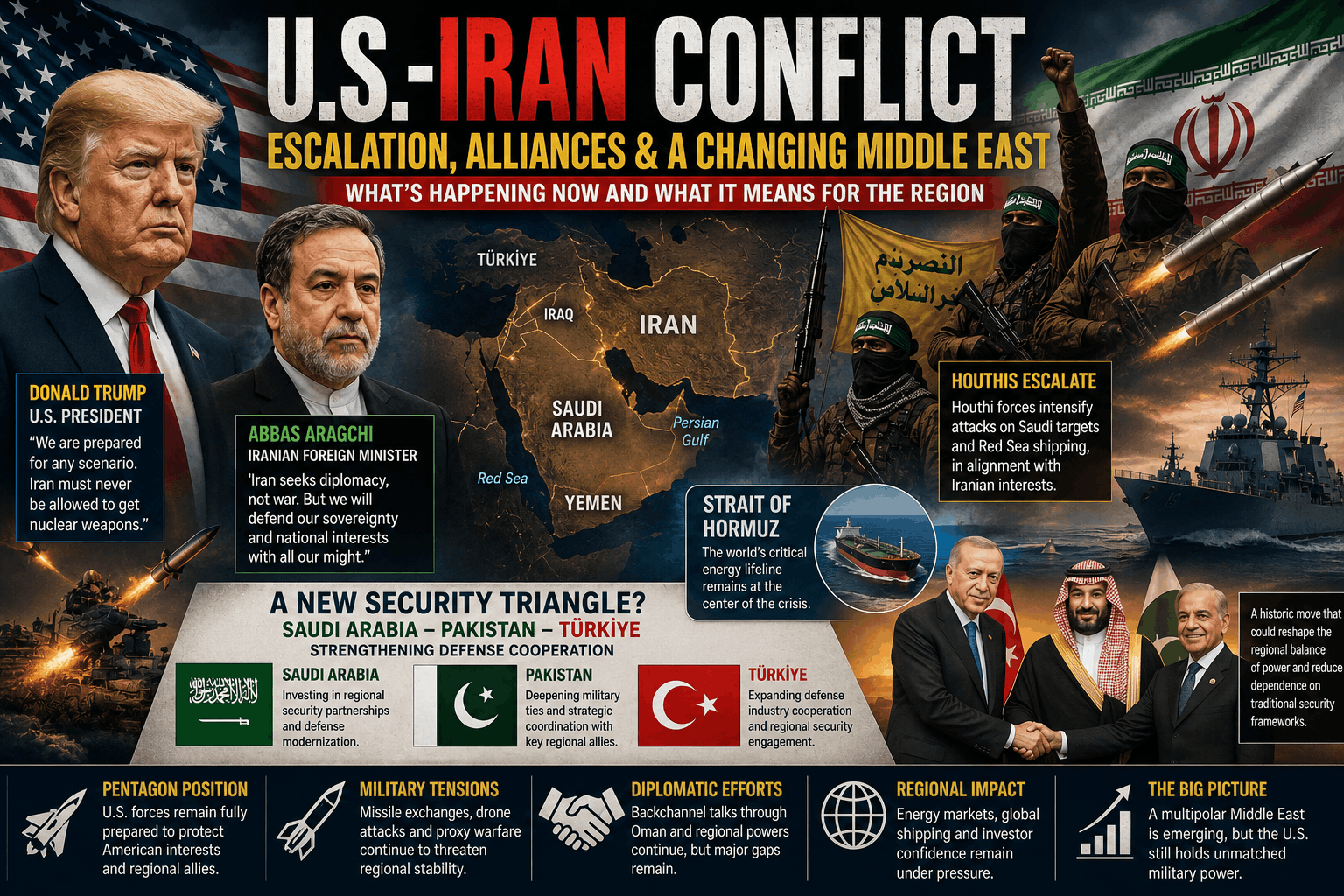
Rochester, NY/Doha, QA: The U.S.–Iran conflict is entering a more complicated phase in which military confrontation; diplomatic bargaining, proxy warfare and new regional security alliances are increasingly interconnected. Washington continues to maintain substantial military pressure on Tehran, while Iran is attempting to demonstrate that another major American attack could destabilize energy supplies and security across the Gulf.
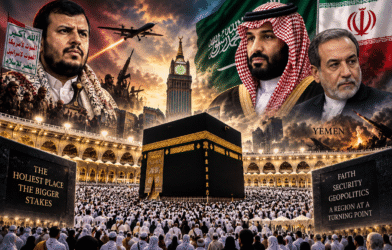
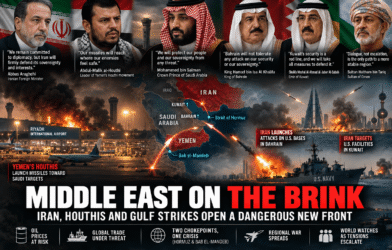
At the same time, Yemen’s Houthis have intensified military pressure affecting Saudi and Red Sea interests, while Saudi Arabia, Pakistan and Türkiye are deepening defense cooperation. Together, these developments raise a larger strategic question: is the Middle East gradually moving away from almost exclusive reliance on American military protection?
The evidence suggests that U.S. influence remains formidable, but regional states are increasingly seeking alternatives.
Trump Keeps Military Pressure While Leaving the Door Open to Diplomacy
President Donald Trump has continued to combine military threats with opportunities for negotiation. His administration has made clear that Washington wants restrictions on Iran’s nuclear and military capabilities while also demanding secure international navigation through the Strait of Hormuz.
Trump recently postponed another major military escalation after regional governments pushed for additional diplomatic negotiations. He indicated that Iran and other Middle Eastern countries had sought more time to work toward an agreement.
His position nevertheless remains conditional. Trump has insisted that Iran must permit unrestricted maritime movement through the Strait of Hormuz and eliminate what Washington regards as a continuing nuclear threat.
The temporary suspension of further attacks should therefore not be interpreted as the end of the confrontation. It is better understood as coercive diplomacy: Washington maintains overwhelming military power while offering Tehran an opportunity to avoid additional strikes by accepting American conditions.
Iran has provided a different interpretation of negotiations.
Iranian Foreign Minister Abbas Araghchi has emphasized diplomacy while maintaining that Tehran will defend its sovereign rights. Iranian officials have suggested that maritime discussions involving Oman should not automatically be interpreted as Iranian acceptance of every American demand regarding Hormuz.
This disagreement reveals the central problem. Washington wants freedom of navigation without Iranian interference, while Tehran wants international recognition that Iran remains an unavoidable security actor in the Persian Gulf.
Pentagon Faces the Cost of a Prolonged Conflict
Another factor increasingly influencing U.S. strategy is the enormous consumption of precision weapons.
Recent reporting has raised questions about the number of long-range missiles used during months of operations connected to the Iran conflict. Modern warfare relies heavily on expensive precision-guided weapons, cruise missiles and missile-defense interceptors, inventories that cannot always be replenished as quickly as they are consumed.
The Pentagon has rejected suggestions that the United States lacks the military capability to continue operations.
Pentagon spokesman Sean Parnell has maintained that the United States remains the world’s most powerful military and possesses the necessary capabilities to defend American forces and interests whenever President Trump orders action.
Trump has similarly argued that the United States retains substantial weapons inventories and that American defense manufacturers are increasing production.
But the strategic question is larger than whether Washington can continue fighting Iran. Pentagon planners must simultaneously consider possible crises involving China, Russia, North Korea and other theaters.
A prolonged Middle Eastern conflict therefore carries an opportunity cost. Every sophisticated missile fired against Iran is one that may need replacement before it can be allocated elsewhere.
That reality may partially explain Washington’s alternating pattern of military escalation and diplomatic pauses.
Iran Tries to Expand the Price of another American Attack
Iran cannot compete directly with the United States in conventional military power. Its strategy therefore depends heavily on asymmetric deterrence.
Tehran has warned that attacks on Iranian energy infrastructure could produce retaliation against economic and strategic interests elsewhere in the Gulf.
Iranian officials have held discussions with regional governments, including Saudi Arabia, Türkiye and Pakistan, as Tehran attempts to prevent another major U.S. offensive.
Foreign Minister Abbas Araghchi has played an important diplomatic role in communicating Iran’s position.
Tehran’s message is essentially that another attack on Iran would not remain geographically confined to Iranian territory. The economic consequences could spread throughout a region containing some of the world’s most important oil facilities, ports and shipping routes.
Saudi Arabia therefore finds itself in an uncomfortable position.
Riyadh does not want an Iranian military victory or a stronger Iranian regional position. However, it also does not want Saudi oil installations, cities and maritime infrastructure to become targets during an expanding U.S.–Iran war.
Crown Prince Mohammed bin Salman has consequently supported efforts aimed at de-escalation while simultaneously strengthening Saudi defensive capabilities.
Houthis Re-Emerge as a Serious Military Pressure Point
The Houthi movement in Yemen represents another major complication.
Recent Houthi missile and drone activity has increased pressure on Saudi-linked interests and forces operating in Yemen. The movement has also threatened maritime activity in the Red Sea, adding another security challenge at a time when the Strait of Hormuz is already central to the U.S.–Iran confrontation.
It is important, however, to distinguish between Iranian influence and Iranian command.
The Houthis are closely aligned with Iran and have received military and technological assistance associated with Tehran’s regional network. But they also possess their own leadership, domestic political objectives and independent calculations.
There is insufficient basis to assume that every Houthi operation is personally directed by Iranian leaders.
Nevertheless, Houthi militarization can objectively benefit Iranian strategic interests.
Iran can place pressure around the Persian Gulf and Strait of Hormuz while the Houthis threaten another globally important maritime corridor around the Bab el-Mandeb and Red Sea.
Together, those geographical pressure points create substantial risks for global commerce.
This is where Iran’s asymmetric strategy becomes dangerous for Washington and its partners. Relatively inexpensive drones and missiles can force governments to deploy extraordinarily expensive defensive systems while threatening commercial shipping and energy infrastructure.
Saudi Arabia, Pakistan and Türkiye Build a New Security Triangle
The most strategically important regional development may be expanding defense cooperation among Saudi Arabia, Pakistan and Türkiye.
Saudi Arabia and Pakistan already have one of the closest defense relationships in the Muslim world. Pakistani personnel have served in Saudi Arabia for decades, while both governments maintain extensive military training and security cooperation.
That relationship has deepened further as Riyadh seeks additional military assurances.
Türkiye adds a different capability.
Under President Recep Tayyip Erdoğan, Türkiye has built an increasingly sophisticated defense industry producing drones, missiles, armored vehicles, naval platforms and advanced aviation technologies. Ankara is also developing its KAAN fighter aircraft and expanding weapons exports across the Middle East and Asia.
Pakistan provides military experience, manpower, missile capabilities and an established defense-industrial base. It also possesses nuclear weapons, although there is no verified evidence that the developing regional security arrangements extend a formal Pakistani nuclear umbrella over Saudi Arabia.
Saudi Arabia provides financial power and strategic access to the Gulf.
Combined, the three countries could eventually create one of the most significant defense-industrial partnerships outside the traditional Western security system.
Is This Alliance Designed to Reduce American Influence?
It would be misleading to describe the Saudi–Pakistan–Türkiye security relationship as an anti-American alliance.
Saudi Arabia remains heavily dependent on American military technology.
Its armed forces operate major American platforms, including F-15 fighter aircraft, Patriot missile-defense systems and other sophisticated equipment. Washington has continued approving multibillion-dollar defense packages for Riyadh.
Türkiye remains a NATO member despite periodic disagreements with Washington.
Pakistan has also sought improved relations with the Trump administration while maintaining close strategic relations with China.
The new alignment therefore appears to represent diversification rather than an attempt to remove the United States from regional security.
But diversification itself is strategically important.
For decades, Gulf security was largely based upon the assumption that the United States would remain the dominant outside military power protecting regional governments and energy routes.
Saudi Arabia increasingly appears unwilling to place its entire security future in one basket.
Riyadh can maintain its American relationship while simultaneously purchasing Turkish technology, expanding Pakistani military cooperation and developing its own defense industry.
That approach reduces dependence without requiring confrontation with Washington.
Could U.S. Arms Exports Eventually Decline?
In the short term, American weapons exports to Saudi Arabia are unlikely to collapse.
The kingdom has invested enormous sums in American aircraft, missile-defense systems, logistics, training and maintenance infrastructure. Replacing those systems would require decades rather than years.
However, the direction of travel is important.
Türkiye is increasingly competitive in drones, missiles and electronic warfare technology. Pakistan offers lower-cost defense products, training and potential joint-production opportunities.
Saudi Arabia itself wants more weapons manufactured domestically as part of its economic diversification strategy.
Future Saudi procurement could therefore become increasingly mixed: American systems for the most sophisticated requirements, alongside Turkish, Pakistani, European and domestically produced equipment.
That would not eliminate U.S. defense exports, but it could gradually reduce America’s exclusive dominance of the Gulf weapons market.
Pakistan Faces a Particularly Delicate Balance
Pakistan may face the most complicated strategic calculation.
Islamabad maintains extraordinarily close security relations with Saudi Arabia but also shares a long border with Iran.
Pakistan therefore has little interest in becoming part of a direct military confrontation against Tehran.
Its preferred role is likely to remain that of security partner to Saudi Arabia while simultaneously encouraging diplomatic de-escalation with Iran.
If Iran or Iran-aligned forces were to conduct a major attack directly against Saudi territory, however, Pakistan could face difficult questions regarding the extent of its security commitments.
Islamabad therefore benefits more from a negotiated U.S.–Iran settlement than from prolonged regional warfare.
A Multipolar Middle Eastern Security System Is Emerging
The larger transformation is not the disappearance of American power.
The United States still possesses unmatched military capabilities, major bases, intelligence networks and defense partnerships throughout the region.
What is changing is the willingness of regional states to depend exclusively on Washington.
Saudi Arabia increasingly wants multiple security partners. Türkiye wants greater strategic independence despite remaining inside NATO. Pakistan wants deeper Gulf security involvement without sacrificing relations with neighboring Iran.
Iran, meanwhile, is using missiles, maritime pressure and allied armed movements to compensate for its conventional military disadvantages.
The U.S.–Iran conflict is therefore accelerating a transformation that was already underway.
The emerging Saudi–Pakistan–Türkiye relationship is unlikely to replace the American security umbrella anytime soon. But it could become an important additional layer underneath it.
The most accurate interpretation is therefore not that Saudi Arabia is abandoning Washington, but that Riyadh is preparing for a future in which no single foreign power completely determines Gulf security.
If that trend continues, the long-term consequence of the U.S.–Iran conflict may extend far beyond Iran itself. It could help create a more multipolar Middle Eastern security order in which Washington remains powerful—but no longer enjoys the same degree of strategic exclusivity it once possessed.
Follow The Variant for timely updates and comprehensive coverage of global affairs, politics, business, and international relations.