Riyadh, SA/Sana, YE: The latest confrontation between Saudi Arabia and Yemen’s Houthi movement illustrates how rapidly a regional security crisis can acquire global economic and religious significance.
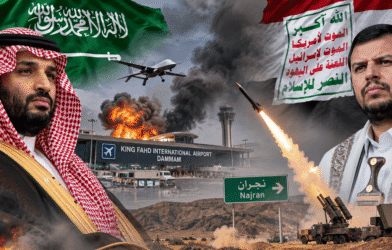
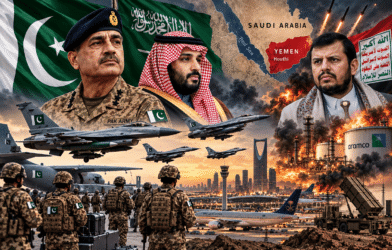
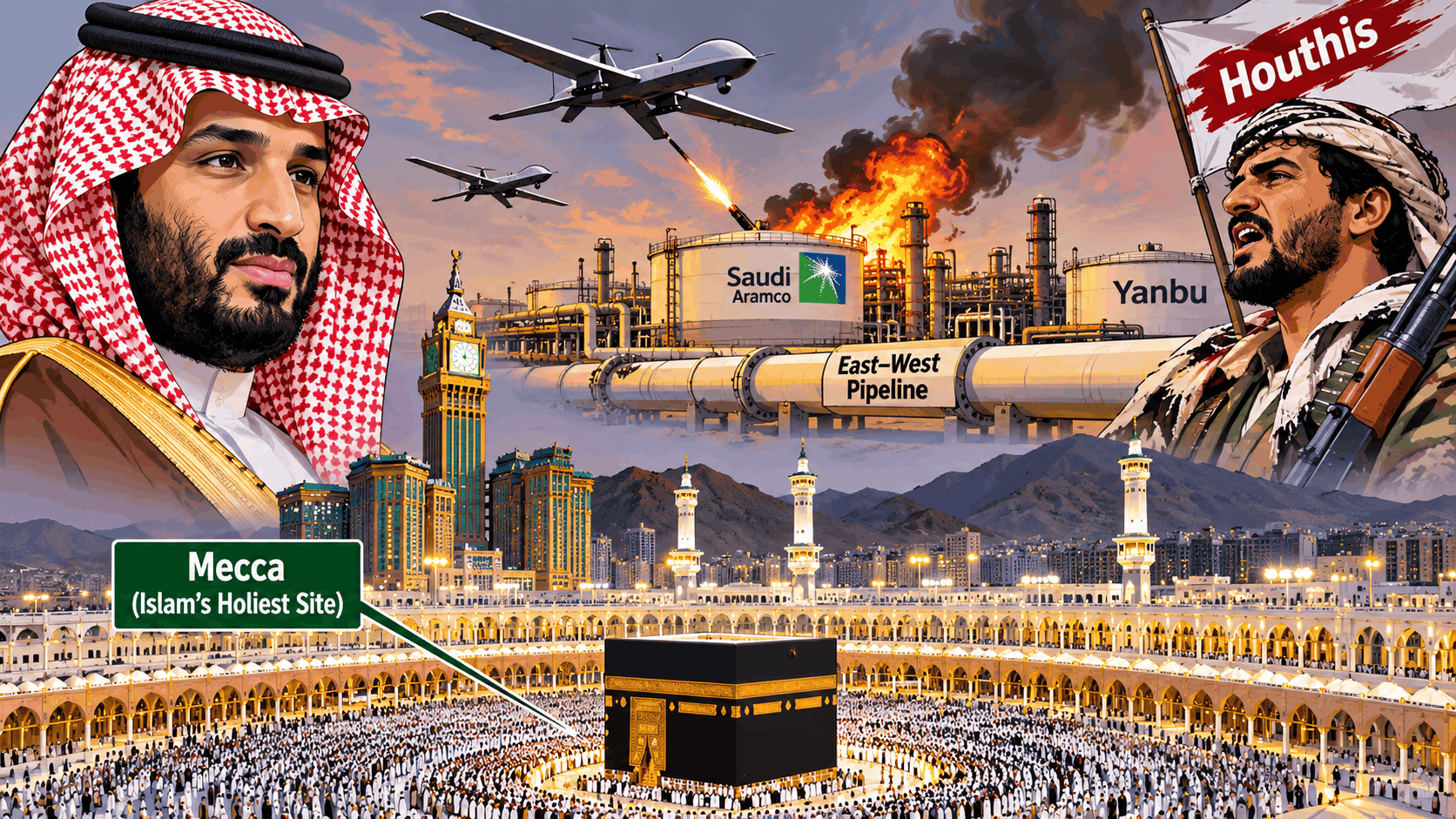
Reports of intercepted projectiles and falling debris in the Mecca region, alongside Houthi claims of attacks against the kingdom’s East–West oil pipeline, an industrial facility in Yanbu, and a Saudi Aramco building in Riyadh, have revived concerns about the vulnerability of Saudi Arabia’s critical infrastructure.
The developments reported around November 12, 2026, are particularly sensitive because they bring together three pillars of Saudi national security: the protection of Islam’s holiest sites, the uninterrupted operation of its energy industry, and the credibility of its military defenses.
Saudi authorities reported interceptions in the Mecca region, while the Houthis denied targeting Mecca. Separately, the movement claimed operations against important Saudi energy and corporate facilities without specifying when the alleged attacks occurred. The Saudi-led coalition also reported intercepting two additional drones.
These accounts require careful distinction. A claim of responsibility does not independently establish that a target was struck, that significant damage occurred, or that an attack took place on the date the claim was announced.
Nevertheless, the combination of reported interceptions and threats to energy infrastructure demonstrates how the conflict can generate strategic consequences even when the physical effects remain uncertain.
Mecca and the Dangerous Intersection of Religion and Warfare
The reported interceptions in the Mecca region carry implications extending far beyond conventional military calculations. Mecca occupies an unparalleled position in the Islamic world, attracting millions of pilgrims annually and serving as the spiritual center toward which Muslims worldwide direct their daily prayers.
Any suggestion that projectiles might endanger the city immediately introduces an exceptionally sensitive religious dimension into an already volatile regional confrontation.
The Houthis’ denial that they targeted Mecca is therefore politically significant. The movement has historically sought to present its military operations as responses to Saudi intervention and broader regional policies.
Being perceived as deliberately threatening Islam’s holiest city could undermine its standing among Muslim audiences, including communities otherwise sympathetic to its political positions.
However, the distinction between an intended target and the geographical area affected by interceptions is crucial.
Debris from intercepted projectiles can create risks even when a religious site was not the intended destination. Reports of falling debris in the wider Mecca region do not, by themselves, establish an attempted attack on the Grand Mosque or the city’s sacred precincts.
For Riyadh, protecting Mecca and Medina is both a constitutional and political responsibility closely associated with the Saudi monarchy’s role as Custodian of the Two Holy Mosques.
Consequently, Saudi authorities face a dual challenge: maintaining effective air defenses while preventing military incidents from escalating into broader religious confrontation.
The stakes are particularly high because religious symbolism can magnify public reactions, narrow diplomatic flexibility, and create political pressure for retaliation.
The East–West Pipeline: Saudi Arabia’s Strategic Energy Lifeline
Among the targets identified in the Houthi claims, the East–West pipeline arguably carries the greatest international economic significance.
The pipeline, commonly known as Petroline, transports crude oil from Saudi Arabia’s eastern producing regions toward the Red Sea port of Yanbu. Its strategic importance lies in providing an alternative export route that avoids dependence on shipping through the Strait of Hormuz.
The system has a nominal capacity of approximately five million barrels per day, with higher capacity cited under certain operating configurations and expansion arrangements. Actual usable capacity depends on operational conditions, available infrastructure, and the volume of oil allocated to the route.
Its importance becomes particularly apparent during periods of confrontation involving Iran, the United States, and other Gulf powers.
The Strait of Hormuz remains one of the world’s most consequential maritime energy corridors. According to historical estimates from the U.S. Energy Information Administration, roughly one-fifth of global petroleum liquids consumption passes through the strait, although actual volumes vary over time.
Saudi Arabia’s Red Sea export infrastructure provides a degree of strategic flexibility if shipping in the Persian Gulf becomes disrupted.
A successful attack on the East–West pipeline could therefore have implications extending beyond Saudi domestic production. Depending on the severity and duration of damage, it could constrain export flexibility, complicate tanker scheduling, increase insurance costs, and intensify volatility in international crude markets.
Yet the Houthis’ November 12 announcement should not be interpreted as proof that pipeline operations were disrupted. Without independently verified damage assessments or confirmation of reduced throughput, the immediate economic impact remains uncertain.
The strategic message, however, is unmistakable: infrastructure designed to reduce vulnerability in one geographic corridor can itself become a target in another.
Yanbu and Riyadh: Economic Targets with Political Significance
Yanbu is more than a coastal industrial city. It is an essential component of Saudi Arabia’s Red Sea energy strategy, accommodating petroleum export facilities, refining operations, and associated industrial infrastructure.
A threat to Yanbu consequently raises questions about the resilience of Saudi Arabia’s western energy network.
The reported Houthi claim involving an Aramco building in Riyadh introduces a different dimension. Unlike an oil pipeline or export terminal, a corporate building can possess symbolic significance independent of its immediate operational importance.
Saudi Aramco represents the economic foundation of the Saudi state and remains central to the kingdom’s fiscal revenues, investment capacity, and long-term development strategy.
Targeting an Aramco-associated facility, even through an unverified claim, can be intended to communicate that the kingdom’s economic institutions remain within reach.
Such threats also intersect with Crown Prince Mohammed bin Salman’s Vision 2030 program, which depends heavily on international investment, economic diversification, tourism, and perceptions of long-term stability.
The contradiction is increasingly apparent. Saudi Arabia seeks to present itself as a secure destination for global capital, while regional adversaries can attempt to challenge that image through relatively inexpensive drones and missiles.
This imbalance between the cost of an attack and the potential economic consequences of defending against it remains one of the defining characteristics of contemporary asymmetric warfare.
The Global Oil Market and the Price of Uncertainty
The economic significance of these developments is heightened by the broader Middle Eastern conflict and the disruption of shipping through the Strait of Hormuz.
Reuters reported that Saudi Arabia has redirected approximately four million barrels of crude oil per day through the East–West pipeline toward Yanbu, representing roughly four percent of global supply. This makes the pipeline particularly important to international energy security.
For international markets, the consequences of attacks on energy infrastructure are not determined exclusively by physical damage. Perceptions of vulnerability can influence oil futures, maritime insurance premiums, freight rates, and investment decisions.
A prolonged interruption to Saudi exports could affect economies far removed from the Middle East.
American consumers could face higher gasoline and transportation costs, European industries could experience additional energy-related inflation, and oil-importing economies such as Pakistan, India, and Bangladesh could confront greater pressure on their foreign exchange reserves.
Higher crude prices also create difficult choices for central banks seeking to contain inflation without undermining economic growth.
However, market reactions must be interpreted cautiously. An increase in oil prices following a military announcement does not necessarily establish that the announcement alone caused the movement. Traders also respond to inventories, shipping conditions, production forecasts, and broader geopolitical developments.
Iran, the Houthis, and the Expanding Regional Conflict
The confrontation also highlights the complex relationship between Yemen’s Houthis and Iran.
The Houthis are widely regarded as part of Iran’s broader network of regional partners, although their decisions cannot automatically be treated as direct orders from Tehran.
Their missile and drone capabilities enable them to exert pressure on Saudi Arabia at comparatively low cost while creating potentially disproportionate economic and political consequences.
The November 12 claims fit a broader pattern in which energy infrastructure becomes a means of strategic coercion.
By threatening facilities connected to Saudi oil exports, the Houthis can seek leverage over Riyadh while drawing international attention to their demands concerning Yemen.
The Critical Threats Project assessed that the Houthis’ November 12 claims were consistent with efforts to impose economic and political costs on Saudi Arabia, but emphasized that the reported strikes could not be independently verified.
For Washington, the implications are equally serious. Saudi Arabia remains an important American security partner, and threats to its energy infrastructure complicate efforts to prevent the regional conflict from spreading.
For Iran, escalating pressure on Saudi energy exports could increase its regional bargaining leverage, but it could also encourage a stronger military response against Iranian-aligned forces.
Neither outcome guarantees strategic success.
The Military Dilemma: Defending Expensive Infrastructure against Inexpensive Weapons
Saudi Arabia has invested heavily in air-defense systems, radar networks, and military modernization. Nevertheless, repeated drone and missile threats demonstrate the difficulties associated with protecting geographically dispersed infrastructure.
A pipeline stretching across vast desert territory presents a fundamentally different security challenge from defending a concentrated military installation.
Even successful interceptions can impose financial costs, consume defensive resources, and generate risks from falling debris.
The Saudi-led coalition’s reported interception of two drones, one near Riyadh and another in the Eastern Province, demonstrates continued defensive activity. It does not, however, independently resolve the separate Houthi claims about successful attacks on named facilities.
This distinction matters because modern warfare increasingly involves competing narratives of military effectiveness.
For the attacking side, announcing an operation can generate publicity and economic anxiety even without verified destruction. For the defending side, reporting interceptions can reassure the public and demonstrate operational capability.
Independent verification remains essential to understanding what actually occurred.
Can Diplomacy Prevent a Wider Confrontation?
The most immediate danger is that repeated incidents could create a cycle of retaliation in which neither side believes it can afford to appear weak.
Saudi Arabia has strong reasons to protect its oil infrastructure and population. The Houthis, meanwhile, may calculate that continued military pressure improves their negotiating position.
Yet escalating attacks risk undermining the possibility of a durable political settlement in Yemen.
A sustainable approach would require renewed diplomatic engagement, credible mechanisms to reduce cross-border attacks, and negotiations addressing Yemen’s unresolved political and economic disputes.
Regional actors, including Oman and other states capable of maintaining communication with opposing parties, could play an important role in reducing tensions.
International diplomatic efforts must also recognize that protecting maritime trade, securing energy supplies, and resolving Yemen’s conflict are increasingly interconnected objectives.
Conclusion: A Crisis beyond Oil and Missiles
The November 12 developments reveal a fundamental vulnerability in the Middle East’s security architecture.
Saudi Arabia possesses considerable financial resources, advanced military capabilities, and globally significant energy infrastructure, yet relatively inexpensive missiles and drones can still threaten its economic confidence and regional stability.
The concerns surrounding Mecca introduce an additional danger: the possibility that military incidents could acquire religious significance far beyond their immediate geographical consequences.
At the same time, threats against the East–West pipeline and Yanbu demonstrate that alternative energy corridors are not automatically safe from regional conflict.
The central question is no longer simply whether Saudi Arabia can intercept incoming weapons. It is whether regional governments can prevent repeated attacks, disputed claims, and retaliatory operations from producing a wider confrontation that damages global energy security.
For Saudi Arabia, the challenge is to defend its territory without becoming trapped in an indefinite escalation. For the Houthis, military pressure carries the risk of deepening Yemen’s isolation and humanitarian suffering.
For Washington and other international powers, the priority should be preventing another expansion of a conflict whose economic consequences are already being felt beyond the region.
Ultimately, the security of Saudi Arabia’s oil infrastructure and the sanctity of Islam’s holy cities should not become competing instruments of regional warfare.
Their protection requires not only military defenses, but also political restraint, credible diplomacy, and a sustained commitment to regional stability.
Reporting basis: Reuters, November 12–13, 2026; AFP, November 12, 2026; and Critical Threats Project, November 12, 2026. Houthi claims of successful strikes remain distinguished from independently verified outcomes.