


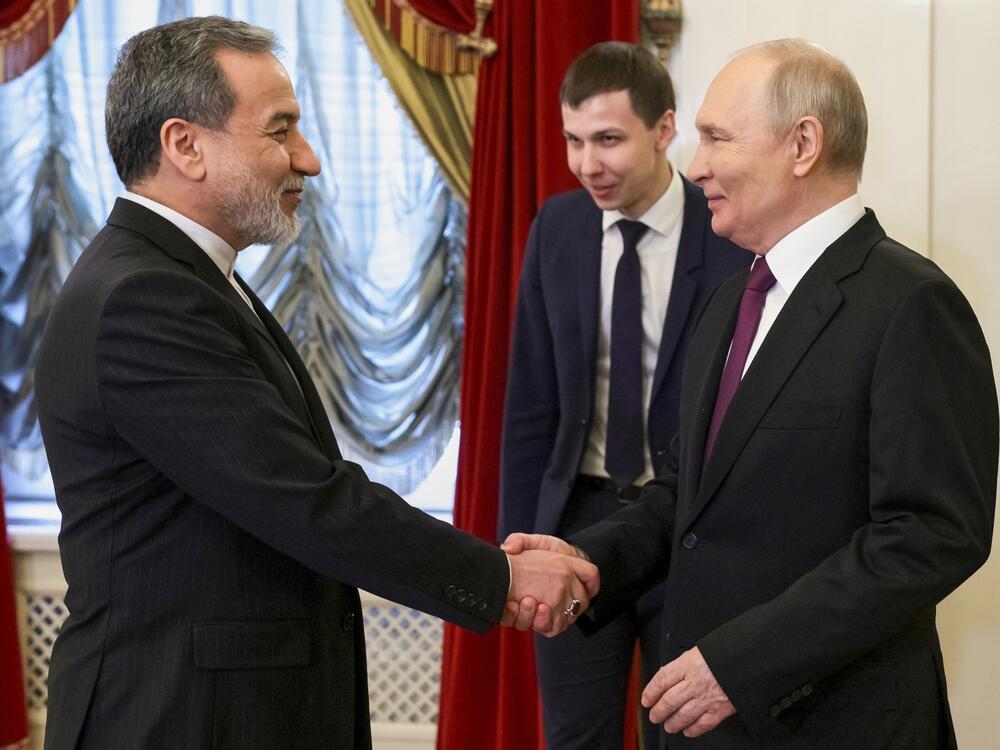
Rochester, NY: The sequence matters. Abbas Araghchi arriving in Moscow shortly after consultations in Islamabad is not a coincidence—it is choreography.
A Confident Tehran: In the current context of a Donald Trump administration, Washington reads this not as routine diplomacy but as layered signaling: Iran is consolidating channels across multiple power centers while tensions with the United States remain unresolved.
Araghchi’s tone after meeting Vladimir Putin appeared notably assured. That confidence is being interpreted in Washington less as bravado and more as a reflection of perceived strategic backing—whether real or exaggerated—from Moscow.
Under President Trump, U.S. policy toward Iran has historically leaned toward maximum pressure combined with unpredictable tactical signaling. In this framework, the Moscow visit reinforces a long-standing concern: that Iran is actively working to dilute U.S. leverage by deepening ties with geopolitical rivals.
Statements from Marco Rubio have emphasized that “any alignment that enables Iran to evade pressure or expand destabilizing influence will face firm response.”
Meanwhile, JD Vance has framed the issue in broader ideological terms, warning that “emerging blocs that challenge U.S. influence must be confronted with clarity and strength.”
President Trump’s own rhetoric, consistent with his previous posture, has revolved around deterrence through dominance.
In a recent address, he reiterated that “Iran will not be allowed to threaten American interests or allies, and any provocation will be met with consequences far greater than before.” The language signals escalation readiness, but also leaves room for negotiation under pressure.
Following his meeting in Moscow, Araghchi emphasized that Iran “will not yield to coercion and continues to engage with partners who respect its sovereignty.” While the statement avoids explicit alignment, the implication is clear: Tehran sees Moscow as a counterweight to Washington.
From the Kremlin side, Vladimir Putin maintained that Russia “supports diplomatic resolution and rejects unilateral pressure mechanisms.” However, he also stressed that “independent states must be free to pursue their strategic interests without external coercion,” a formulation that implicitly supports Iran’s position.
The gap between rhetoric and reality remains important. Russia’s support for Iran is strategic but not unconditional; Moscow benefits from Iran’s defiance of U.S. policy but is unlikely to be drawn into direct confrontation on Tehran’s behalf.
The timing of Araghchi’s stop in Islamabad has fueled speculation that Pakistan may have played a preparatory role in shaping Iran’s diplomatic messaging.
Pakistan’s military establishment has historically maintained discreet channels with both Tehran and Washington, making it a plausible—though unproven—facilitator of strategic coordination.
However, labeling this as a “double game” risks oversimplification. Pakistan’s approach is better understood as strategic hedging.
It must manage its border realities with Iran, its economic dependencies, and its long-standing security relationship with the United States. This produces a pattern of engagement that can appear contradictory but is, in reality, structurally consistent.
From Washington’s perspective, any perception that Islamabad is enabling Tehran—directly or indirectly—will deepen mistrust, especially under a Trump administration that prioritizes transactional clarity over diplomatic ambiguity.
Simultaneously, Israel continues its military operations in Lebanon, targeting positions linked to Hezbollah. These actions are not isolated incidents but part of a broader confrontation with Iran’s regional network.
For the Trump administration, Israel’s assertiveness aligns with its own hardline stance on Iran. Yet, it also introduces risk. Sustained escalation in Lebanon could trigger a wider regional conflict—one that might compel direct U.S. involvement despite its preference for controlled pressure.
Both sides are preparing, but preparation does not necessarily mean imminent war. The United States is reinforcing deterrence through military positioning and economic pressure, while Iran is strengthening its asymmetric capabilities and diplomatic ties.
The likely trajectory is not immediate large-scale conflict but calibrated escalation. Cyber operations, proxy engagements, and strategic signaling will dominate the landscape.
Under Trump, however, the margin for sudden escalation is narrower—his administration’s unpredictability itself becomes a strategic variable.
The United States, under President Trump, stands in a posture of assertive containment. It seeks to constrain Iran’s regional influence, disrupt its alliances, and maintain dominance without committing to prolonged conflict.
Russia’s engagement complicates this effort but does not redefine it. Iran’s outreach to Moscow—and possibly quiet coordination with Islamabad—suggests a strategy of diversification rather than dependence.
As for Pakistan, its role remains ambiguous by design. It is neither fully aligned with Iran nor entirely anchored to U.S. expectations. That ambiguity may serve Islamabad’s interests, but it also ensures that its actions will continue to be scrutinized—and, at times, suspected—by Washington.
In this evolving equation, perception, signaling, and timing are as critical as actual policy. And right now, all three are in motion.


