


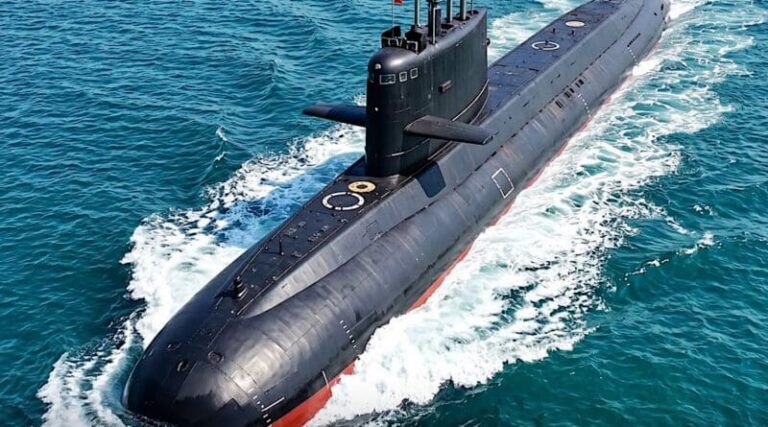
Rochester, NY/Karachi, PK: The arrival of the first Hangor-class submarine at Karachi Port represents a landmark development in Pakistan’s ongoing efforts to modernize its naval forces and strengthen its maritime security architecture.
More than a decade after Pakistan initiated plans to upgrade its underwater fleet, the induction of the new submarine marks the beginning of one of the most ambitious naval modernization programs in the country’s history.
The development is being closely watched across the Indian Ocean region, where strategic competition, expanding naval capabilities, and the protection of critical sea lanes have become increasingly important to regional and global security.
The Hangor-class submarine program originates from a defense agreement signed between Pakistan and China in 2015. Under the agreement, Pakistan is set to acquire eight advanced diesel-electric submarines based on China’s Type 039B design, known internationally as the Yuan-class submarine.
The project has been regarded as a cornerstone of naval cooperation between Islamabad and Beijing, reflecting the broader strategic partnership that has deepened between the two countries over the past decade.
For Pakistan, the arrival of the first Hangor-class submarine is not merely the addition of a new naval platform. It symbolizes a transition toward a more technologically sophisticated maritime force capable of addressing emerging security challenges in the Arabian Sea and the wider Indian Ocean region.
The submarine is expected to gradually replace elements of Pakistan’s aging Agosta-class fleet, which has served as the backbone of the Pakistan Navy’s underwater capabilities for several decades.
The Agosta submarines, acquired from France during different periods, have played a vital role in Pakistan’s maritime defense strategy. However, changing technological requirements, evolving anti-submarine warfare capabilities and the increasing complexity of regional naval operations have created a need for more advanced platforms.
The Hangor-class is intended to bridge that gap by introducing modern combat systems, improved stealth characteristics, enhanced endurance, and greater operational flexibility.
One of the most significant features associated with the Hangor-class submarine is its Air Independent Propulsion (AIP) capability.
This technology allows conventional submarines to remain submerged for extended periods without the need to surface frequently for battery recharging.
Extended underwater endurance significantly reduces the risk of detection and enhances the vessel’s ability to conduct surveillance, intelligence gathering, deterrence patrols, and combat operations in contested maritime environments.
Military analysts believe that the integration of AIP technology into Pakistan’s submarine fleet could substantially improve the country’s underwater deterrence capabilities.
In modern naval warfare, stealth remains one of the most valuable attributes of a submarine. The ability to remain hidden while operating in strategic waters provides a critical advantage in both peacetime monitoring missions and potential conflict scenarios.
The strategic importance of the Hangor-class program becomes even more evident when viewed within the broader security environment of South Asia.
The Arabian Sea serves as a vital maritime corridor for international trade, energy transportation, and military movements. Several major powers maintain a naval presence in the region, while neighboring countries continue to invest heavily in naval modernization programs.
India, in particular, has significantly expanded its maritime capabilities over the past decade through the acquisition of advanced surface combatants, aircraft carriers, maritime patrol aircraft, and nuclear-powered submarines.
This naval expansion has prompted Pakistan to seek measures that preserve what military planners describe as a credible balance of power at sea.
While the Hangor-class submarines do not alter the fundamental strategic realities of the region, they are expected to enhance Pakistan’s ability to maintain deterrence and safeguard its maritime interests.
The modernization effort also reflects Pakistan’s growing recognition of the economic significance of maritime security.
With the development of Gwadar Port and the expansion of the China-Pakistan Economic Corridor (CPEC), the protection of sea lines of communication has become increasingly important.
Much of Pakistan’s trade, energy imports, and economic activity depend on secure maritime routes connecting the country to global markets.
A modern submarine force provides an additional layer of security for these critical interests. Submarines can monitor strategic waterways, deter hostile naval activities, and contribute to broader maritime domain awareness.
Their presence often serves as a force multiplier, enabling smaller navies to project influence beyond what their surface fleets alone might permit.
The Hangor-class program is also notable for its industrial and technological dimensions. Under the original agreement, some of the submarines are expected to be constructed in China, while others are being assembled in Pakistan with technology transfer arrangements.
This approach aims to strengthen Pakistan’s domestic shipbuilding and defense manufacturing capabilities, potentially contributing to the long-term development of indigenous naval expertise.
Defense economists argue that such technology transfer programs can have benefits extending beyond military applications.
They can support local industries, enhance technical skills, and create opportunities for future innovation in engineering and maritime sectors. However, the extent of these benefits will depend on how effectively the transferred technologies are integrated into Pakistan’s industrial base.
From a geopolitical perspective, the submarine project further underscores the strategic depth of Pakistan-China defense cooperation.
Beijing has emerged as Pakistan’s principal defense partner across multiple domains, including air power, missile technology, naval systems, and infrastructure development.
The Hangor-class submarines therefore represent not only a military acquisition but also a manifestation of broader geopolitical alignment between the two countries.
At the same time, the acquisition has generated debate among security analysts regarding its impact on regional stability.
Supporters argue that strengthening Pakistan’s naval deterrent contributes to strategic equilibrium and reduces the likelihood of coercive maritime pressure.
Critics, however, contend that continued military modernization across South Asia risks fueling an arms competition that could increase tensions in an already sensitive region.
Despite differing interpretations, most experts agree that submarines will remain a central component of naval strategy in the Indian Ocean for the foreseeable future.
As maritime competition intensifies and regional powers seek to secure vital trade routes and strategic chokepoints, underwater capabilities are expected to play an increasingly important role in shaping the security environment.
The arrival of the first Hangor-class submarine at Karachi Port therefore marks more than the delivery of a new military asset. It represents the beginning of a transformative phase for the Pakistan Navy, one that seeks to align maritime capabilities with evolving strategic realities.
As the remaining submarines enter service over the coming years, Pakistan’s underwater fleet is expected to become more capable, more survivable, and better positioned to protect national interests across the Arabian Sea and beyond.
Whether viewed through the lens of defense modernization, regional deterrence, economic security, or strategic partnership, the Hangor-class submarine program stands as one of the most consequential military developments in Pakistan’s recent history.
Its long-term significance will ultimately be measured not only by the capabilities of the submarines themselves but also by their contribution to maintaining stability, safeguarding maritime interests, and adapting to the changing dynamics of the Indian Ocean region.
Continue exploring the latest developments in politics, business, diplomacy, and global affairs with The Variant.


