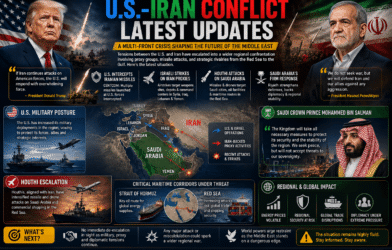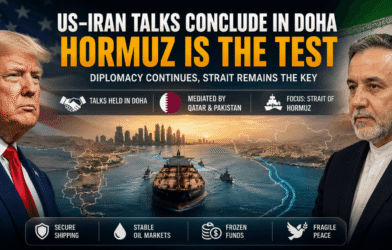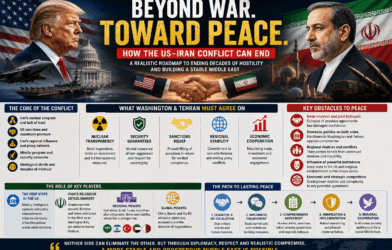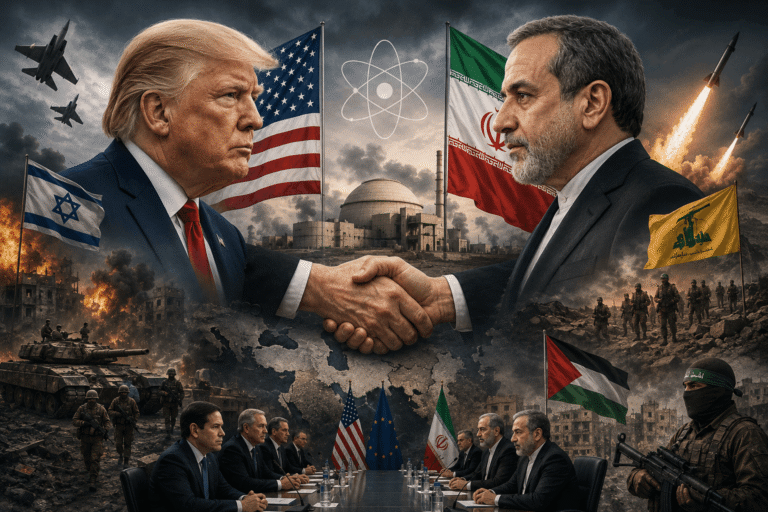
Rochester, NY: The virtual signing of a preliminary peace agreement between the United States and Iran marks one of the most unexpected geopolitical developments in the Middle East since the collapse of the 2015 nuclear accord.
After months of military confrontation, direct and proxy warfare, attacks on strategic infrastructure, and fears of a wider regional war, Washington and Tehran have agreed to a framework aimed at ending hostilities and opening the door for broader negotiations.
Yet beneath the diplomatic celebration lies a difficult reality: the most contentious issues remain unresolved, particularly Iran’s nuclear program, Israel’s security concerns, and the future of Iran-backed armed groups across the region.
The agreement appears to be more of a ceasefire framework than a comprehensive peace treaty.
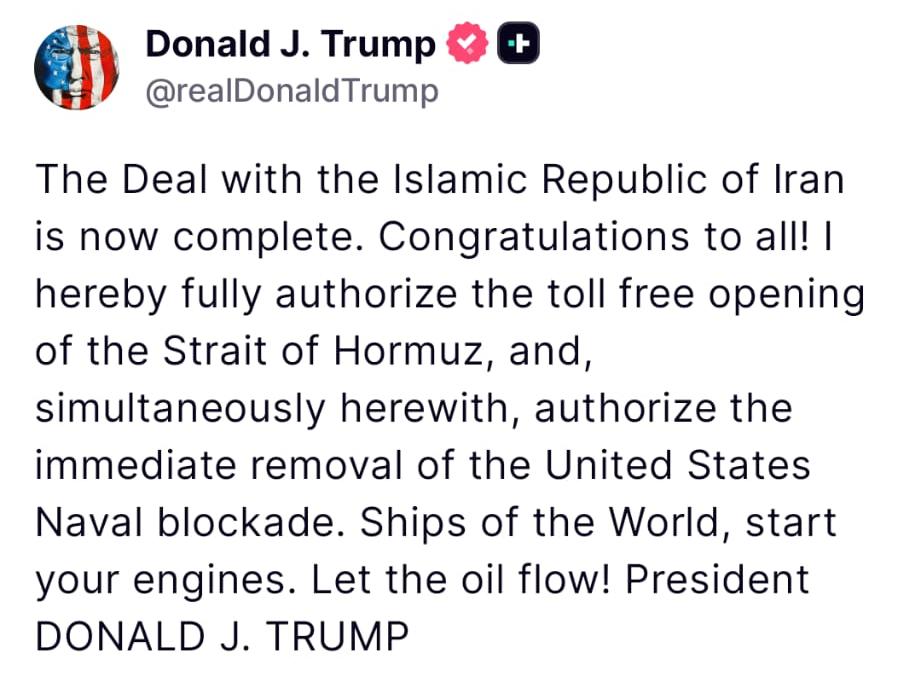
It reportedly includes the reopening of the Strait of Hormuz, phased sanctions relief for Iran, a halt to direct military operations, and a commitment to continue negotiations on nuclear matters over the coming weeks.
However, the details concerning uranium enrichment, inspections, missile development, and regional proxy networks remain either deferred or deliberately ambiguous.
The Nuclear Question: The Most Controversial Part of the Deal
The Iranian nuclear program remains the central fault line of the agreement. While President Donald Trump has claimed that Iran has agreed never to acquire a nuclear weapon, Iranian officials have simultaneously indicated that Tehran will not surrender its sovereign right to nuclear enrichment.
This contradiction has immediately raised questions about whether both sides are actually describing the same agreement.
Reports suggest that future negotiations may focus on limiting enrichment levels, returning international inspectors to Iranian facilities, and possibly converting or diluting highly enriched uranium stockpiles.
Yet there is still no public consensus regarding whether Iran will completely abandon enrichment activities or merely place them under stricter international monitoring.
This ambiguity is precisely why many analysts compare the emerging framework to the 2015 nuclear agreement negotiated under former U.S. President Barack Obama.
The earlier accord limited Iran’s nuclear activities in exchange for sanctions relief but did not permanently eliminate Tehran’s nuclear infrastructure.
Critics in both Israel and the United States argued that the agreement merely delayed rather than eliminated Iran’s nuclear ambitions. President Trump later withdrew from that agreement during his first administration, calling it insufficient and flawed.
Ironically, the current framework appears to be moving toward a similar model: restrictions, inspections, and monitoring rather than complete dismantlement.
This is why opponents of the deal argue that the fundamental disagreement between Washington and Tehran has not been solved but merely postponed.
Netanyahu’s Strategic Dilemma
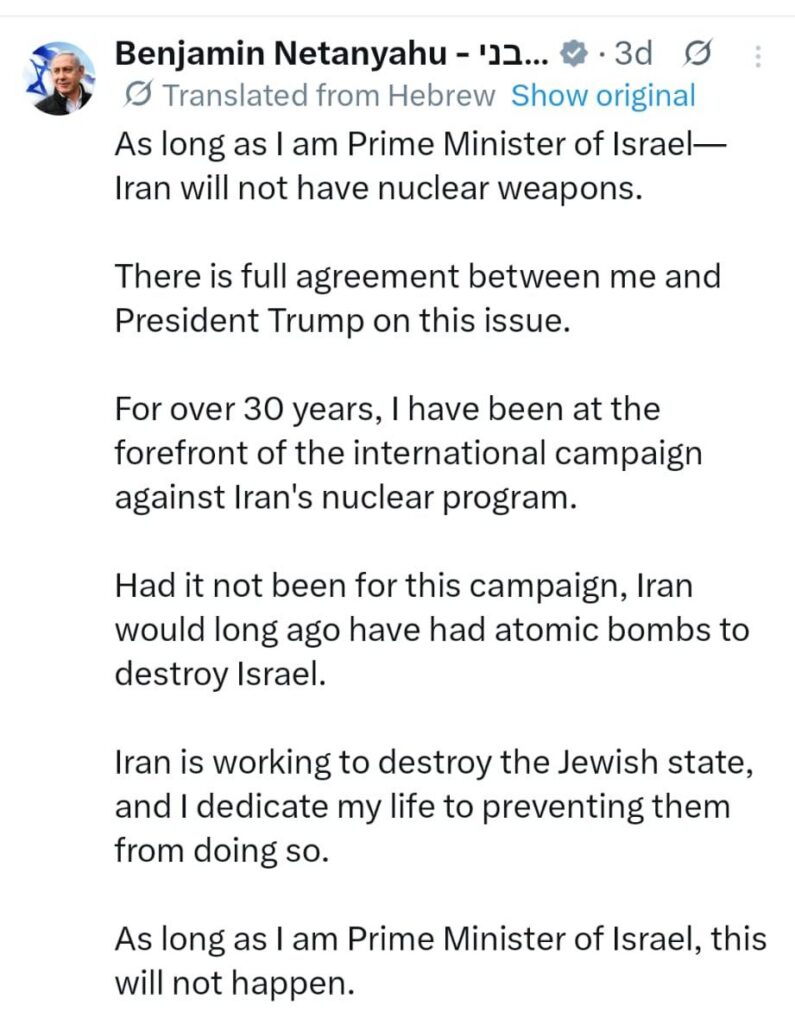
No leader appears more uncomfortable with the emerging agreement than Benjamin Netanyahu.
For years, Netanyahu has built his security doctrine around the principle that Iran must never retain a pathway to nuclear capability.
The Israeli government invested significant military, intelligence, and diplomatic resources to counter Iranian influence across the Middle East.
Now, after extensive military operations and unprecedented strikes against Iranian targets, Israel finds itself watching Washington negotiate directly with Tehran.
Netanyahu publicly stated that Israel does not yet know all the terms of the agreement and emphasized that Israel would ensure Iran never acquires nuclear weapons “with or without an agreement.” He also acknowledged that he and President Trump do not always see eye-to-eye on security matters.
Within Israel’s security establishment, reactions appear mixed. Some military officials recognize that a prolonged regional war would place enormous economic and security burdens on Israel.
Others fear that sanctions relief could eventually strengthen Iran financially and allow Tehran to rebuild its military and regional influence.
The concern is not merely about nuclear facilities; it is about the broader strategic balance of power in the Middle East.
Why Israel Continues Operations in Lebanon
One of the most revealing aspects of Israel’s reaction is its refusal to halt military operations in Lebanon despite the U.S.-Iran breakthrough.
Israeli leaders have repeatedly declared that the fight against Hezbollah is separate from any agreement between Washington and Tehran.
Netanyahu and Israeli defense officials insist that Israeli forces will remain in Lebanese security zones and buffer areas for as long as necessary.
From Israel’s perspective, Hezbollah remains the most dangerous component of Iran’s regional network.
Even if Tehran reaches an accommodation with Washington, Israel believes Hezbollah still possesses the capability to threaten northern Israel through rockets, drones, and cross-border operations.
Therefore, Israeli military planners appear determined to continue degrading Hezbollah’s capabilities before any future political settlement emerges. In effect, Israel is signaling that a U.S.-Iran agreement does not automatically translate into an Israel-Hezbollah ceasefire.
How Hezbollah and Hamas View the Agreement
The reactions among Iran’s regional allies are likely characterized by caution rather than celebration.
For Hezbollah, the agreement presents both opportunities and risks.
On one hand, reduced pressure on Iran could improve Tehran’s financial position and potentially restore resources flowing to allied movements.
On the other hand, Hezbollah’s leadership must worry that Iran could prioritize state interests over ideological commitments if broader normalization with Washington becomes a strategic objective.
The agreement notably does not contain binding provisions regarding Hezbollah or Hamas.
This omission has alarmed Israeli policymakers because it suggests that proxy issues may be addressed later—or perhaps not at all.
For Hamas, the situation is even more complicated. The organization has historically relied on Iranian political and military support, but Hamas must now evaluate whether Tehran’s diplomatic engagement with Washington could constrain future support mechanisms.
Hamas may welcome reduced regional tensions, but it also faces uncertainty regarding Iran’s long-term strategic priorities.
The broader concern among Iran’s allied groups is that Tehran could gradually shift from a confrontation-based strategy toward a diplomacy-centered regional posture.
If that occurs, proxy organizations may lose some of the strategic leverage they have enjoyed during years of confrontation.
Pakistan’s Emergence as a Key Mediator
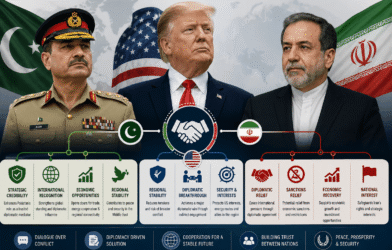
Perhaps the most significant diplomatic surprise of this process has been Pakistan’s role.
Multiple reports indicate that Pakistan, alongside regional partners, played an important mediating role in facilitating contacts between Washington and Tehran.
Pakistani officials publicly welcomed the agreement and described it as a pathway toward ending hostilities across multiple fronts.
Pakistan reportedly participated in efforts that helped bring both sides to a virtual signing process and maintain communication during periods of intense tension.
For Islamabad, successful mediation delivers several strategic benefits. It strengthens Pakistan’s international diplomatic profile, reinforces its relationships with both the United States and Iran, and positions the country as a credible regional interlocutor during a period of extraordinary instability.
Pakistan’s balancing act has been particularly notable. Unlike many regional actors, Islamabad maintained working relations with Tehran while preserving important ties with Washington and Gulf states.
This unique positioning enabled Pakistani diplomacy to function as a bridge when direct communication channels became politically difficult.
If the agreement survives its implementation phase, Pakistan could emerge as one of the major diplomatic beneficiaries of the crisis.
Critical Assessment: Peace Agreement or Strategic Intermission?
The most realistic assessment is that the current U.S.-Iran agreement is not the end of the crisis but the beginning of a new phase.
The core disputes remain unresolved. Iran’s nuclear future remains uncertain. Israel remains deeply skeptical. Hezbollah and Hamas remain active actors.
Ballistic missile issues have not been comprehensively addressed. The future architecture of regional security remains undefined.
What has changed is that both Washington and Tehran appear to have concluded that continued escalation carries greater costs than negotiation.
The economic impact of war, disruptions in energy markets, risks to global shipping, and fears of a broader regional conflagration created powerful incentives for compromise.
Whether this framework evolves into a durable peace agreement will depend almost entirely on the nuclear negotiations that now follow.
If those talks produce verifiable limitations, international inspections, and mutual confidence-building measures, the Middle East could witness its most significant diplomatic breakthrough in more than a decade.
If they fail, the current agreement may be remembered not as a peace settlement, but merely as a pause between conflicts.
Bookmark The Variant for trusted updates, informed analysis, and comprehensive coverage of the stories that matter most.