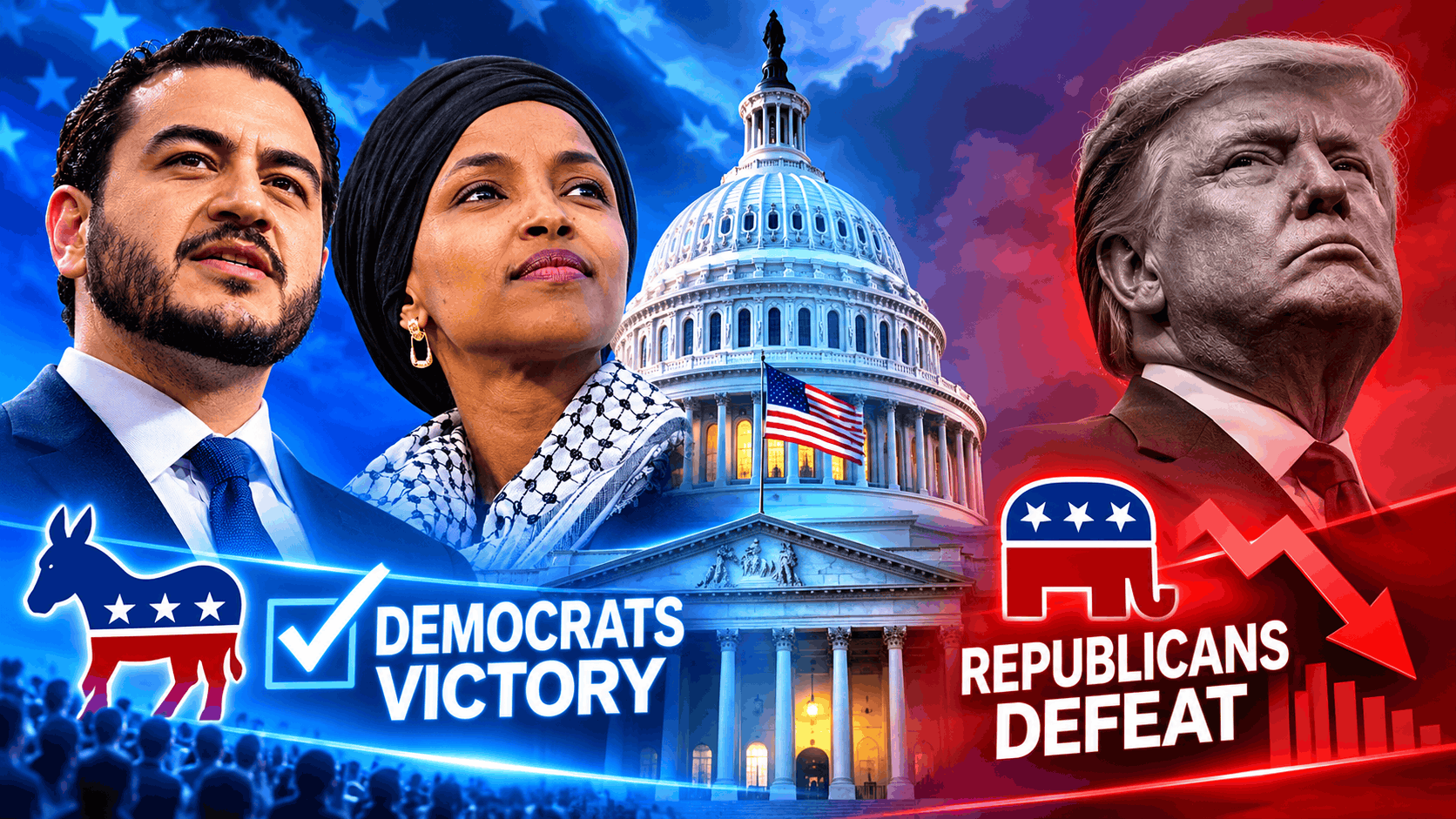
Washington, D.C/New York City, NY: The 2026 United States midterm elections have opened a new chapter in American politics, raising fundamental questions about the balance of power in Washington, the future of President Donald Trump’s domestic and foreign policy agenda, and the growing influence of diverse political voices.
Yet the distinction between electoral victory and the constitutional transfer of legislative power is essential. Winning an election does not immediately make a candidate a sworn-in member of Congress.
The incoming House and Senate must complete their respective constitutional procedures before newly elected lawmakers formally exercise their authority.
For Muslim-American political figures, including Abdul El-Sayed and Ilhan Omar, the broader significance extends beyond individual campaigns.
Their political prominence illustrates an ongoing debate about religious representation, immigration, economic opportunity, civil liberties and the role of minority communities in American democracy.
The Swearing-In Ceremony: A New Congress, but Not yet a New Government
As of November 14, 2026, the incoming 120th Congress has not yet held its formal swearing-in ceremony. Its term begins on January 3, 2027, although the exact arrangements for ceremonial activities may differ between the chambers.
In the House of Representatives, members will elect a Speaker before the oath is administered. In the Senate, newly elected senators will take their oaths under established constitutional procedures, ordinarily administered by the vice president in his capacity as president of the Senate.
The November 3 elections nevertheless produced a decisive political transformation. The Associated Press projected Democratic control of both chambers, with Democrats overturning Republican advantages in a series of competitive states.
Reportedly at least 43 Democratic House pickups and seven Senate pickups in its November 6 assessment, although several individual contests remained unresolved afterward.
The incoming congressional class includes both established Democratic figures and newcomers whose victories challenged conventional assumptions about American electoral politics.
Among the Democratic Senate winners were Abdul El-Sayed of Michigan, James Talarico of Texas, Sherrod Brown of Ohio, Roy Cooper of North Carolina, Peggy Flanagan of Minnesota, Chris Pappas of New Hampshire, Juliana Stratton of Illinois, Josh Turek of Iowa, Adam Hamilton of Kansas, Annie Andrews of South Carolina and Troy Jackson of Maine.
Republican victories included Andy Barr in Kentucky, Kevin Hern in Oklahoma, Harriet Hageman in Wyoming, Barry Moore in Alabama, Julia Letlow in Louisiana and Kurt Alme in Montana. These results demonstrate that although Democrats captured control of Congress, Republicans retained significant electoral strength in numerous states.
The new political reality will also influence congressional leadership. Democratic leader Hakeem Jeffries is positioned as a leading candidate for Speaker of the House, but the speakership must be decided by the incoming chamber. Senate Democratic leadership decisions likewise remain separate from the election results.
The incoming Congress will have the power to investigate the executive branch, shape federal spending, negotiate legislation and influence the confirmation process. However, Democratic majorities will not automatically provide enough votes to override presidential vetoes or overcome Senate procedural obstacles.
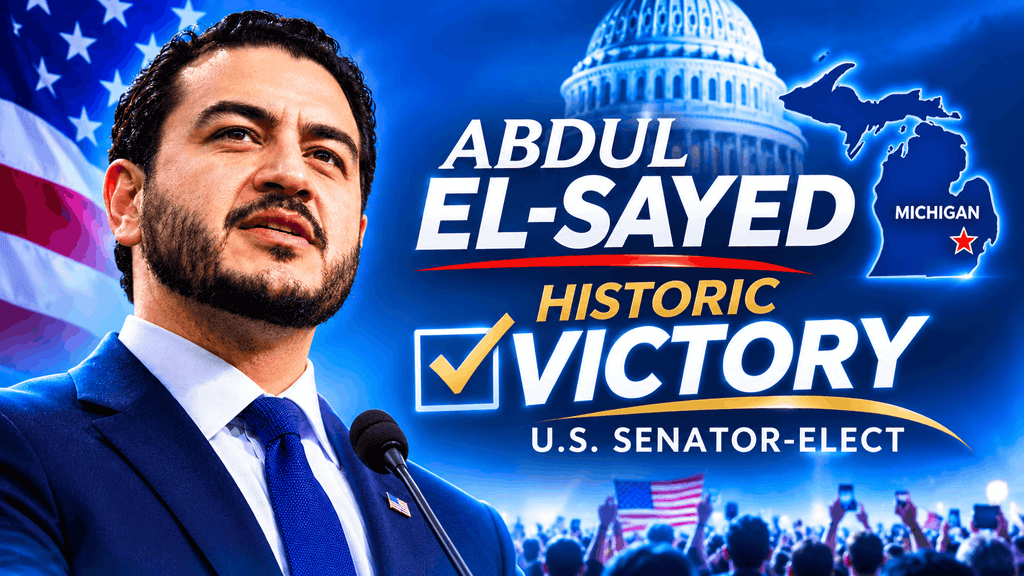
Abdul El-Sayed: A Historic Victory That Redefines Muslim-American Political Representation
The 42-year-old physician and former public health official defeated Republican Mike Rogers, becoming the first Muslim elected to the United States Senate.
El-Sayed’s victory is arguably one of the most historically significant individual results of the 2026 elections. Born in Michigan to Egyptian immigrant parents, he won a closely watched Senate contest in a state where industrial decline, manufacturing employment, health care costs, Middle East policy and religious identity all shaped political debate.
His election also represents a breakthrough for progressive Democrats. El-Sayed campaigned on reducing the influence of wealthy donors, reforming health care and challenging corporate power. His positions on U.S. military support for Israel and the Gaza conflict generated both strong support and significant criticism.
Republican opponents attempted to portray him as politically extreme, while El-Sayed and his supporters argued that attacks on his Muslim identity were discriminatory.
His victory indicates that such attacks did not prevent him from assembling a winning statewide coalition. It does not, however, establish that every voter endorsed his entire progressive agenda.
His Victory Speech: Faith, Defiance and a Message to Trump
At his Detroit victory gathering, El-Sayed celebrated the result with the declaration, “Michigan, we did it.”
His remarks combined religious identity with an unmistakably political message. He referred to the Arabic expressions Inshallah, meaning God willing, and Alhamdulillah, meaning praise be to God, as symbols of a campaign that had overcome considerable obstacles.
Addressing the outgoing political battle, El-Sayed told Mike Rogers, “You chose hate, and Michigan chose hope.”
He also directly challenged President Trump, saying that after being sworn in, the president could simply call him “Senator.” The remarks reflected the unusually personal character of the campaign and the broader confrontation between Trump’s political movement and an emerging generation of progressive leaders.
The importance of his victory extends to the constitutional ceremony itself. As president of the Senate, Vice President JD Vance would ordinarily administer the oath to incoming senators. El-Sayed drew attention to that prospect during his victory speech, presenting it as an ironic conclusion to a bitter campaign.
But political symbolism should not overshadow the legislative challenge awaiting him. A single senator, even one elected under historic circumstances, cannot independently deliver universal health care, campaign-finance reform or a new foreign policy.
His influence will depend on coalition-building within the Democratic caucus, relationships with moderate senators and his ability to turn campaign promises into workable legislation.
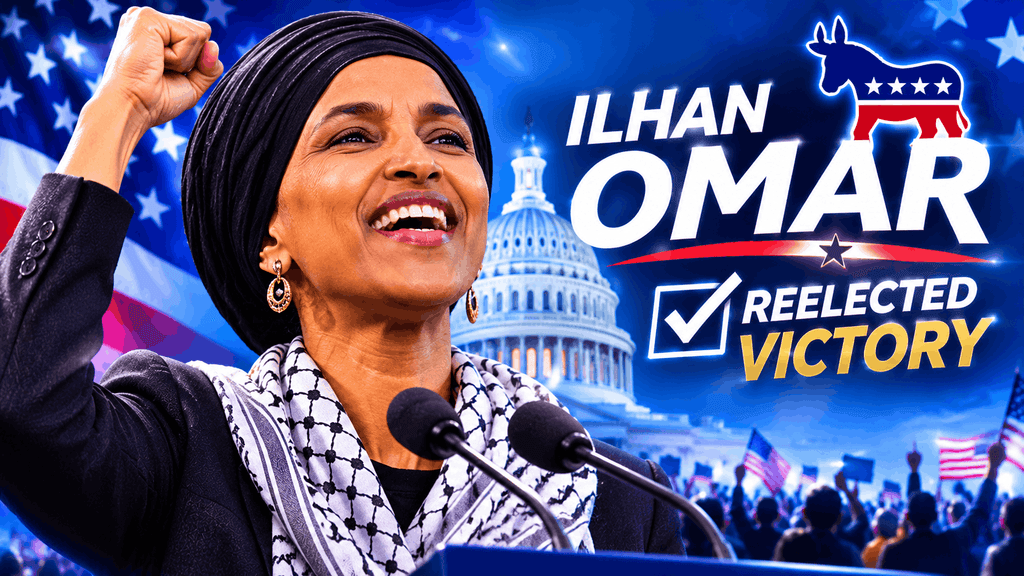
Ilhan Omar: A Fifth-Term Victory and the Resilience of Progressive Politics
Omar secured another term representing Minneapolis and surrounding communities, defeating Republican John Nagel and other candidates in the general election.
Omar’s reelection carries a different political significance from El-Sayed’s breakthrough. While he enters the Senate as a newcomer, Omar returns to the House as an established national political figure whose career has frequently placed her at the center of debates over immigration, religious discrimination, Palestinian rights and American foreign policy.
In her victory statement, Omar thanked the voters of Minnesota’s Fifth District and reaffirmed her commitment to an economy that benefits working families, expanded access to health care, accountability for Immigration and Customs Enforcement, and democratic institutions that are not dominated by billionaires.
She also presented her victory as a rejection of fear, division and bigotry, emphasizing solidarity among the communities she represents.
Omar’s political durability is noteworthy because she has faced years of criticism from Republican leaders, including Trump, over her views on Israel, immigration and national identity.
Her supporters view her as an outspoken defender of marginalized communities, while critics challenge aspects of her foreign policy positions and political rhetoric.
Her substantial electoral margin demonstrates strong support within her own district, but Minnesota’s Fifth is heavily Democratic. Therefore, the result should not be interpreted as proof that her positions command comparable support nationwide.
Nevertheless, Omar’s continued presence in Congress gives progressive Democrats an experienced voice on immigration enforcement, foreign policy and civil liberties precisely when a new Democratic majority is preparing to confront the Trump administration.
A Broader Muslim-American Presence in the Incoming Congress
The 2026 elections also produced a notable expansion of Muslim-American representation in federal politics. According to the Council on American-Islamic Relations and CAIR Action, at least seven Muslim candidates secured congressional victories, with another race still awaiting final resolution at the time of its report.
Alongside El-Sayed and Omar, the successful candidates included Rashida Tlaib, a Democrat reelected in Michigan’s 12th Congressional District; André Carson, a Democrat reelected in Indiana’s 7th District; and Lateefah Simon, a Democrat reelected in California’s 12th District.
The new faces included Adam Hamawy, a Democrat elected to New Jersey’s 12th Congressional District, and Darializa Avila Chevalier, a Democrat elected to New York’s 13th Congressional District. California Democrat Aisha Wahab also declared victory in the 14th District, although final results were still pending in the cited assessment.
The significance of these victories should not be reduced to religious identity alone. These candidates come from different communities and political backgrounds, and they do not necessarily share identical positions on economic policy, Israel, immigration or the role of government.
Their electoral success nevertheless challenges the notion that Muslim identity is inherently incompatible with broad political acceptance in the United States.
For decades, Muslim Americans have participated in public life as voters, professionals, community organizers and elected officials. The arrival of the first Muslim senator represents another institutional milestone in that history.
It is also important to recognize that Muslim-American electoral success does not mean all Muslim voters supported Democrats. Muslim communities are politically diverse, and their voting behavior reflects competing priorities, including economic opportunity, education, religious freedom, social policy and foreign affairs.
Victory Statements Reveal Competing Visions for America
The post-election statements of newly elected lawmakers reveal that the Democratic coalition is united in its opposition to many Trump administration policies but remains divided over how aggressively to pursue structural change.
Texas Democratic senator-elect James Talarico celebrated his party’s breakthrough in a traditionally Republican state. His victory became one of the defining symbols of the Democratic electoral wave.
In Ohio, Democratic governor-elect Amy Acton framed her victory around unity and decency, reflecting the more conciliatory language adopted by some successful candidates.
El-Sayed, by contrast, emphasized economic restructuring and resistance to wealthy special interests. Omar placed immigration enforcement, health care and democratic accountability at the center of her message.
These differences matter because the incoming Democratic majority must determine whether its principal mission is to block Trump’s agenda, restore institutional checks and balances, or pursue a far-reaching progressive legislative program.
Republicans face an equally consequential debate. Some party figures interpret the election as evidence of voter dissatisfaction with economic conditions and the administration’s governing style. Others remain committed to Trump’s political priorities and argue that the party should defend its core agenda rather than abandon it.
The resulting conflict is likely to shape the opening months of the new Congress.
What the Swearing-In Will Mean for Trump and His Administration
When the new Congress takes office in January 2027, President Trump will face a fundamentally different legislative environment.
Democratic control of the House will provide the party with greater authority over committee leadership, congressional investigations, spending negotiations and oversight of federal agencies. Senate control will also affect judicial and executive nominations, legislative priorities and the confirmation process.
Immigration policy is likely to become one of the most contentious areas of confrontation.
Lawmakers such as Omar and El-Sayed have emphasized civil liberties and accountability, while the Trump administration has pursued a more restrictive approach to immigration and enforcement.
A Democratic Congress could demand greater transparency from the Department of Homeland Security, examine immigration detention practices, scrutinize USCIS processing and challenge particular enforcement priorities through legislation and appropriations.
However, Congress cannot automatically reverse executive immigration policies. The president retains substantial administrative authority, federal courts remain independent, and legislation ordinarily requires presidential approval or sufficient congressional support to overcome a veto.
Foreign policy will present similar difficulties. Democratic lawmakers may increase scrutiny of U.S. military operations involving Iran and of military assistance to Israel. Yet substantial differences exist within the Democratic Party itself, particularly regarding Israel, Gaza and America’s military commitments overseas.
The emerging political landscape therefore points toward stronger oversight and potentially sharper institutional conflict rather than an immediate transformation of federal policy.
The Historic Oath and the Greater Test of Governance
The swearing-in of the 120th Congress will be more than a ceremonial gathering in Washington. It will mark the constitutional transfer of legislative authority following an election that substantially changed the political balance of the federal government.
For Abdul El-Sayed, the ceremony will formally establish a historic first in the Senate. For Ilhan Omar, it will represent the continuation of a political career that has survived repeated national controversies and sustained electoral challenges.
For the broader Democratic Party, the occasion will carry both opportunity and responsibility. Electoral victories have provided the party with the power to challenge the administration, but voters will ultimately judge its success through legislative achievements, economic conditions and the effectiveness of government.
Republicans, meanwhile, must decide how to respond to their losses while retaining the White House and a substantial presence in Congress.
The central question is no longer simply who won the November elections. It is whether the incoming lawmakers can translate public dissatisfaction into policies that improve the lives of ordinary Americans.
The victories of El-Sayed and Omar symbolize the growing diversity of American political representation, but the lasting importance of the 2026 elections will depend on what the new Congress accomplishes after the applause fades and the constitutional oaths are taken.
The ceremony will affirm the democratic principle that elected representatives serve under the Constitution. Their subsequent decisions will determine whether the election produces meaningful legislative change or another period of prolonged confrontation between Congress and the White House.