Washington, D.C: More than four and a half years after Russia launched its full-scale invasion; Ukraine finds itself confronting two interconnected struggles: a devastating military conflict against Moscow and an increasingly complicated diplomatic relationship with Washington.
For President Volodymyr Zelenskyy, the challenge is no longer simply securing enough weapons to resist Russian advances. It is also preserving American political support while navigating President Donald Trump’s determination to negotiate an end to the war.
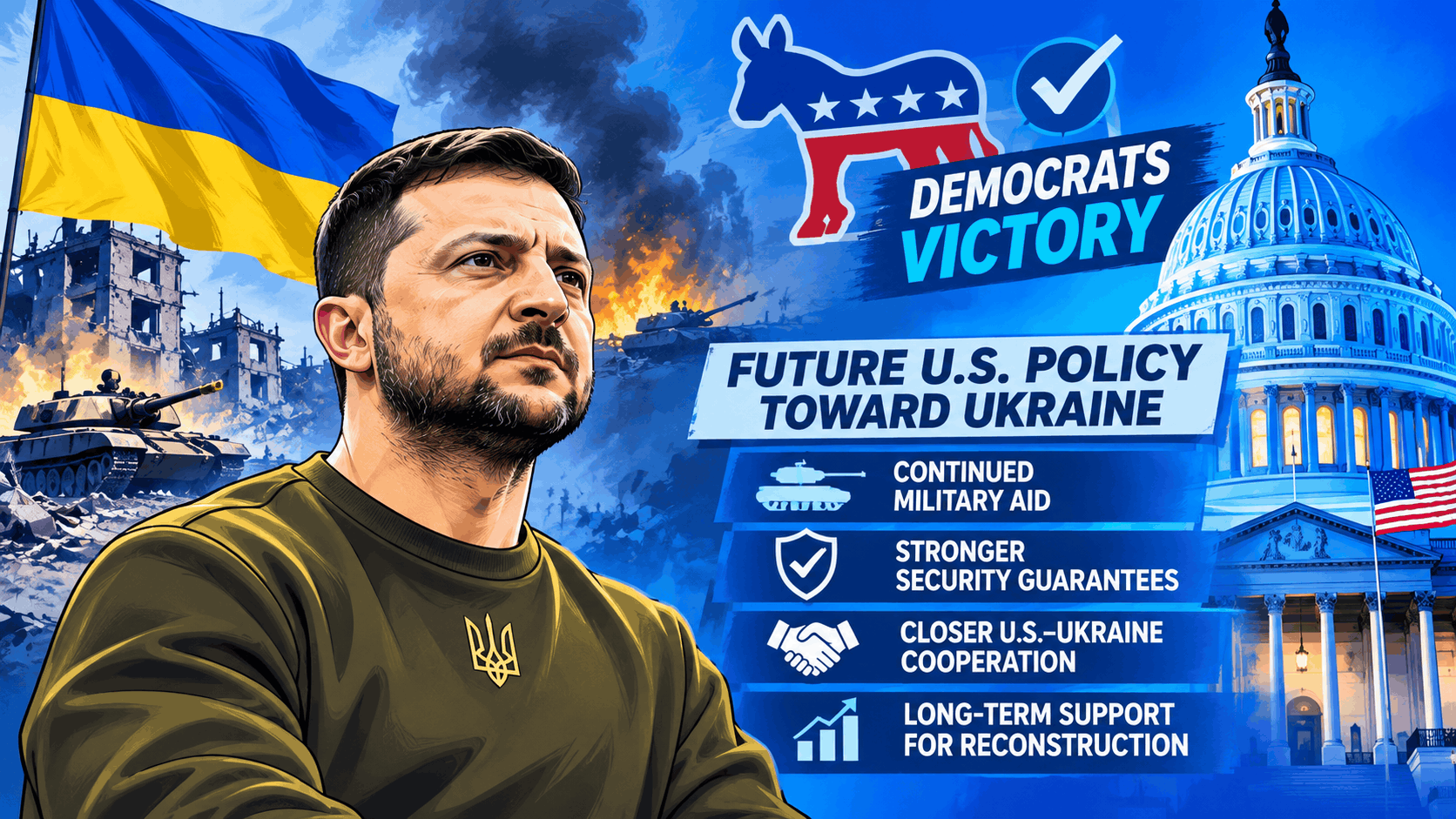
The changing balance of power in Washington following the November 2026 midterm elections has introduced a potentially significant political dimension. Democratic gains have raised expectations in Kyiv that Congress could adopt a more assertive position on military assistance, European security and American commitments to Ukraine.
In an interview with Germany’s ZDF television on November 4, Zelenskyy expressed hope that Democratic control of both chambers of Congress in the next legislative session would strengthen American assistance. He also acknowledged Republican support, emphasizing the importance of renewed cooperation between Washington and Europe.
Yet congressional support and presidential diplomacy are not interchangeable. Congress can authorize funding, conduct oversight and exert political pressure, but the White House retains substantial influence over foreign negotiations, military transfers and the implementation of security policy.
This institutional division could become a defining feature of American policy toward Ukraine.
The White House Confrontation that Reshaped Relations
The extraordinary confrontation between Trump and Zelenskyy in the Oval Office on February 28, 2025, remains a revealing episode in the relationship between the two administrations.
What was expected to be a diplomatic meeting involving a proposed minerals agreement deteriorated into a public disagreement over American assistance, Ukraine’s negotiating position and the meaning of peace.
Vice President JD Vance challenged Zelenskyy’s approach to diplomacy, while Trump criticized the Ukrainian president for what he considered insufficient gratitude toward Washington.
Zelenskyy defended his concerns about Russia’s reliability, referring to Moscow’s previous violations of agreements and insisting that meaningful security guarantees were necessary.
The meeting ended without the anticipated agreement, and Zelenskyy departed the White House earlier than planned.
The confrontation was significant beyond its uncomfortable diplomatic optics. It exposed a fundamental difference between the two leaders’ understanding of the conflict.
Trump has emphasized ending the fighting through negotiations, arguing that diplomacy can prevent further destruction and American involvement in an expensive foreign war.
Zelenskyy, meanwhile, has consistently argued that ending hostilities without credible protection against renewed aggression could merely postpone another conflict.
The consequences quickly became tangible. On March 3, 2025, the Trump administration paused military assistance to Ukraine while reviewing whether American support was contributing to a negotiated settlement.
Although the suspension was not presented as permanent, it demonstrated how military assistance could become linked to diplomatic expectations.
For Kyiv, that episode established an enduring concern: the availability of American weapons could depend not only on battlefield requirements but also on the Ukrainian government’s willingness to accommodate Washington’s negotiating strategy.
Trump’s Peace Initiative: Diplomatic Breakthrough or Strategic Compromise?
Trump’s administration has continued pursuing direct negotiations involving Russia and Ukraine, presenting itself as a mediator capable of narrowing differences between the two countries.
The latest round of American-brokered discussions in Abu Dhabi on November 10–11 brought Russian and Ukrainian representatives together after months without comparable direct talks.
American envoys Steve Witkoff and Jared Kushner have played central roles in the diplomatic initiative. The negotiations produced movement toward a major prisoner exchange, but no comprehensive agreement ending the war.
The central obstacle remains territory.
Russia continues to seek control over Ukrainian territory, including areas of the Donbas that remain under Kyiv’s administration. Ukraine rejects surrendering territory as the price of ending Russian military operations.
According to reporting on November 14, Zelenskyy described an American proposal connecting a Ukrainian withdrawal from parts of Donbas with possible NATO membership. He rejected territorial concessions while maintaining that Ukraine required credible security arrangements.
This raises an important distinction between securing a ceasefire and establishing sustainable peace.
A ceasefire could reduce immediate casualties, stabilize parts of the front line and create opportunities for reconstruction. However, without effective monitoring, enforceable commitments and reliable security guarantees, Ukraine fears that Russia could use the interruption to rebuild its military capabilities.
From Washington’s perspective, a negotiated compromise could reduce the burden of prolonged military involvement and allow greater American attention to domestic priorities and other international challenges.
From Kyiv’s perspective, the same compromise could carry unacceptable long-term risks if it leaves strategically important defensive positions exposed.
Neither concern can be dismissed without examining the actual terms of a proposed settlement.
Military Assistance: The Difference between Political Promises and Battlefield Reality
Ukraine’s dependence on Western military technology remains one of the most consequential factors shaping the conflict.
American-made Patriot air-defense systems, advanced munitions, intelligence capabilities and communications technology have supported Ukraine’s ability to defend its population and critical infrastructure.
Yet uncertainty surrounding future assistance complicates military planning.
In September 2026, Reuters reported that the Trump administration was moving to obligate nearly all of the $400 million previously approved by Congress under the Ukraine Security Assistance Initiative before the relevant fiscal deadline. The report also described criticism from Democratic and Republican lawmakers over delays in committing the funds.
The distinction between appropriating funds, contracting for equipment and delivering operational weapons is crucial. Congressional approval does not automatically guarantee immediate battlefield availability.
More recently, restrictions affecting Star shield communications have introduced additional concerns. On November 12, Zelenskyy said speed limitations on the system were interfering with Ukrainian military operations and that Kyiv was seeking clarification from the American side.
Such developments illustrate that military support extends beyond financial allocations and missile deliveries. Access to communications, maintenance, intelligence and technical services can influence operational effectiveness.
For Ukrainian commanders, uncertainty itself creates strategic costs. Military operations require predictable supplies, replacement equipment and long-term planning.
Europe’s Strategic Dilemma: Supporting Ukraine without Depending Entirely on Washington
Europe occupies an increasingly important position in Ukraine’s calculations.
European governments have substantial interests in preventing the conflict from destabilizing the continent’s wider security arrangements. However, replacing American capabilities would require sustained industrial production, defense expenditure and political coordination.
The latest negotiations have broadened discussions beyond Ukraine’s borders to include the future European security architecture.
On November 11, Axios reported that Washington had asked Moscow to propose elements of a new security agreement involving Europe. Separately, American officials have facilitated discussions intended to bring European and Russian positions into the broader diplomatic process.
This development presents both opportunities and complications.
A comprehensive settlement could potentially address military deployments, regional stability and mechanisms for preventing future confrontation, but negotiating European security arrangements while Ukraine’s sovereignty remains contested risks creating disagreements over priorities.
Zelenskyy has warned against allowing wider discussions about European security to overshadow the immediate requirement for a sustainable settlement in Ukraine.
Europe therefore faces a difficult balancing act: supporting American mediation while ensuring that Ukrainian security interests are not marginalized.
The Human Cost behind the Diplomatic Negotiations
Beyond presidential meetings and strategic calculations lies the continuing suffering of Ukrainian civilians.
Russian attacks on cities and energy infrastructure have compounded the economic and humanitarian consequences of the war. The latest negotiations have unfolded alongside continued strikes and disruption to essential services.
For ordinary Ukrainians, the debate over military assistance is inseparable from the availability of electricity, heating, housing, employment and personal security.
For American taxpayers, meanwhile, the conflict raises legitimate questions about spending priorities, accountability and the duration of foreign military commitments.
Trump’s administration has emphasized the importance of ending the war and limiting prolonged American exposure. Supporters of continued assistance argue that helping Ukraine resist Russian aggression also serves broader American and European security interests.
The debate is therefore not simply between peace and war. It concerns the conditions under which peace can be achieved, the resources required to sustain it and the consequences if a settlement fails.
Conclusion: Ukraine’s Future Depends on More Than a Peace Agreement
Ukraine now faces a diplomatic environment in which increased congressional sympathy may coexist with pressure from the White House to accept difficult compromises.
The November midterm results have strengthened Kyiv’s hopes for renewed American engagement, but they have not resolved disagreements over territorial sovereignty, military assistance or enforceable security guarantees.
Trump’s negotiations have reopened channels between Moscow and Kyiv, yet the latest discussions have also demonstrated how far the parties remain from agreement on the conflict’s central questions.
For Zelenskyy, the immediate challenge is maintaining military resilience without closing the door to diplomacy. For Trump, the challenge is translating negotiations into an agreement that both sides can implement and that reduces the risk of renewed warfare.
The decisive test will not simply be whether an agreement is signed, but whether it protects civilians, establishes credible security arrangements and prevents another cycle of conflict.
Ukraine is seeking more than American weapons or diplomatic assurances. It is seeking confidence that the end of this war will not become the beginning of another.
And for Washington, the question extends beyond Ukraine: whether American diplomacy can reconcile the urgency of ending a devastating conflict with the security commitments necessary to make peace endure.