Rochester, NY/Washington, D.C: The controversy surrounding U.S. Defense Secretary Pete Hegseth has evolved into one of the most consequential confrontations between the executive branch and Congress during President Donald Trump’s second administration.
What initially appeared to be a series of disputes over military leadership, national security communications and Pentagon management has developed into a far-reaching debate about constitutional authority, the legality of American military interventions and the limits of presidential power.
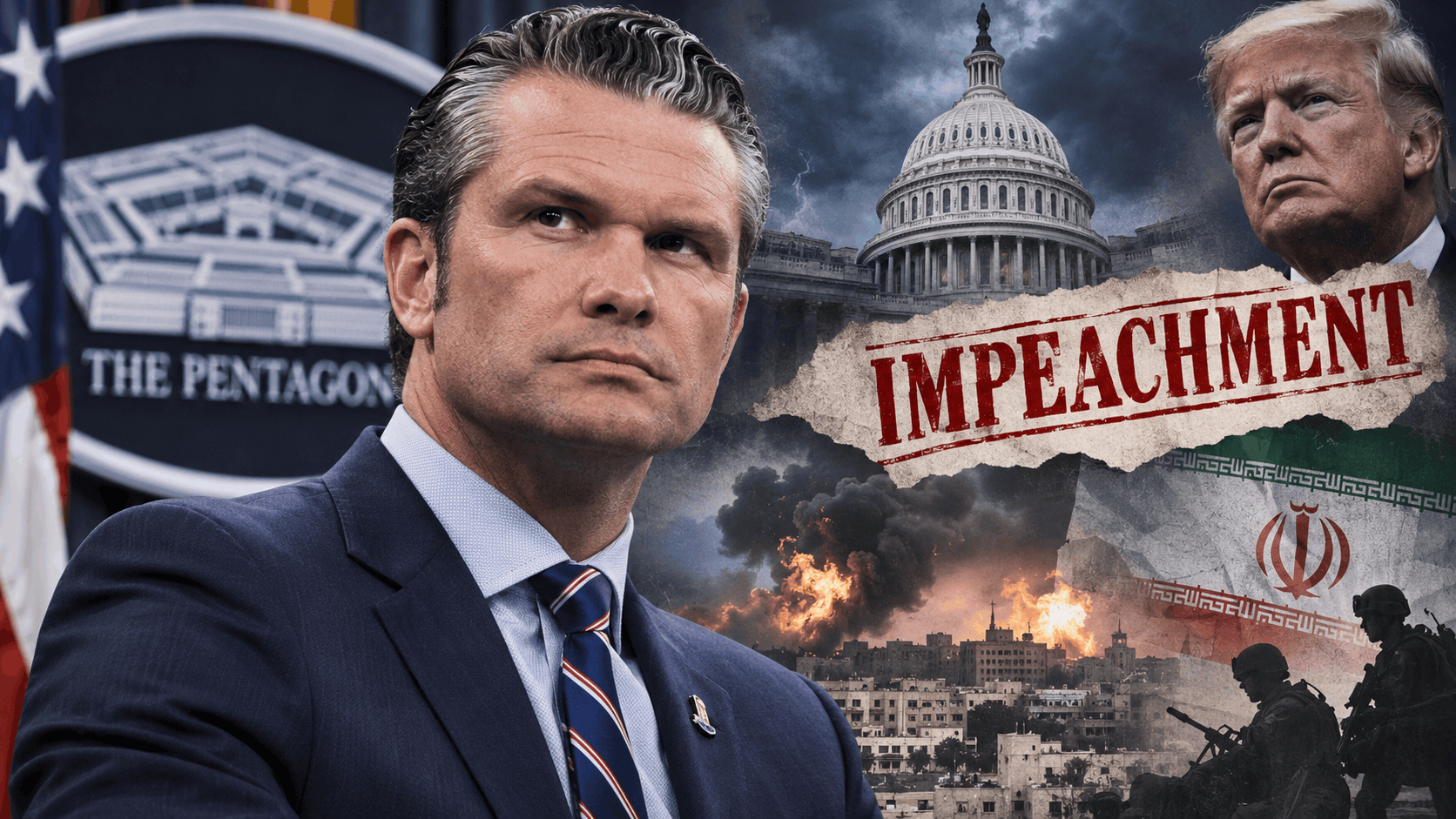
The latest confrontation intensified on November 10, 2026, when the House of Representatives voted 211–204 to refer impeachment articles against Hegseth to the Judiciary Committee, effectively halting the immediate effort.
The eight articles were introduced by Republican Representative Thomas Massie, an unusual development because the challenge originated within the president’s own party rather than exclusively from Democratic opposition.
The allegations concern American military operations in Iran, Venezuela and Yemen, as well as claims of retaliation against a Democratic senator. Hegseth denies wrongdoing, while Trump continues to defend his defense secretary.
The political implications extend beyond Hegseth’s personal future. With Democrats preparing to assume control of Congress in January 2027, the Pentagon faces the prospect of intensified investigations, demands for classified briefings and renewed scrutiny of decisions previously defended under the umbrella of executive authority.
At the heart of this confrontation lies a larger institutional question: whether the United States can maintain effective civilian control of its armed forces without allowing political loyalty to replace independent judgment, legal compliance and democratic accountability.
The Impeachment Challenge: A Constitutional Dispute, Not Simply a Political Attack
The most serious development in the Hegseth controversy is the attempt to impeach a sitting defense secretary over decisions involving military force.
Massie’s eight impeachment articles raise allegations that go far beyond disagreements about defense policy.
Four concern the war with Iran, including claims that military operations continued beyond the statutory 60-day period without the required congressional authorization and that the Pentagon failed to take sufficient precautions to protect civilians.
Other articles challenge operations in Venezuela, lethal strikes against suspected drug traffickers and military actions against Houthi forces in Yemen.
The final article alleges retaliation against Democratic Senator Mark Kelly after he and other lawmakers encouraged military personnel to reject unlawful orders. These remain allegations within an impeachment initiative, not judicial findings establishing criminal responsibility.
Hegseth has rejected the accusations, describing the impeachment effort as politically motivated and harmful to American service members. Trump has similarly characterized the unsuccessful House vote as a vindication of his defense secretary.
Yet a procedural victory in Congress does not amount to a legal exoneration. Referring impeachment articles to committee prevents an immediate confrontation but does not establish whether the underlying military decisions complied with constitutional or statutory requirements.
The Constitution assigns Congress the power to declare war, while the president serves as commander in chief. The War Powers Resolution of 1973 attempts to regulate this relationship by requiring congressional involvement in prolonged hostilities, subject to important legal disputes over its application.
The central issue is therefore not whether a defense secretary can execute presidential military directives. It is whether those directives, and the manner in which they are implemented, remain within the law.
For Hegseth’s defenders, the impeachment initiative threatens to politicize military command and undermine national security during active conflicts. For critics, allowing senior officials to escape scrutiny because their decisions involve military operations would weaken Congress’s constitutional responsibilities.
Neither national security nor political opposition should automatically determine the outcome. The allegations require evidence, legal analysis and credible oversight.
The Iran War: Strategic Victory Claims Confront Military and Political Reality
Perhaps the most consequential controversy involves the American military campaign against Iran, initiated alongside Israel in February 2026.
Hegseth has been among the administration’s most visible defenders of the operation, portraying American military actions as successful demonstrations of overwhelming force.
However, the prolonged conflict and the absence of a comprehensive political settlement have complicated the administration’s declarations of victory.
Reporting following the November midterm elections described growing criticism within Washington over optimistic assessments of the war, its strategic objectives and its economic consequences.
The Washington Post reported that officials familiar with military advice to Trump questioned whether senior defense leaders had adequately communicated the conflict’s risks and costs.
This controversy exposes a familiar weakness in American military strategy: the temptation to equate battlefield achievements with durable political success.
Destroying military infrastructure, weakening an adversary’s command capabilities or conducting successful strikes does not necessarily eliminate the adversary’s capacity to resist. Nor does it guarantee regional stability, prevent retaliatory attacks or create the conditions for a sustainable diplomatic settlement.
The political consequences have become particularly significant because the Iran conflict has coincided with economic pressures on American households.
Rising gasoline prices, uncertainty in energy markets and concern about another prolonged Middle Eastern confrontation have contributed to the broader debate over the administration’s foreign-policy priorities.
For voters struggling with living expenses, the distinction between military success and economic security is substantial. A military operation celebrated in Washington may be evaluated very differently by a household facing higher transportation costs.
Hegseth’s political vulnerability is therefore connected not only to the legality of the war but also to whether the administration’s strategic promises have matched the actual results.
Civilian Casualties and the Moral Responsibilities of Military Command
One of the gravest allegations concerns a February 28 strike on a girls’ school in Minab, Iran, that reportedly killed scores of children.
The impeachment articles accuse Hegseth of failing to minimize civilian harm, while reporting on the controversy has raised questions about reductions in Pentagon resources dedicated to civilian-casualty prevention. The precise chain of responsibility and the circumstances of the strike require rigorous investigation.
International humanitarian law requires military forces to distinguish between military objectives and civilians, observe proportionality and take feasible precautions to minimize civilian harm.
These obligations do not disappear during a conflict with a hostile government, nor can civilian deaths automatically be justified by the broader objectives of a military campaign.
At the same time, the occurrence of civilian casualties does not, by itself, establish that a war crime occurred or that a particular civilian official bears individual legal responsibility.
Such conclusions depend on evidence concerning targeting intelligence, the anticipated military advantage, precautions taken and the knowledge and decisions of responsible officials.
This distinction is essential to an impartial assessment.
The Pentagon’s credibility depends on demonstrating that allegations involving civilian deaths are investigated seriously, regardless of the political affiliation of the administration responsible.
For the United States, the consequences extend beyond domestic politics. Civilian-casualty controversies can damage relationships with allies, strengthen hostile propaganda, undermine international confidence and complicate diplomatic efforts long after military operations conclude.
A defense secretary’s responsibility is not simply to authorize or defend the use of force. It is also to ensure that military power operates within an accountable legal and ethical framework.
Signalgate: When National Security Communications Became a Political Liability
Long before the latest impeachment confrontation, Hegseth’s credibility faced a serious challenge over his handling of sensitive military communications.
The controversy, widely known as Signalgate, emerged in March 2025 when senior Trump administration officials discussed impending American strikes against Houthi targets in Yemen through the commercial messaging application Signal.
The episode became particularly embarrassing after journalist Jeffrey Goldberg was inadvertently included in a group conversation containing operational information.
A subsequent Pentagon inspector general investigation concluded that Hegseth’s use of Signal created risks to operational security that could have jeopardized American personnel and military objectives. The investigation also identified problems involving the preservation of government records.
Hegseth maintained that the information he transmitted was not classified or had been appropriately declassified under his authority.
Nevertheless, the inspector general’s assessment challenged the administration’s portrayal of the episode as a complete exoneration.
The significance of Signalgate extends beyond a technological mistake. Military communication procedures exist to protect operational secrecy, intelligence sources and service members deployed in dangerous environments.
When senior officials appear to disregard established safeguards, they risk creating a double standard between political leadership and uniformed personnel who are expected to follow strict security protocols.
The broader institutional danger is that national security rules may become negotiable according to political status rather than consistently enforced professional standards.
Venezuela, Yemen and the Expanding Debate over Executive Military Power
Hegseth’s critics have also challenged the legality of American military operations outside Iran.
The impeachment articles concerning Venezuela allege that the defense secretary participated in the unlawful seizure of President Nicolás Maduro and authorized extrajudicial strikes against suspected drug-trafficking operations in the Caribbean and Pacific.
Separate allegations question the legality of military operations against Houthi forces in Yemen.
These disputes raise difficult questions about the international legal basis for military intervention, the use of lethal force outside conventional battlefields and the degree of congressional authorization required.
Supporters of the administration argue that aggressive military operations can deter hostile governments, disrupt transnational criminal networks and protect American interests.
Critics contend that treating counter-narcotics operations or regional security threats as sufficient justification for extraordinary military action risks expanding executive power beyond meaningful legal constraints.
The distinction between legitimate national defense and unauthorized military intervention cannot be resolved through political slogans. It requires examination of intelligence, legal authorities, operational orders and the circumstances surrounding individual strikes.
Without that examination, the United States risks establishing precedents that future administrations could invoke to justify increasingly expansive military operations.
A New Controversy: Defense Contractors and the Future of American Warfare
The controversy has expanded into the Pentagon’s approach to technological modernization.
On November 13, Military Times reported that three government watchdog organizations had filed a lawsuit challenging the composition and transparency of Project Meridian, a Pentagon advisory initiative intended to examine the future of warfare.
The panel includes prominent technology and defense-industry figures such as Elon Musk, Palmer Luckey and former House Speaker Newt Gingrich.
The plaintiffs argue that the initiative fails to comply with federal advisory committee requirements and raises concerns about potential conflicts of interest because several participants have substantial commercial interests in defense contracting.
These are allegations in ongoing litigation, not established findings of unlawful conduct.
The underlying policy question is important. Artificial intelligence, autonomous weapons, military robotics and advanced surveillance systems are becoming central to future defense planning.
Private-sector expertise is indispensable to technological innovation. However, allowing companies with major financial interests to exercise disproportionate influence over military priorities could blur the boundary between national security requirements and commercial opportunities.
An effective modernization strategy must therefore combine innovation with transparent procurement, independent technical assessment and meaningful safeguards against conflicts of interest.
Trump’s Political Protection and the Coming Congressional Confrontation
Despite the growing controversies, President Donald Trump has remained publicly supportive of Hegseth.
Following the November 10 impeachment vote, Trump celebrated the outcome and praised his defense secretary’s performance.
The political equation, however, is changing.
Democrats are preparing to assume congressional control in January, creating the possibility of renewed investigations into military decision-making, civilian casualties, Pentagon communications and the administration’s conduct of the Iran war.
The incoming leadership of congressional oversight and armed services committees could demand testimony, seek operational records and examine whether military officials provided accurate assessments to elected representatives.
Such investigations would not automatically establish wrongdoing or lead to Hegseth’s removal. Impeachment requires approval by the House, while conviction and removal require a two-thirds vote in the Senate.
Nevertheless, expanded oversight could place substantial political and institutional pressure on the Pentagon.
There is also a strategic risk for Democrats. If congressional scrutiny becomes dominated by partisan confrontation rather than demonstrable evidence, the administration may successfully portray legitimate oversight as political retaliation.
Conversely, dismissing every inquiry as sabotage would undermine the principle that civilian officials exercising military authority remain accountable to Congress and the public.
The Future of Hegseth and the Credibility of American Defense Leadership
Hegseth’s future will depend on several interconnected developments: the administration’s ability to defend its military decisions, the outcome of renewed congressional investigations, the trajectory of the Iran conflict and Trump’s willingness to maintain political support amid mounting scrutiny.
A significant distinction must be made between controversy and proven misconduct. Allegations of unconstitutional military action, retaliation or failures to protect civilians require independent examination. Political opposition alone cannot establish guilt, just as presidential confidence cannot establish innocence.
For America’s allies, the controversy raises questions about the consistency and reliability of Washington’s defense leadership. For adversaries, visible institutional divisions may create opportunities to challenge American resolve. For the military itself, prolonged political conflict at the Pentagon risks distracting attention from readiness, operational effectiveness and the welfare of service members.
Yet oversight should not be confused with institutional weakness. A democratic military establishment derives part of its legitimacy from its willingness to scrutinize mistakes, correct failures and hold leaders accountable.
Conclusion: The Pentagon’s Real Test Is Larger Than Pete Hegseth
The Hegseth controversy is ultimately about more than the political survival of one cabinet secretary.
It reflects a struggle over the relationship between military power, presidential authority, congressional oversight and the rule of law.
Trump’s continued backing may protect Hegseth politically, but it cannot eliminate the constitutional questions surrounding military operations, the legal concerns raised by civilian casualties or the institutional consequences of security failures.
Equally, congressional opponents must demonstrate that their demands for accountability are grounded in evidence rather than the pursuit of political advantage.
The United States possesses extraordinary military capabilities, but military superiority alone cannot guarantee strategic wisdom, democratic legitimacy or international credibility.
The defining question is not simply whether Pete Hegseth will survive another political confrontation. It is whether the Pentagon can demonstrate that its immense power remains subject to the same laws, professional standards and democratic accountability that American leaders insist other nations must respect.
In that sense, Hegseth’s greatest challenge may not come from an impeachment vote or a congressional hearing. It may come from the widening gap between the administration’s claims of military success and the public’s demand for lawful, transparent and responsible leadership.
The outcome will help determine not only the future of the defense secretary but also the credibility of American military leadership at a moment of profound domestic division and international uncertainty.