


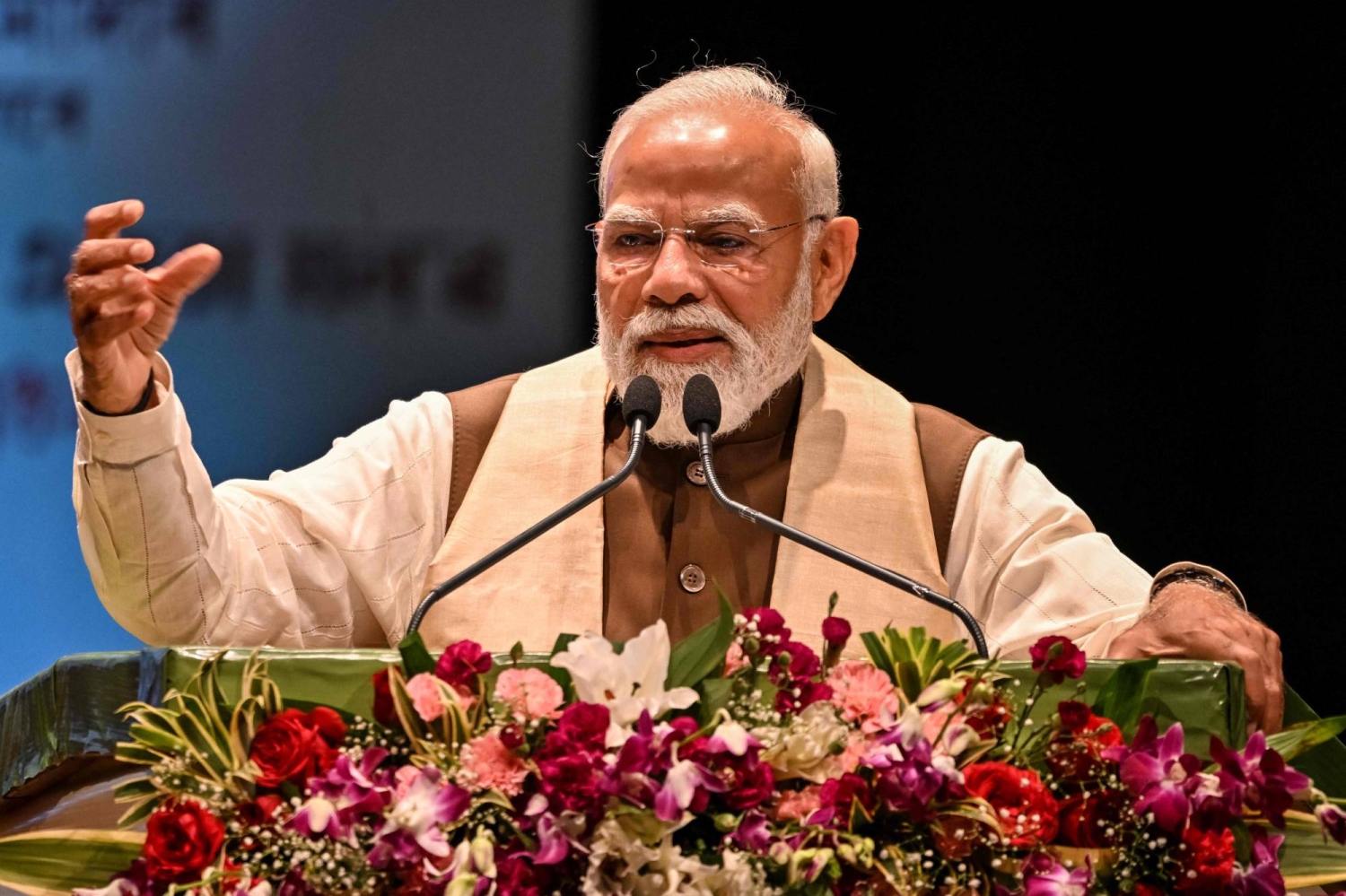
New Delhi, IN: India’s position on a potential or ongoing US–Iran conflict under Indian Prime Minister Narendra Modi reflects a carefully calibrated diplomatic strategy shaped by strategic autonomy, energy dependence, and India’s expanding global ambitions.
Rather than aligning itself with any single power bloc, New Delhi has consistently pursued a balancing act that allows it to preserve ties with both Washington and Tehran while avoiding entanglement in military escalation.
At the core of India’s approach is the doctrine of strategic autonomy, which has become more pronounced under the Modi government.
This principle enables India to engage simultaneously with rival powers without formally committing to any alliance structure. In the context of US–Iran tensions, this translates into a deliberate refusal to take sides in public or institutional terms.
Instead of endorsing punitive measures or military pressure against Iran, India has preferred to emphasize diplomacy and restraint. Similarly, while deepening its strategic partnership with the United States across defence, technology, and Indo-Pacific cooperation, India avoids allowing that relationship to dictate its West Asia policy.
India’s official response to escalations between the United States and Iran has consistently followed a restrained diplomatic tone. The Indian leadership typically avoids direct political alignment with either side and instead calls for de-escalation, dialogue, and stability in the region.
In practice, this approach is reflected in carefully worded statements from New Delhi during periods of heightened tension. Whether responding to US military actions or Iranian retaliatory measures, India’s messaging remains focused on preventing further escalation rather than attributing blame.
This neutrality is not accidental but a deliberate effort to preserve India’s credibility as an independent actor in international affairs.
One of the most significant factors shaping India’s position is its dependence on West Asian energy supplies. A substantial portion of India’s crude oil imports either originates from or passes through regions that would be directly affected by any US–Iran confrontation, particularly the Strait of Hormuz.
Any disruption in this corridor immediately translates into volatility in global oil markets, which has direct consequences for India’s inflation, trade balance, and overall economic stability.
This structural vulnerability compels India to prioritize regional stability over geopolitical alignment. As a result, New Delhi has a strong incentive to discourage escalation and promote diplomatic engagement between Washington and Tehran.
India’s challenge lies in maintaining two strategically important but often contradictory relationships. On one hand, the United States is a key partner in defence cooperation, technology transfers, and broader Indo-Pacific strategy.
On the other hand, Iran has historically been an important partner for energy imports and connectivity projects, particularly through initiatives such as the Chabahar port.
Even under the pressure of US sanctions in previous years, India has sought ways to preserve limited engagement with Iran, particularly in areas linked to infrastructure and regional connectivity. At the same time, it has carefully avoided actions that could undermine its growing strategic convergence with Washington.
This dual-track diplomacy requires constant adjustment, especially during periods of heightened US–Iran tension, where decisions about oil imports, financial transactions, and infrastructure cooperation become politically sensitive.
Although India is often viewed as a potential bridge between competing powers, it has generally avoided taking on the role of formal mediator in US–Iran disputes. While Indian leaders may support dialogue in principle and engage in quiet diplomatic communication with both sides, New Delhi remains cautious about overt mediation.
This reluctance stems from the complexity of US–Iran relations, where previous mediation attempts by other actors have had limited success. India prefers to maintain flexibility rather than risk diplomatic capital on outcomes it cannot control. Instead, it positions itself as a supporter of peaceful resolution rather than an active broker.
India’s external posture is also influenced by domestic political dynamics. Any perceived tilt toward either the United States or Iran can become a subject of internal debate, particularly in relation to energy prices, foreign policy independence, and national security concerns. This reinforces the government’s preference for a neutral and carefully balanced public stance.
On the global stage, India’s position is also linked to its broader aspiration to be seen as a responsible rising power. Maintaining credibility with multiple major actors simultaneously enhances India’s ability to shape conversations in global forums without being constrained by bloc politics.
In essence, Indian Prime Minister Narendra Modi’s approach to a US–Iran conflict is defined by cautious equilibrium. India does not seek confrontation with either side, nor does it fully align with one against the other. Instead, it operates within a framework of strategic autonomy that prioritizes national economic security, diplomatic flexibility, and long-term geopolitical positioning.
This balancing act is increasingly complex as US–Iran tensions fluctuate, but it remains central to India’s foreign policy identity. By consistently advocating restraint and maintaining working relationships with both adversaries, India aims to protect its immediate interests while preserving its image as an independent and stabilizing force in an uncertain international environment.
Discover more perspectives, breaking news, and in-depth reports from around the world by visiting The Variant.


