


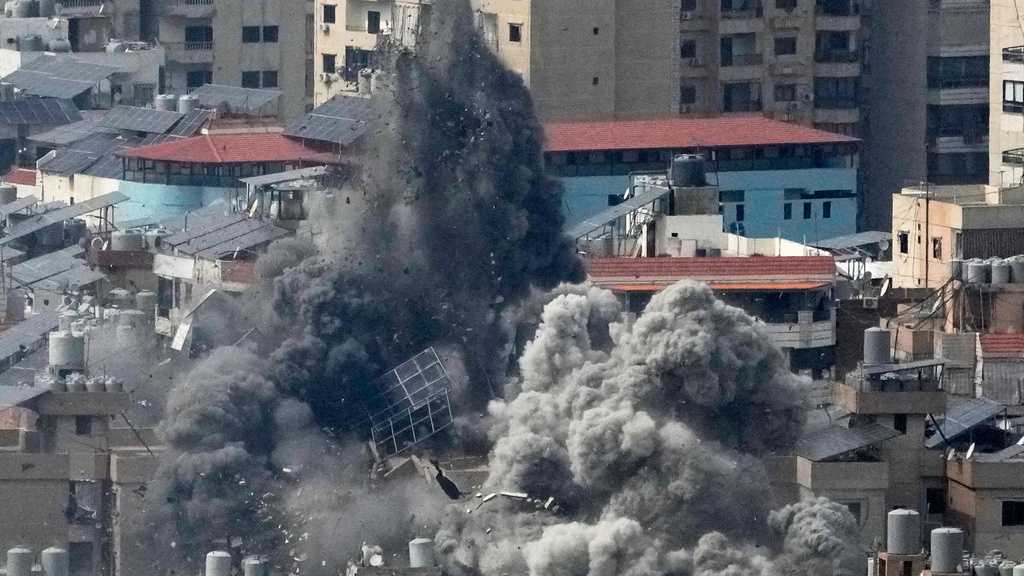
Rochester, NY: The latest exchange of military strikes between Iran, Israel, and Lebanon reflects far more than a series of isolated battlefield incidents. It represents the evolution of a regional confrontation that has been building for decades and is now entering one of its most dangerous phases.
What began as a shadow war involving intelligence operations, proxy groups, and limited military engagements has increasingly transformed into a direct and open confrontation involving state actors and regional allies.
Recent Israeli strikes in southern Lebanon, which reportedly killed senior military figures and members of Hezbollah, have once again highlighted the fragile security environment across the Middle East.
In response, Hezbollah has intensified its rhetoric and military posture, while Iran has continued to signal that attacks against its regional allies will not go unanswered. The result is a volatile triangle of confrontation in which actions taken by one actor immediately reverberate across multiple fronts.
Israel’s Expanding Security Doctrine
Israel’s current military strategy is driven by a belief that traditional deterrence mechanisms are no longer sufficient to address threats emerging from Lebanon and Iran.
Israeli leaders increasingly view Hezbollah not as an independent Lebanese movement but as an extension of Iran’s regional military architecture.
Consequently, Israeli military planners argue that preventing Hezbollah from strengthening its military capabilities is essential for Israel’s long-term security.
This approach has led Israel to adopt a more aggressive doctrine that favors preemptive military action.
Israeli officials contend that allowing Hezbollah to expand its missile stockpiles, drone capabilities, and military infrastructure would create an unacceptable threat along Israel’s northern border.
Therefore, Israeli strikes in Lebanon are designed not only to target immediate threats but also to weaken Iran’s broader regional influence.
However, this strategy carries significant risks. Every Israeli strike that causes casualties or infrastructure damage in Lebanon increases the possibility of retaliation, creating a cycle of escalation that becomes increasingly difficult to control.
Iran’s Regional Strategy under Pressure
For Iran, the confrontation extends far beyond Lebanon. Tehran views Hezbollah as one of the most important pillars of its regional deterrence network.
The organization serves as a strategic asset that allows Iran to project influence across the Middle East while maintaining pressure on Israel without engaging in direct and continuous warfare.
Iranian leaders perceive Israeli operations against Hezbollah as an attempt to dismantle a critical component of Iran’s regional security framework.
Consequently, Tehran has adopted a policy that combines diplomatic warnings with military signaling.
By demonstrating its willingness to retaliate directly or indirectly, Iran seeks to convince both Israel and the United States that further escalation will carry substantial costs.
At the same time, Iran faces its own strategic dilemma. A measured response risks appearing weak before its regional allies, while a large-scale response could trigger a broader military confrontation involving the United States and other regional powers.
This balancing act explains why Iranian policy often oscillates between restraint and escalation.
Lebanon: The Unintended Battlefield
Among all parties involved, Lebanon continues to pay the highest price. The country remains trapped between regional power struggles that it neither initiated nor fully controls.
Years of political instability, economic collapse, and institutional weakness have left Lebanon vulnerable to external shocks.
Every military confrontation between Israel and Hezbollah deepens the country’s humanitarian and economic crisis.
Entire communities in southern Lebanon live under the constant threat of displacement, while businesses, infrastructure, and public services continue to suffer.
The Lebanese government lacks the political authority and military capacity to prevent the country from becoming a battlefield for competing regional interests.
This reality creates a tragic paradox. While Israel seeks security and Iran seeks strategic influence, ordinary Lebanese citizens face the devastating consequences of decisions made far beyond their control.
The Hezbollah Factor
No analysis of the conflict can ignore Hezbollah’s central role. The organization has evolved from a local resistance movement into one of the most powerful non-state military actors in the world.
Its extensive missile arsenal, combat experience, and close relationship with Iran have made it a major strategic concern for Israel.
Supporters of Hezbollah argue that the group serves as a deterrent against Israeli military actions and protects Lebanese sovereignty.
Critics contend that Hezbollah’s military activities expose Lebanon to repeated cycles of conflict and undermine the authority of the Lebanese state.
Regardless of these competing narratives, Hezbollah remains the critical link connecting Iran and Lebanon in the broader confrontation with Israel.
As long as this relationship exists, developments in southern Lebanon will continue to influence regional security calculations in Tehran and Jerusalem.
Global Implications beyond the Battlefield
The consequences of the Iran-Israel-Lebanon confrontation extend far beyond the Middle East.
International energy markets closely monitor every escalation because of concerns about disruptions to critical shipping routes and oil supplies.
Any significant expansion of the conflict could trigger increases in energy prices, affecting economies around the world.
The conflict also presents a major challenge for international diplomacy. The United States seeks to prevent a regional war while maintaining its commitment to Israel’s security.
European governments are concerned about humanitarian consequences and regional instability.
Gulf States fear that prolonged conflict could undermine economic development initiatives and threaten regional investment.
As a result, every missile strike and military operation carries implications not only for the immediate parties involved but also for the broader international community.
A Region Approaching a Strategic Turning Point
The most dangerous aspect of the current crisis is the possibility of miscalculation. Each side believes it is acting defensively.
Israel argues that it is preventing future attacks. Iran claims it is protecting regional allies and preserving deterrence.
Hezbollah insists that it is resisting external aggression. Yet these competing security narratives are collectively driving the region toward greater instability.
History demonstrates that wars often begin not because leaders seek a major conflict but because they underestimate how quickly limited confrontations can spiral beyond their control.
The Middle East today faces precisely such a risk.
Conclusion: Diplomacy Remains the Only Sustainable Path
The latest strikes between Iran, Israel, and Lebanon illustrate a region caught in an escalating cycle of retaliation.
Military victories may deliver short-term tactical gains, but they have consistently failed to provide lasting security.
Every round of violence creates new grievances, deepens mistrust, and increases the likelihood of future conflict.
A sustainable solution requires renewed diplomacy involving regional and international stakeholders.
It requires mechanisms that address legitimate security concerns while preventing further humanitarian suffering.
Most importantly, it requires political leaders to recognize that military escalation alone cannot resolve the underlying disputes that continue to fuel instability across the Middle East.
Without such efforts, the current confrontation risks becoming not merely another chapter in a long-running conflict but the beginning of a wider regional crisis with consequences that could extend far beyond the borders of Iran, Israel, and Lebanon.
Bookmark The Variant for trusted updates, informed analysis, and comprehensive coverage of the stories that matter most.


