A major military escalation took place on February 28, 2026, when the United States and Israel launched coordinated airstrikes against the Islamic Republic of Iran in what they described as pre-emptive and defensive operations. The campaign has rapidly broadened, drawing retaliation from Tehran and global diplomatic backlash.
Timeline of the Escalation
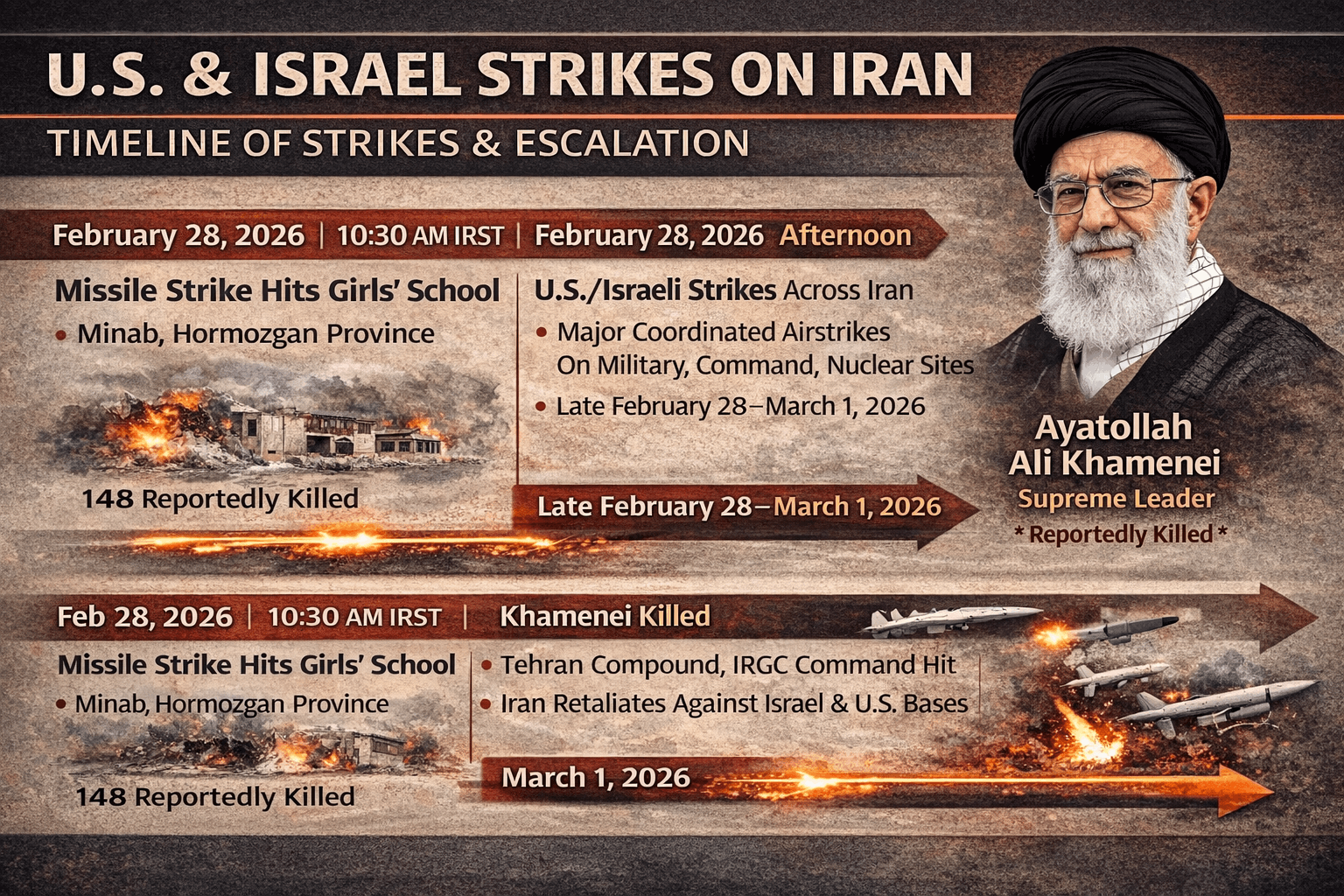
February 28, 2026 – Initial Strikes Begin
The United States and Israel initiated joint air and missile strikes against numerous strategic targets across Iran. The operations were codenamed “Operation Epic Fury” (U.S. forces) and “Operation Roaring Lion” (Israel Defense Forces).
Strikes focused on Iran’s nuclear facilities and military infrastructure, including sites near Tehran, Natanz, Fordow, and Isfahan.
Morning of February 28, Minab School Strike
A girls’ middle school in Minab, Hormozgan province — the Shajareh-Tayebeh elementary school — was hit by a ballistic missile during class hours, killing scores of students. Iranian authorities reported at least 108 deaths and many more injured.
Iranian state media described the destruction as an attack on educational infrastructure; independent verification of exact responsibility remains contested.
March 1, 2026 – Continued Strikes and Retaliation
Iranian state media confirmed the death of Supreme Leader Ayatollah Ali Khamenei — a central figure in the regime — alongside senior commanders including General Mohammad Pakpour and Ali Shamkhani.
Iran launched ballistic missiles and drones toward Israel and nearby U.S. military bases in the Gulf, contributing to expanded combat across the region.
Confirmed Targets and Locations
- Tehran: Supreme Leader compound, Revolutionary Guard Command Headquarters, Ministry of Intelligence, and multiple urban areas.
- Natanz and Fordow: Deep underground nuclear enrichment facilities.
- Isfahan and Qom regions: Nuclear research centers and ballistic missile infrastructure sites identified in long-range strike planning.
- Minab (Hormozgan province): Shajareh-Tayebeh girls’ school.
Iran’s retaliatory missile and drone strikes targeted:
- Israeli territory, striking Tel Aviv and killing at least one civilian woman.
- U.S. and coalition military bases in Bahrain, Qatar, and Iraq as part of Iranian counter-operations.
Official Statements and Quotes
U.S. Government:
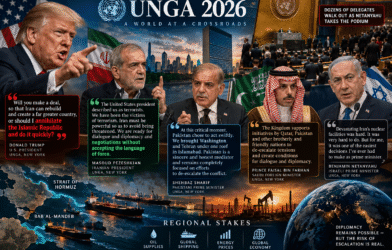
President Donald Trump framed the operation as necessary to “prevent a global nuclear catastrophe,” asserting that U.S. forces are acting within the bounds of self-defense.
Israel Defense Forces (IDF):
Israeli Defense officials highlighted the precision timing of strikes based on intelligence about high-level Iranian regime meetings, and issued public warnings to Iranian civilians near military sites.
Iranian Government:
Tehran’s leadership condemned the strikes as “atrocious crimes” and acts of war. Iranian Foreign Minister Abbas Araghchi denounced the school attack and demanded international action.
United Nations:
U.N. Secretary-General António Gutierrez condemned all attacks and urged de-escalation, calling the strikes violations of international law.
Global Reactions:
Russia condemned the U.S.–Israeli operation as an “unprovoked act of armed aggression” that jeopardizes regional and global security.
European nations and the Arab League called for diplomacy and restraint.
Regional and International Impact
Airspace closures across the Gulf and disrupted shipping through the Strait of Hormuz are affecting global energy markets.
Civil unrest and protests have flared in multiple countries in response to the strikes and rising casualties.
Diplomatic efforts at the U.N. and through the E.U. aim to prevent expanded warfare.
Outlook
With operations ongoing and both sides reinforcing military positions, the conflict has escalated into a broader regional confrontation with significant humanitarian, political, and economic consequences. Continued monitoring and reporting will be necessary as events develop.
Follow our latest coverage for deeper insights into the policies, trends, and developments influencing today’s world.