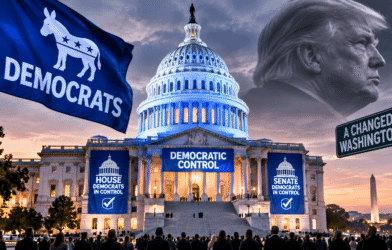
Rochester, NY: The Democratic Party’s sweeping victory in the November 3, 2026, midterm elections has fundamentally altered Washington’s political balance, delivering a significant setback to President Donald Trump and raising expectations among millions of immigrants that America’s increasingly restrictive immigration environment might finally begin to change.
Yet the central question remains whether Democratic control of Congress can translate into meaningful protection for immigrants, asylum seekers, international students and temporary foreign workers while Trump retains control of the White House.
The election results represent more than an ordinary midterm correction. According to the Associated Press, Democrats secured control of both chambers of Congress, capturing the Senate on election night and the House early the following morning.
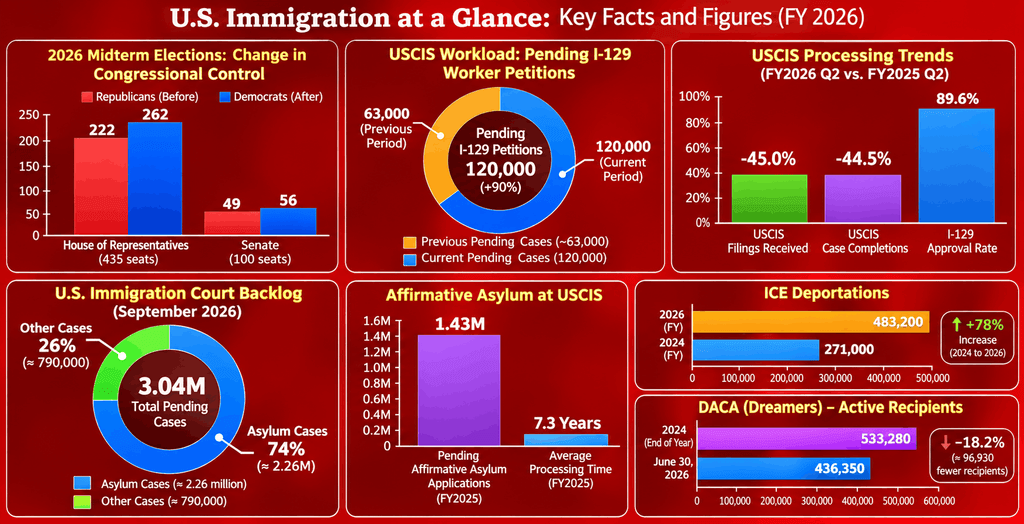
Ballotpedia reported that Democrats had gained at least seven Senate seats and more than 40 House seats, reversing Republican control of the legislative branch.
The political message was equally significant. CBS News reported that Trump’s approval rating had fallen to 38%, while 89% of voters identified the cost of living as a major or crucial electoral concern.
These figures suggest that Republican losses reflected widespread dissatisfaction with economic conditions and presidential leadership, although they cannot establish that voters rejected every aspect of Trump’s immigration agenda.
For immigrant communities, the election introduces a new political opportunity, but not an immediate legal transformation. The distinction is essential: congressional power can restrain a president, investigate administrative decisions and influence federal spending, but it cannot automatically reverse executive immigration orders or grant lawful status to millions of undocumented residents.
Can Democrats Restrict Trump’s Immigration Enforcement Agenda?
Trump’s immigration strategy has relied heavily on executive authority, aggressive enforcement, expanded detention, stricter asylum procedures and administrative restrictions affecting legal and unauthorized immigration alike.
Democratic majorities could challenge these policies through congressional investigations, appropriations negotiations and legislation.
Congress could examine Immigration and Customs Enforcement operations, detention conditions, deportation practices and the treatment of individuals awaiting immigration hearings.
Lawmakers could also demand greater transparency from the Department of Homeland Security and USCIS regarding processing delays, application denials and administrative decision-making.
However, the president retains substantial authority over federal immigration enforcement. Immigration and Customs Enforcement, Customs and Border Protection and USCIS remain executive-branch agencies.
Even with Democratic majorities, Congress generally needs presidential approval to enact legislation, unless it can assemble sufficient votes to override a veto.
Furthermore, the newly elected Congress will not take office until January 2027. Consequently, the election victory does not immediately transfer legislative control or suspend existing enforcement policies.
This institutional reality means the coming two years could produce intensified political confrontation rather than immediate immigration liberalization.
USCIS: Growing Backlogs and Uncertainty for Legal Immigrants
Perhaps the most troubling aspect of the immigration system is that administrative delays increasingly affect people attempting to follow established legal procedures.
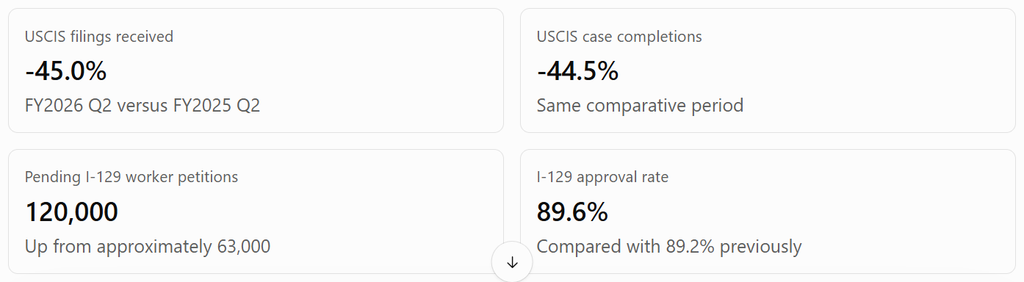
A September 2026 analysis by the American Immigration Council, using USCIS data, found that pending applications had reached a record level within its dataset despite a sharp decline in new filings.
These figures reveal a crucial distinction between approval rates and administrative efficiency. A relatively stable approval rate does not guarantee that applicants receive timely decisions.
For families awaiting adjustment of status, employers sponsoring skilled workers and individuals seeking employment authorization, delays can disrupt careers, household finances and long-term planning.
Democrats could press USCIS to improve processing efficiency and disclose the reasons for growing backlogs. Nevertheless, congressional scrutiny alone cannot guarantee faster approvals, and every immigration benefit remains subject to applicable legal requirements.
Immigration Courts: Millions Still Waiting for Justice
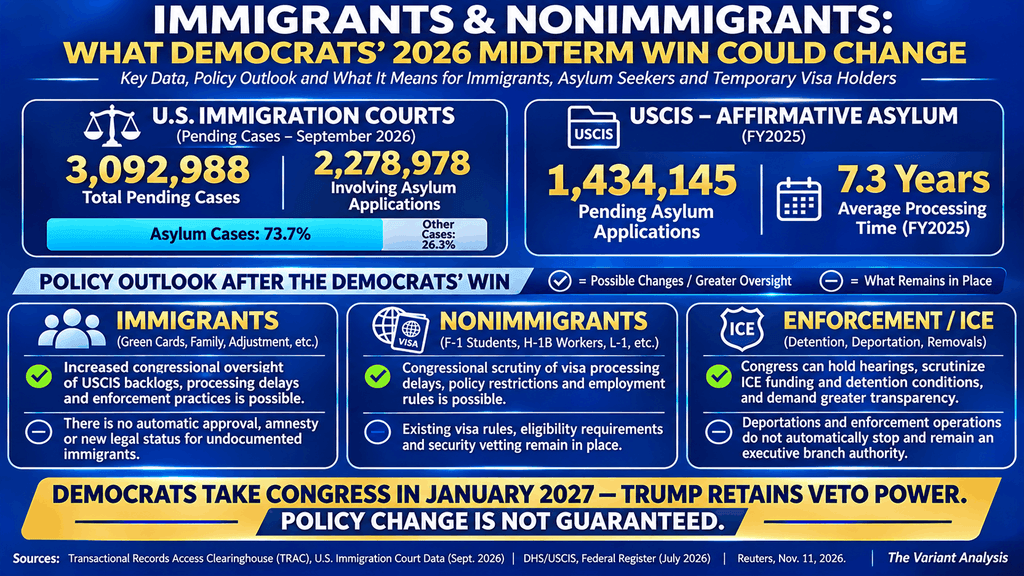
The immigration court system presents an equally complicated picture. According to Syracuse University’s Transactional Records Access Clearinghouse, approximately 3.04 million cases remained pending at the end of September 2026, including roughly 2.26 million involving immigrants who had filed asylum applications.
The Department of Justice offers another perspective. Its Executive Office for Immigration Review reported nearly 974,000 immigration court case completions during fiscal year 2026 and more than 300 permanent immigration judge appointments.
The administration presents these achievements as evidence that its enforcement-oriented approach is improving efficiency.
Both realities deserve recognition. Case completions have increased substantially, yet millions remain in proceedings. Moreover, faster case closures do not necessarily establish whether applicants received adequate opportunities to present evidence, secure representation or challenge removal decisions.
Immigration courts are administered by the Department of Justice rather than the independent federal judiciary. Consequently, changes in congressional control do not automatically replace immigration judges or reverse existing decisions.
Democratic lawmakers could advocate greater judicial independence, expanded legal representation and additional resources. But such reforms would require legislation, funding agreements or administrative cooperation.
Asylum Seekers: Will the Waiting Finally End?
The uncertainty is especially serious for individuals whose asylum applications remain pending at USCIS rather than in immigration court.
Federal regulations published in July 2026 disclosed that approximately 1.43 million affirmative asylum applications were pending at the end of fiscal year 2025. The government reported an average processing time of approximately 7.3 years for that fiscal year.
A particularly consequential 2026 regulatory change allows USCIS to refer certain asylum applications to immigration court without first conducting an asylum interview.
The administration argues that this procedure can eliminate unnecessary processing steps. Critics question whether transferring cases without interviews adequately protects applicants’ opportunities to explain their claims.
For asylum applicants, the Democratic victory may increase political pressure for fairer procedures, but it does not create an automatic right to an immediate interview, prevent a lawful referral to immigration court or guarantee approval.
Employment authorization presents another challenge. USCIS guidance confirms that eligible pending-asylum applicants generally may apply for work authorization after 150 days and receive authorization after 180 qualifying days, excluding certain applicant-caused delays. Annual asylum fees and restrictions affecting some automatic employment authorization extensions add further complications.
For families whose livelihoods depend on valid employment authorization, congressional promises will matter far less than practical improvements in processing times and regulatory stability.
Nonimmigrant Visa Holders and Dreamers: Different Statuses, Shared Uncertainty
The distinction between immigrants and non-immigrants is legally important. Nonimmigrant classifications generally include temporary students, visitors and workers, such as F-1, B-2, H-1B and L-1 visa holders.
Immigrant categories generally concern permanent residence, while asylum applicants, undocumented residents and DACA recipients occupy different legal positions that should not be treated as interchangeable.
Temporary visa holders may benefit from congressional scrutiny of processing delays, restrictive administrative rules and employment-related barriers. Nevertheless, their eligibility for extensions, changes of status or permanent residence continues to depend on individual circumstances and applicable law.
Dreamers remain another politically sensitive constituency. An October 2026 immigration policy assessment reported approximately 436,350 active DACA recipients as of June 30, 2026, compared with 533,280 at the end of 2024. Existing recipients could continue seeking renewals, while new initial applications were not being processed.
A Democratic Congress may revive negotiations over protections for Dreamers and bipartisan immigration reform.
Reuters reported on November 11 that Democratic lawmakers were considering greater oversight of immigration enforcement alongside possible legislative compromises, although presidential veto power and Republican opposition remain substantial obstacles.
Will Immigrants Finally Breathe a Sigh of Relief?
The answer is cautiously optimistic politically, but considerably less reassuring legally.
The Trump administration’s enforcement machinery remains operational. Associated Press reporting on November 12 placed fiscal year 2026 ICE deportations at approximately 483,200, an increase of 78% compared with 2024.
The administration views tougher enforcement as essential to restoring immigration control, while opponents question its proportionality, transparency and treatment of people without criminal convictions.
Democratic control may eventually produce stronger oversight, greater accountability and more serious negotiations over humanitarian protections. However, deportation proceedings, visa requirements, asylum eligibility rules and existing immigration orders remain enforceable unless changed through lawful administrative, legislative or judicial processes.
The coming confrontation may therefore be defined by three competing priorities: Trump’s determination to maintain immigration restrictions, Democrats’ effort to demonstrate meaningful congressional oversight, and the American public’s expectation that immigration policy should combine border security with fairness and economic stability.
The Road to 2028: Reform, Resistance or Political Deadlock?
Immigration policy could become one of the defining political battlegrounds before the 2028 presidential election. Democrats have an opportunity to argue for administrative efficiency, legal immigration pathways and constitutional protections. Republicans, meanwhile, can continue emphasizing border security, enforcement credibility and the government’s obligation to apply immigration law consistently.
Neither party can afford to ignore the economic implications. Businesses depend on skilled international workers, universities benefit from international students, and families require predictable immigration decisions.
Equally, public confidence depends on effective enforcement and a system capable of distinguishing legitimate humanitarian claims from applications that do not satisfy legal requirements.
The ultimate measure of reform will not be the number of congressional hearings or partisan confrontations, but whether Washington can reduce backlogs, deliver timely decisions, preserve due process and establish transparent immigration rules.
The Democratic victory has changed the political balance of power, but it has not yet changed the legal reality facing millions of immigrants.
For those waiting years for an asylum interview, a green card, a visa decision or a court hearing, hope may have returned to Washington. Relief, however, remains conditional on what the next Congress can actually accomplish.
America’s immigration future will depend less on which party celebrates an electoral victory than on whether divided government can transform political promises into a functioning, credible and humane immigration system.