


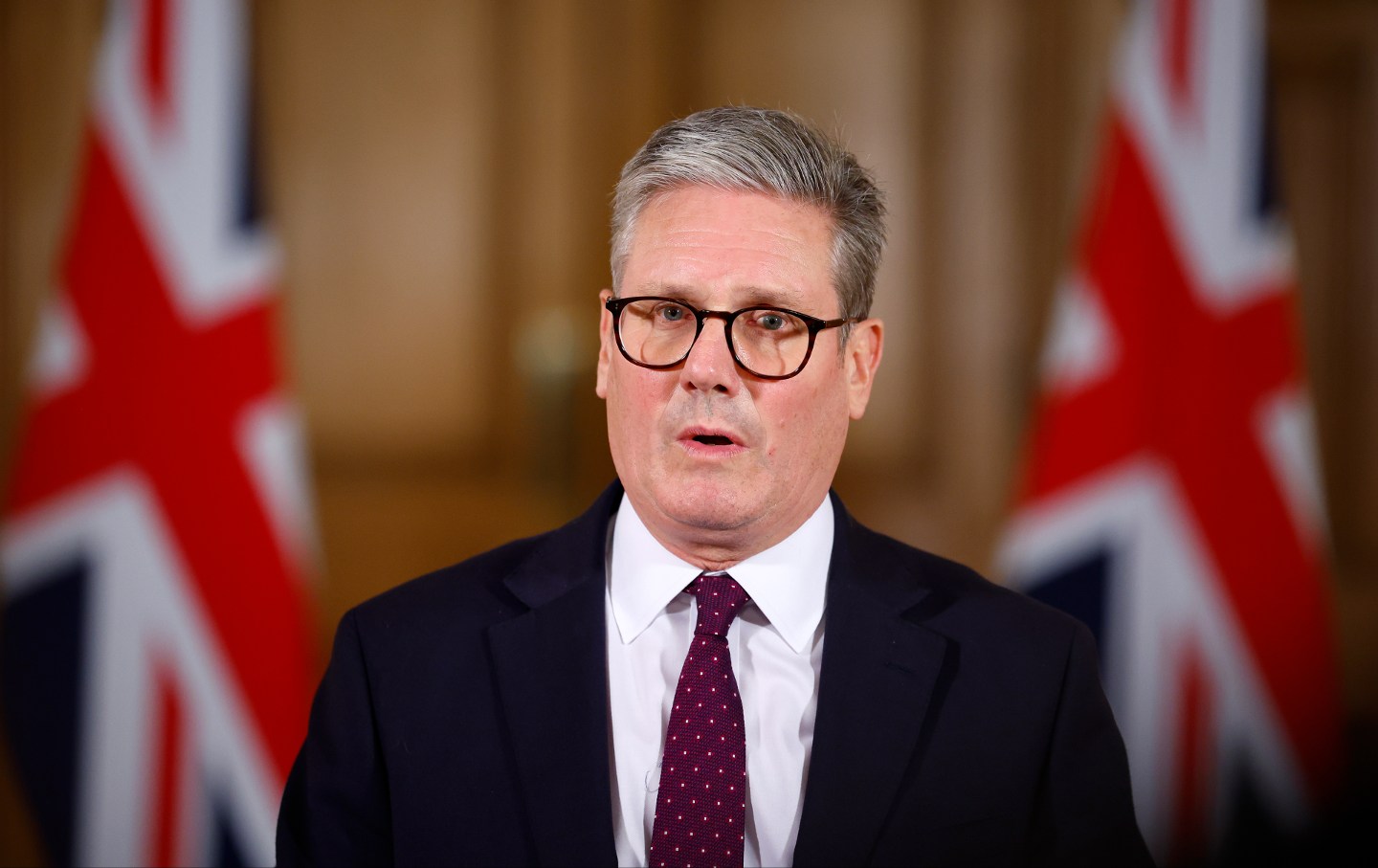
Glasgow, UK: The Revolt against Starmer — the growing pressure inside the UK’s ruling Labour Party for Prime Minister Keir Starmer to step down reflects a deeper political crisis that has been building steadily since Labour returned to power.
What initially appeared to be isolated criticism after disappointing local election results has now evolved into a broad internal revolt involving ministers, MPs, party factions and ideological blocs within Labour itself?
The challenge facing Starmer is no longer simply about electoral setbacks; it is increasingly about leadership credibility, ideological direction and the future identity of Labour in post-Brexit Britain.
The immediate trigger behind the pressure campaign has been Labour’s poor performance in local and regional elections across England and Wales.
Senior MPs and ministers openly argued that the government has lost public trust and failed to inspire voters despite entering office with promises of stability and economic recovery.
Several lawmakers accused Starmer of lacking a coherent political vision and governing with excessive caution. Reports indicate that dozens of Labour MPs have either directly demanded his resignation or called for a timetable for leadership transition.
However, the roots of this rebellion go much deeper than electoral disappointment. Since becoming Labour leader, Starmer attempted to reposition the party toward the political center, distancing it from the left-wing politics associated with former leader Jeremy Corbyn.
While this strategy initially reassured moderate voters and business circles, it also alienated many grassroots activists and left-leaning MPs who believed Labour had abandoned its traditional socialist identity.
Internal tensions intensified after cabinet reshuffles, policy reversals and disputes over economic priorities.
Another major factor behind the current instability is the deteriorating economic environment in Britain.
Rising borrowing costs, weak growth, inflationary pressures and public frustration over living standards have damaged the government’s image.
Financial markets reacted nervously to the political uncertainty, with UK bond yields climbing sharply amid fears that Labour could descend into another prolonged leadership struggle similar to the instability that damaged the Conservative Party in previous years.
The controversy surrounding the appointment of Peter Mandelson as ambassador to Washington also weakened Starmer politically.
Critics inside Labour questioned the vetting process and accused the prime minister of poor judgment and lack of transparency. For many MPs, the issue became symbolic of a broader concern that Starmer’s leadership lacked decisiveness and political control.
The Iran crisis and Britain’s complicated relationship with the United States have added another sensitive dimension to the political turmoil.
Starmer attempted to maintain a delicate balance between supporting the transatlantic alliance and avoiding direct British involvement in offensive military operations against Iran.
He resisted joining large-scale US-led strikes while still permitting limited defensive cooperation through British bases.
This balancing act exposed divisions inside Labour.
Some MPs believed Starmer was too cautious and weak in dealing with Washington, while others argued he was still too closely aligned with US strategic interests.
Public opinion in Britain largely opposed deeper military involvement in Iran, and Labour lawmakers feared that any perception of following American military policy could politically damage the party, especially given Britain’s painful historical memory of the Iraq War.
Nevertheless, it would be an exaggeration to conclude that the pressure campaign against Starmer is solely driven by the Iran issue or by UK-US tensions.
The Iran crisis has certainly intensified existing dissatisfaction and exposed fractures in Labour’s foreign policy approach, but the rebellion primarily stems from domestic political grievances, ideological conflicts and fears that Labour may lose future elections under Starmer’s leadership.
The foreign policy disagreements are therefore acting more as a catalyst rather than the fundamental cause of the revolt.
Political rivalry is unquestionably playing a major role. Inside Labour, different factions are maneuvering to shape the party’s future leadership. Names such as Wes Streeting, Andy Burnham and Angela Rayner are increasingly discussed as potential successors.
Some MPs want an immediate leadership challenge while others prefer a gradual transition. The situation reveals that Labour’s internal power struggle is not only ideological but also deeply personal and strategic.
The broader implications for the UK political system could be profound. Britain has already experienced years of instability with rapid leadership changes under the Conservatives following Brexit.
If Labour also enters a prolonged cycle of internal warfare and leadership turnover, public confidence in mainstream political parties could erode further.
Such instability may strengthen populist and anti-establishment forces, particularly parties seeking to capitalize on voter frustration with traditional politics.
At the same time, repeated leadership crises weaken Britain’s international standing. Allies and adversaries alike may perceive the UK as politically fragile and strategically inconsistent.
Economic markets generally dislike uncertainty, and ongoing speculation about the prime minister’s future risks further damaging investor confidence and economic stability.
Ultimately, the campaign against Starmer represents a convergence of ideological dissatisfaction, electoral anxiety, economic frustration and geopolitical tension.


