Courtesy: Reporting Contribution by Salman-Bin-Kareem [A Senior Journalist I Doha, Qatar]
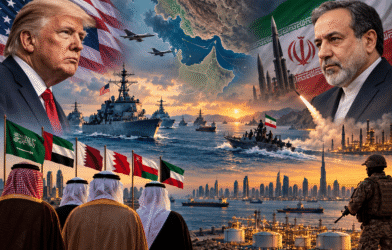
Washington, D.C/Rochester, NY/Doha, QA: The United States and Iran entered a second consecutive day without major new American offensive strikes, creating a brief operational pause in a conflict that has already transformed the security landscape of the Middle East.
While the absence of large-scale attacks has prompted cautious optimism among diplomats, U.S. officials have indicated that the pause should not be mistaken for a ceasefire or a political settlement.
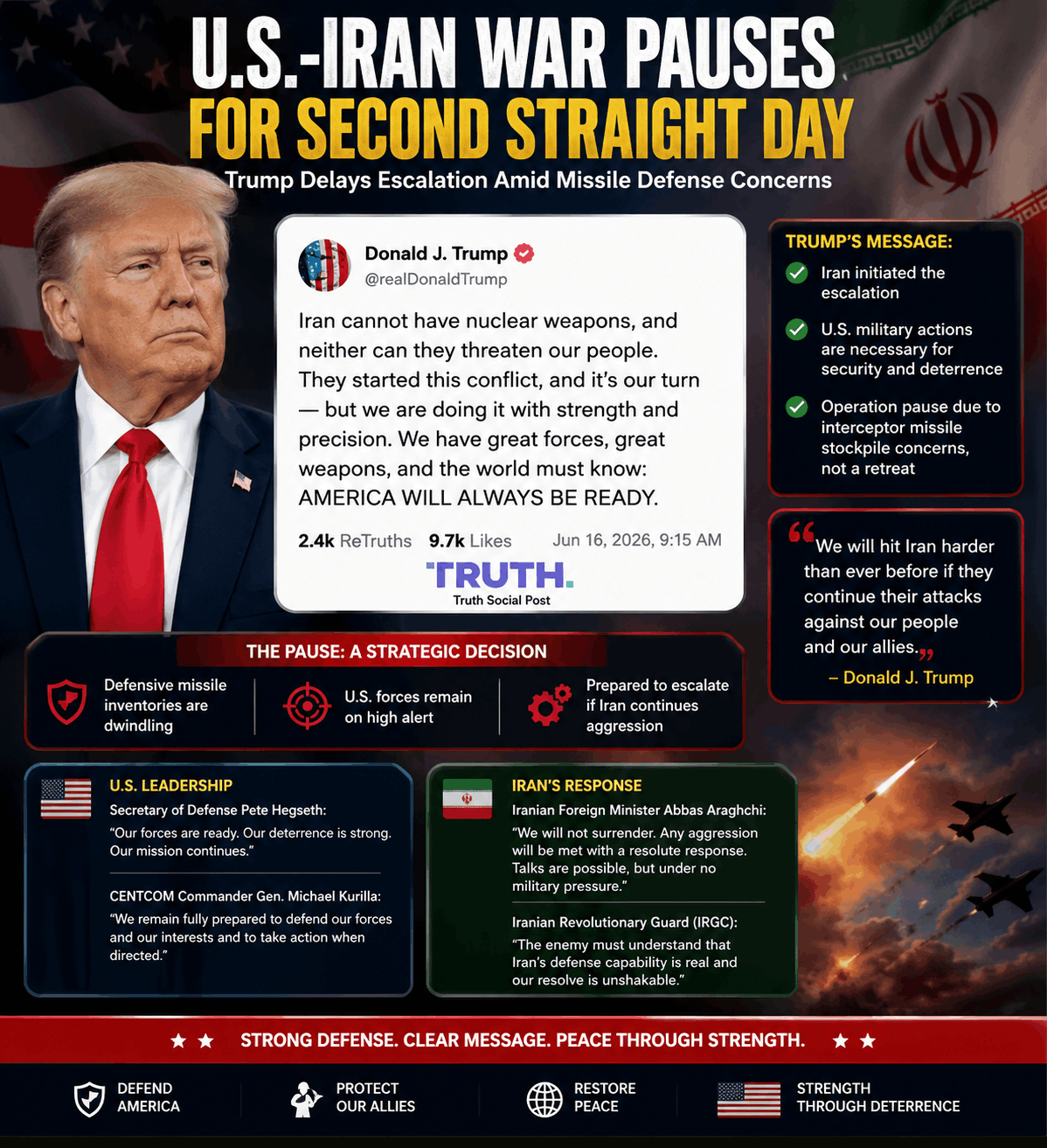
According to American officials familiar with internal deliberations, President Donald Trump postponed plans for an expanded military campaign partly because of concerns over the declining stockpiles of interceptor missiles used to defend U.S. forces and regional allies against Iranian ballistic missile attacks.
The decision illustrates that even the world’s most powerful military must balance offensive ambitions with defensive readiness.
Modern conflicts are increasingly determined not only by battlefield success but also by industrial production, logistics, and the sustainability of precision-guided weapons inventories.
Trump’s Strategic Pause: Military Necessity Rather Than Political Retreat
The Trump administration has rejected suggestions that the operational pause represents a weakening of U.S. resolve.
Instead, senior officials describe it as a calculated military adjustment designed to preserve America’s defensive capabilities while reassessing the next phase of operations.
President Donald Trump has repeatedly argued that Iran initiated the latest escalation and that the United States retains both the capability and the political will to respond decisively.
Following Iran’s attempted missile attack on U.S. forces in the region, Trump declared that “it’s our turn,” promising a forceful American response while simultaneously leaving the door open for negotiations if Tehran changed its course.
On his Truth Social platform over recent days, Trump has maintained that Iran would face overwhelming military consequences if it continued targeting American personnel and regional partners.
He has argued that U.S. operations are intended to restore deterrence rather than pursue an indefinite regional war.
His public messaging has consistently emphasized that any pause in offensive operations should not be interpreted as hesitation but as an operational decision based on military requirements.
American defense officials have similarly stressed that U.S. forces remain fully prepared to resume expanded military operations should Iranian attacks continue.
The Interceptor Missile Challenge
One of the most significant revelations emerging from the current pause is the growing importance of missile-defense inventories.
Iran has relied extensively on ballistic missiles, cruise missiles, and drones throughout the conflict.
Defending against these weapons requires sophisticated interceptor systems such as Patriot, THAAD, and naval Standard Missiles.
Unlike offensive missiles, interceptor missiles are consumed purely for defensive purposes and cannot be rapidly replaced.
Military analysts have warned for months that sustained high-intensity conflict could strain U.S. production capacity, especially given existing commitments in Europe and the Indo-Pacific.
The reported concern inside the Pentagon therefore reflects a broader strategic reality: maintaining sufficient defensive ammunition has become as important as sustaining offensive strike capabilities.
CENTCOM Maintains Defensive Posture
Although offensive operations have slowed, U.S. Central Command has continued maintaining heightened readiness throughout the Middle East.
American forces remain deployed across the Gulf, Jordan, Iraq, Syria, and surrounding waters, while carrier strike groups, missile-defense systems, intelligence assets, and combat aircraft continue operating at elevated alert levels.
Following Iran’s recent attempted ballistic missile attack against U.S. forces, CENTCOM reported that incoming missiles were successfully intercepted, preventing casualties among American personnel.
The command emphasized that U.S. forces remain fully capable of defending themselves while preserving the option for future offensive operations if directed by the President.
Iran’s Position: Resistance without Concession
Iranian leaders continue portraying the confrontation as resistance against foreign military pressure.
Iranian officials have repeatedly argued that U.S. military operations violate international law and regional sovereignty.
Tehran maintains that its missile activities represent legitimate self-defense while insisting that any future negotiations must occur without military coercion.
Iranian officials have also stated that the country remains prepared for prolonged confrontation if Washington expands its military campaign.
At the same time, Iranian diplomatic channels have indicated that indirect discussions through regional mediators remain possible provided military pressure decreases.
This dual-track approach—military resistance combined with diplomatic signaling—reflects Tehran’s longstanding strategy of avoiding formal surrender while preserving opportunities for negotiated outcomes.
Diplomacy Remains Fragile
Regional mediators continue attempting to prevent another cycle of escalation.
Reports indicate that Oman and several Gulf states remain engaged in diplomatic contacts aimed at preventing further military exchanges.
Iranian officials have described recent discussions with Omani intermediaries as constructive, although no formal breakthrough has been announced.
Nevertheless, diplomatic efforts remain vulnerable because both governments continue insisting that the other side bears responsibility for the crisis.
Washington demands an end to Iranian attacks against U.S. forces and regional partners.
Tehran insists that American military operations must stop before broader negotiations can advance.
These fundamentally different preconditions continue limiting prospects for immediate political progress.
Economic Consequences Continue to Mount
Although combat operations have slowed temporarily, economic uncertainty persists.
Global energy markets remain sensitive to developments around the Strait of Hormuz, one of the world’s most critical maritime energy corridors.
Insurance costs for commercial shipping remain elevated, while governments continue monitoring potential disruptions to oil exports.
Iran’s economy continues facing severe pressure from sanctions, military damage, and reduced investor confidence.
Meanwhile, the United States confronts rising operational costs associated with maintaining large-scale military deployments, interceptor missile production, and regional force protection.
The longer the confrontation continues, the greater the financial burden on both governments, even during periods of reduced combat activity.
Strategic Assessment
The current pause should be understood as an operational adjustment rather than evidence that the conflict has entered a lasting de-escalation.
For Washington, conserving defensive missile inventories while reassessing military objectives reflects prudent strategic planning rather than abandonment of military options.
For Tehran, surviving sustained U.S. military pressure without major political concessions strengthens its narrative of resilience, even as economic and military costs continue accumulating.
Neither side currently appears prepared to accept the political compromises necessary for a comprehensive settlement.
Consequently, the present lull may simply represent an opportunity for both militaries to reorganize, replenish critical capabilities, and reassess future operations rather than the beginning of a durable peace.
Whether diplomacy ultimately succeeds will depend less on battlefield developments than on whether Washington and Tehran conclude that continued escalation would impose greater strategic costs than negotiated compromise.
At present, both governments continue preparing for either outcome, leaving the Middle East in a state of continued uncertainty despite the temporary reduction in active military operations.
Explore related stories, expert opinions, and exclusive insights to better understand the broader implications of today’s headlines.