Courtesy: Reporting Contribution by Salman-Bin-Kareem [A Senior Journalist I Doha, Qatar]
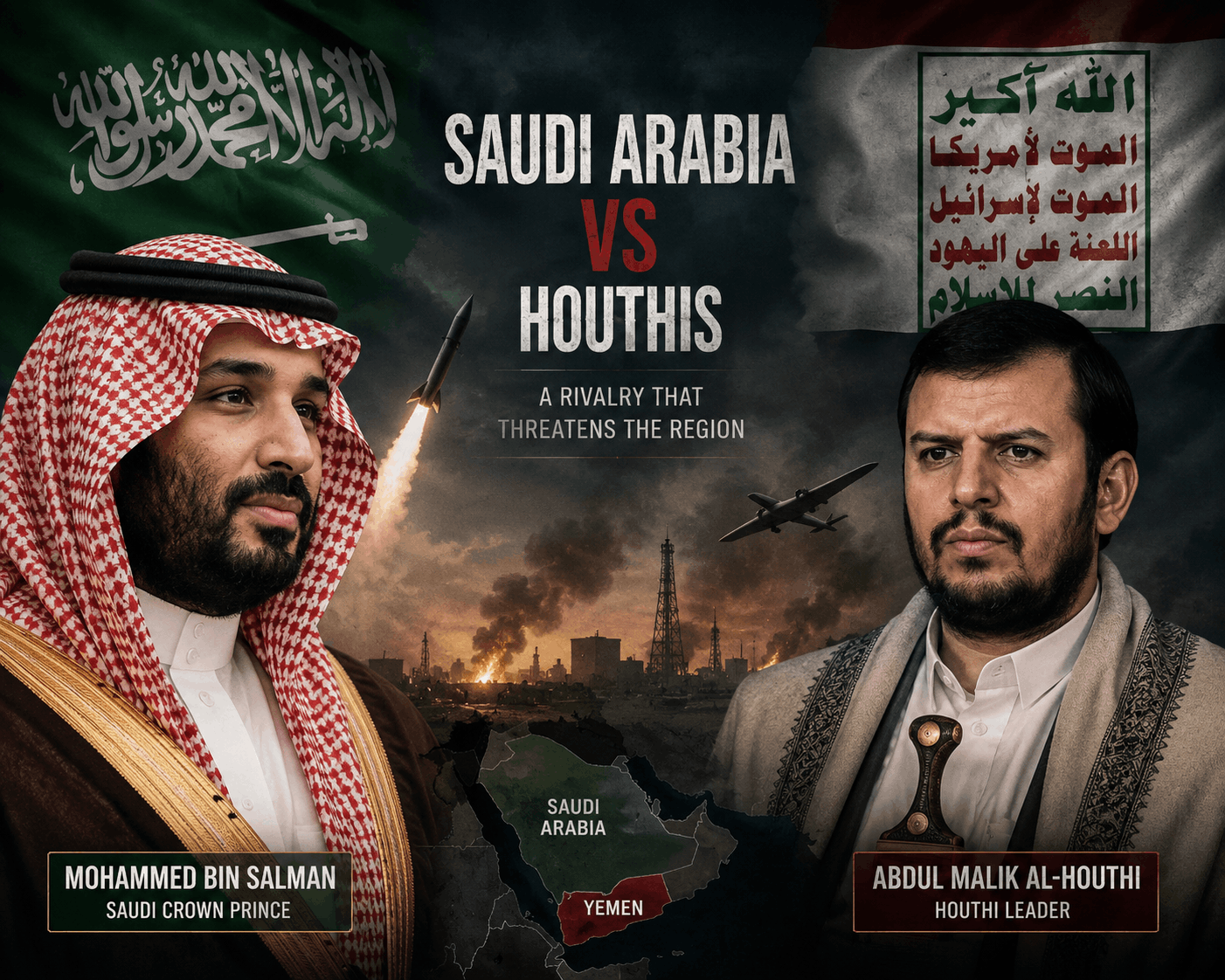
Rochester, NY/Doha, QA: The renewed confrontation between Yemen’s Houthi movement and Saudi Arabia represents more than another episode in the long-running Yemeni war.
It is a direct test of Crown Prince Mohammed bin Salman’s attempt to transform Saudi national security from an interventionist military posture into a more cautious strategy built around deterrence, diplomacy, economic resilience and selective force.
In July 2026, the Houthis intensified pressure on Saudi Arabia by declaring what they described as a naval blockade, warning shipping companies against using Saudi ports and claiming attacks on Saudi-linked oil tankers and energy infrastructure.
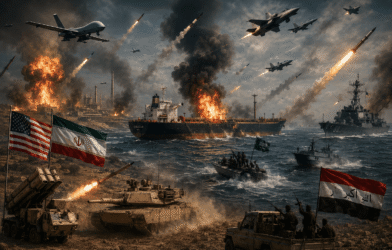
Missile and drone attacks were subsequently reported against targets around Jizan and Yanbu, while Saudi forces responded with airstrikes against Houthi-controlled areas in Yemen.
The exchange threatened to end the relative calm that had largely prevailed along the Saudi-Yemeni frontier since the 2022 truce.
This escalation places Mohammed bin Salman in a difficult position. A restrained response could be interpreted by the Houthis as weakness, encouraging further attacks.
A large-scale military campaign, however, could drag Saudi Arabia back into an expensive and politically damaging war that Riyadh has spent years trying to leave behind.
The Saudi-Yemeni rivalry predates the Houthis
The conflict between Saudi Arabia and forces operating from Yemen cannot be understood solely as a Sunni-Shia confrontation or as a Saudi-Iranian proxy war.
Tension between the Arabian Peninsula’s wealthiest state and its poorest country has much deeper historical roots.
Saudi rulers have long regarded Yemen as both a strategic buffer and a potential source of instability.
The two countries fought a border war in the 1930s, after which Saudi Arabia gained control over the provinces of Jizan, Najran and Asir.
Although the 2000 Treaty of Jeddah formally settled the modern border, historical grievances and tribal connections continued to shape relations.
For decades, Riyadh sought influence in Yemen through financial assistance, tribal patronage, political alliances and support for friendly governments.
Saudi policy generally aimed to prevent any single Yemeni faction from becoming powerful enough to threaten the kingdom while ensuring that Yemen remained politically dependent on Riyadh.
Why the Houthis are escalating again
The latest Houthi pressure appears designed to exploit Saudi Arabia’s vulnerabilities without necessarily initiating an immediate full-scale ground war.
By threatening Saudi ports, oil tankers, energy facilities and Red Sea shipping, the Houthis can impose economic and psychological costs far beyond the physical damage caused by individual missiles or drones.
The declared maritime restrictions are particularly significant because Saudi Arabia increasingly depends on its western ports and Red Sea export infrastructure whenever the Strait of Hormuz becomes insecure.
Threats around Bab al-Mandeb can therefore place pressure on Saudi trade routes at the same time that instability affects energy flows through the Gulf.
The Houthis may also believe that Saudi Arabia has become more risk-averse. Mohammed bin Salman wants to avoid another open-ended war and the group could calculate that this gives it greater coercive power.
The movement’s strategy appears to combine military escalation with political bargaining.
By demonstrating that it can disrupt Saudi ports, oil exports and investment confidence, the Houthis may seek concessions related to Yemen’s economy, salaries, border arrangements, reconstruction funding and political recognition.
Iran’s regional confrontation with the United States and its partners adds another layer. The Houthis benefit from Iranian weapons expertise and belong to Tehran’s broader network of regional allies.
Yet their actions should not automatically be interpreted as direct Iranian commands. They also have their own interests in consolidating authority inside Yemen and presenting themselves as a regional resistance force.
Mohammed bin Salman’s first priority: layered air and missile defence
The most immediate part of Saudi planning is defensive.
Riyadh has invested heavily in Patriot missile systems, radar networks, fighter aircraft and other air-defence capabilities.
The kingdom is also seeking greater coordination between military sensors, naval forces, civil-defence authorities and energy installations.
The difficulty is that Houthi attacks can involve combinations of ballistic missiles, low-flying cruise missiles and relatively inexpensive drones.
Even advanced systems can struggle against coordinated attacks arriving from different directions and altitudes.
Saudi Arabia must therefore avoid relying on a single interception system. Its emerging model is likely to involve layered defence, including long-range missile interception, short-range protection of strategic sites, electronic warfare, intelligence surveillance and rapid repair capabilities.
The use of allied air-defence assets also illustrates the international dimension of Saudi protection. Recent reporting indicated that foreign-operated Patriot systems contributed to intercepting missiles directed at Saudi infrastructure.
However, air defence alone cannot deliver security. Interceptors are costly, while drones can be comparatively cheap. The attacker can therefore impose a long-term financial burden even when most projectiles are destroyed.
Economic warfare and protection of Vision 2030
The Houthis understand that Saudi Arabia’s greatest vulnerability may no longer be territorial security alone. It is the credibility of Vision 2030.
Saudi Arabia is investing hundreds of billions of dollars in tourism, technology, logistics, entertainment, renewable energy and new urban developments. These projects require long-term confidence from investors, insurers, airlines and international companies.
Even unsuccessful Houthi attacks can increase insurance costs, redirect shipping, alarm investors and damage the perception of stability.
Mohammed bin Salman’s administration is therefore likely to treat economic continuity as part of national defence.
Emergency plans may include diversifying oil-export routes, increasing pipeline capacity, strengthening protection around Yanbu and Jizan, dispersing critical assets and maintaining reserves of replacement equipment.
Saudi Arabia may also expand coordination with Egypt over the Suez Canal and the SUMED pipeline while developing alternative logistics corridors that reduce dependence on any single maritime chokepoint.
The kingdom’s response will not be measured only by how many missiles are intercepted. It will be measured by whether ports remain open, oil exports continue, airlines operate and investors avoid panic.
Diplomacy with Oman, Washington and Tehran
The third pillar of Mohammed bin Salman’s approach is diplomatic containment.
Oman remains the most credible intermediary between Saudi Arabia and the Houthis. Muscat has maintained communication with the group and has played an important role in previous negotiations.
Riyadh is likely to preserve this channel even while conducting military retaliation.
Saudi Arabia also needs American intelligence, missile defence, naval coordination and diplomatic pressure. However, Mohammed bin Salman does not want the kingdom to be automatically pulled into every US-Iran confrontation.
This explains Saudi Arabia’s broader effort to balance its security partnership with Washington against diplomatic engagement with Tehran.
The Saudi-Iranian rapprochement was intended partly to reduce proxy conflict and establish rules of restraint. Renewed Houthi attacks will test whether Tehran is willing or able to limit its allies.
Riyadh may privately pressure Iran to restrain weapons transfers and discourage attacks on Saudi territory. But Saudi leaders also understand that Tehran may not exercise complete control over Houthi decision-making.
The kingdom must therefore negotiate on two levels: regionally with Iran and directly or indirectly with the Houthis.
MBS has learned from the first war, but the central problem remains unresolved
The most important difference between 2015 and 2026 is that Mohammed bin Salman no longer appears to believe that Saudi air power alone can impose a political solution in Yemen.
His strategy has evolved from rapid military victory to conflict management. It now combines missile defence, limited retaliation, diplomatic engagement, economic protection and support for Yemeni partners.
This is a more realistic policy, but it does not solve the fundamental problem.
The Houthis control much of northern Yemen, possess significant military capabilities and believe that pressure on Saudi Arabia can produce concessions.
Riyadh, meanwhile, cannot accept a permanently armed hostile movement capable of striking its cities, oil facilities and shipping routes.
Both sides may prefer bargaining to full-scale war, but each also wants negotiations to occur from a position of strength.
The result is a dangerous form of armed diplomacy in which missiles; drones, port warnings and airstrikes function as negotiating instruments.
Mohammed bin Salman’s greatest challenge is therefore not simply to defeat the next Houthi attack. It is to prevent tactical retaliation from destroying the strategic objective of a stable southern border.
Saudi Arabia can intercept missiles and bomb launch sites, but lasting security will require a political settlement inside Yemen that addresses power-sharing, economic institutions, local governance, border security and the role of armed factions.
For ongoing coverage and detailed analysis of international affairs, visit The Variant regularly for the latest updates.