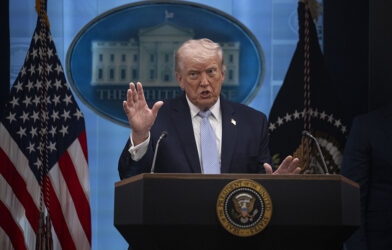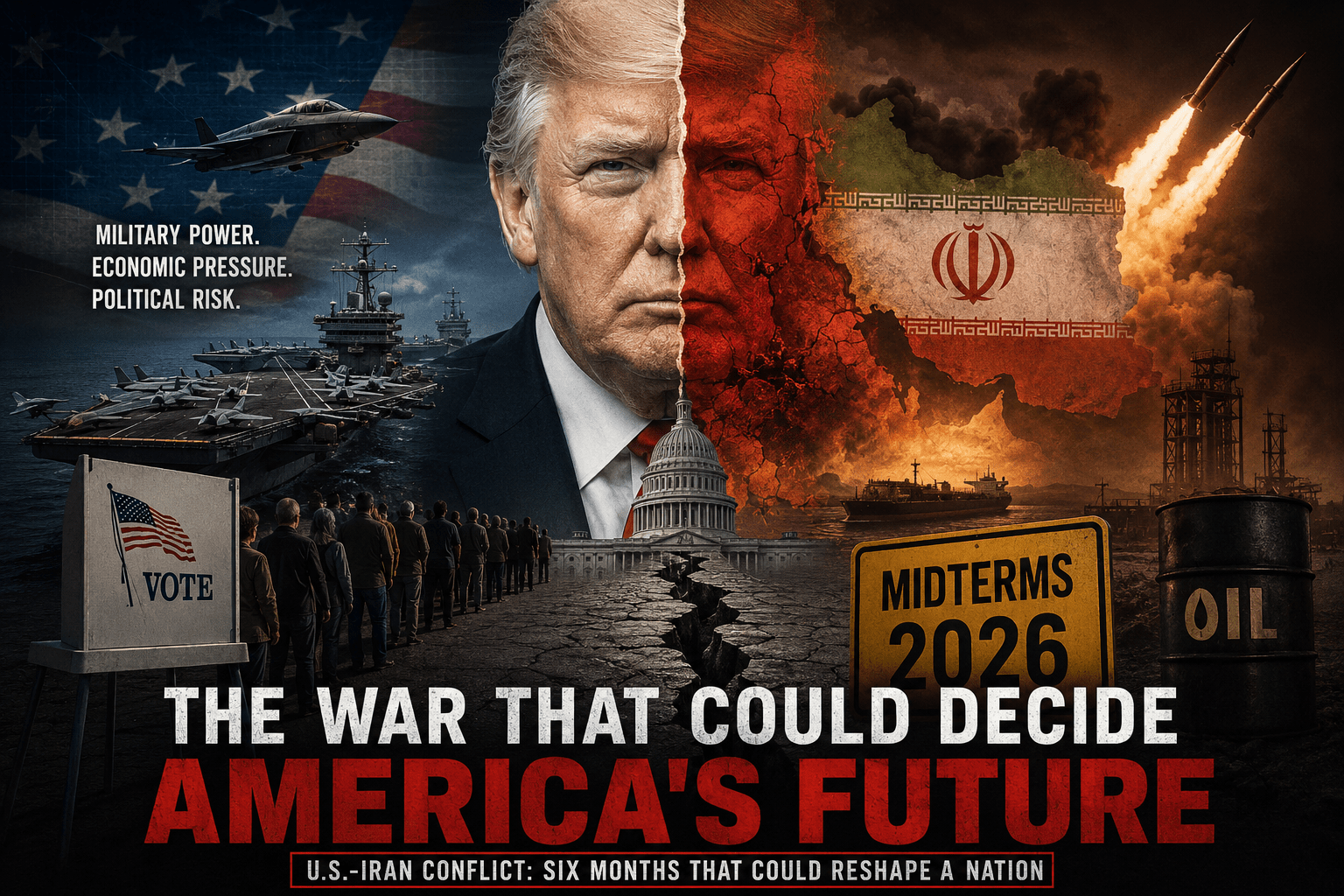
Rochester, NY: President Trump seemed intent on avoiding a protracted Middle Eastern confrontation with no apparent military or diplomatic way out just six months after the United States and Israel began their massive military campaign against Iran on February 28, 2026.
The Iranian leadership, nuclear facilities, and missile capabilities have all taken a major hit due to the actions of Washington and Israel. However, Tehran has remained firm and has not given in to Washington’s political demands.
Instead, what started as a fierce military campaign has evolved into a wider war over economic sanctions, pressure on the seas, energy security, and sudden military escalation?
The importance of that contrast in American politics is growing. As he campaigned for reelection, Trump maintained that the United States should use its overwhelming military might wisely, that its allies should shoulder a greater share of the burden for their own security, and that Washington should withdraw from the protracted wars in Afghanistan and Iraq.
Those ideas are being considered for compatibility by Iran right now.
War Has Transformed, but It Is Far From Over
As a preliminary step, the first operation sought to degrade Tehran’s regional military infrastructure and destroy Iran’s nuclear and ballistic missile capabilities. With six months under our belts, attention has turned to the Strait of Hormuz and the fate of Iran’s economy.
Transportation in the strait, which carries around 20% of the world’s petroleum, is still severely impacted. With the imposition of an embargo by Washington to limit Iranian imports, U.S. personnel have been tasked with clearing mines and protecting goods.
According to the White House, some 1,500 commercial vessels have been protected by American forces, and the international commerce lines are controlled by the United States, not Iran.
However, what happened on August 30 demonstrated how precarious that assertion is. Following American officials’ belief that Revolutionary Guard members were about to lay sea mines, U.S. Marines struck Iranian launchers on Larak Island.
After that, Iran began firing missiles targeting American bases in Jordan. The oil market reacted swiftly, sending Brent oil soaring beyond $89/barrel.
This is clearly not a typical conflict with a clear victory. Iran is attempting to keep up enough military pressure to raise the economic and political costs to the United States, while Washington aims to prevent them from controlling the Hormuz without starting a larger ground fight. The situation is becoming more of a question of controlled escalation.
A New Tool for Trump: Economic Isolation
Washington has recently shifted its focus from primarily using military force to economic warfare, which is the most noticeable difference.
On August 24, the White House introduced Operation Economic Outcast in an endeavor to severe Iran’s last international financial connections.
In the time after, Scott Bessent, the U.S. Treasury Secretary, dropped hints that new secondary sanctions may be implemented often, perhaps affecting financial institutions and foreign organizations that help Iran with its financial dealings.
China presents the greatest obstacle to that strategy. Beijing is already the final destination for the most majority of Iran’s exported petroleum, and networks located in China and Hong Kong that are engaged in Iran’s oil and military acquisitions have already been sanctioned by the Treasury Department.
Trump has a significant strategic challenge with this. While punishing Chinese businesses would increase pressure on Tehran, it might also lead to heavy secondary consequences on Beijing, which could widen the US-China economic conflict at a time when American voters are concerned about price.
Consequently, the administration must make a difficult calculation: the economic pressure must be severe enough to influence Iranian conduct without causing the American people to experience another inflationary shock.
Challenges Faced by the Midterm Election
Ultimately, American spending at gas stations, supermarkets, and airports may matter more than what happen in Tehran when it comes to the November 2026 midterm elections.
As of August 24th, a Reuters/Ipsos poll put Trump’s approval rating at around 33% and support for American military action against Iran at roughly 31%.
More importantly from a political perspective, almost 80% of Americans believe that the US will stay engaged for an extended period, as opposed to a brief one.
Those numbers might hurt the Republican Party’s chances in close races for the Senate and House.
On their own, foreign wars seldom determine who represents the United States in Congress. However, they pose a political threat when they are associated with domestic economic hardship.
Oil and transportation costs have risen due to the conflict in Iran, but voters’ perceptions of the economy are already impacted by broader concerns about food, housing, and inflation.
Even more disconcerting than his stances on issues like immigration, recent polls have shown that Trump’s economic popularity is far lower.
The Democratic line of reasoning is simple: Trump campaigned on a platform of toughness without dragging the United States into needless conflicts, yet here we are, six months into an expensive battle with no resolution in sight.
In response, Republicans will point out that the administration has prevented Iran from getting nuclear weapons, safeguarded global commerce routes, crippled Iran’s military strength, and avoided the need to deploy a large American ground force.
The political verdict will be heavily influenced by events transpiring between this moment and November.
Should oil prices decline, Hormuz shipping restore normalcy, and Iran engage in substantive negotiations, Trump may be able to use the campaign as evidence that sustained US pressure has persuaded Tehran to begin negotiations.
A number of Republican contenders may try to separate them from the current administration’s position on Iran if the violence intensifies the number of American casualties’ rises, or the price of oil increases.
Could the Trump Doctrine Be Undergoing a Revision?
The Trump Doctrine may continue beyond the showdown with Iran. Perhaps reversing the situation instead.
In conclusion, deterrence by unpredictability was Trump’s prior stance on foreign policy: use threats of overwhelming force, deploy limited but spectacular military action if needed, aggressively use sanctions, and negotiate from a position of strength.
The Iran crisis put that idea to the ultimate test.
The destruction of infrastructure at the hands of a dominant military force may be much more rapid than the subjugation of political leaders. Even if sanctions destroy an economy, they may not change a government’s long-term objectives.
The United States of America does not have to be physically destroyed by an enemy like Iran. To make continuation less appealing, it must suffer sufficient economic and political consequences.
In the future, the Trump doctrine may take a page out of the learning book and advocate for forcible containment rather than regime transition. This would include striking new threats as they emerge, controlling key waterways, economically isolating enemies, and avoiding widespread occupation.
Indeed, the current state of affairs in Washington is increasingly indicative of precisely that strategy.
Triumph or Failure—or Just a Partial Evaluation?
It is premature to declare victory or defeat for the United States in the six-month conflict.
Both Iran’s military and economy have taken heavy hits. Its military infrastructure was damaged, its ability to export oil was drastically reduced, and its nuclear ambitions seem to be on pause.
However, Tehran’s political system remains in place, the Iranian military has significant retaliatory capabilities, and Washington has failed to achieve a meaningful agreement to end the war.
Dominance on the battlefield may therefore no longer be Trump’s top priority. This is transforming military superiority into a marketable good for the benefit of the American people.
As a result, the next few weeks may be pivotal for American politics as well as the Middle East. One possible outcome of Trump’s pressure campaign is the reopening of Hormuz via negotiation, which would lead to a permanent reduction in tensions.
Instead, if there are further attacks, casualties, or increases in oil prices, Democrats may use this as an opportunity to portray the conflict as evidence that the “America First” administration was caught up in the same kind of long-term Middle Eastern entanglements it had promised to avoid.
Six months into the conflict, the focus has changed. It is now obvious that the US can do Iran significant military damage; the issue was whether it could or could not.
Before the economic and electoral ramifications start to alter American politics, the question is whether Washington can convert that influence into a lasting political consensus.
Thus, Iran is now more than just another foreign policy problem in that regard. It could wind up being the deciding factor in whether or not the Trump Doctrine fulfills its central promise of achieving maximum American strength without triggering another endless American battle.
Understanding global events requires context. The Variant brings together facts, analysis, and perspectives that matter.