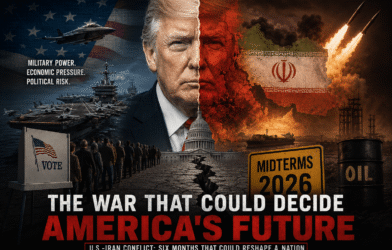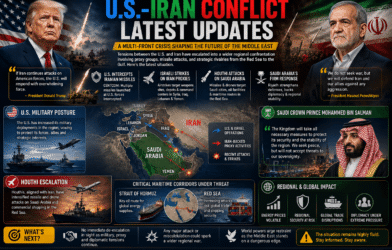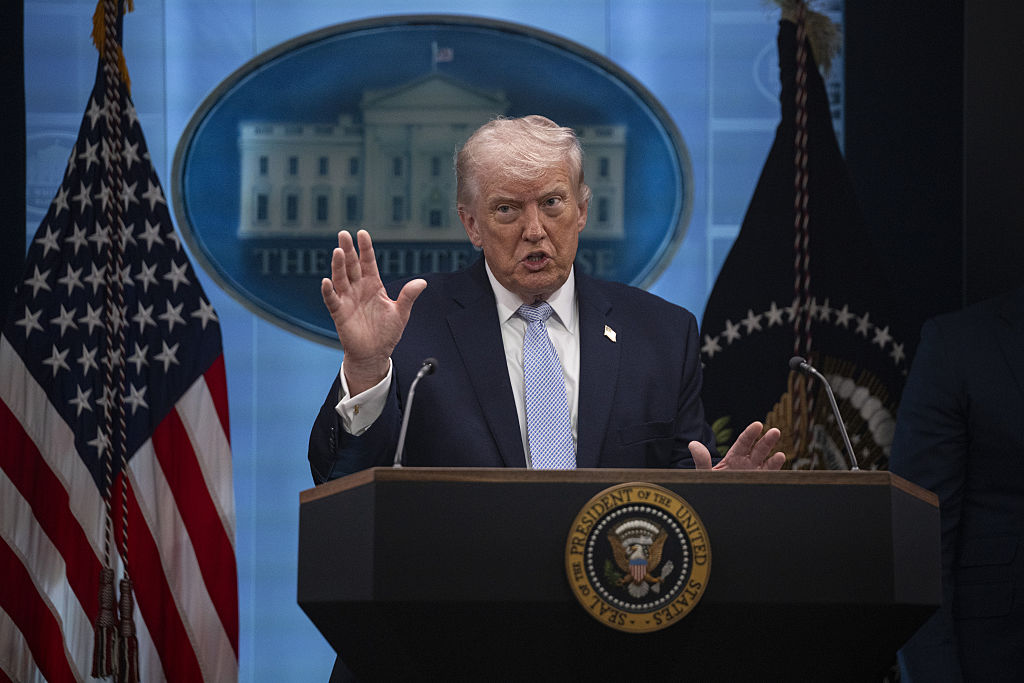
Washington, D.C/Rochester, NY: The latest press briefing by President Donald Trump reflects a moment of deep strategic ambiguity rather than clarity. On one hand, he declared that the United States has effectively “won” militarily against Iran, portraying the conflict as nearing conclusion. On the other, he simultaneously threatened unprecedented escalation—warning that Iran’s infrastructure could be systematically destroyed within hours if demands are not met.
This dual messaging is not accidental; it reveals a White House attempting to balance three competing pressures: domestic political fatigue with the war, the need to project strength, and the reality that Iran remains far from capitulation. The result is a narrative that oscillates between victory and imminent escalation, leaving both allies and adversaries uncertain about Washington’s true endgame.
The Strategic Reality vs. Political Narrative
A central tension in the briefing lies in the gap between rhetoric and battlefield reality. Trump described Iran as militarily broken—claiming it lacks meaningful air defenses or operational capability. Yet recent events directly contradict this assertion. Iranian forces have successfully downed U.S. aircraft and continued to strike back, indicating that while degraded, Iran’s military infrastructure is far from eliminated.
This discrepancy matters. Overstating victory can lock policymakers into rigid positions, making de-escalation politically costly. If the U.S. publicly frames Iran as defeated, any negotiated settlement may appear as an unnecessary concession rather than a strategic compromise.
The “Soft Rift” Between Washington and the Pentagon
Beneath the surface of the press briefing lies a subtle but consequential divergence between political leadership and military command. The Pentagon, under Defense Secretary Pete Hegseth, has continued to emphasize sustained operations and even increasing strike intensity, signaling that from a military standpoint, the conflict is ongoing and far from resolved.
At the same time, internal disruptions—such as the sudden removal of senior military leadership during an active conflict—point to institutional unease within defense circles.
This “soft rift” is not an open confrontation but a difference in tempo and framing. The White House is attempting to politically close the war narrative, while the Pentagon is preparing for its continuation.
Historically, such divergences tend to produce strategic incoherence: political declarations outpace operational realities, increasing the risk of miscalculation.
Diplomacy under Threat of Total War
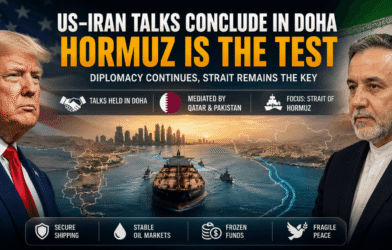
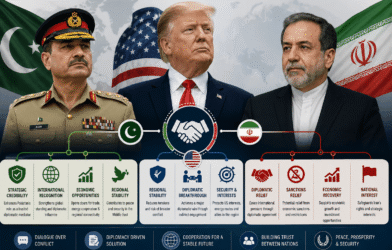
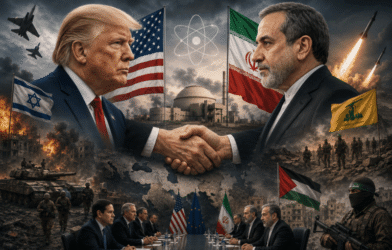
Trump’s claim that “active” peace talks are underway introduces another layer of contradiction. While negotiations are reportedly being pursued through intermediaries, they are paired with explicit ultimatums—deadlines backed by threats of massive strikes on civilian infrastructure.
This approach—often described as coercive diplomacy—can be effective in limited scenarios. However, in this case, it faces structural limits. Iran has already rejected key U.S. demands, including dismantling its missile and nuclear programs, and has issued its own counter conditions such as sanctions relief and war reparations.
More critically, Tehran has signaled that further escalation will trigger “devastating” retaliation, indicating that deterrence remains mutual rather than one-sided.
The implication is clear: diplomacy is not operating in a space of compromise but under the shadow of maximalist demands from both sides, making a breakthrough unlikely in the short term.
The Information War and Domestic Optics
Another striking feature of the briefing was Trump’s aggressive posture toward the media, including threats to jail journalists over leaks related to military operations.
This signals a parallel “information war” at home. By framing leaks as threats to national security, the administration is attempting to control the narrative of the conflict. However, such moves also reflect sensitivity to public perception—particularly as the war appears to be losing domestic support.
The emphasis on the dramatic rescue of a downed U.S. airman further illustrates this dynamic. The operation has been elevated as a symbolic victory, used to reframe a broader conflict that remains strategically unresolved.
Where the Situation Is Heading
Taken together, the briefing suggests that the conflict is entering a highly volatile phase rather than moving toward resolution.
The most likely trajectory in the immediate term is continued calibrated escalation. The United States appears unwilling to back down without tangible concessions, while Iran has shown no indication of yielding under pressure.
This creates a feedback loop in which each side escalates to force negotiations, but escalation itself reduces the space for compromise.
At the same time, the internal divergence between political messaging and military planning increases the risk of abrupt shifts. A single triggering event—such as a high-casualty strike, closure of the Strait of Hormuz, or a direct hit on U.S. assets—could rapidly transform a controlled conflict into a broader regional war.
Longer term, the briefing reveals a deeper strategic dilemma for Washington. The administration is attempting to achieve decisive outcomes—military dominance, regime pressure, and diplomatic concessions—without committing to a full-scale war. History suggests that such middle-ground strategies are difficult to sustain.
Conclusion
The press briefing does not clarify the path forward; instead, it exposes the contradictions shaping U.S. policy. Washington is simultaneously signaling victory and preparing escalation, engaging in diplomacy while threatening total war, and projecting unity while managing internal divergence.
Iran, meanwhile, is absorbing pressure without conceding core demands, indicating that the conflict has reached a stalemate masked by aggressive rhetoric.
In essence, the situation is not stabilizing—it is hardening. And when conflicts harden without resolution, they tend to break suddenly rather than gradually ease.