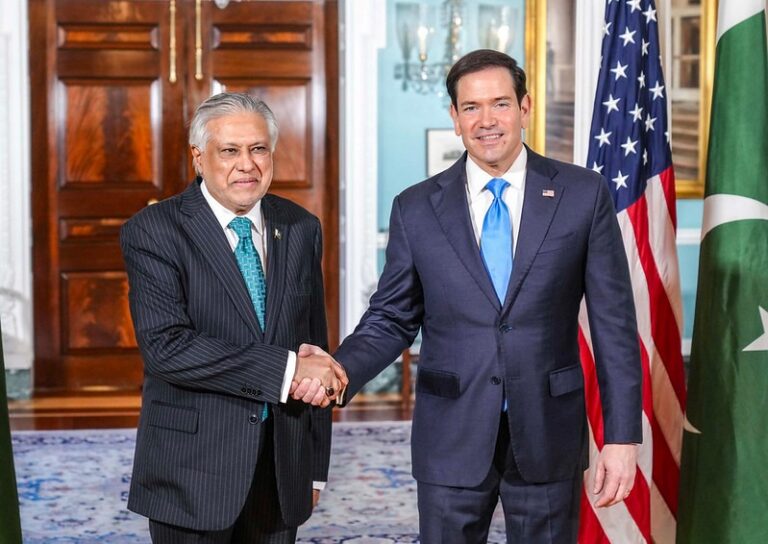
Rochester, NY: The recent visit of Pakistan’s Deputy Prime Minister and Foreign Minister Ishaq Dar to Washington has generated considerable political interpretation, not because of what was formally announced, but because of what appeared absent in terms of diplomatic optics and high-level engagement.
In international diplomacy, especially between allies and strategic partners like Pakistan and the United States, ceremonial reception protocols are often read as signals of warmth or distance.
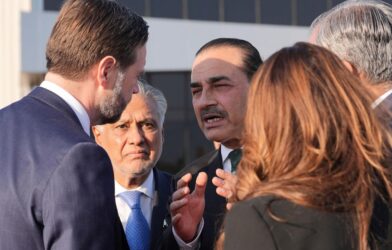
Reports and diplomatic observers noted that Dar’s arrival did not feature the kind of visible high-level U.S. reception that typically accompanies visits involving active bilateral negotiations.
Instead, he was received primarily through Pakistan’s own diplomatic mission, with the Pakistani Ambassador in Washington playing a central role in initial formalities.
While such arrangements are not unusual in routine diplomatic travel, the timing of this visit—amid heightened tensions in the Middle East and ongoing US-Iran friction—has encouraged analysts to interpret the lower visibility as a reflection of Washington’s cautious posture toward Islamabad at this stage.
US Expectations and the Iran Mediation Question
A key dimension shaping the backdrop of this visit is Pakistan’s perceived role—or limitations—in mediating broader regional crises, particularly involving Iran.
According to multiple diplomatic assessments circulating in policy commentary circles, the United States has been closely watching Islamabad’s outreach to Tehran in recent months.
The concern in Washington is not necessarily Pakistan’s engagement with Iran itself, but whether Pakistan can act as an effective intermediary capable of influencing de-escalation in a rapidly evolving security environment.
In this context, officials linked to the US foreign policy establishment have reportedly conveyed expectations that Pakistan should play a “more decisive and operationally effective role” in encouraging restraint in regional flashpoints.
However, there is also a parallel narrative in Washington policy debates suggesting skepticism about the actual leverage Pakistan holds over Iran, especially given Iran’s increasingly complex alignment structure and its reduced dependence on traditional regional intermediaries.
This duality—expectation without full confidence—appears to define the current US approach.
Marco Rubio’s Strategic Concerns and Messaging
The visit also coincided with political commentary attributed to U.S. Senator Marco Rubio, a prominent voice on foreign policy and national security.
While no official public joint statement was released in connection with Dar’s meetings, sources cited in media commentary suggest that Rubio and other Washington figures have expressed concerns regarding Pakistan’s broader regional positioning, particularly its diplomatic balancing act between Iran, China, and the United States.
The underlying concern is strategic consistency: whether Pakistan’s foreign policy objectives in the Middle East align with Washington’s expectations at a time of heightened volatility.
Reports further suggest that in closed-door interactions, U.S. interlocutors emphasized the need for Pakistan to adopt a more visibly supportive role in stabilizing regional tensions rather than maintaining what some in Washington perceive as “dual-engagement ambiguity.”
However, it is important to note that such interpretations remain part of broader diplomatic signaling rather than officially confirmed public readouts, and therefore should be treated as indicative rather than definitive.
The Question of Israel, Abraham Accords, and Diplomatic Silence
One of the more politically sensitive moments associated with the visit—circulating through journalistic accounts—was a question reportedly posed to Ishaq Dar regarding whether Pakistan might consider recognition of Israel or engagement with the Abraham Accords framework.
Pakistan has historically maintained a consistent position linking recognition of Israel to a broader resolution of the Palestinian question, and any deviation from that stance carries significant domestic and ideological implications.
According to these reports, Dar did not engage substantively with the question, maintaining diplomatic silence before continuing his engagements, including closed-door discussions with US officials.
This silence, while not unusual in sensitive diplomatic contexts, reflects Pakistan’s continued caution in navigating Middle Eastern normalization dynamics, especially at a time when regional alignments are rapidly shifting.
Domestic Political Optics: Timing and Messaging from Islamabad
Another layer of interpretation has emerged from the domestic political sphere in Pakistan. During Dar’s Washington engagements, Pakistan’s Prime Minister addressed the media back home, reportedly emphasizing Pakistan’s diplomatic outreach and framing it as part of a broader effort to position the country as a constructive player in regional stability discussions, including the US-Iran context.
This parallel communication strategy—where domestic messaging highlights diplomatic relevance while external optics appear more restrained—has been interpreted by analysts as an attempt to balance internal political expectations with external diplomatic realities.
The divergence between domestic projection and international reception often reflects a deeper challenge for middle powers like Pakistan: maintaining influence narratives at home while navigating constrained leverage abroad.
Conclusion: Strategic Ambiguity in a High-Stakes Environment
The Washington visit of Ishaq Dar ultimately illustrates the complexity of Pakistan–US relations at a moment of global realignment.
While there is no formal indication of diplomatic breakdown or rupture, the symbolism surrounding reception levels, reported expectations regarding Iran mediation, and cautious engagement on sensitive issues such as Israel and regional normalization all point toward a relationship characterized by strategic ambiguity.
For Washington, the central question appears to be whether Pakistan can translate its geographic and diplomatic positioning into tangible influence over regional crises.
For Islamabad, the challenge lies in preserving strategic autonomy while responding to external expectations that may not always align with domestic political constraints or regional partnerships.
In this delicate equilibrium, visits such as Dar’s become less about immediate agreements and more about signaling—signals that are often read differently in Washington, Islamabad, and the broader Middle East, depending on the strategic lens applied.
Bookmark The Variant for trusted updates, informed analysis, and comprehensive coverage of the stories that matter most.