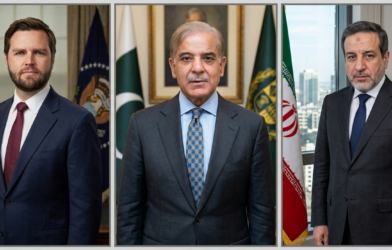
Rochester, NY/Islamabad, PK: The reported US-Iran talks in Islamabad reveal a layered story of diplomatic ambition, strategic mistrust, and, perhaps most strikingly, Pakistan’s internal power imbalance. While official confirmations remain limited, the sequence of events described by political and military sources offers enough material to critically assess both the negotiations themselves and the optics surrounding them.
The arrival of the US delegation, reportedly led by JD Vance, was marked by a notably warm reception.
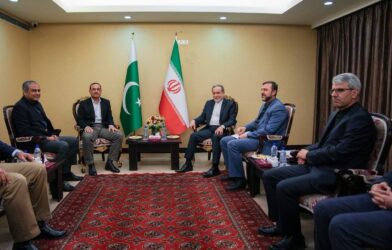
Senior Pakistani officials were present, but the dominant figure throughout the process appeared to be Pakistan’s chief of defense forces, Syed Asim Munir. Similarly, the Iranian delegation under Abbas Araghchi received comparable ceremonial treatment.
However, the deeper issue lies not in the formal reception but in who actually conducted the meaningful engagement. Multiple accounts suggest that Pakistan’s civilian leadership was largely sidelined during substantive discussions.
The optics projected a familiar pattern: the military establishment positioning itself as the central authority in foreign policy, while civilian leadership remained in the background.
This imbalance is not merely symbolic. In high-stakes diplomacy, perception matters. When foreign delegations engage primarily with the military leadership, it reinforces the notion that Pakistan’s political elite lacks full control over its own foreign policy apparatus.
Sources from Islamabad’s ruling political and defense circles describe the environment of the meetings as tense from the outset. There was little of the usual diplomatic flexibility or trust-building that characterizes successful negotiations. Instead, both sides appeared entrenched in their positions.
The US delegation reportedly pushed for a broader framework that went beyond nuclear limitations, potentially including Iran’s regional activities and missile program. For Tehran, these demands were seen as excessive and outside the acceptable scope of negotiation. The Iranian side maintained a rigid stance, emphasizing that any agreement must remain within previously discussed boundaries.
The result was a negotiation climate defined more by confrontation than compromise. Even informal interactions reportedly failed to ease tensions, suggesting that the talks were perhaps doomed from the beginning.
Before departing Islamabad, JD Vance publicly labeled the talks a “failure,” placing the blame squarely on Iran for refusing to accept what he described as a reasonable proposal. This early declaration was not just a reflection of the talk’s outcome but also a strategic move to shape international perception.
From Washington’s perspective, the proposal may have been designed to test Iran’s willingness to engage on a wider set of issues. However, critics argue that the US overplayed its hand by presenting demands that were politically unacceptable for Iran’s leadership.
On the other side, Abbas Araghchi and his delegation reportedly viewed the US demands as crossing established limits. Iranian officials signaled that they were unwilling to negotiate under pressure or accept terms that could compromise their strategic autonomy.
This divergence underscores a fundamental mismatch. While the US aimed for a comprehensive agreement addressing multiple concerns, Iran remained focused on a narrower, more controlled framework.
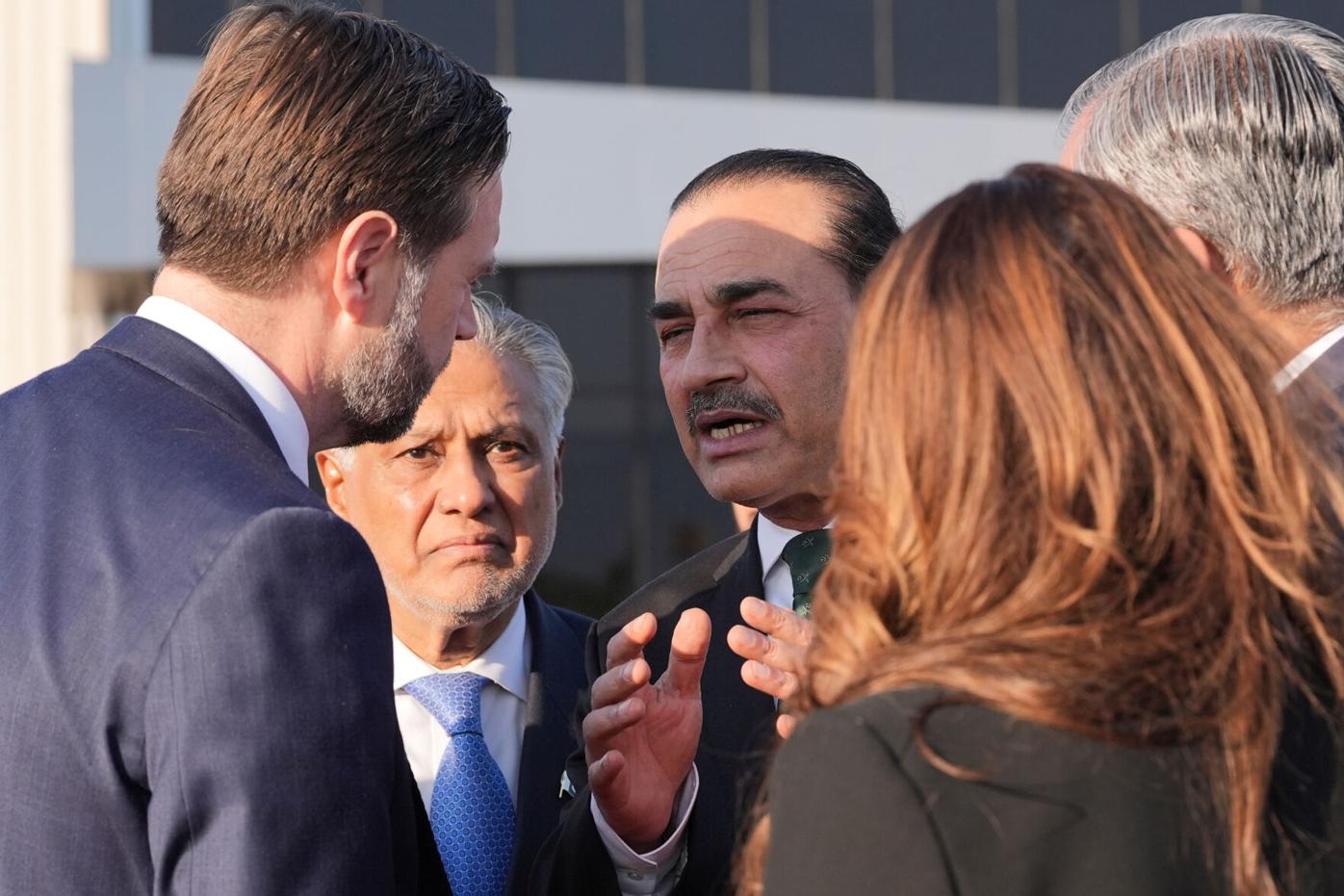
If the negotiations themselves were inconclusive, the departure scenes were far more revealing. As JD Vance boarded Air Force One, his visible engagement with Pakistan’s military chief—while largely bypassing civilian leaders—sent a powerful message about where authority is perceived to lie in Pakistan.
The pattern repeated when Abbas Araghchi departed. His direct interaction with General Munir stood in stark contrast to the passive presence of Pakistan’s foreign and interior ministers.
In diplomacy, such optics is never incidental. They reflect underlying realities. The sidelining of civilian leadership during both arrival and departure phases suggests a deliberate or systemic marginalization rather than mere protocol oversight.
The Islamabad talks have, perhaps unintentionally, exposed a longstanding structural issue in Pakistan’s governance: the dominance of the military in strategic decision-making. While the military’s involvement may ensure continuity and discipline, it also raises serious questions about democratic legitimacy and institutional balance.
For a country attempting to position itself as a credible mediator between two adversaries, this imbalance can be damaging. International actors may question whether commitments made in such settings truly reflect the authority of the state or are confined to one powerful institution within it.
Moreover, the apparent ignorance of civil administration during key moments reinforces perceptions of a weakened civilian government. Whether due to internal protocol decisions or deeper structural constraints, this absence did not go unnoticed.
The failure of the US-Iran talks in Islamabad cannot be attributed solely to the rigid positions of Washington and Tehran. It is equally a story of mismatched expectations and an overambitious agenda. However, beyond the talks, the episode has highlighted a more enduring issue: Pakistan’s internal power dynamics.
Instead of emerging as a confident and balanced mediator, Pakistan appeared divided in its representation. The dominance of military establishment over the process, contrasted with the marginal role of political elite, has reinforced long-standing criticisms of civil-military imbalance.
In the end, Islamabad’s attempt at mediation has not only failed to bridge the gap between the US and Iran but has also, perhaps unintentionally, revealed the deeper fractures within its own governance structure.