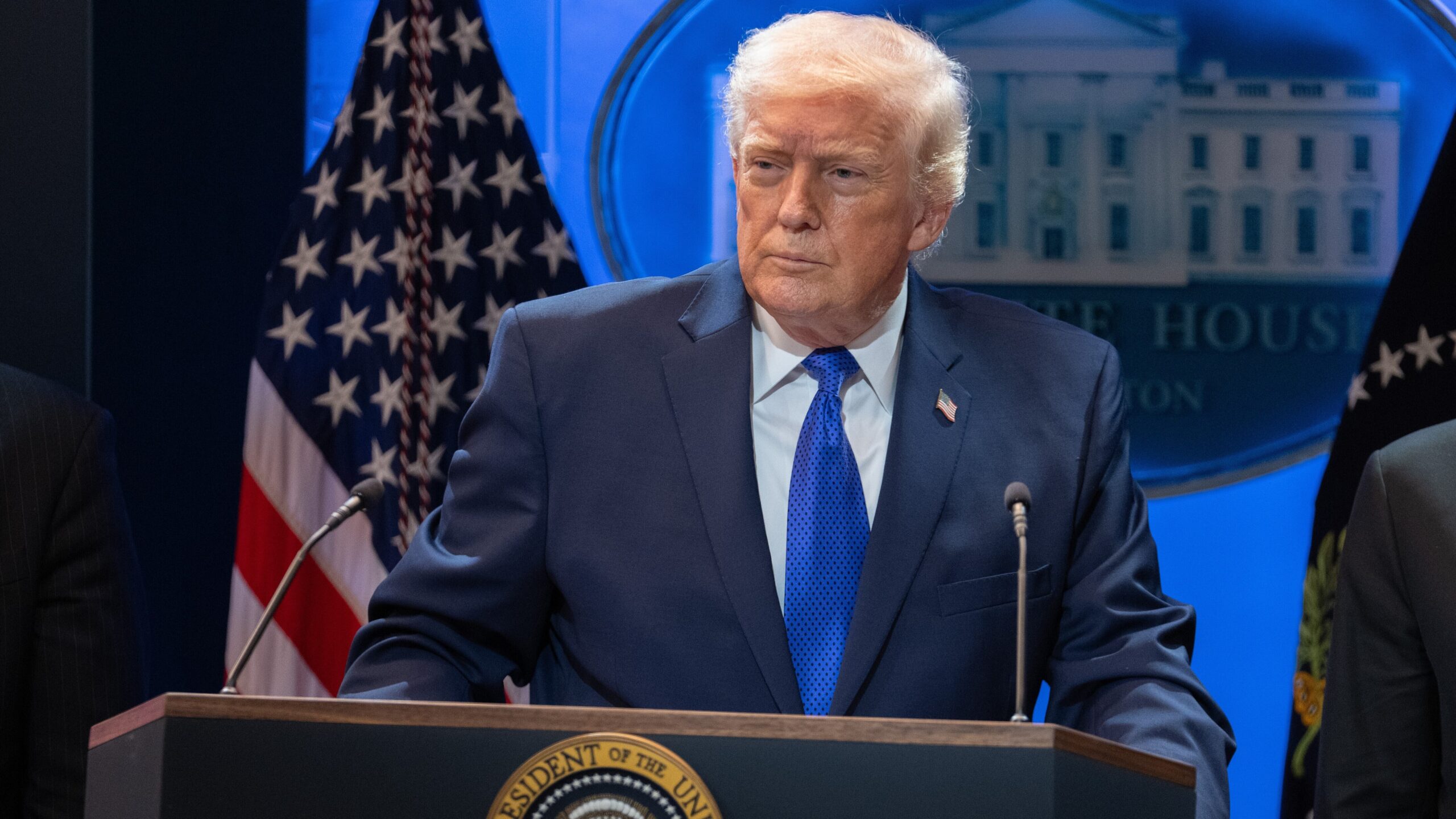
Washington, D.C: In his latest national address, Donald Trump framed the escalating tensions with Iran as both a strategic necessity and a test of American resolve. While the speech projected clarity and strength on the surface, a deeper reading reveals a layered political, military, and diplomatic narrative that goes beyond the stated objectives.
The Public Narrative: Strength, Deterrence, and Justification
Trump’s address emphasized three core themes: deterrence, retaliation, and national security. He portrayed Iran as the aggressor, citing threats to U.S. assets, allies, and regional stability. The justification for potential or ongoing military action was framed within the doctrine of preemptive defenses—an approach consistent with past U.S. interventions in the Middle East.
The tone was assertive but calculated. Trump avoided outright declarations of prolonged war, instead signaling “limited but decisive” action. This is a crucial distinction, aimed at maintaining domestic support while avoiding the political costs associated with another extended conflict.
The Strategic Messaging: What Was Said vs. What Was Meant
Beneath the rhetoric, the speech carried several implicit messages:
First, it was directed not just at Iran, but at U.S. allies and adversaries alike. By emphasizing military readiness, Trump sought to reassure partners like Israel and Gulf states while warning rivals such as China and Russia against intervention.
Second, the ambiguity in operational details—no clear timeline, no defined scope—suggests strategic flexibility. This allows the administration to escalate or de-escalate without appearing inconsistent.
Third, Trump’s repeated references to “ending endless wars” while simultaneously justifying military action reveal a balancing act. He is attempting to reconcile his political brand of non-interventionism with the realities of geopolitical pressure.
Domestic Political Undertones
The address cannot be separated from its domestic context. Trump’s language was carefully crafted to appeal to multiple constituencies:
He invoked patriotism and security to consolidate support among conservative voters, while avoiding alarmist war rhetoric that could alienate moderates. The absence of detailed casualty projections or economic costs indicates a deliberate effort to control public perception.
Moreover, the speech subtly shifted responsibility onto previous administrations, a familiar rhetorical strategy. By framing the Iran crisis as an inherited problem, Trump positioned himself as both a corrective force and a reluctant actor.
Military Implications: Limited Strike or Broader Conflict?
From a defense perspective, the speech leaves open two pathways.
The first is a controlled escalation—targeted strikes on Iranian military infrastructure or proxies in the region. This aligns with Trump’s emphasis on precision and deterrence.
The second, more concerning scenario, is unintended escalation. Iran’s military doctrine, particularly through the Islamic Revolutionary Guard Corps, relies heavily on asymmetric warfare. Any U.S. action could trigger retaliatory attacks across multiple fronts, including the Strait of Hormuz and regional bases.
Trump’s failure to outline a clear de-escalation strategy is notable here. While he emphasized strength, he offered limited insight into how the U.S. intends to avoid a prolonged conflict.
Diplomatic Silence: The Missing Piece
Perhaps the most striking aspect of the address was what it did not include. There was little mention of diplomatic channels, negotiations, or international mediation.
This omission suggests one of two possibilities: either backchannel diplomacy is ongoing and intentionally undisclosed, or the administration is prioritizing coercive pressure over immediate dialogue.
Historically, U.S.-Iran tensions have oscillated between confrontation and negotiation. The absence of a diplomatic roadmap raises questions about the long-term strategy.
The Global Signal: Reasserting U.S. Dominance
On a broader level, the speech was as much about global power projection as it was about Iran. Trump’s framing of the conflict reinforces a doctrine of unilateral action—where the U.S. is willing to act independently if necessary.
This has implications for NATO cohesion, Middle Eastern alliances, and the broader international order. Allies may support the stance publicly but remain cautious about being drawn into another regional conflict.
Conclusion: A Speech of Strength Masking Strategic Ambiguity
Trump’s address was effective in projecting confidence and control, but it left critical questions unanswered. The “inside story” of the speech lies in its dual nature: a strong outward posture combined with deliberate ambiguity.
It signals readiness without commitment, escalation without definition, and resolve without a clearly articulated endgame.
For the global audience, the key takeaway is not just what Trump said—but what he chose not to say.