Co-Authors: Salman-Bin-Kareem/Ahmed-Al-Saeed
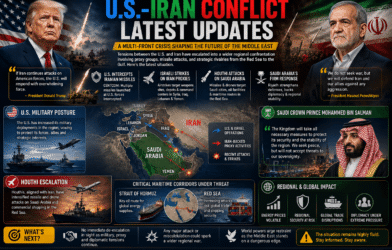
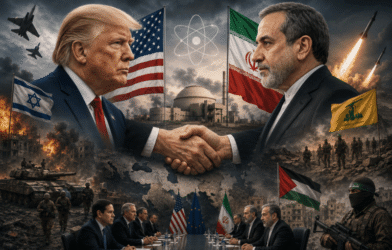
Washington, D.C/Rochester, NY/Doha, QR: Washington’s Warning to Tehran has once again been exposed through the latest U.S. military strikes in southern Iran, revealing the complex and often contradictory nature of American policy toward Tehran.
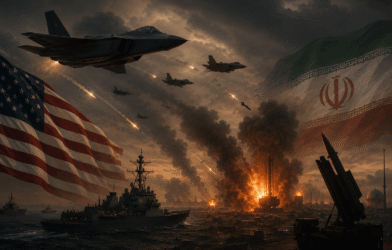
At a time when Washington and Tehran were reportedly moving closer to a diplomatic framework designed to reduce tensions and prevent a wider regional war, U.S. forces launched what the Pentagon described as “self-defense strikes” against Iranian missile sites and vessels allegedly involved in laying naval mines in the Strait of Hormuz.
The operation targeted military assets near Bandar Abbas and other strategic locations in southern Iran, an area that has become the focal point of the ongoing confrontation between the two adversaries.
The timing immediately raised questions among regional observers.
- Why would the United States authorize military action while negotiations were still underway?
- Why did the strikes occur just days after Pakistan’s military leadership and intelligence chief visited Tehran as part of an emerging mediation effort?
- Most importantly, what strategic message was Washington attempting to send, and how is Tehran likely to interpret it?
CENTCOM’s Official Position
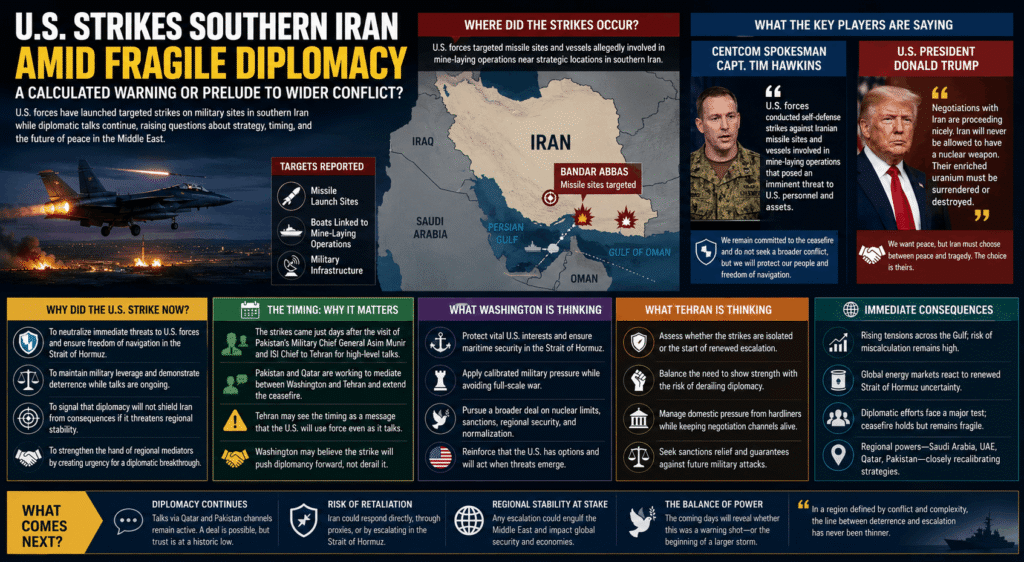
According to U.S. Central Command, the strikes were conducted strictly as defensive operations. Navy Captain and CENTCOM spokesman Tim Hawkins stated that U.S. forces targeted missile launch sites and boats suspected of laying mines because they posed an immediate threat to American personnel and military assets operating in the region.
CENTCOM emphasized that the United States remained committed to the ceasefire but reserved the right to protect its forces from emerging threats.
This language is significant because Washington is attempting to create a distinction between offensive military operations and what it characterizes as force-protection measures.
In other words, the administration wants to argue that the ceasefire remains intact despite the strikes because the operation was designed to neutralize specific threats rather than initiate a broader campaign against Iran.
Donald Trump’s Position
President Donald Trump has simultaneously maintained pressure and diplomacy. Following the strikes, Trump publicly stated that negotiations with Iran were “proceeding nicely,” while continuing to insist that Iran’s enriched uranium stockpile must ultimately be surrendered or destroyed under international supervision.
Reports also indicate that Trump continues to view any future agreement through the broader lens of regional normalization and expansion of the Abraham Accords.
The president’s remarks reveal the dual-track strategy that has characterized his administration’s Iran policy: negotiate from a position of military strength while ensuring Tehran understands that military options remain available if diplomacy stalls.
Why Strike While Negotiations Continue?
At first glance, the strikes appear counterproductive. Diplomacy typically requires restraint, and military action risks undermining trust between negotiating parties. However, Washington’s strategic thinking appears more nuanced.
American policymakers likely calculated that failing to respond to alleged Iranian mine-laying operations would weaken U.S. leverage at the negotiating table.
The Strait of Hormuz remains one of the world’s most critical energy corridors, and any Iranian attempt to threaten maritime traffic directly challenges a core U.S. security interest. By striking quickly, Washington sought to reinforce a message that negotiations will not provide Tehran with immunity from military consequences.
From the American perspective, diplomacy and deterrence are not mutually exclusive. Instead, military pressure is viewed as an instrument for improving negotiating leverage.
The strikes therefore served as a reminder that while Washington is willing to negotiate, it remains prepared to use force whenever it believes American forces or international shipping routes are threatened.
The Pakistan Factor: Why the Timing Matters
Perhaps the most intriguing aspect of the operation is its timing.
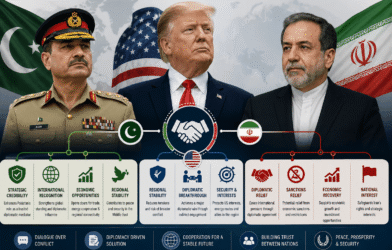
Only days before the strikes, Pakistan’s military leadership, led by Asim Munir, visited Tehran as part of an increasingly important mediation effort between Washington and Tehran.
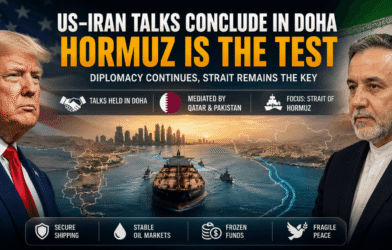
Reports suggest Pakistan, alongside Qatar, has been attempting to facilitate a broader understanding aimed at extending the ceasefire, reopening the Strait of Hormuz, and creating a pathway toward future nuclear negotiations.
The coincidence is unlikely to have gone unnoticed in Tehran.
One interpretation is that Washington wanted to strengthen Pakistan’s mediation leverage by demonstrating that diplomatic progress remains preferable to renewed military escalation.
Under this view, the strikes were intended to create urgency and encourage Iranian negotiators to move more quickly toward compromise.
Another interpretation is less optimistic. Iranian hardliners may view the operation as evidence that Washington is negotiating in bad faith—using diplomacy as cover while maintaining military pressure.
If that perception gains traction inside Iran’s political establishment, it could complicate the efforts of those advocating engagement with the United States.
From an intelligence perspective, the timing may also suggest that Washington received actionable information regarding Iranian military activities and chose not to delay action despite the ongoing diplomatic process.
In national security calculations, immediate operational concerns often outweigh diplomatic sensitivities.
What Is Washington Thinking?
Inside Washington, policymakers are likely pursuing three objectives simultaneously.
First, they want to preserve freedom of navigation through the Strait of Hormuz, a waterway that remains critical to global energy markets. Any perception that Iran can mine or close the strait without consequence would be strategically unacceptable to the United States.
Second, the administration wants to maintain pressure on Iran’s military infrastructure while avoiding a return to full-scale conflict.
The characterization of the operation as a limited defensive strike reflects this objective. Washington appears determined to demonstrate strength without triggering a broader regional war.
Third, American officials continue to pursue a diplomatic framework that could eventually address nuclear issues, maritime security, sanctions, and broader regional stability.
Reports indicate that discussions in Qatar and through Pakistani mediation remain active despite the latest military exchange.
What Is Tehran Thinking?
For Tehran, the calculations are equally complex.
Iranian leaders are likely trying to determine whether the strikes represent an isolated tactical action or the beginning of renewed escalation. Publicly, Iranian officials continue to insist on sanctions relief and guarantees against future military attacks.
At the same time, they remain deeply skeptical of American intentions due to the history of previous negotiations and military confrontations.
Iran’s leadership also faces domestic pressures. Following months of conflict and economic strain, appearing weak in the face of American military action carries political risks.
Consequently, Tehran may feel compelled to demonstrate resolve while avoiding steps that would completely derail ongoing diplomacy.
The challenge for Iranian decision-makers is balancing deterrence with pragmatism. Excessive retaliation could destroy the diplomatic process, while excessive restraint could invite criticism from hardline factions at home.
Consequences for the Region
The immediate consequence of the strikes is likely to be increased uncertainty rather than immediate escalation. Both Washington and Tehran appear to be signaling that they still prefer negotiations over war, but neither side wants to appear vulnerable.
For Gulf States, particularly Saudi Arabia, Qatar, and the United Arab Emirates, the incident reinforces concerns that even a fragile ceasefire can be disrupted by localized military actions.
Any sustained confrontation around the Strait of Hormuz would threaten energy exports, shipping routes, and regional economic stability.
For Pakistan, the episode is a test of its emerging diplomatic role. Islamabad has invested significant political capital in facilitating dialogue between Washington and Tehran.
If negotiations survive the latest crisis, Pakistan’s mediation efforts could gain credibility. If diplomacy collapses, its influence may diminish.
Conclusion
The U.S. strikes in southern Iran were not merely a military operation; they were a strategic signal delivered in the middle of an ongoing diplomatic contest.
Washington sought to demonstrate that negotiations would not prevent it from acting against perceived threats, while simultaneously insisting that diplomacy remains the preferred path forward. Tehran, meanwhile, must decide whether to interpret the strikes as a warning designed to strengthen negotiations or as evidence of American coercion.
The paradox defining the current phase of the conflict is that both sides appear to want an agreement, yet neither side is willing to negotiate from a position of perceived weakness.
The result is a dangerous mixture of diplomacy and military pressure in which a single miscalculation could either derail a historic agreement or trigger a new cycle of escalation across the Middle East.
For more latest News Updates and Analysis, Stay tuned!