Washington, D.C/Doha, QA: The possibility that President Donald Trump may temporarily refrain from launching additional military strikes against Iran represents a potentially significant development in an increasingly volatile confrontation between Washington and Tehran.
Yet beneath the apparent moderation in American military posture lies a more complicated strategic calculation involving deterrence, domestic political pressures, regional security, economic uncertainty, and the limits of military coercion.
According to a November 14 Reuters report described in the latest accounts of the confrontation, Trump informed advisers that he might avoid further attacks on Iranian targets unless Tehran engaged in new provocations.
Although the reported position suggests a willingness to prevent an immediate expansion of hostilities, it does not constitute a ceasefire, a diplomatic settlement, or a fundamental change in American policy toward Iran.
Instead, the development points toward what could best be described as a tactical pause: a deliberate effort to preserve military leverage while allowing political and diplomatic considerations to influence the next stage of the crisis.
For both Washington and Tehran, the distinction between restraint and reconciliation remains critically important. A temporary suspension of attacks may reduce the immediate likelihood of military escalation, but it does little to resolve the underlying disagreements that have repeatedly brought the United States and Iran into confrontation.
A Tactical Pause Rather Than a Strategic Retreat
Trump’s reported consideration of holding off further strikes should not necessarily be interpreted as an American retreat from its broader regional objectives.
Military restraint can itself serve as an instrument of strategic pressure, particularly when a government wishes to demonstrate that it retains the capacity to escalate while placing responsibility for any renewed confrontation on its adversary.
The Trump administration’s approach to Iran has long combined economic pressure, military deterrence, and demands for changes in Tehran’s regional and security policies. Within that framework, the possibility of suspending additional attacks could represent an effort to consolidate the perceived results of earlier military action without becoming entangled in an extended conflict.
Such calculations are especially relevant when the potential costs of continued escalation exceed the immediate strategic benefits of further strikes.
Military operations against Iranian installations may demonstrate American operational capabilities, but they cannot automatically guarantee long-term changes in Iranian behavior.
Tehran possesses an extensive network of military assets, asymmetric capabilities, and regional relationships that complicate efforts to achieve decisive political outcomes through limited attacks.
Consequently, Washington faces a difficult balancing act. Excessive restraint could be interpreted by Iranian hardliners as evidence that American threats lack credibility, while continued military escalation could provoke retaliation against American personnel, regional allies, or commercial shipping.
The reported pause may therefore reflect an attempt to maintain deterrence without surrendering control over the pace of the confrontation.
However, the effectiveness of such an approach depends heavily on how Iran interprets American intentions.
Iran’s Strategic Calculations: Restraint, Resistance, and Political Survival
For Tehran, Washington’s apparent willingness to suspend additional attacks presents both an opportunity and a challenge.
Iranian decision-makers may interpret the development as evidence that military confrontation carries substantial risks for the United States.
Such an assessment could reinforce the argument among Iranian political and security institutions that resistance to external pressure remains an effective means of preserving national sovereignty.
At the same time, Iran has compelling reasons to avoid an uncontrolled military escalation.
Its economy remains vulnerable to sanctions, restrictions on international financial transactions, and disruptions affecting energy exports and investment.
A prolonged confrontation with the United States could deepen these pressures, undermine economic stability, and impose additional costs on ordinary Iranian citizens.
The Iranian leadership must therefore balance the domestic political importance of demonstrating strength against the practical necessity of preventing a wider conflict.
The danger lies in the possibility that Washington and Tehran may interpret the same developments differently. What American officials regard as a conditional offer of restraint could be viewed by Iranian hardliners as evidence that military pressure has forced Washington to reconsider its position.
Conversely, an Iranian military maneuver intended to demonstrate defensive readiness could be interpreted by American commanders as preparation for renewed hostilities.
This problem of strategic misperception has repeatedly complicated relations between adversarial states, particularly when direct diplomatic communication is limited.
The absence of a mutually accepted definition of what constitutes a new provocation makes the reported American position especially fragile.
The Strait of Hormuz and the Economic Consequences of Uncertainty
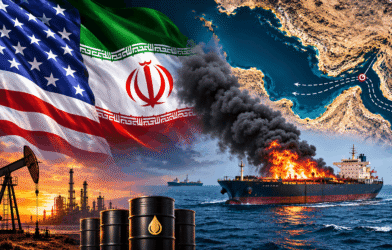
One of the most consequential dimensions of the confrontation concerns the security of the Strait of Hormuz, the strategically vital maritime passage connecting the Persian Gulf with international energy markets.
Any renewed military confrontation involving Iran could threaten shipping confidence, increase insurance costs, and introduce fresh uncertainty into global oil markets.
Even when energy infrastructure remains physically intact, the perception of heightened maritime risk can influence commercial decisions. Shipping companies may reassess routes, insurers may demand higher premiums, and energy traders may incorporate additional geopolitical risk into oil prices.
A temporary American suspension of attacks could ease some of these concerns by reducing the immediate expectation of further escalation.
Nevertheless, the economic benefits of restraint would depend on whether regional security conditions genuinely improve.
If maritime incidents continue, or if military forces remain on heightened alert, energy markets may remain volatile despite a reduction in direct American attacks.
For the United States, this economic dimension carries considerable political significance. Higher energy prices can affect transportation, manufacturing, agricultural production, and household expenses. In an environment where Americans remain sensitive to living costs, a sustained Middle Eastern conflict could create economic challenges that extend far beyond the battlefield.
For major energy-importing economies in Asia and Europe, uncertainty in the Persian Gulf presents a different but equally serious challenge. Disruptions to shipping and energy supplies can undermine industrial competitiveness, complicate inflation management, and increase pressure on governments already navigating difficult economic conditions.
The broader lesson is that military decisions involving Iran cannot be separated from their global economic consequences.
A tactical pause may therefore serve not only American security interests but also the administration’s desire to prevent geopolitical instability from translating into additional economic pressure.
Saudi Arabia and Turkey Emerge as Influential Voices for Restraint
An important element of the emerging diplomatic picture is the reported involvement of Saudi Arabia and Turkey in encouraging Washington to avoid another major military confrontation.
According to Reuters, Saudi Crown Prince Mohammed bin Salman and Turkish President Recep Tayyip Erdoğan urged Trump during recent telephone conversations not to resume strikes against Iran. Their intervention reflects growing concern among regional powers about the consequences of an expanded conflict.
Saudi Arabia has a particularly strong interest in preventing further instability in the Persian Gulf. Its economic diversification plans depend heavily on investment confidence, infrastructure development, tourism, and the perception of long-term regional security.
Turkey, meanwhile, faces its own strategic challenges involving regional trade, border security, energy supplies, and its relationships with Washington and Tehran.
The reported diplomatic interventions suggest that influential American partners increasingly view military restraint as preferable to another round of confrontation.
Reuters also reported that American intelligence assessments indicate economic sanctions and the naval blockade are already damaging Iran’s economy, while additional strikes would be unlikely to substantially change Tehran’s negotiating demands.
This raises an important question about whether renewed military operations would achieve political objectives that existing economic pressure has failed to secure.
Israel’s Security Concerns Complicate Washington’s Choices
Israel remains another central factor in the American decision-making process.
Israeli officials have reportedly continued advocating additional military action against Iran, reflecting concerns about Tehran’s nuclear capabilities, missile infrastructure, and regional military influence.
From Israel’s security perspective, a prolonged pause without enforceable restrictions on Iranian military activities could allow Tehran to rebuild damaged infrastructure or strengthen its defensive capabilities.
Washington, however, must consider a wider range of interests.
While Israeli security remains an important component of American Middle Eastern policy, the United States also has military personnel, economic relationships, diplomatic commitments, and strategic responsibilities throughout the region.
The difference between American and Israeli threat assessments could become increasingly consequential if Washington concludes that additional military action offers diminishing returns.
A temporary pause may therefore expose differences over the appropriate balance between deterrence and diplomacy, even if the broader security partnership remains intact.
Domestic Political Pressure after the Midterm Elections
Trump’s reported reconsideration of further military action also comes at a politically sensitive moment following the November 3 congressional midterm elections.
The electoral setbacks suffered by Republicans have intensified scrutiny of the administration’s domestic and foreign policy priorities.
According to a Reuters/Ipsos survey conducted shortly before the elections, 55 percent of Americans believed the war with Iran was not worth its cost. Vice President JD Vance subsequently linked the conflict to Republican electoral losses, according to Reuters.
These findings suggest that the administration faces growing pressure to demonstrate that its military strategy serves clearly defined American interests.
For many voters, foreign policy decisions are increasingly evaluated through their consequences for household finances, fuel prices, public spending, and economic stability.
The political challenge for Trump is therefore substantial. Maintaining a forceful national security image may appeal to parts of his political base, but a prolonged conflict that generates higher economic costs could deepen dissatisfaction among voters concerned primarily with domestic issues.
A decision to avoid further attacks might allow the administration to argue that earlier military operations established sufficient deterrence while reducing the risk of another expensive confrontation.
Nevertheless, political calculations alone cannot ensure regional stability.
A new maritime incident, an attack involving American personnel, or an unexpected escalation involving Iranian-backed groups could rapidly alter the administration’s calculations.
The Houthis and the Risk of an Uncontrolled Escalation
The reported conditions attached to Trump’s possible restraint extend beyond Iran itself.
Reuters specifically identified potential provocations by the Iran-backed Houthis in Yemen as a factor that could influence Washington’s decision to resume military action.
This creates an additional layer of uncertainty.
The Houthis have demonstrated their ability to threaten maritime security and disrupt regional commercial activity. Their involvement means that the trajectory of American-Iranian relations may be affected by developments outside the direct control of Washington and Tehran.
Although the Houthis maintain relationships with Iran, treating every Houthi military action as a direct Iranian decision risks oversimplifying a complicated regional conflict.
This distinction matters because a retaliatory American strike against Iran in response to a Houthi operation could expand hostilities even if Tehran had not directly authorized the incident.
The broader danger is that multiple actors operating across interconnected conflict zones could create a chain reaction in which a localized military event triggers a much larger confrontation.
A sustainable reduction in tensions would therefore require more than restraint by American and Iranian forces. It would also depend on maritime security arrangements, regional communication channels, and efforts to prevent allied or affiliated armed groups from undermining diplomatic progress.
Military Readiness Continues Despite Signals of Restraint
Despite Trump’s reported willingness to avoid further attacks, American military preparations indicate that Washington is not abandoning the option of renewed force.
Reuters reported that another American aircraft carrier was expected to move into the Middle East, potentially leaving three carriers operating in the region simultaneously.
The report also raised concerns about the availability of certain American precision-guided munitions, although the White House maintained that the military possessed sufficient resources to accomplish its objectives.
This combination of diplomatic restraint and military preparedness is not inherently contradictory.
Governments frequently maintain substantial military capabilities during negotiations to discourage adversaries from exploiting a temporary reduction in hostilities.
However, the presence of heavily armed forces in a tense environment creates its own risks.
Military deployments intended to reassure allies can appear threatening to adversaries. Defensive maneuvers can be misinterpreted as preparations for offensive operations, while unexpected encounters between military units can produce rapid escalation.
The central challenge for Washington is to ensure that military readiness strengthens deterrence without undermining the diplomatic possibilities created by a pause.
Can a Temporary Pause Become a Lasting Diplomatic Opportunity?
The most important question emerging from the November 14 developments is whether Trump’s apparent reconsideration of military strikes could eventually produce a meaningful diplomatic breakthrough.
At present, there is insufficient evidence to conclude that Washington and Tehran are approaching a comprehensive settlement.
The fundamental disputes involving Iran’s nuclear program, sanctions, maritime security, and regional military activities remain unresolved.
Associated Press reporting has also described uncertainty surrounding diplomatic efforts, including attempts to establish an interim arrangement addressing the Strait of Hormuz.
Iran has indicated openness to diplomacy while maintaining conditions for a ceasefire, and Washington continues to insist on terms it considers acceptable.
Any lasting agreement would require both sides to move beyond immediate military calculations and address the political grievances that sustain the confrontation.
For Washington, this could involve identifying realistic security objectives and determining which concessions or verification mechanisms would justify easing pressure.
For Tehran, progress would likely require credible assurances concerning sovereignty, economic relief, and protection against renewed attacks.
Regional governments could play a constructive role by facilitating communication and offering diplomatic channels capable of reducing misunderstandings.
Yet such efforts would face significant obstacles, particularly if either side believes that time or continued pressure will improve its negotiating position.
The danger is that a tactical pause becomes a prolonged stalemate rather than a pathway toward peace.
Conclusion: A Moment of Restraint, Not yet a Turning Point
President Donald Trump’s reported willingness to hold off further attacks on Iran represents a potentially important adjustment in the American approach to an increasingly costly confrontation.
It suggests that the administration may be reassessing the strategic value of additional military operations in light of regional diplomatic pressure, economic consequences, domestic political opposition, and uncertainty over whether further strikes could produce meaningful concessions.
However, the development should not be mistaken for a confirmed peace initiative.
Washington retains substantial military capabilities in the region, Tehran remains under significant economic and security pressure, Israel continues to express concerns about Iranian military capabilities, and the Houthis remain a potential source of renewed escalation.
The coming period will test whether restraint can evolve into a more coherent diplomatic strategy or whether the region remains trapped in a recurring cycle of threats, retaliation, and temporary military pauses.
For Trump, the decision carries implications extending beyond relations with Iran. It will influence perceptions of American leadership, the credibility of military deterrence, relations with regional allies, and the administration’s ability to reconcile its foreign policy ambitions with domestic economic and political realities.
For Iran, the opportunity lies in preventing further destruction while exploring whether diplomatic engagement can produce tangible economic and security benefits.
For the wider Middle East, the stakes are considerably greater than the political fortunes of either government.
After months of conflict, the region requires more than an interruption in military operations. It needs a credible framework capable of preventing renewed confrontation and addressing the underlying disputes that continue to threaten regional stability.
The essential distinction is between choosing not to fire the next missile and establishing the political conditions that make another missile unnecessary.
Trump may be considering the first. Whether Washington, Tehran, and their regional partners can achieve the second remains the defining question.