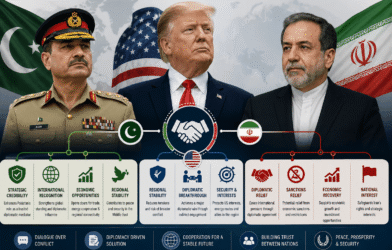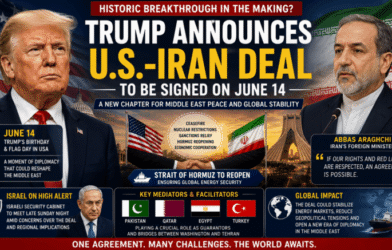
Washington, D.C: President Donald Trump’s emerging strategy to end the nearly three-month-long conflict with Iran has triggered one of the most significant foreign policy disputes within the Republican Party since the war began.
What started as a military campaign aimed at weakening Iran’s strategic capabilities and forcing Tehran into submission is now evolving into a complex diplomatic effort, exposing deep divisions between the White House and many of the party’s traditional national security hawks.
The controversy centers on reports that the Trump administration is negotiating a framework that could include a prolonged ceasefire, limited sanctions relief, mechanisms for reopening the Strait of Hormuz, and a renewed diplomatic process focused on Iran’s nuclear program.
While administration officials insist the proposal is designed to secure American interests and prevent Iran from obtaining nuclear weapons, many Republican lawmakers argue that the emerging deal risks squandering military gains achieved during the conflict.
For President Trump, the shift toward diplomacy reflects a political and strategic reality that differs sharply from the objectives articulated at the beginning of the war.
When U.S. and allied forces launched operations against Iran, administration officials spoke of crippling Tehran’s military infrastructure, dismantling its nuclear ambitions, and potentially creating conditions for fundamental political change within Iran.
Months later, however, Iran’s government remains intact, much of its missile capability reportedly survives, and the economic consequences of the conflict have become increasingly difficult to ignore.
The closure and disruption of the Strait of Hormuz emerged as a turning point. With roughly one-fifth of global oil shipments passing through the strategic waterway, the crisis sent shockwaves through international energy markets.
Rising fuel prices and growing concerns about global economic stability increased pressure on Washington to find a negotiated exit from the conflict. Analysts argue that these economic realities have pushed the administration toward a more pragmatic approach than many of its supporters anticipated.
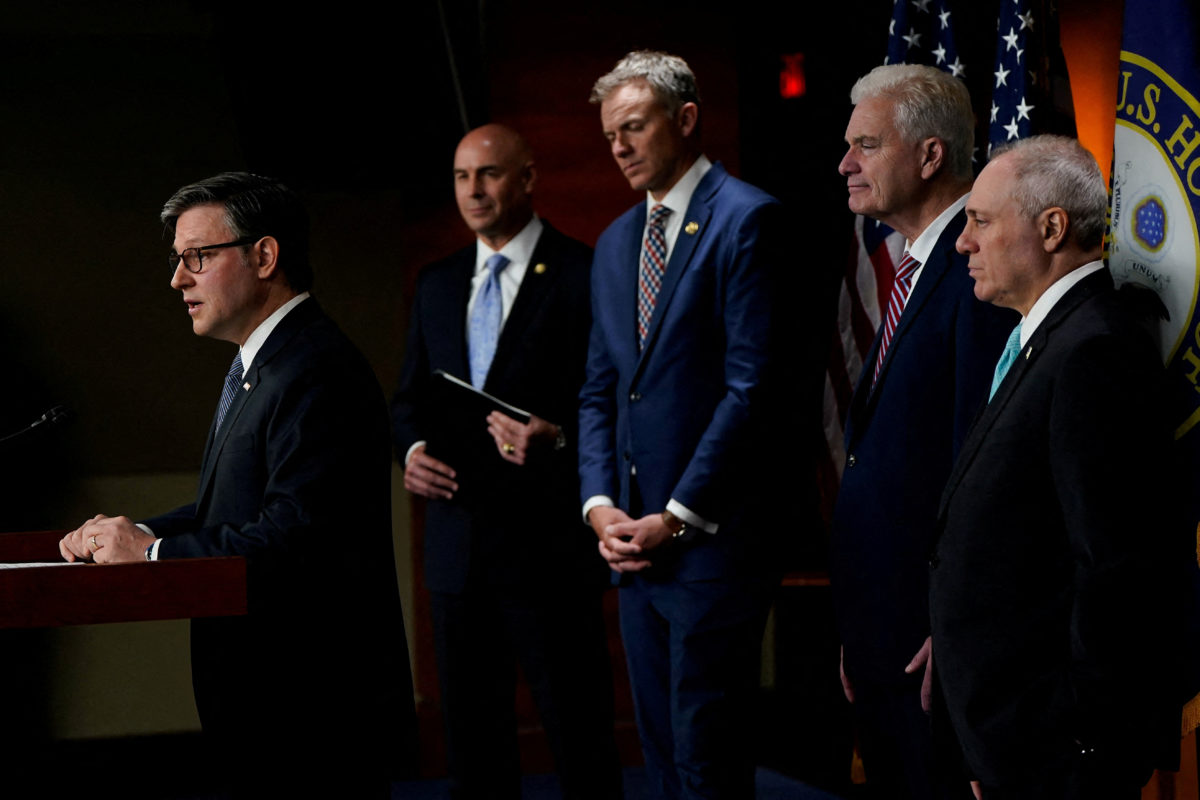
This diplomatic pivot has alarmed prominent Republican hawks. Senators such as Ted Cruz, Lindsey Graham, and Roger Wicker have voiced concerns that any agreement allowing Iran to retain enrichment capabilities, maintain regional influence, or receive sanctions relief would effectively reward Tehran after months of costly military confrontation.
Critics fear that a ceasefire could freeze the conflict without addressing the underlying security threats that motivated military action in the first place.
Their criticism reflects a broader ideological divide inside the Republican coalition. One faction believes military pressure should continue until Iran accepts sweeping concessions, including severe restrictions on its nuclear program and regional activities.
Another faction, more closely aligned with Trump’s “America First” instincts, argues that prolonged military engagements are costly, politically risky, and inconsistent with the administration’s broader objective of reducing American involvement in overseas conflicts.
The administration has attempted to reassure skeptics by emphasizing that the proposed agreement would differ fundamentally from the 2015 nuclear accord negotiated during the Obama administration.
Trump has repeatedly insisted that any future arrangement would contain stronger safeguards and stricter verification mechanisms. Reports indicate that he recently demanded tougher provisions regarding Iran’s nuclear materials before approving a final agreement, suggesting that negotiations remain fluid and unresolved.
Yet the political challenge facing the White House extends beyond the details of the deal itself. The war has already imposed substantial financial costs on the United States while generating uncertainty among voters ahead of the 2026 midterm elections.
Some Republican strategists fear that a prolonged conflict could damage the party politically, while others worry that an agreement perceived as weak could alienate conservative voters who supported the military campaign.
Trump thus finds himself balancing competing pressures: ending a costly conflict without appearing to retreat.
Another obstacle is the issue of trust. Tehran remains deeply skeptical of Washington’s intentions, particularly given Trump’s withdrawal from the original nuclear agreement during his first presidency.
Iranian leaders are reportedly demanding guarantees regarding sanctions relief and economic normalization, while U.S. negotiators insist on strict limitations on Iran’s nuclear activities and assurances that Tehran will not pursue nuclear weapons.
These unresolved disputes continue to complicate efforts to finalize a comprehensive settlement.
The emerging negotiations also reveal a striking irony. Trump originally criticized the Obama-era nuclear agreement as insufficiently restrictive and pledged to secure a stronger deal.
Yet analysts note that the broad outlines of the current diplomatic effort—focused on nuclear restrictions, verification measures, and sanctions relief—bear similarities to the framework he once condemned.
While the details may differ, the strategic objective of preventing nuclear proliferation through negotiation has reemerged as the central pillar of American policy toward Iran.
From a geopolitical perspective, the administration appears to have concluded that a negotiated settlement offers the most realistic path to ending the conflict. Continued military escalation risks further destabilizing the Gulf region, threatening energy supplies, and increasing the possibility of a wider regional war.
At the same time, accepting a compromise agreement could expose Trump to accusations that he abandoned the ambitious objectives that initially justified military action.
The coming days may determine whether Trump can achieve what has thus far proven elusive: transforming battlefield pressure into a sustainable political settlement. If negotiations succeed, the president could present himself as the leader who ended a costly conflict while preventing Iran from becoming a nuclear power.
If talks collapse, however, military operations could resume, deepening divisions within the Republican Party and prolonging a crisis that has already reshaped the political landscape in Washington and the strategic balance in the Middle East.
In many ways, the debate surrounding Trump’s Iran strategy has become a test of the future direction of Republican foreign policy.
The central question is no longer whether Iran should be confronted, but how victory should be defined. For hard-line Republicans, victory means forcing Tehran into far-reaching concessions through sustained pressure.
For Trump and his advisers, victory increasingly appears to mean ending the war on terms that preserve American leverage while avoiding an open-ended military commitment. The outcome of that debate may shape U.S. policy in the Middle East long after the current conflict ends.
Continue exploring the latest developments in politics, business, diplomacy, and global affairs with The Variant.