


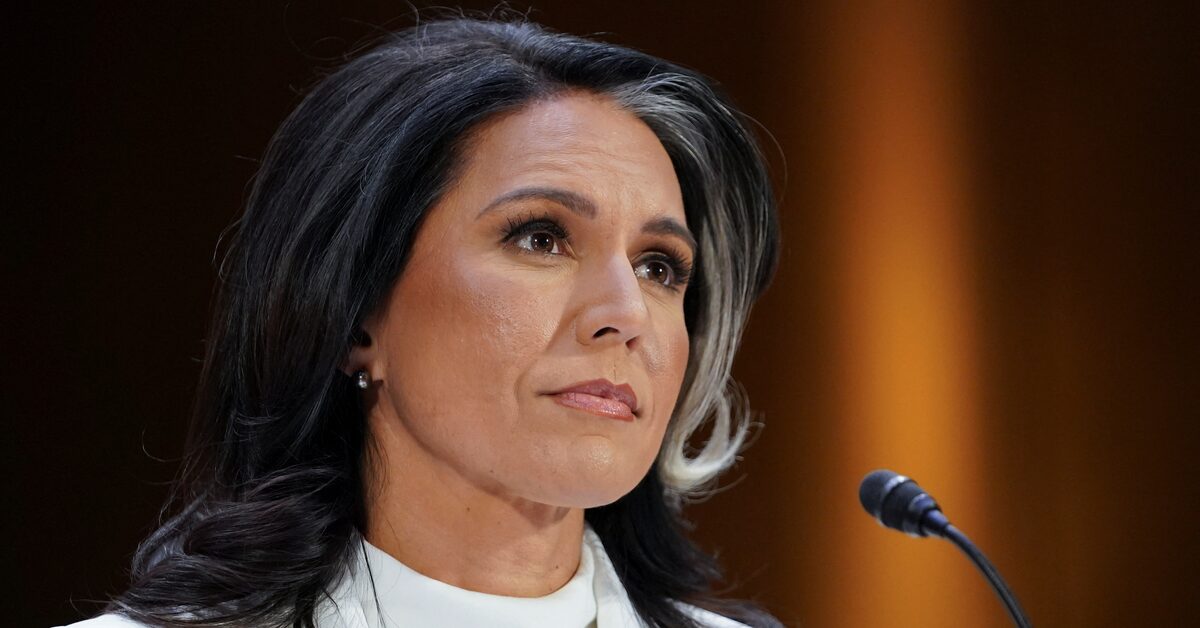
Rochester, NY: In a move that is already reshaping diplomatic discourse, Tulsi Gabbard has declared that five countries—including Pakistan—pose what she described as a “direct or emerging military threat” to the United States. The statement, delivered during a high-profile policy address in Washington, marks one of the most expansive threat assessments articulated by a senior American political figure in recent years.
Gabbard’s remarks come at a time of heightened global instability, with ongoing conflicts in the Middle East, rising tensions in Asia, and growing concerns within Washington about non-state actors and nuclear proliferation risks. Her framing signals a shift toward a broader, more assertive U.S. security doctrine—one that blurs the line between traditional adversaries and complex, multi-layered threats.
The Five-Country Threat Framework
While Gabbard did not present a formal Pentagon document, she outlined a strategic framework identifying five countries that, in her view, collectively represent a spectrum of military risks to the United States. These include state actors with nuclear capabilities, nations accused of supporting militant networks, and countries whose internal instability could spill across borders.
Pakistan’s inclusion has drawn particular attention. Gabbard pointed to concerns over the security of its nuclear arsenal, its history of harboring militant groups, and the evolving role of its military establishment in regional geopolitics. “We cannot afford to ignore the convergence of nuclear capability and internal instability,” she said, emphasizing that threats today are “not always linear, but layered and unpredictable.”
Pakistan’s Reaction: Rejection and Recalibration
Islamabad responded swiftly and firmly. Officials from Ministry of Foreign Affairs Pakistan rejected the characterization as “baseless and politically motivated,” arguing that Pakistan has been a frontline state in counterterrorism efforts for over two decades.
A senior Pakistani official stated, “Pakistan’s sacrifices in the fight against terrorism are unmatched. Labeling us a threat ignores both reality and our ongoing cooperation with global partners.” The statement also highlighted Pakistan’s nuclear command and control systems as “robust, secure, and internationally recognized.”
Privately, however, analysts in Islamabad acknowledge that such rhetoric from Washington could complicate already fragile bilateral relations, particularly in areas such as intelligence sharing and regional security coordination.
Responses from Other Named Countries
Although Gabbard did not release an official list in writing, diplomatic sources indicate that the framework includes countries already under U.S. strategic scrutiny, such as Iran and North Korea, alongside emerging concerns tied to global power competition.
Tehran dismissed the remarks as “hostile propaganda,” with a spokesperson for Iranian Foreign Ministry stating that “the United States continues to justify its militarism by manufacturing threats.” The statement also warned that such narratives could escalate tensions further in an already volatile region.
Meanwhile, Pyongyang responded through state media, calling the comments “a continuation of U.S. aggression,” and reiterating its stance that its nuclear program is purely defensive.
Reaction on Capitol Hill
Within the United States, Gabbard’s statement has triggered a sharp debate among lawmakers.
Senator Lindsey Graham supported the broader thrust of the warning, stating, “We are living in a world where threats are evolving faster than our policies. Recognizing these dangers is the first step toward protecting American interests.”
However, others expressed concern about the implications of such sweeping classifications. Senator Chris Murphy cautioned against “oversimplifying complex geopolitical realities,” arguing that labeling multiple countries as direct threats could undermine diplomatic engagement. “We need precision in our language, not rhetoric that boxes us into confrontation,” he said.
Senator Rand Paul went further, warning that expanding the list of perceived threats risks overextension. “The United States cannot afford to treat half the world as adversaries without clear strategic objectives,” he noted, emphasizing the need for restraint and prioritization.
Strategic Implications: Broadening the Threat Lens
Gabbard’s remarks reflect a broader shift in how threats are conceptualized in Washington. Rather than focusing solely on peer competitors like China or Russia, the framework expands the lens to include hybrid threats—countries that may not pose a direct conventional military challenge but could still destabilize U.S. interests through indirect means.
This approach aligns with recent discussions within defense circles about “multi-domain threats,” where cyber capabilities, proxy warfare, and internal instability are seen as equally significant as traditional military power.
However, critics argue that such an expansive definition risks diluting strategic focus. By grouping together countries with vastly different capabilities and intentions, the framework may create more ambiguity than clarity in policy formulation.
The Risk of Escalation
One of the most immediate concerns raised by analysts is the potential for escalation. Publicly labeling countries as military threats can harden positions, reduce diplomatic flexibility, and increase the likelihood of miscalculation.
In the case of Pakistan, the implications are particularly sensitive. As a nuclear-armed state with a complex relationship with Washington, any shift in its strategic classification could have ripple effects across South Asia, including its relations with India and Afghanistan.
Similarly, for countries like Iran, already engaged in a tense standoff with the United States, such statements may reinforce hard-line narratives and justify further military posturing.
Conclusion: Doctrine or Political Signal?
The significance of Tulsi Gabbard’s declaration lies not only in its content but in its timing. Delivered amid multiple global crises, it reflects a growing sense within parts of the U.S. political establishment that traditional threat models are no longer sufficient.
Yet whether this marks the beginning of a formal policy shift or remains a political signal is still unclear. What is certain, however, is that the reaction—from Islamabad to Tehran, and across Capitol Hill—demonstrates the far-reaching consequences of redefining who is considered a threat in an increasingly interconnected and volatile world.
In an era where perception often shapes reality, such declarations do more than describe the geopolitical landscape—they actively reshape it.







